Grandcamp, Evening — History & Analysis
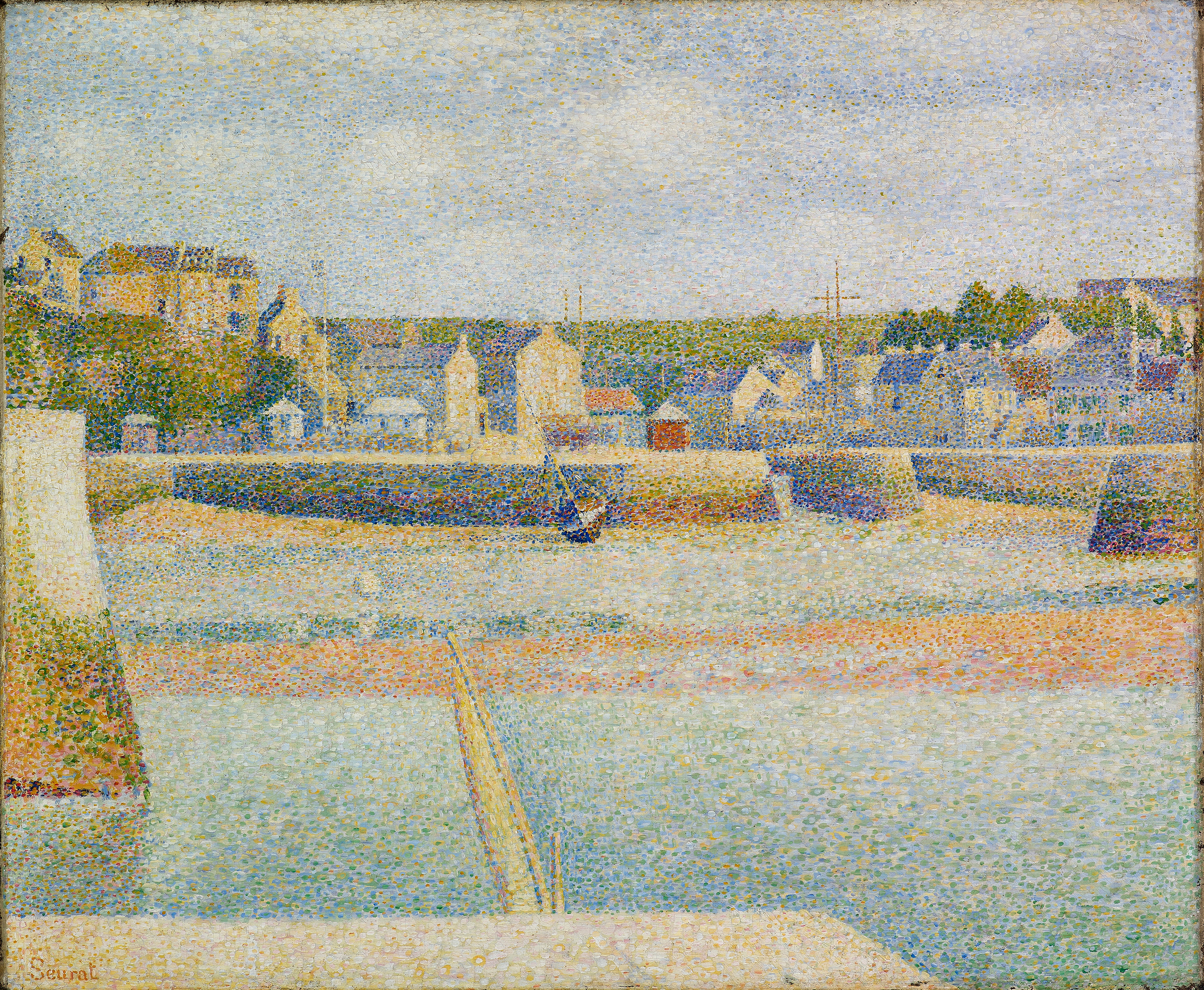
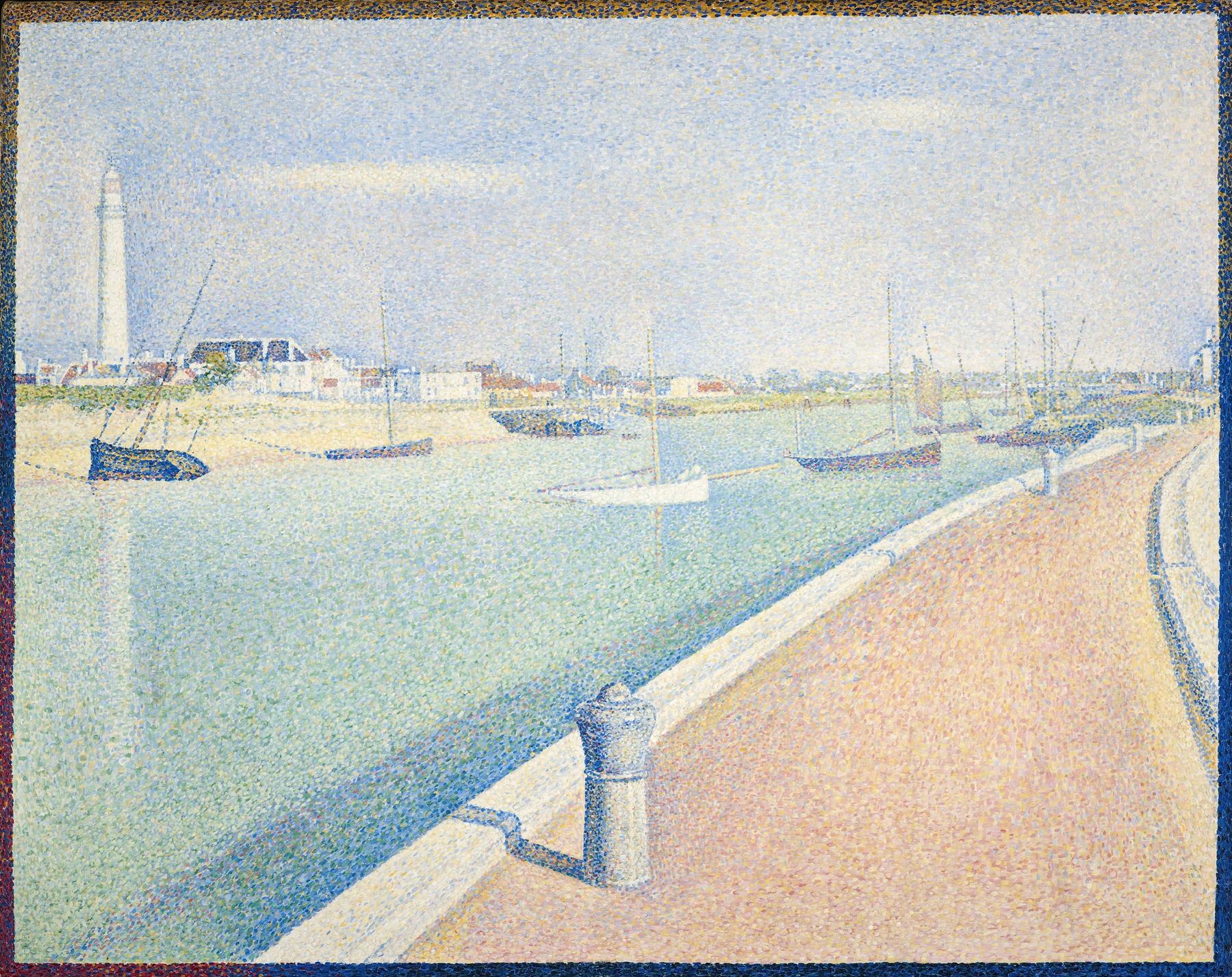
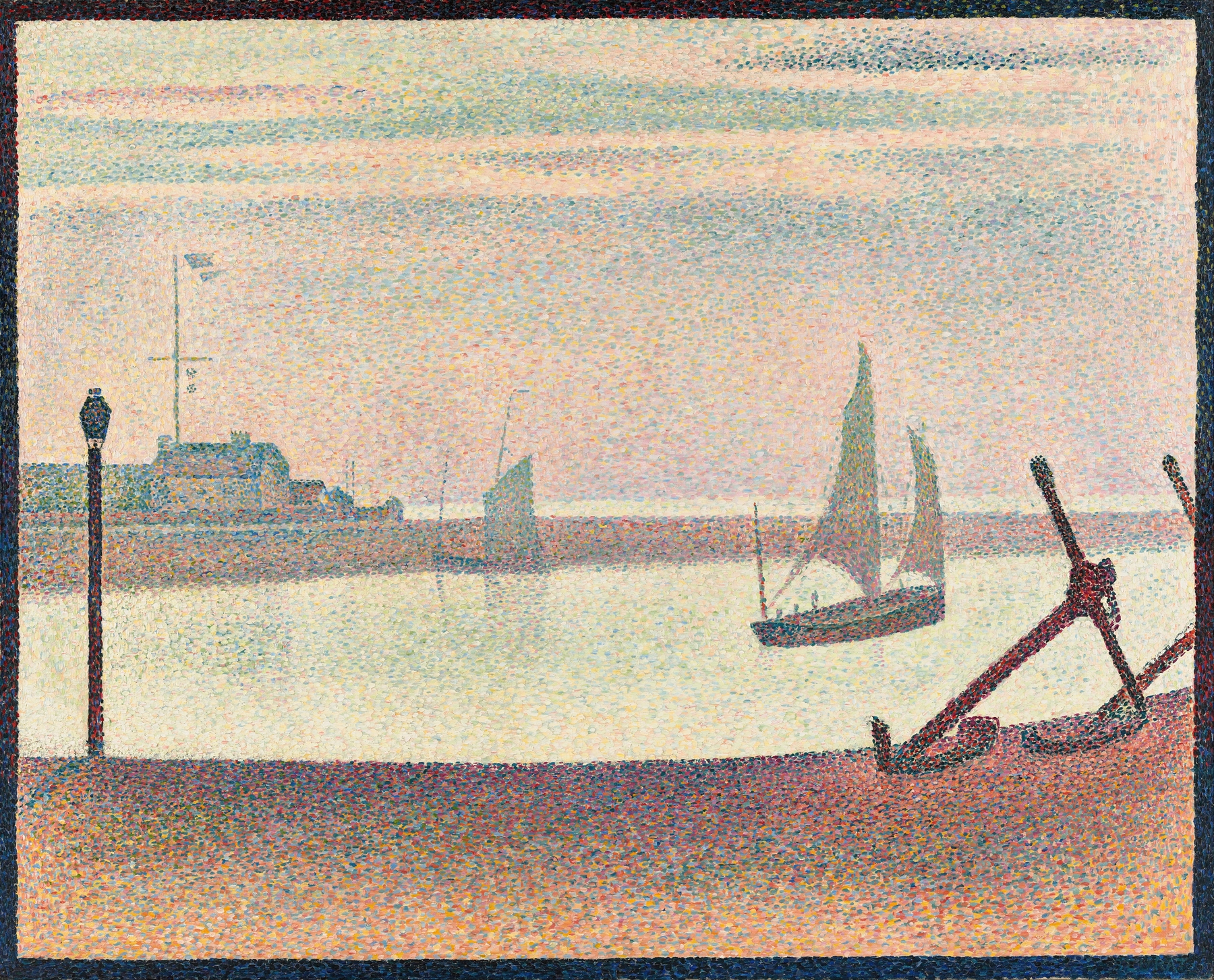
What if silence could speak through light? In Grandcamp, Evening, a soft hush envelops the scene, inviting the viewer to ponder the unvoiced emotions of twilight. Look to the left, where the gentle interplay of blues and purples captures the transition from day to night. Seurat’s meticulous pointillism creates a shimmering effect, as if the colors themselves are whispering secrets. The soft, dappled light reflects on the water, compelling you to trace the contours of the small boats resting in stillness, their forms outlined by a fading sun.
Each dot vibrates with energy, yet the overall composition conveys a profound sense of calm. There’s an alluring contrast between the serenity of the evening and the tension of untold stories. The distant figures, silhouetted against the backdrop of the gradually darkening sky, evoke a longing for connection that remains unfulfilled. The rhythmic quality of the undulating water mirrors the ebb and flow of emotions, hinting at the nuances of relationships that exist in this fleeting moment.
The meticulous arrangement of colors and shapes amplifies this yearning, drawing viewers deeper into the essence of the scene. Georges Seurat painted Grandcamp, Evening in 1885 while exploring the coastal landscape of Normandy. During this period, he was developing his signature technique of divisionism, which sought to enhance the vibrancy of color through optical mixing. The art world was shifting toward Impressionism, yet Seurat’s precise, deliberate method set him apart, allowing him to infuse his work with a thoughtful meditation on light and emotion.