Greenwood Lake, Autumn on the Hudson — History & Analysis
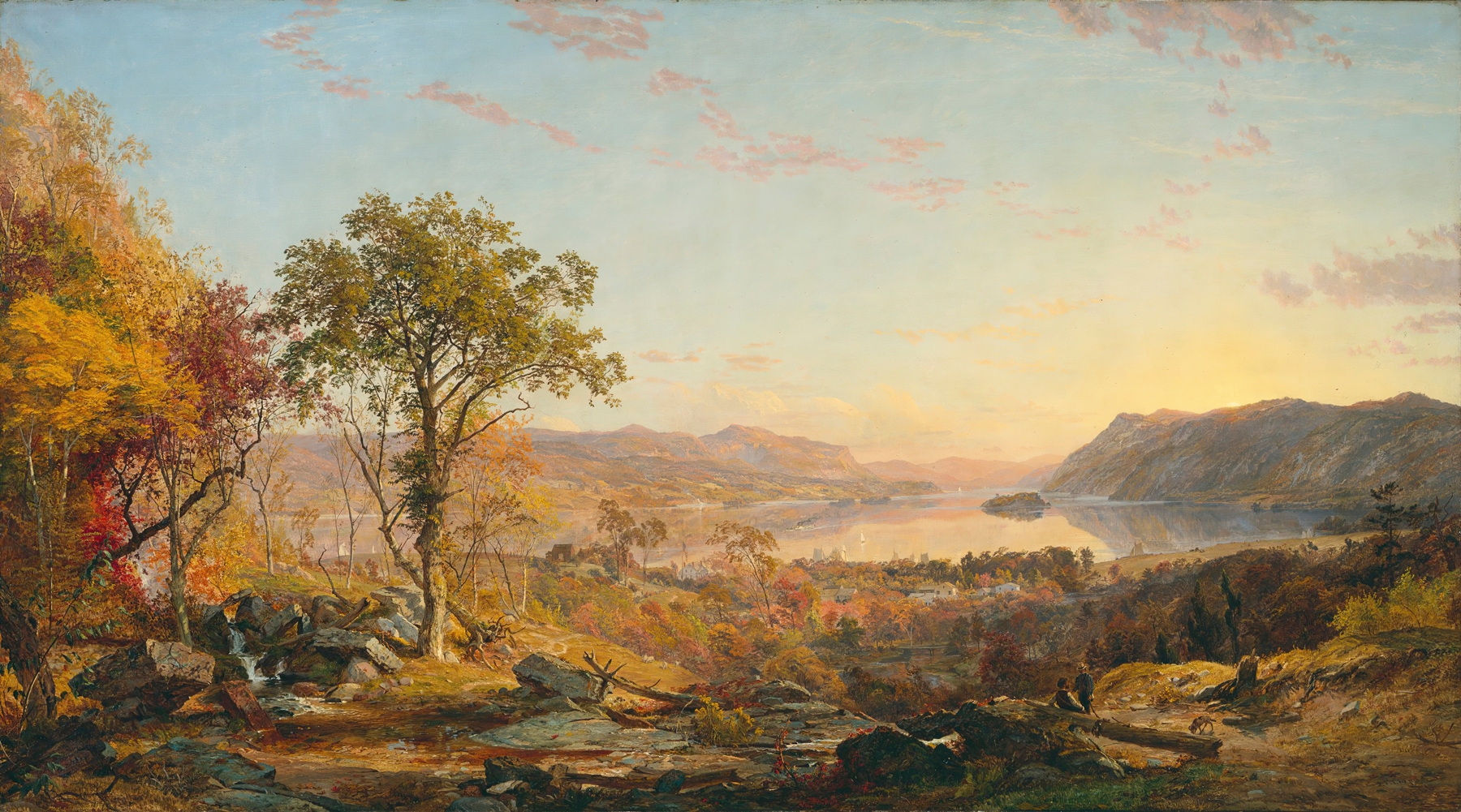
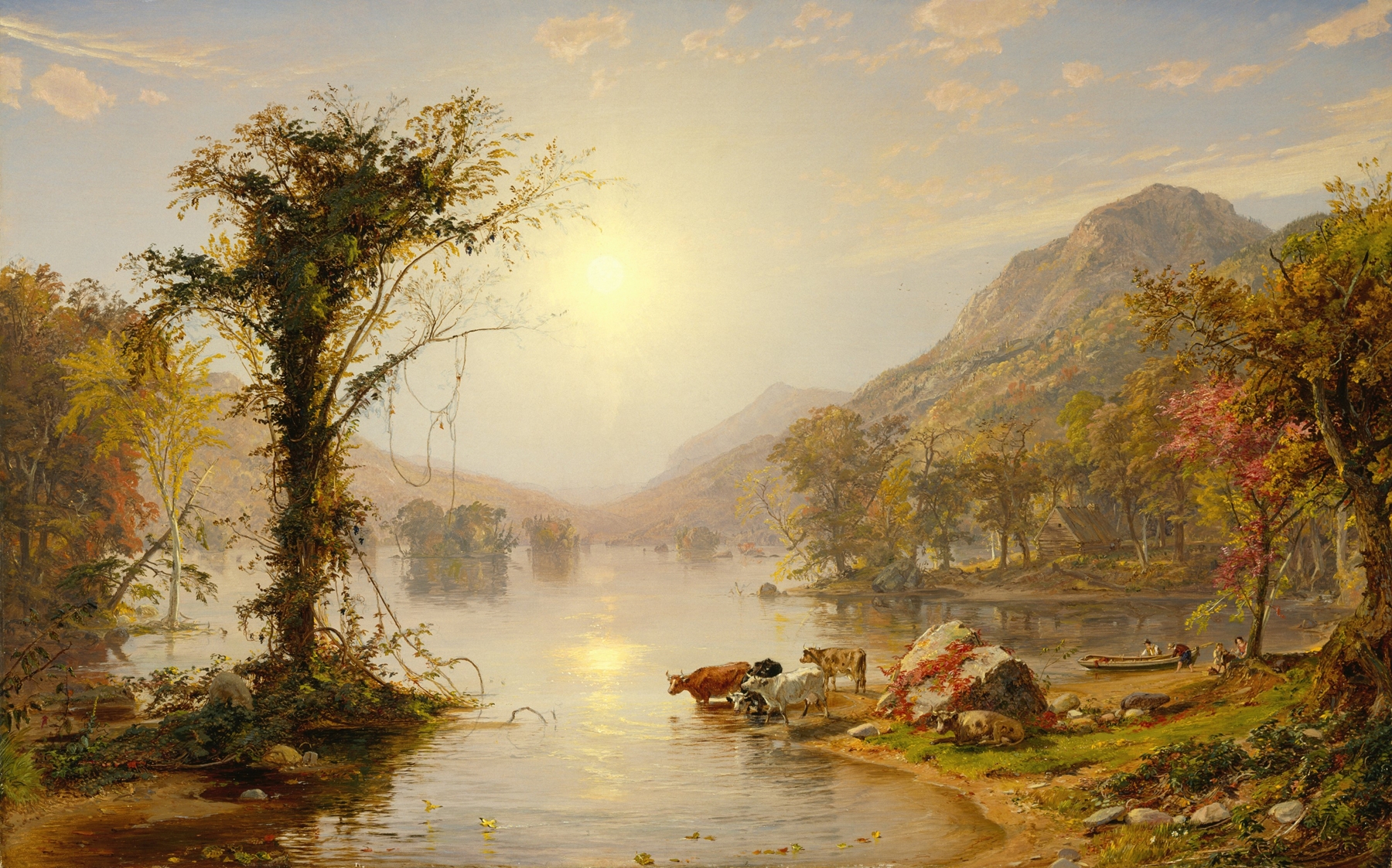
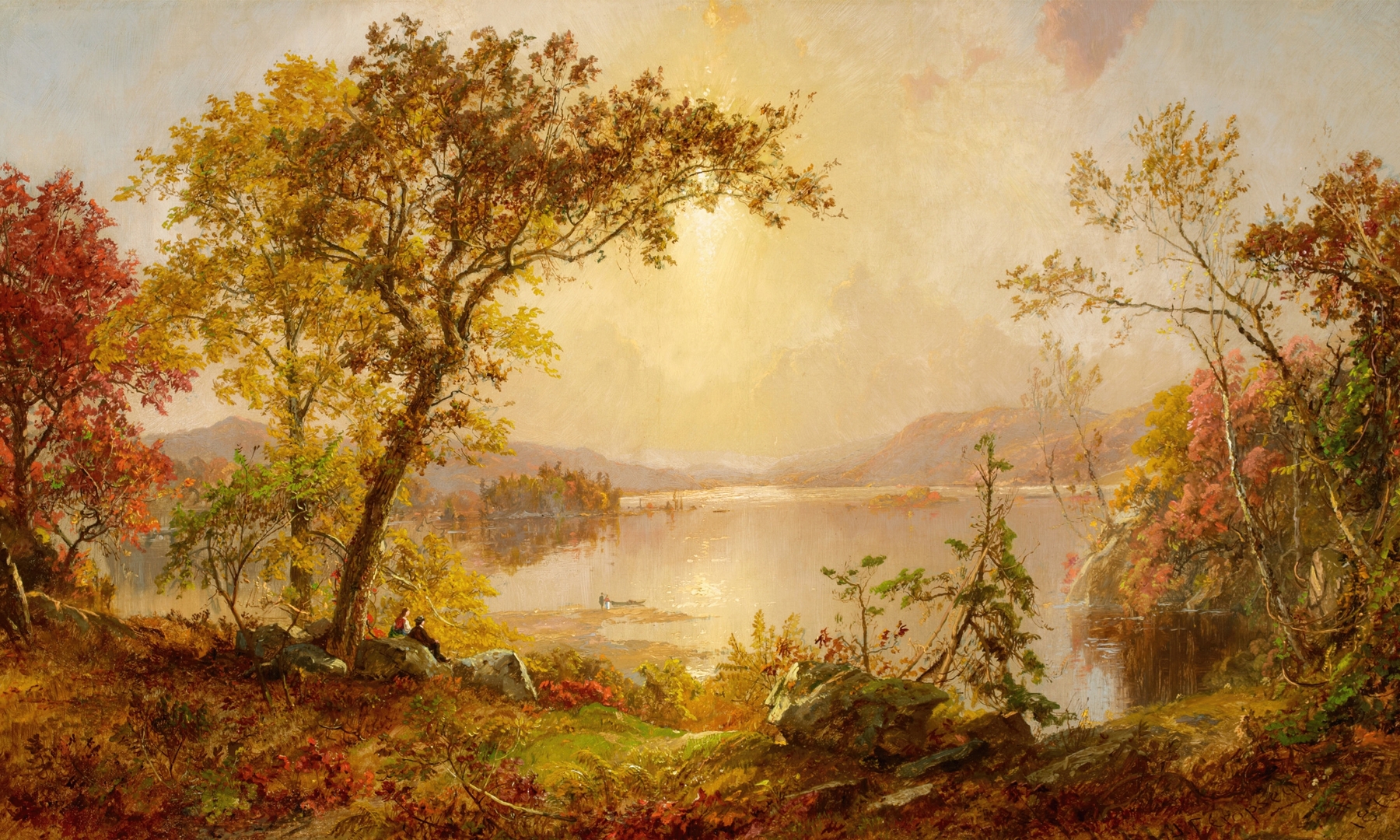
Can beauty exist without sorrow? In Jasper Francis Cropsey’s Greenwood Lake, Autumn on the Hudson, the ethereal landscape presents a world where each vibrant hue speaks of joy, yet whispers of an underlying melancholy. Look to the left, where the trees, ablaze with autumn’s fiery palette, seem to reach toward the sky, their branches a delicate interplay of light and shadow. The water mirrors this spectacle, reflecting the brilliant oranges and reds, while a serene tranquility envelops the scene.
Notice how the soft brushwork captures the fleeting essence of this moment, inviting the viewer into a dreamlike state where reality and illusion entwine. Yet, the painting harbors deeper contrasts. The luminous colors exude warmth, suggesting a moment of bliss, while the quiet, almost still water hints at the passage of time and the inevitability of change. The juxtaposition of vibrant life against the tranquil backdrop of the lake evokes a longing, a reminder that beauty is often ephemeral.
Each wave capturing the fiery foliage serves as a reminder of nature's cycle, where joy and sorrow coexist harmoniously. In 1875, Cropsey was deeply engaged with the Hudson River School's ideals, celebrating American landscapes through his work. At this time, he resided in New York, where the burgeoning art scene was shifting towards a focus on American themes. The country was experiencing both industrial growth and an increasing appreciation for natural beauty, a tension reflected in this artwork, where the allure of the landscape contrasts with its transient nature.