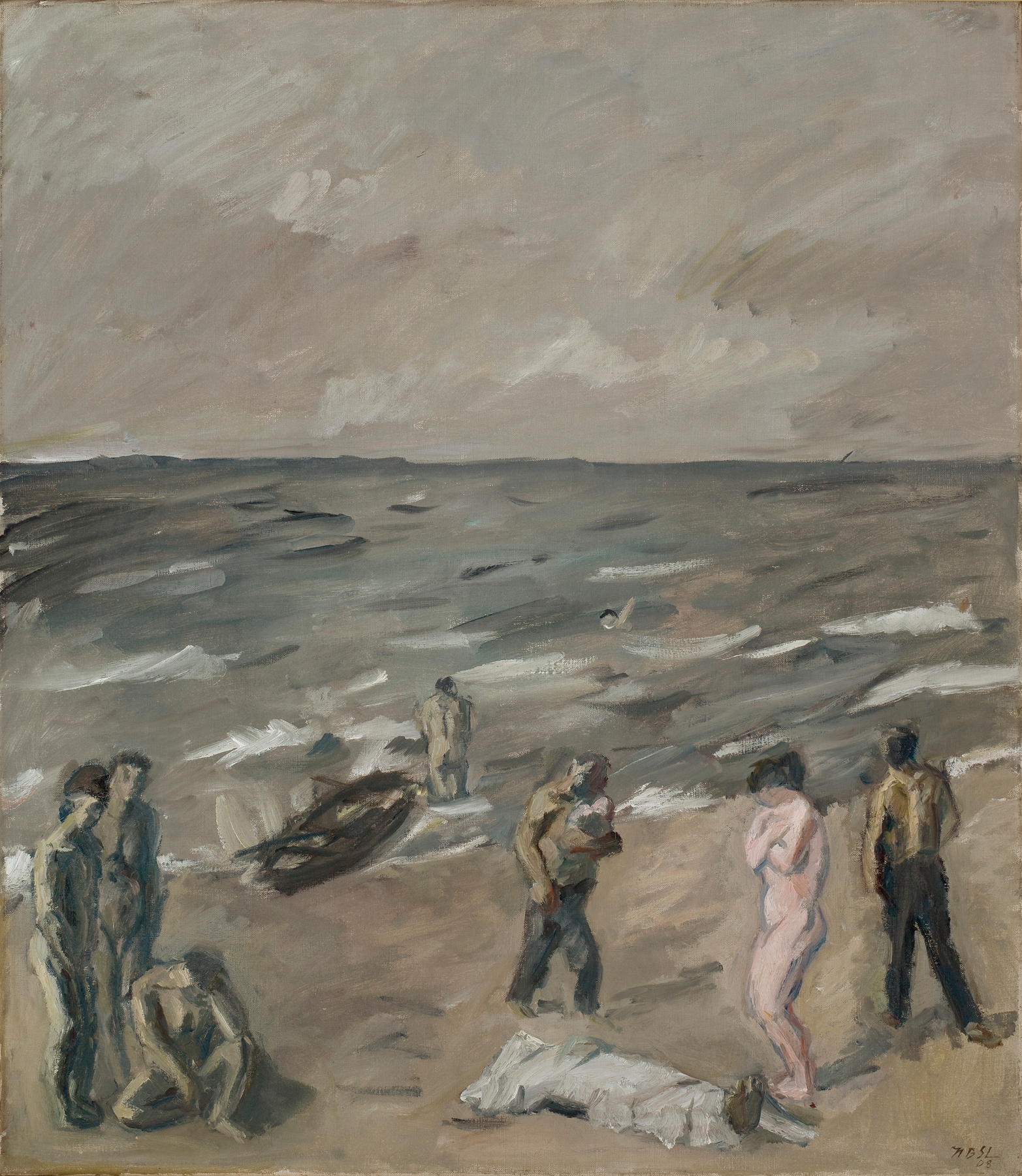
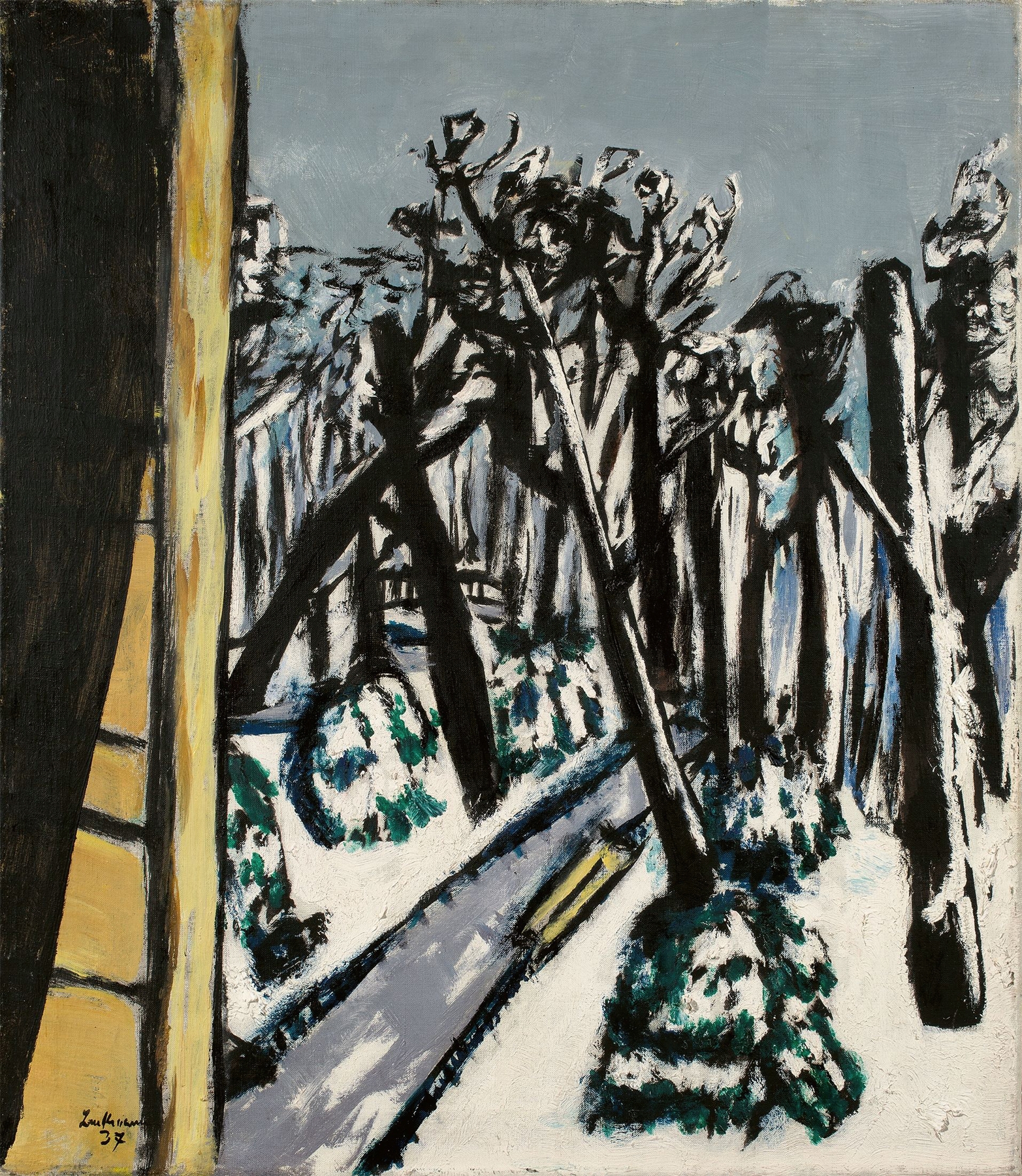
Grosser Steinbruch in Oberbayern (Large Quarry in Upper Bavaria) — History & Analysis
“Between color and silence, truth hides.” In the intricate layers of perception, illusion weaves itself through reality, challenging the viewer to discern what lies beneath the surface. Begin your exploration in the lower left corner, where rugged earth and muted tones blend into a chaotic foundation. Notice how the sharp angles and deep shadows create a sense of confinement, as if the quarry itself is a metaphor for the human condition. The raw, earthy palette contrasts with hints of vibrant color that emerge sporadically, inviting your gaze upward towards the expansive sky.
The looming clouds, tinged with ominous hues, seem to whisper of both beauty and despair enveloping this landscape, heightening the emotional tension. Within the jagged forms, Beckmann captures a poignant interplay between industry and nature. The quarry, as a symbol of exploitation, stands in stark contrast to the free-flowing elements above it. Yet, the sheer force of the earth is softened by the ethereal quality of the atmosphere, suggesting a fragile coexistence between the man-made and the natural world.
This tension resonates not only in the physical elements but also in the emotional undertone, where hope and desolation coexist, creating a rich narrative born from the artist’s personal experiences. In 1934, Beckmann found himself in a turbulent Europe, grappling with the rise of totalitarianism and the resulting chaos of the artistic landscape. Living in self-imposed exile in Amsterdam, he sought to convey the struggles of the human spirit through his work. Grosser Steinbruch in Oberbayern emerged during a time of profound reflection and transformation, echoing both his inner turmoil and the broader societal upheaval, as he utilized the quarry to symbolize the conflict between destruction and resilience.