Hanging the Laundry out to Dry — History & Analysis

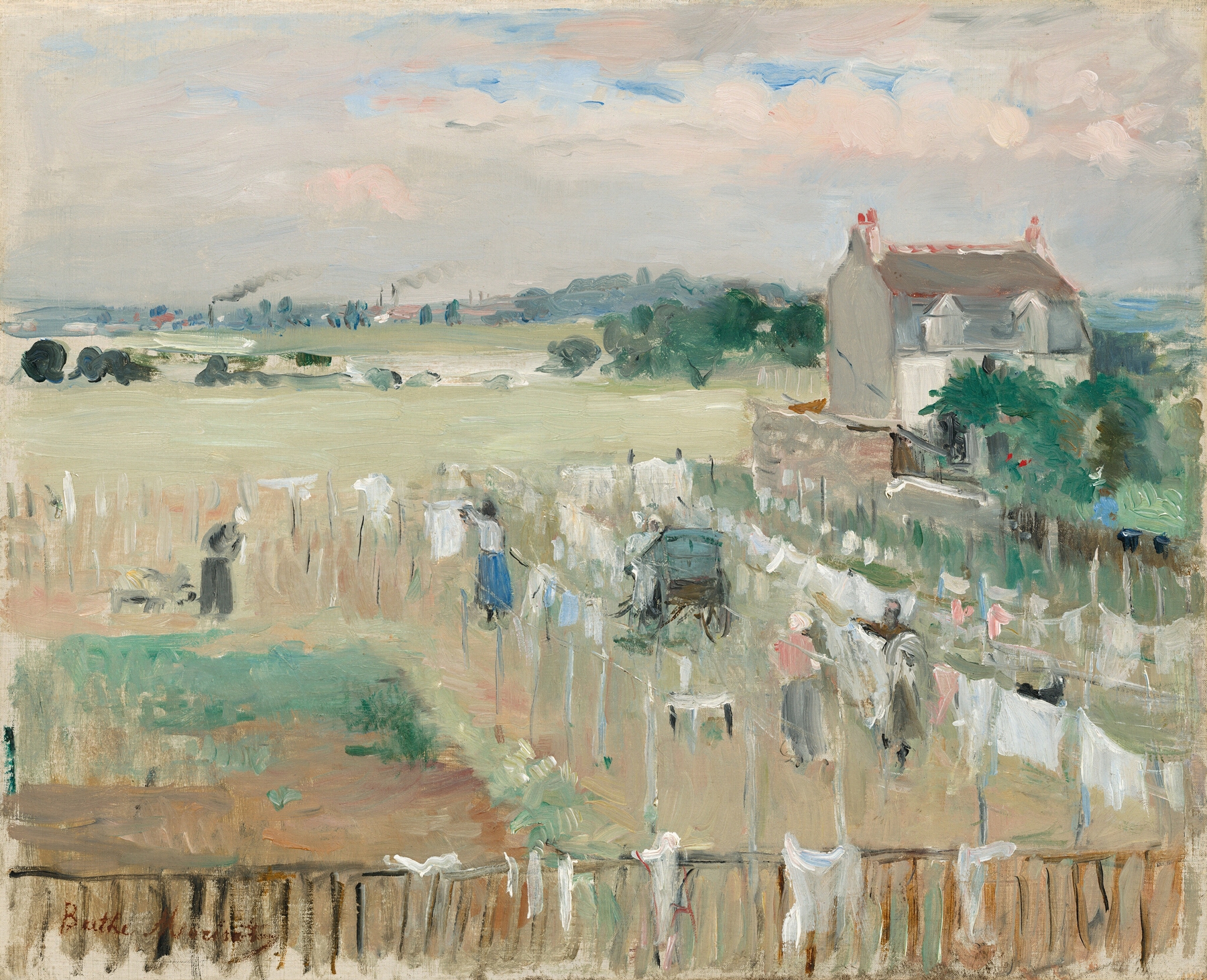
Did the painter know this moment would outlive them? In a world where the mundane often fades into oblivion, Hanging the Laundry out to Dry whispers the delicate threads of destiny. Look to the center of the canvas, where the gentle figures of women come to life, their movements fluid and purposeful. Notice the vibrant white sheets catching the sun, illuminated against a backdrop of soft greens and blues. The brushwork is both loose and deliberate, capturing a fleeting sense of intimacy as the women engage in a simple yet profound task.
Morisot’s deft use of light creates a shimmer that dances upon the fabric, almost transforming the ordinary into the extraordinary. Beyond the surface, the painting reflects deeper emotional currents—community, connection, and the cyclical nature of domestic life. The act of hanging laundry becomes a metaphor for shared burdens and collective resilience, framed by the serene yet active atmosphere. There’s a contrast between the brightness of the cloth and the shadowy corners of the garden, suggesting the balance of joy and labor that defines womanhood during this period.
Each detail, from the gentle curve of a tree branch to the fluttering fabric, speaks to an enduring harmony within the chaos of daily life. In 1875, the artist captured this moment in a private garden in Paris, during a time when women artists were beginning to carve out their space in a male-dominated art world. Morisot was not only a key figure in the Impressionist movement—she was also navigating personal challenges, including her role as a mother and a wife, all while striving for artistic recognition. This piece stands as a testament to her unique perspective, finding beauty in the everyday and asserting the significance of women’s experiences.