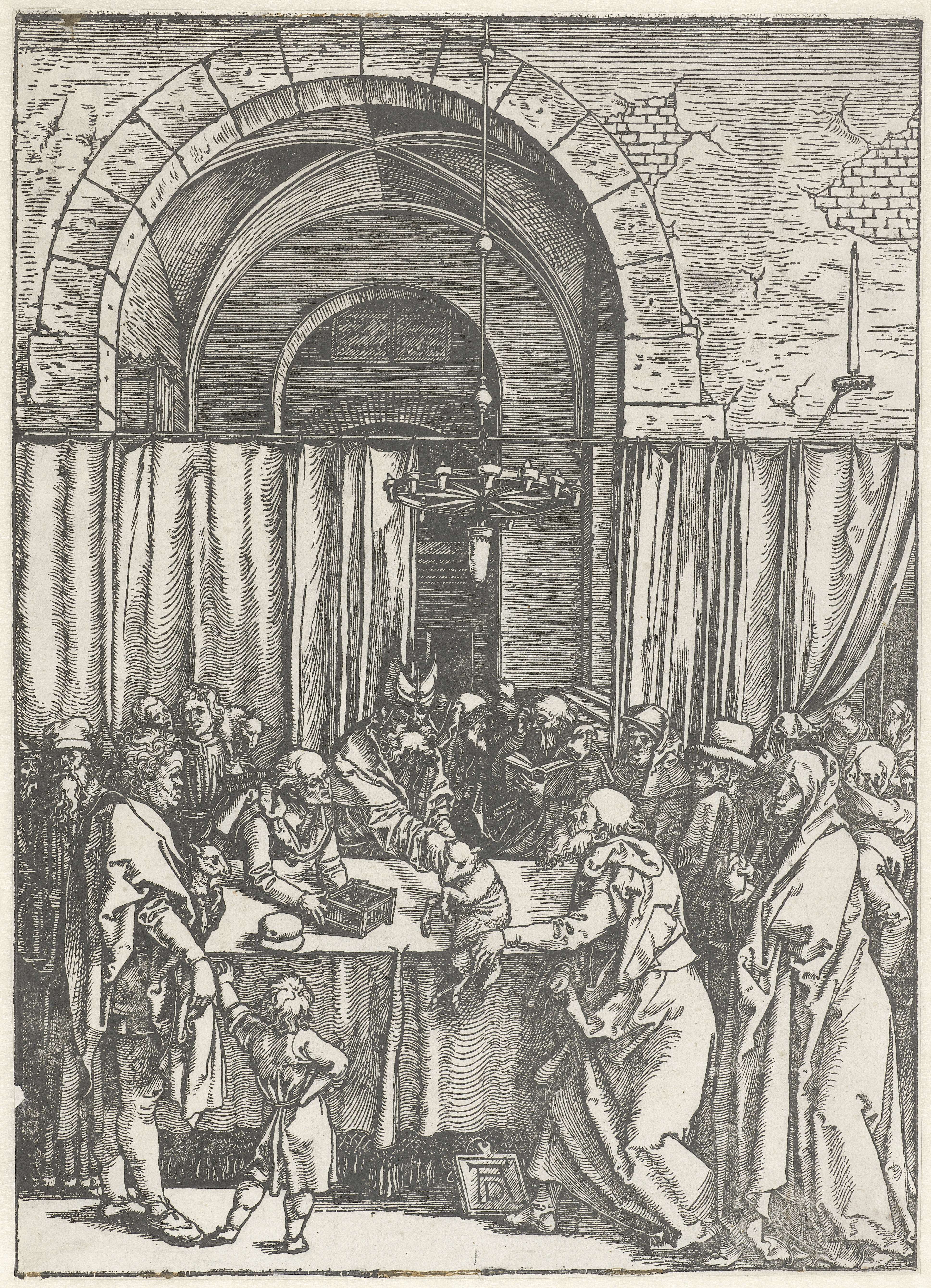
“Art reveals the soul when the world turns away.” In *Het offer van Joachim wordt geweigerd*, the tension between divine hope and human despair is poignantly captured, showcasing a moment of rejection that reverberates through time. Look to the left at Joachim, his face a study in anguish as he raises his hands in a desperate appeal, his garments rich with deep hues that contrast against the stark background. The light falls dramatically upon his face, illuminating the raw emotion that wrestles with the shadows of the surrounding figures. Notice how the arching structure frames this emotional conflict, drawing your focus into the heart of the narrative, while the warm tones of the sky suggest the presence of something greater just beyond comprehension. In this intricate tableau, the rejection of Joachim's offering transcends mere disappointment; it embodies the profound struggle between faith and doubt. The figures in the background, their expressions veiled with skepticism, juxtapose with the halo of divinity hinted at in the heavenly light. This tension mirrors the human condition, where hope often clashes with the harsh realities of existence, leaving viewers to contemplate their own path toward acceptance and belief. Albrecht Dürer created this work between 1502 and 1506 during a period marked by significant shifts in the art world, as the Northern Renaissance blossomed. Residing in Nuremberg, Dürer was exploring a fusion of traditional religious themes and emergent humanist ideas. This painting reflects both his mastery of detail and the prevailing cultural currents, making it a vital piece in understanding the evolution of art during his time.