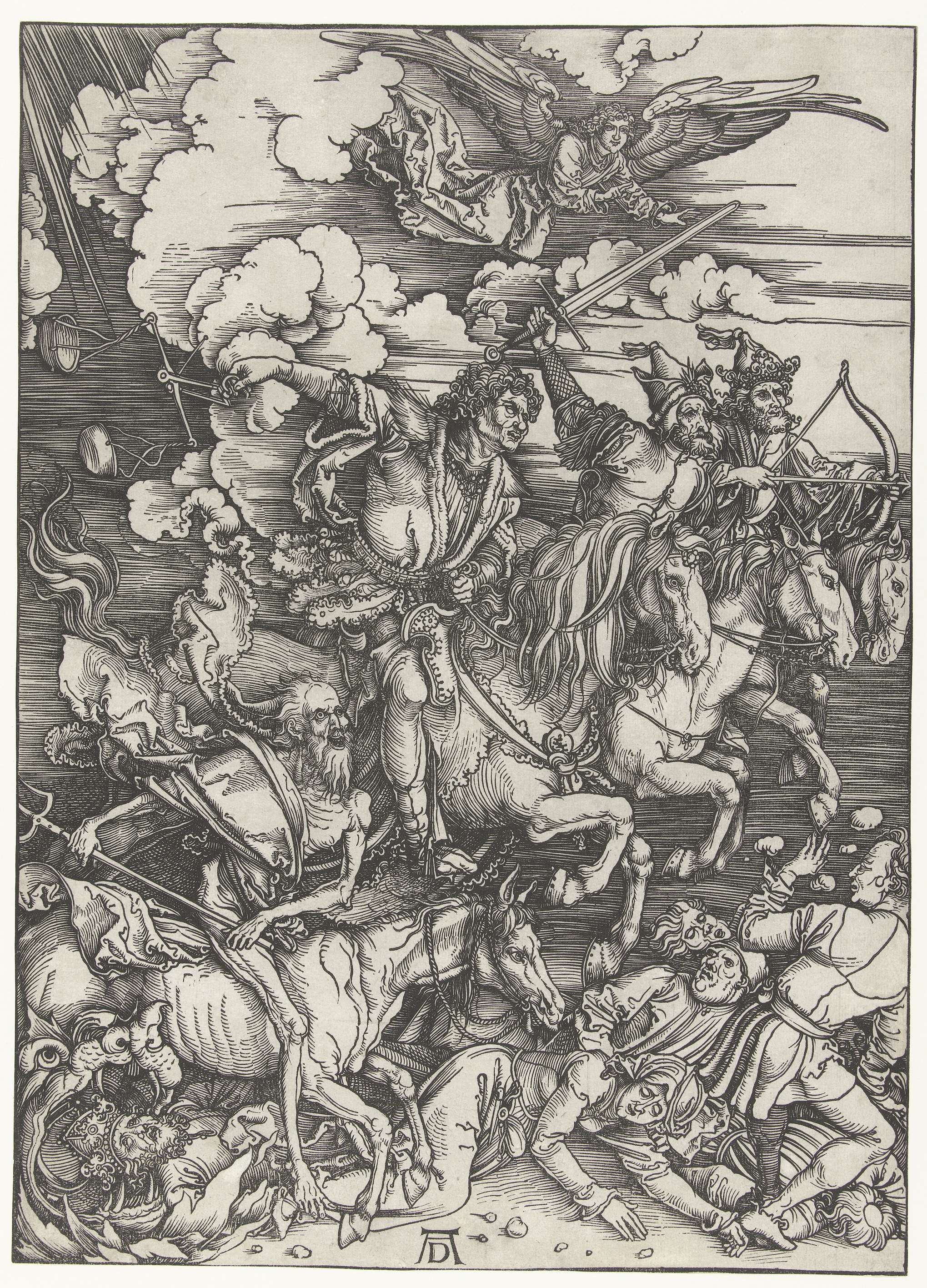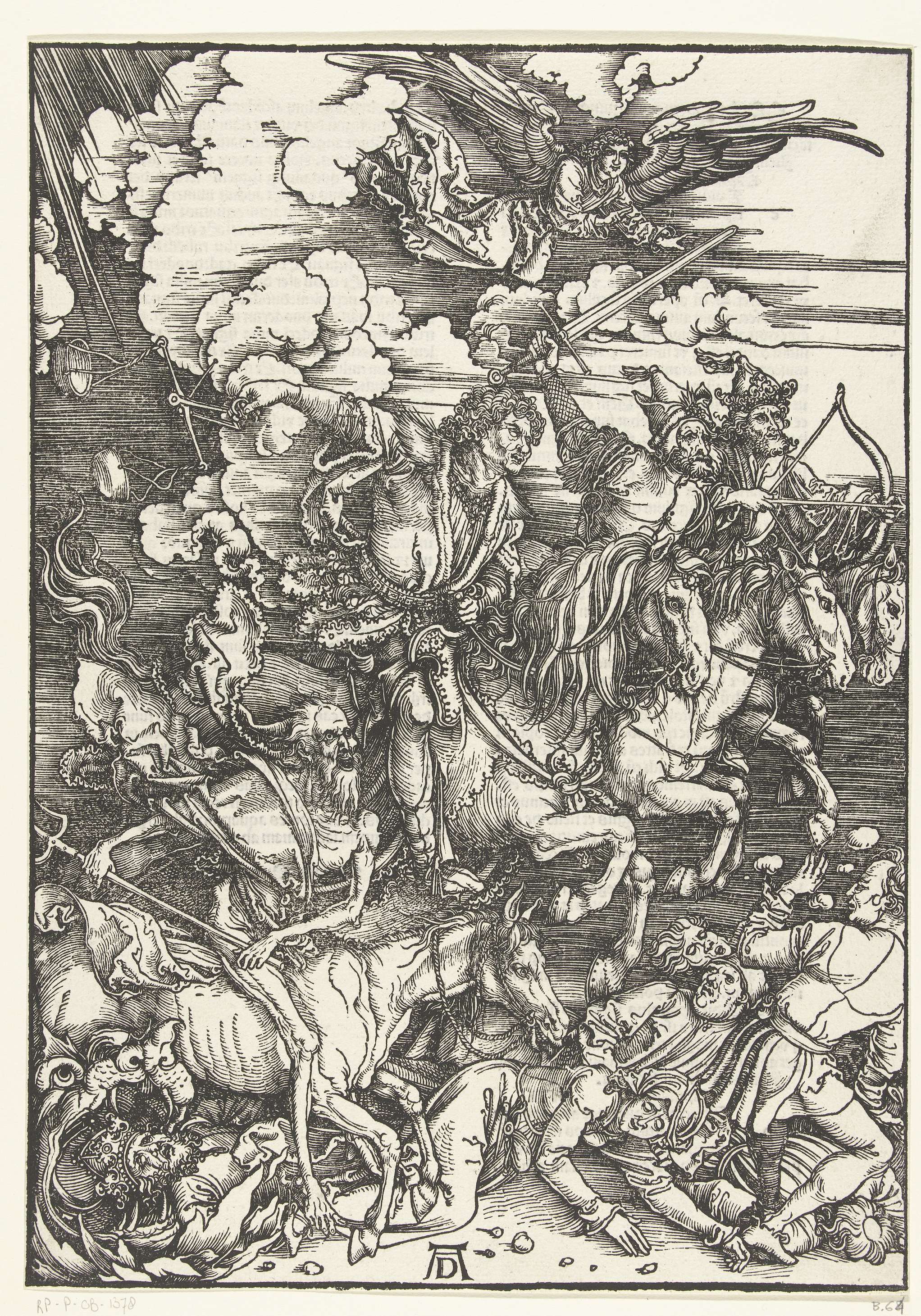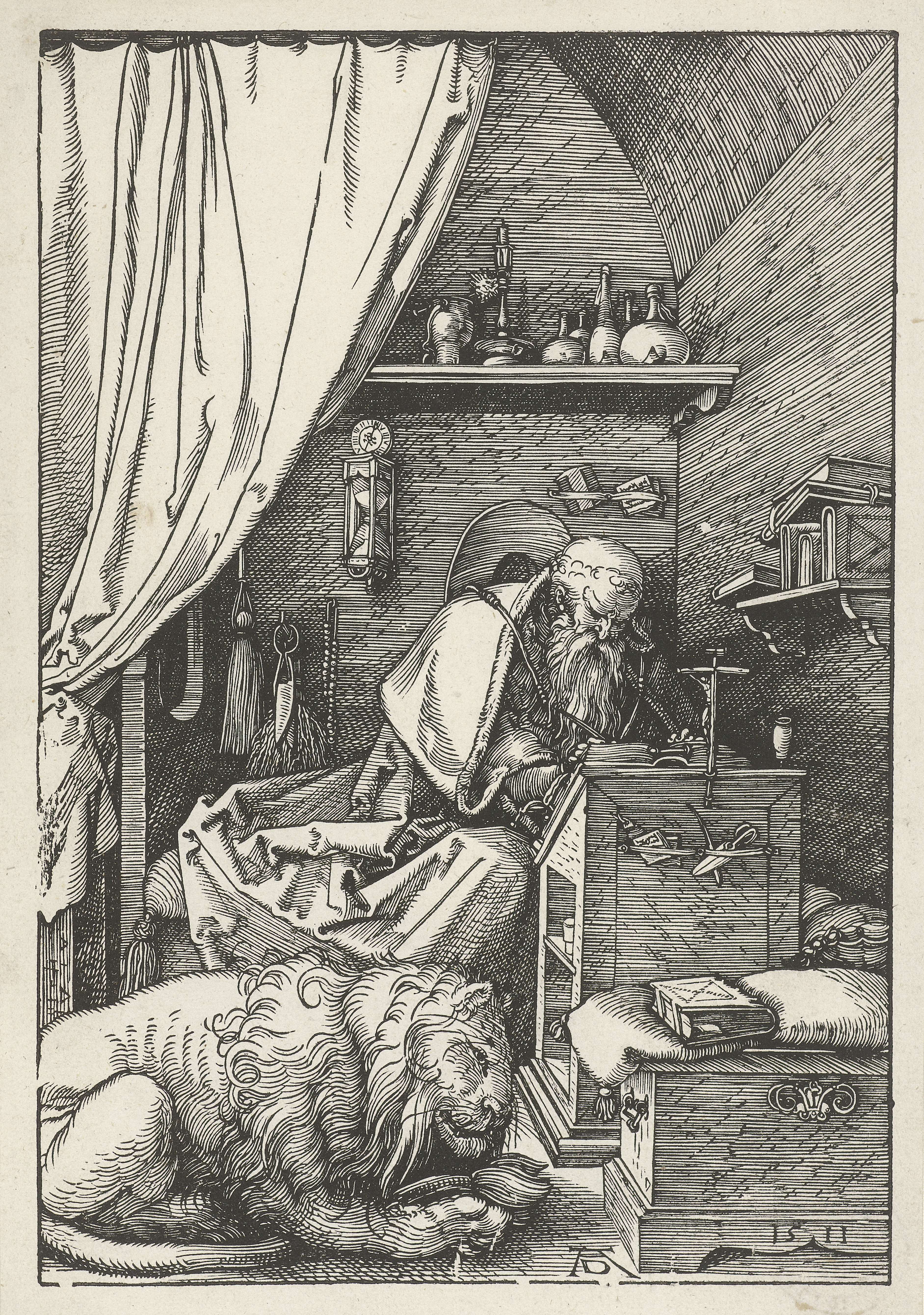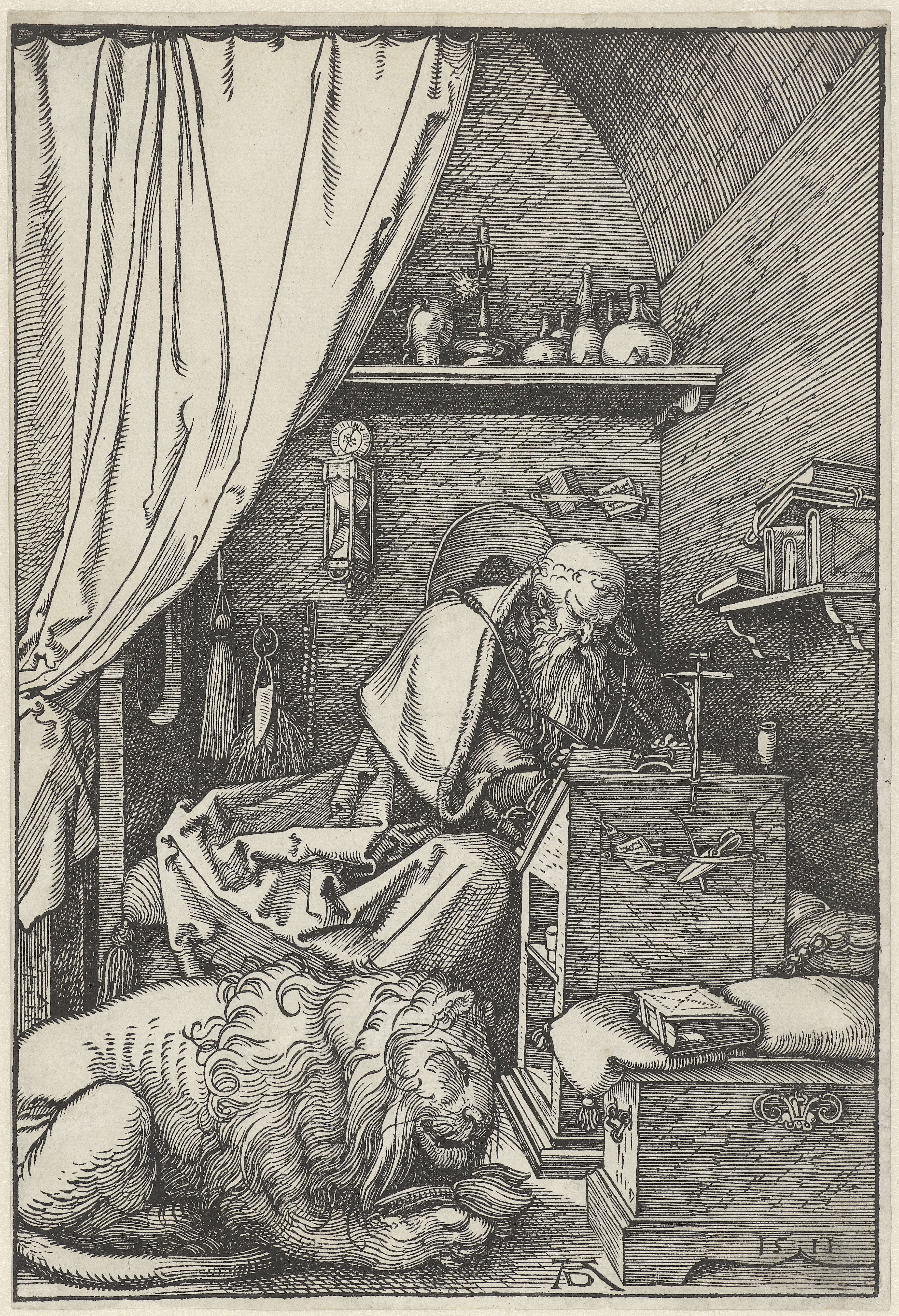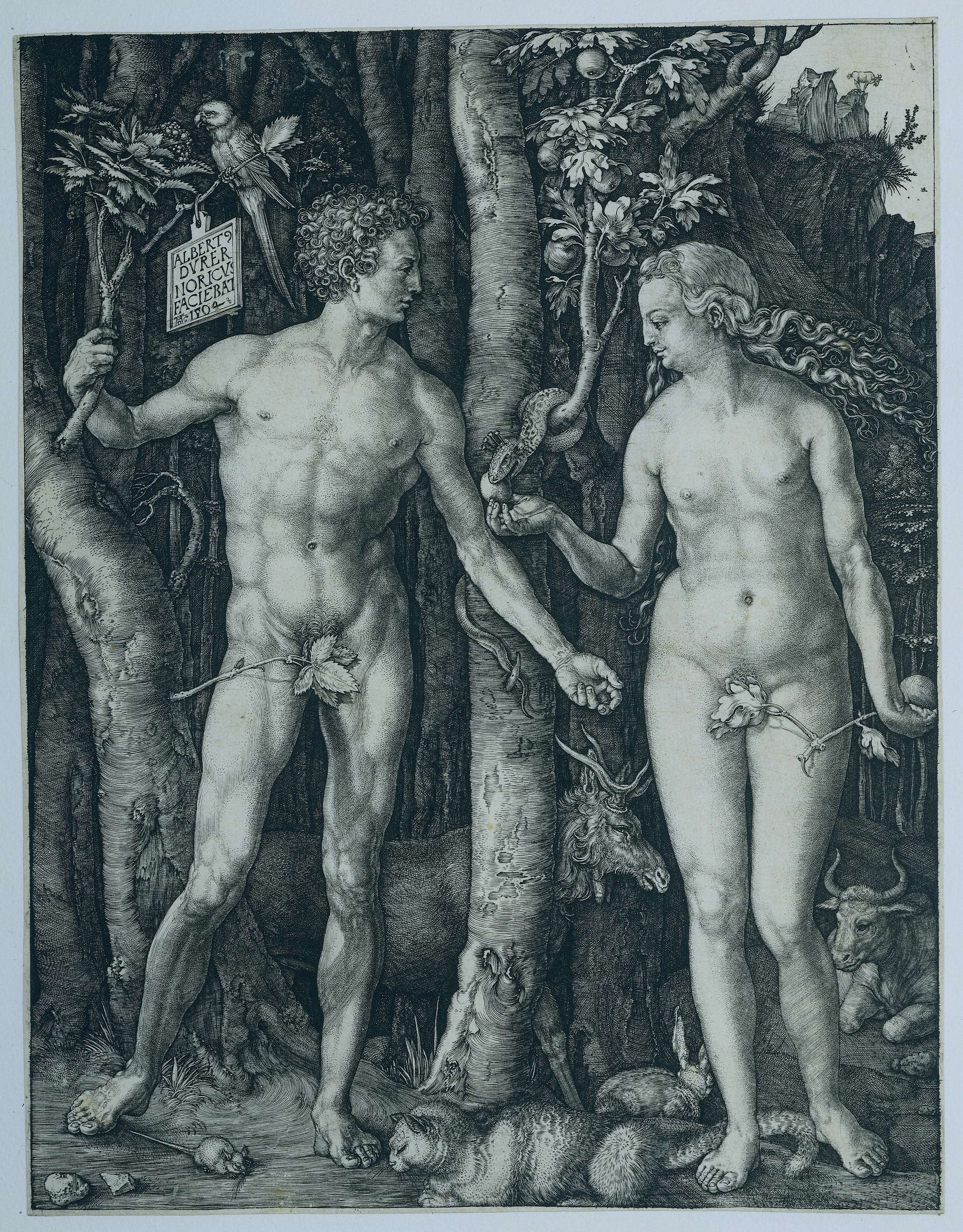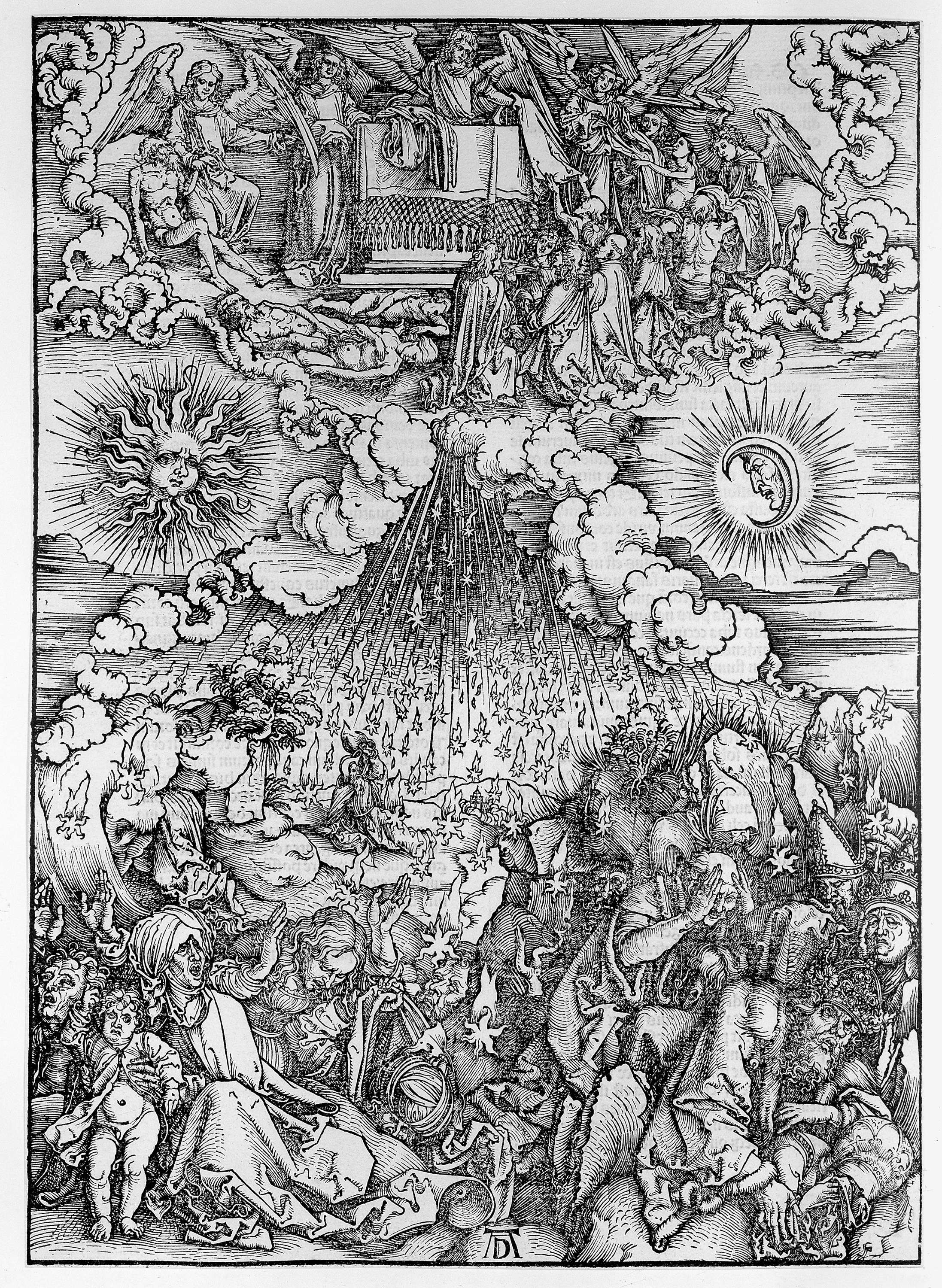
“To paint is to remember what time wants us to forget.” In the haunting silence of *Het openen van het vijfde en het zesde zegel*, emptiness speaks louder than words, as an expanse of desolation emerges. The viewer confronts the inevitability of mortality, wrapped in a shroud of intricate detail that invites both awe and sorrow. Look closely at the center, where the two seals are being opened; the figures emerging from the darkness exude a sense of somber anticipation. Dürer’s meticulous line work and tonal contrasts draw the eye, emphasizing the tension between light and shadow. The stark, almost monochromatic palette enhances the gravity of the moment, while the delicate rendering of each figure's expression reveals profound emotion, capturing an unsettling stillness that grips the viewer. In this artwork, the juxtaposition of hope and despair is palpable. The figures, poised as if caught between worlds, embody the struggle against the void, their gazes reflecting a yearning for understanding in the midst of chaos. The surrounding emptiness serves as a reminder of existential dread, yet there lies a faint glimmer of transcendence woven into their expressions, suggesting a connection to the divine that remains just out of reach. Created in 1511, during a period of personal and artistic evolution for Dürer, the piece reflects the artist's deep engagement with themes of spirituality and human experience. Having returned to Nuremberg after travels in Italy, he was influenced by Renaissance ideals while grappling with the emerging Protestant Reformation and its implications on faith. This artwork captures the essence of a transformative moment, resonating with the duality of life and death that persists through time.