Hiver en banlieue — History & Analysis
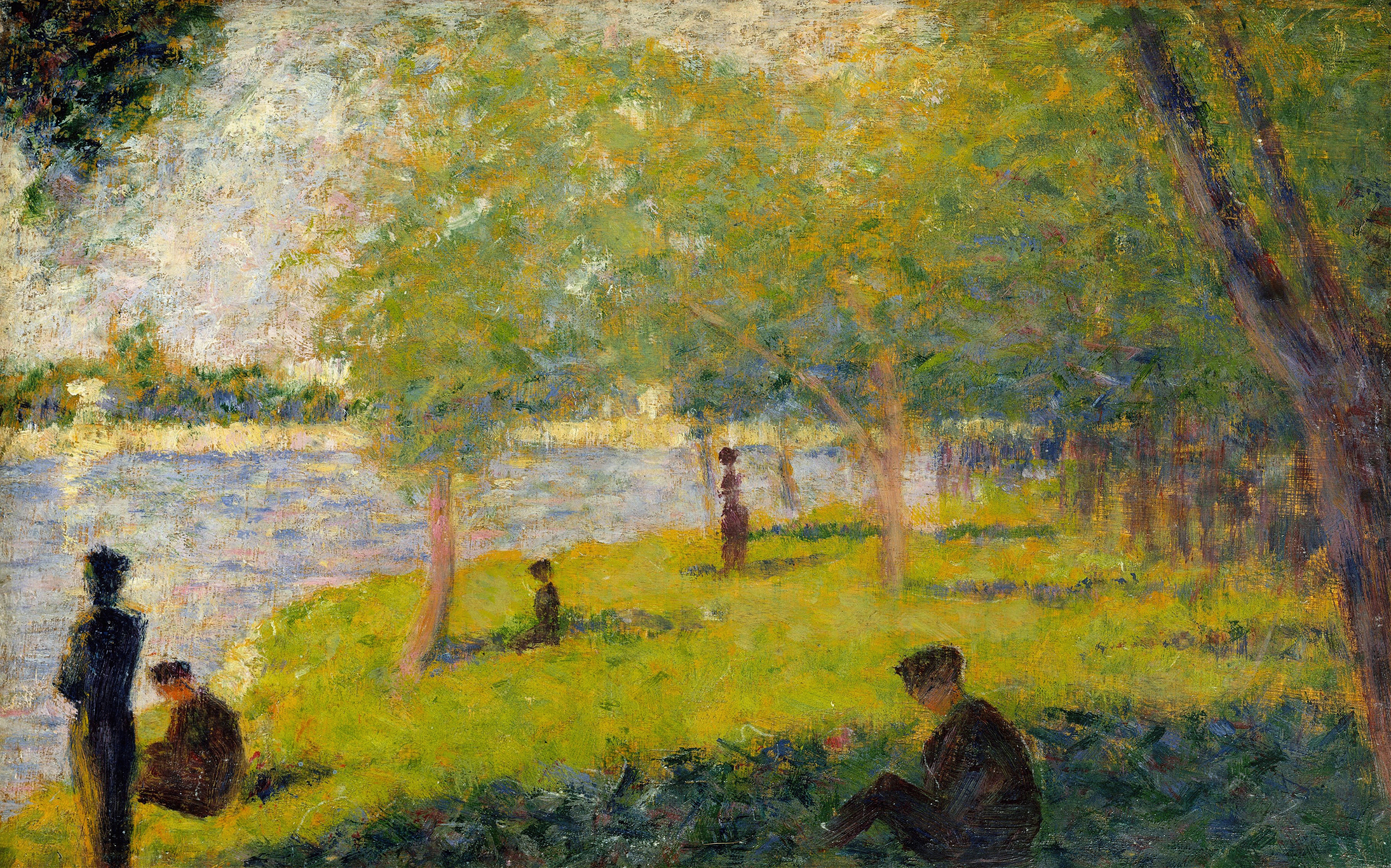
“To paint is to remember what time wants us to forget.” In the delicate balance of Seurat's world, a tranquil stillness invites contemplation amidst the bustle of life. Look to the left at the gentle curve of the street, where figures occupy the foreground, cloaked in the muted tones of winter garments. The soft interplay of blues, greens, and browns creates a harmonious palette, while dappled light illuminates the snow-covered ground, inviting you to feel the chill in the air. Notice how Seurat's precise dots of color blend into lively forms, each character etched with a sense of purpose, yet distinctly isolated in their own solitude.
As you move across the canvas, realize the contrast between warmth and cold—each figure lost in thought, wrapped in their own world. The looming trees provide a stark framing against the pale sky, their branches almost skeletal, resembling the fragility of human connection in a sprawling urban landscape. This juxtaposition of separation and unity resonates deeply, a reminder of the delicate balancing act of existence in the face of inevitable change.
In 1883, Seurat was emerging from the academic circles of Paris, deeply influenced by his studies in color theory and the avant-garde movement. Painting Hiver en banlieue during a time when urban life was rapidly transforming, he captured the essence of a society on the brink of modernization. This work reflects not only his personal artistic journey but also the broader narratives unfolding in the bustling world around him.