Hot Springs of Gardiner’s River, Yellowstone — History & Analysis
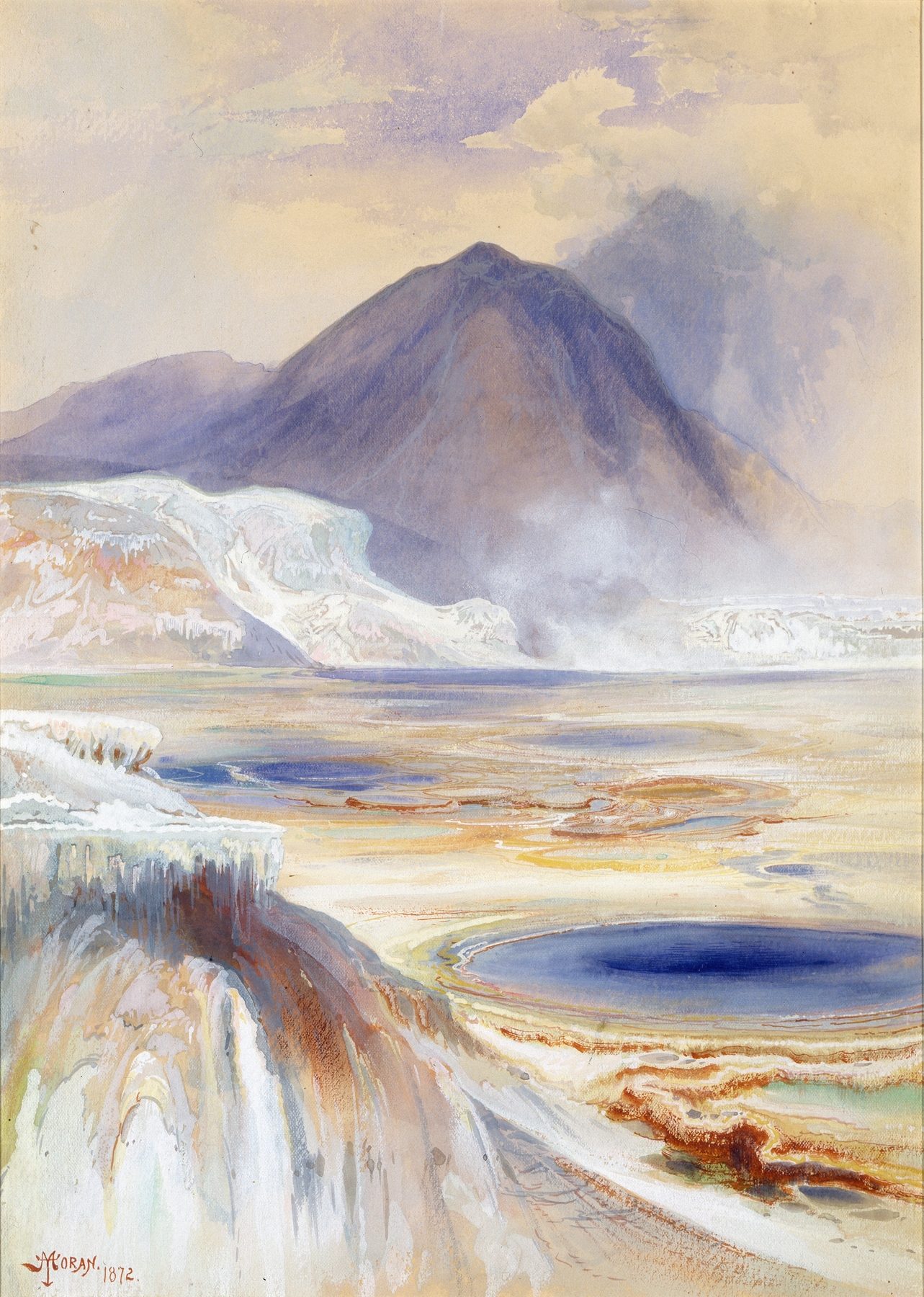
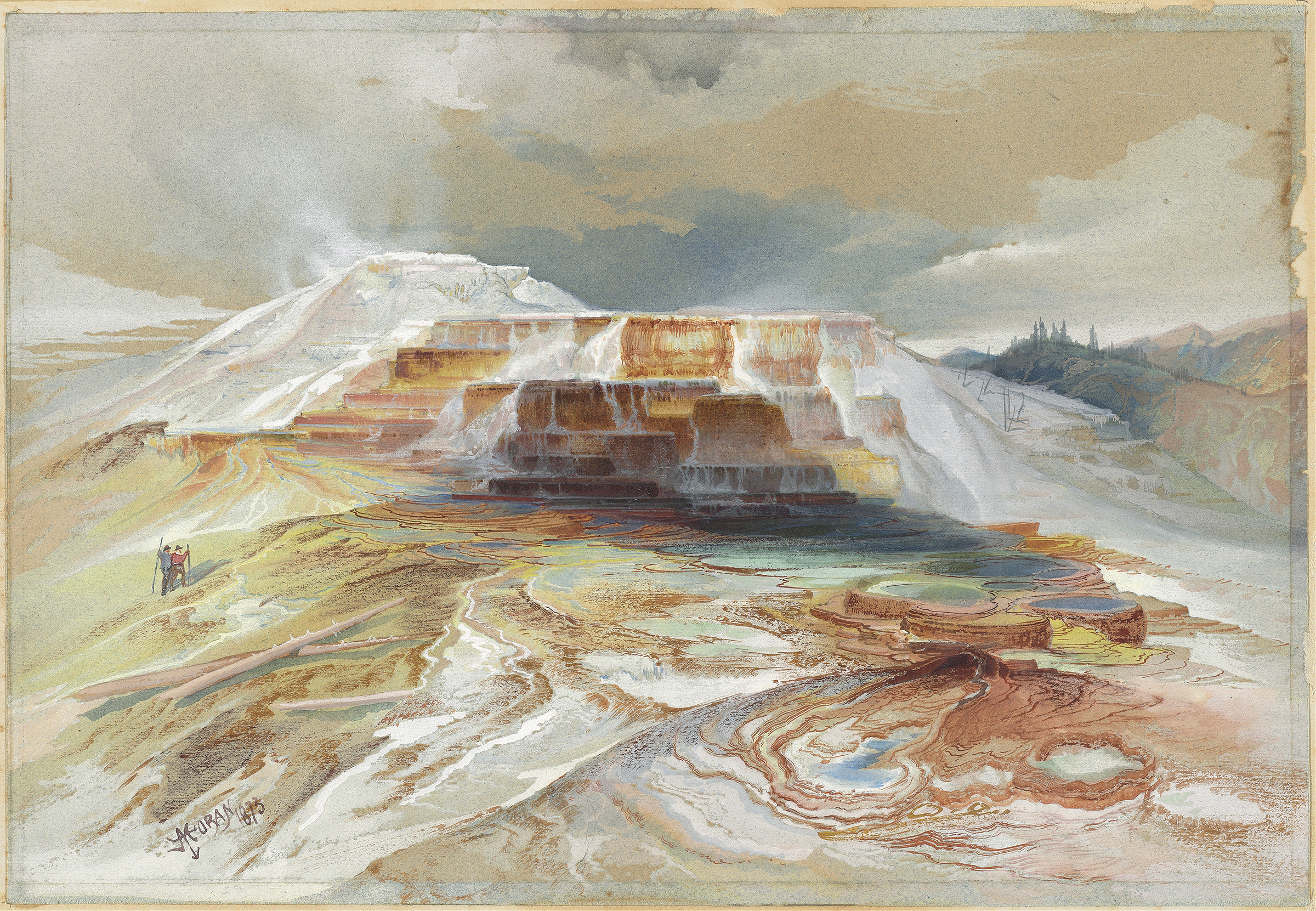
What if beauty was never meant to be finished? The vivid yet ephemeral qualities of nature evoke a fear of its transience, a reminder that every stunning moment is a fleeting whisper. Look to the left at the vibrant blue waters, swirling and foaming as they cascade gently into the pool below. Notice how the mineral-rich earth transitions from bright azure to soft oranges and earthy yellows, illustrating the interplay between heat and water.
The artist masterfully employs chiaroscuro, creating a dynamic contrast between light and shadow, which brings the landscape to life while simultaneously evoking a sense of both tranquility and volatility. In the midst of this natural wonder, contrasts emerge: the serenity of the hot springs against the potential chaos of volcanic activity lurks just beneath the surface. The intricate details of the rocks and foliage invite contemplation of time’s passage, while the warmth radiating from the water speaks of renewal—a duality that captures both the joy and fear inherent in nature's beauty. The painting thus becomes a metaphor for life itself, where stunning moments are often underscored by an awareness of impermanence.
In 1873, while creating this work, the artist was deeply engaged with the American landscape, capturing the awe-inspiring beauty of the West. This period marked a surge of interest in national parks and the preservation of natural wonders, as the United States grappled with its identity and the impacts of industrialization. Moran’s work reflects not only his personal journey but also the collective desire to understand and protect the wilderness that defines a nation.