Hot Springs of Gardiner’s River, Yellowstone — History & Analysis
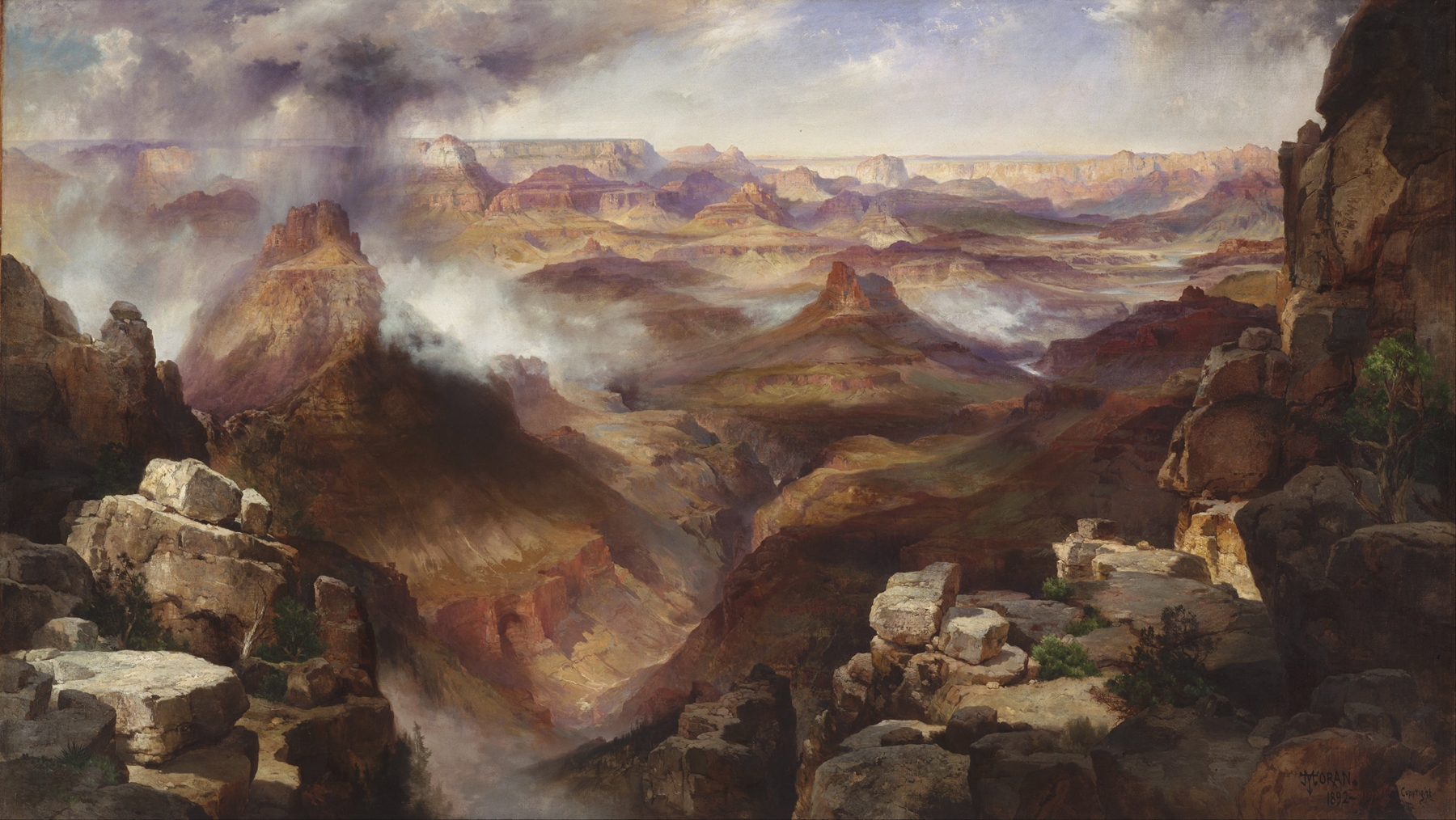
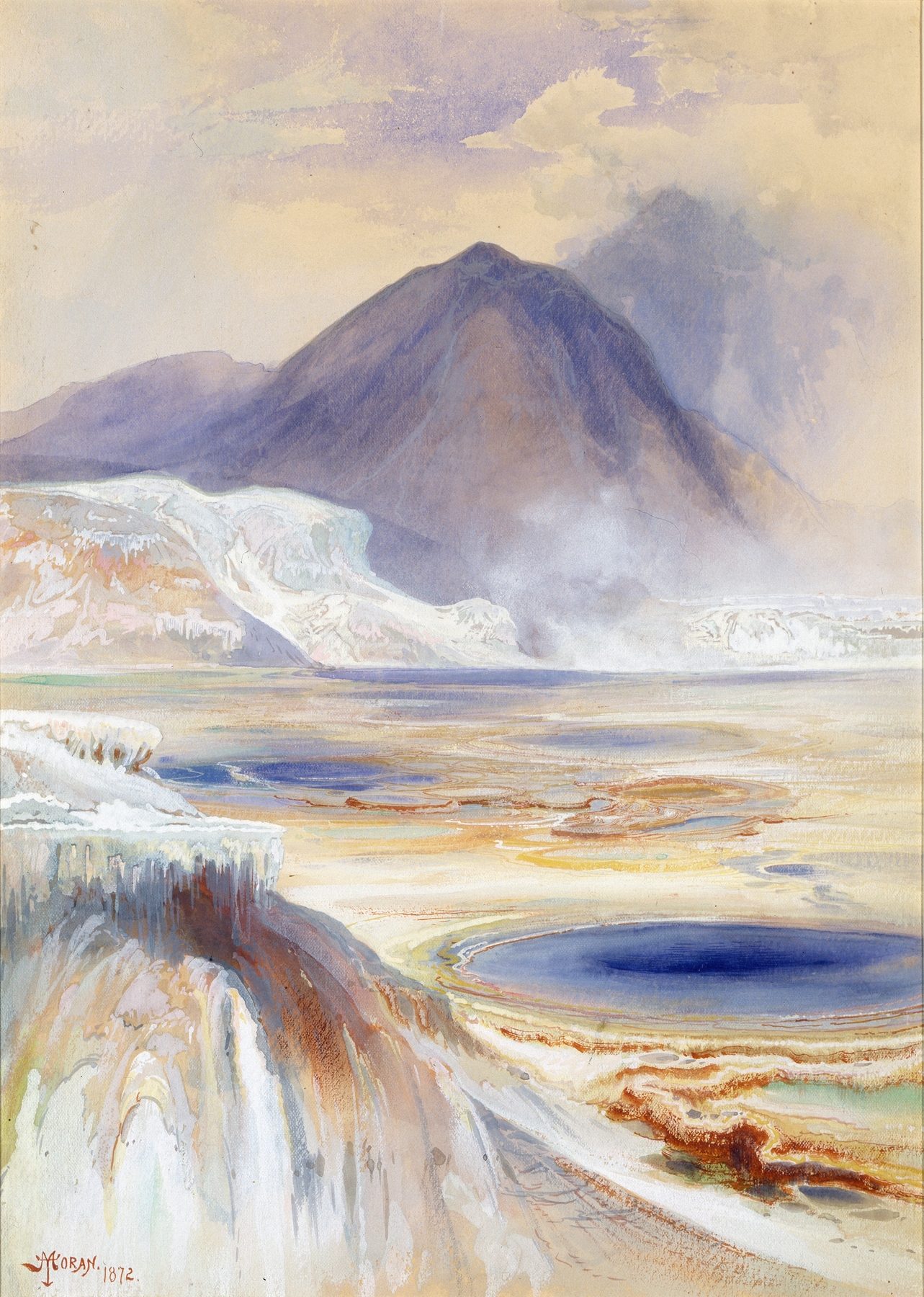
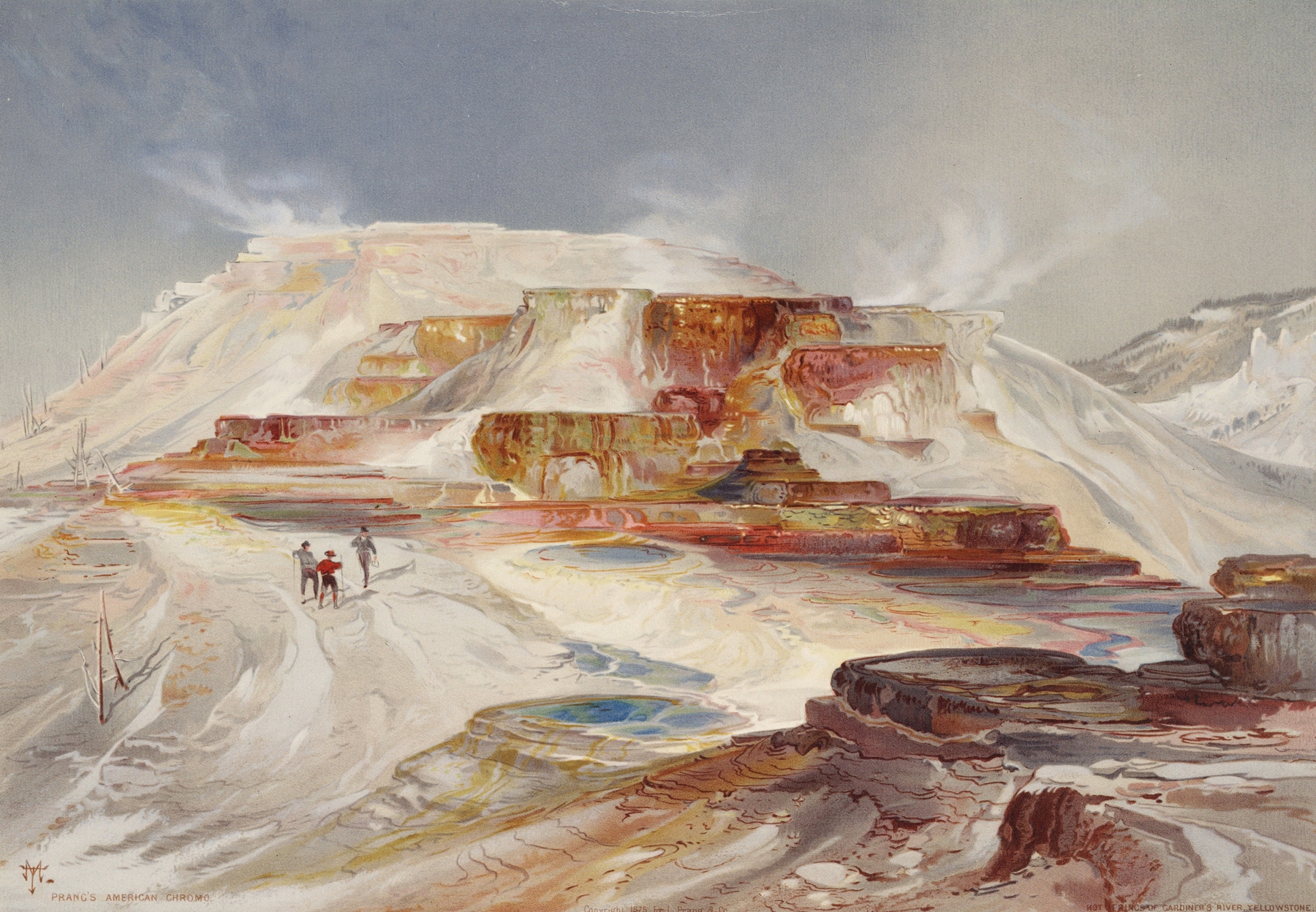
Can paint confess what words never could? In the swirling colors of nature's raw beauty lies a palpable tension, an unspoken fear of the unknown that transcends the canvas. Look to the center, where vibrant blues and greens erupt like whispers of steam from the hot springs. The luminescent hues stand in stark contrast to the earthy browns and deep shadows that frame the scene. Moran’s brushwork invites the viewer’s eye to traverse the undulating contours of the land, echoing the heated tumult beneath.
The sunlight filters through the rising steam, creating pockets of ethereal light that dance over the surface, capturing the moment’s luminosity and warmth. Yet, beneath this surface beauty, there is a deeper, more unsettling narrative. The juxtaposition of the tranquil landscape with the boiling springs evokes a sense of dread; the vibrancy masks a volatile nature that could easily turn violent. It is the interplay of life and danger — the beauty of the natural world coexists with the fear of its unpredictable power.
Observers may feel both awe and trepidation, caught between the allure and the peril it embodies. Thomas Moran painted Hot Springs of Gardiner’s River, Yellowstone in the summer of 1875, during a pivotal moment in American art history when the Romantic movement was increasingly intertwining with the burgeoning national identity. Having recently returned from a trip to Yellowstone, he sought to capture not just the beauty of the scenery but the spirit of exploration and the sublime terror that such vastness can inspire. This work reflects a crucial time when nature was seen both as a source of inspiration and a reminder of humanity's fragile place within it.