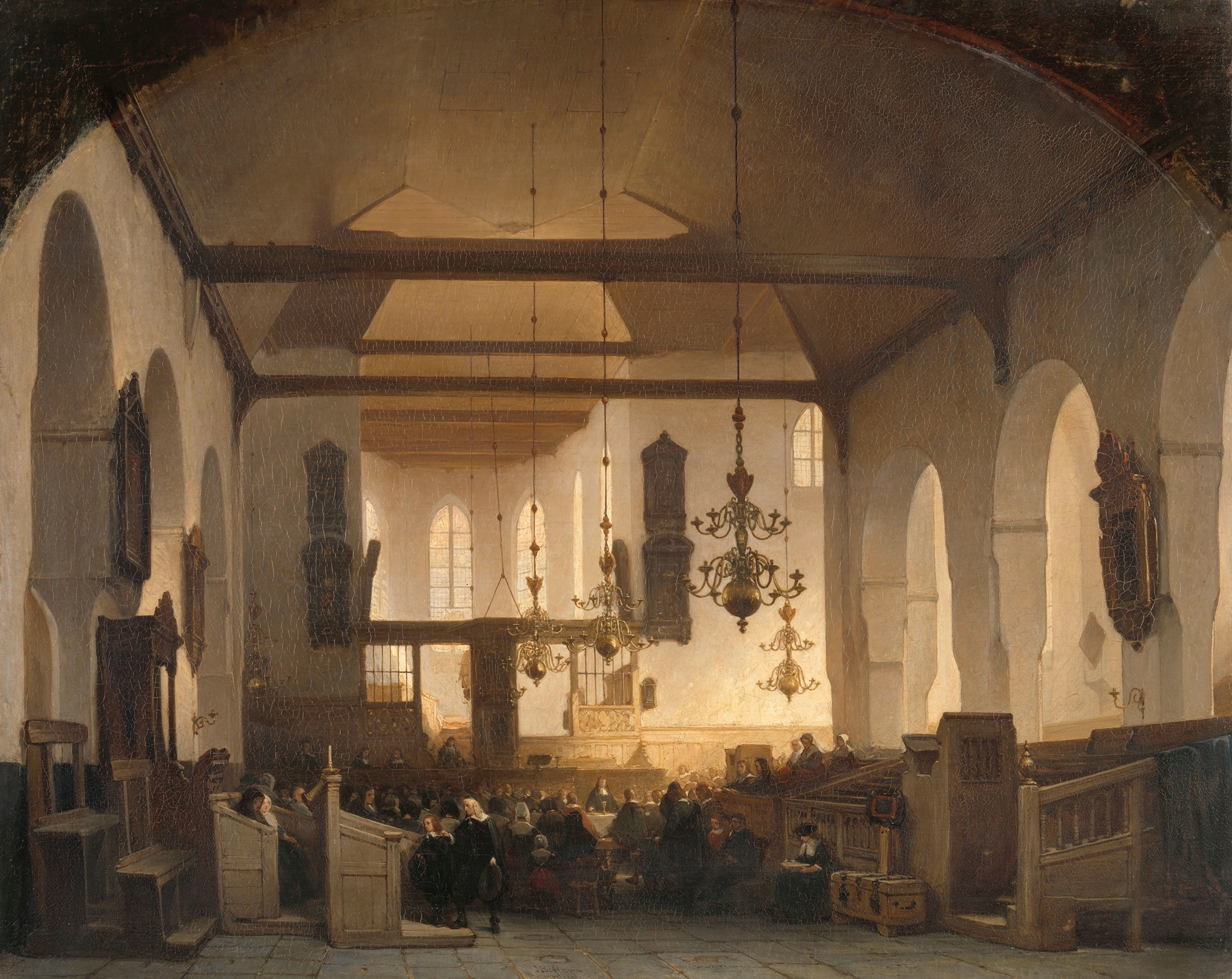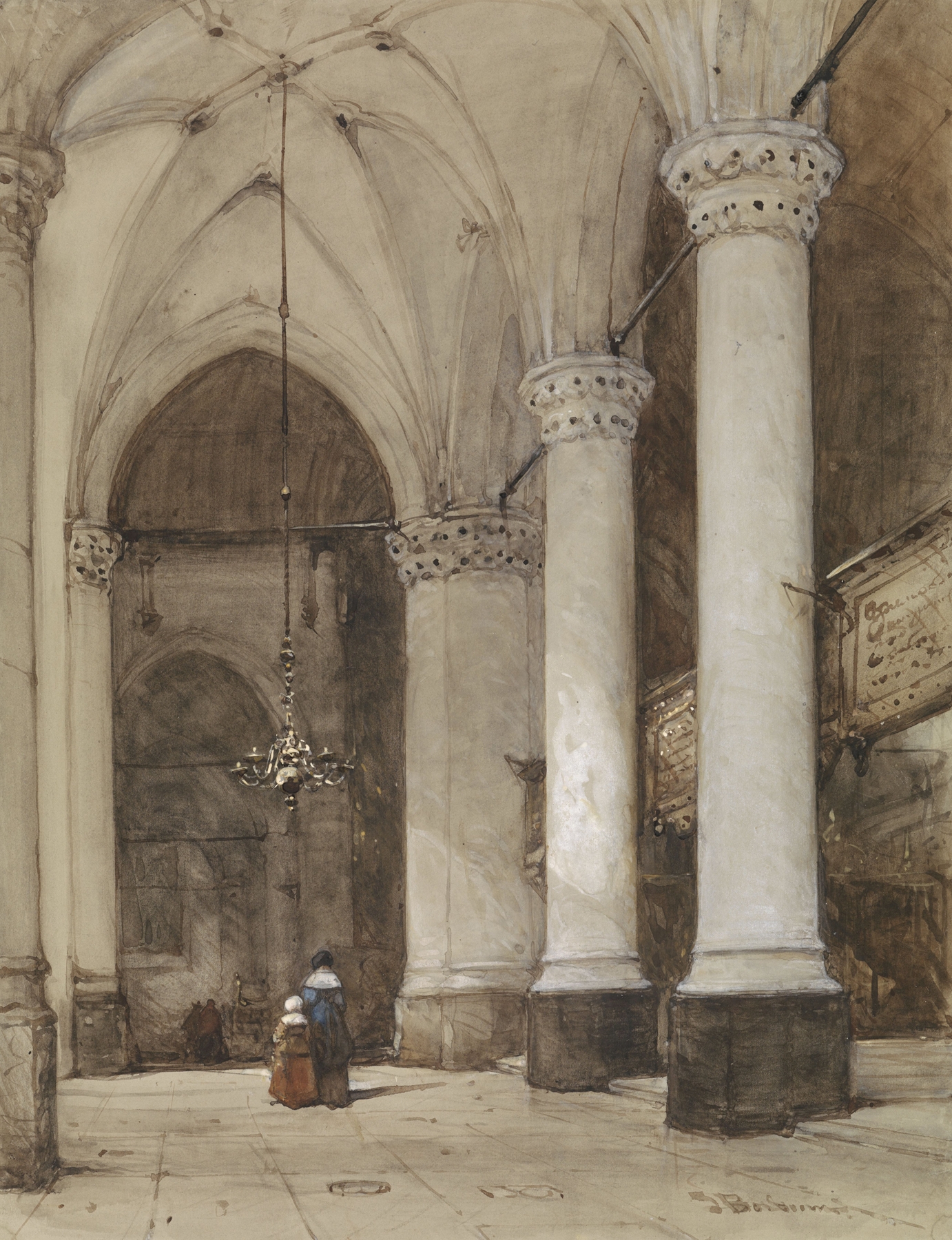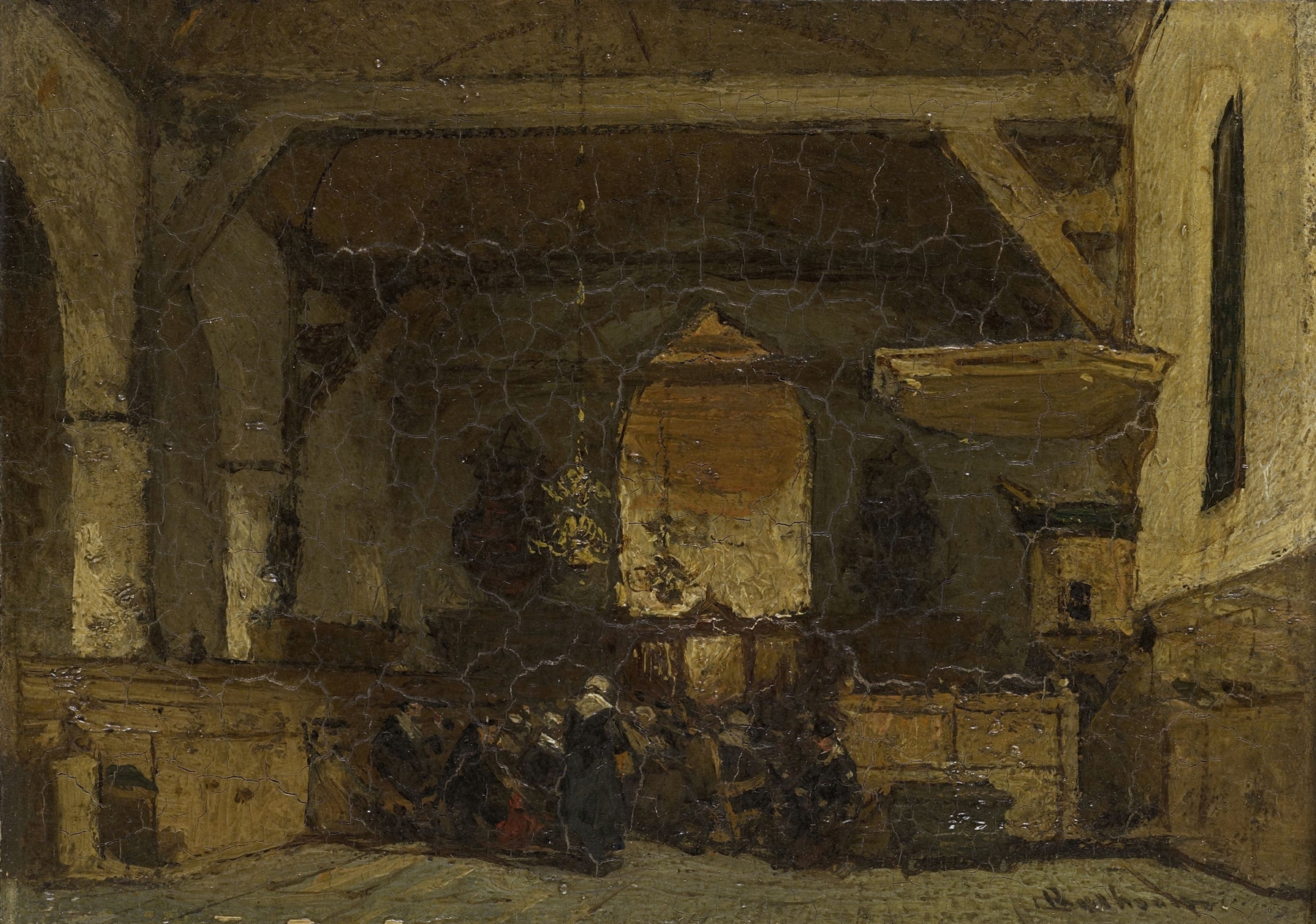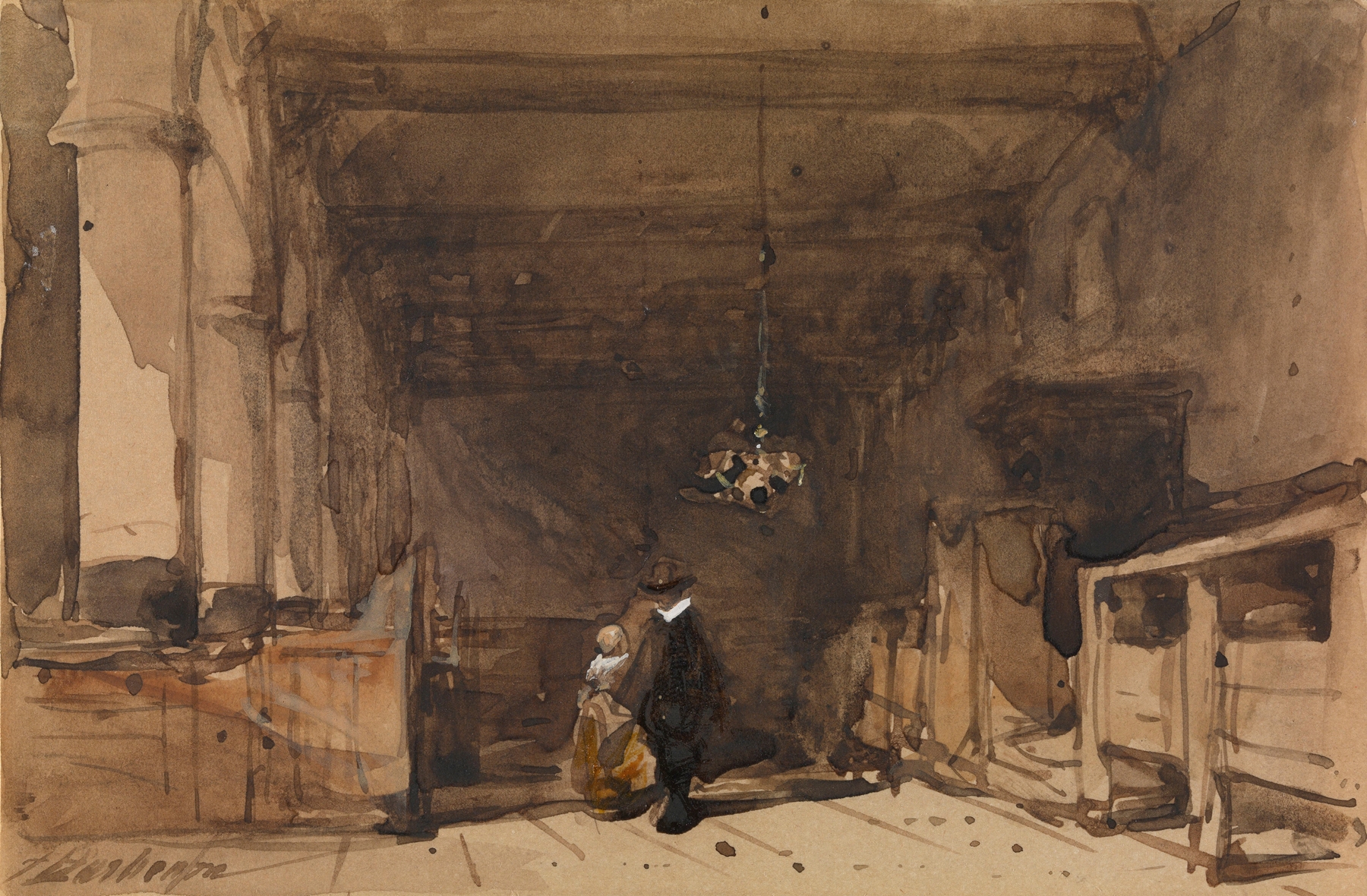
Interior of the ‘Hooglandse’ Church, Leiden — History & Analysis
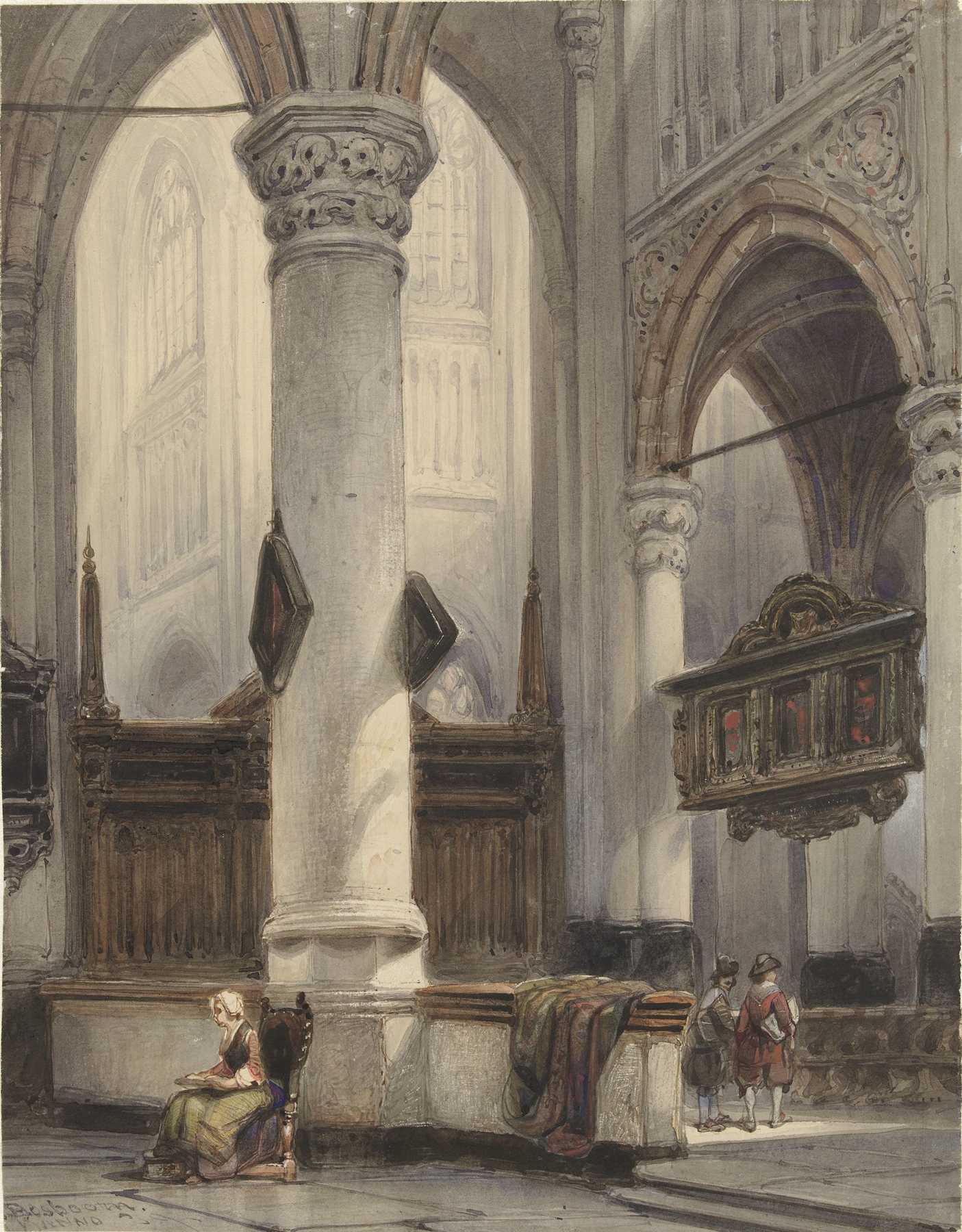
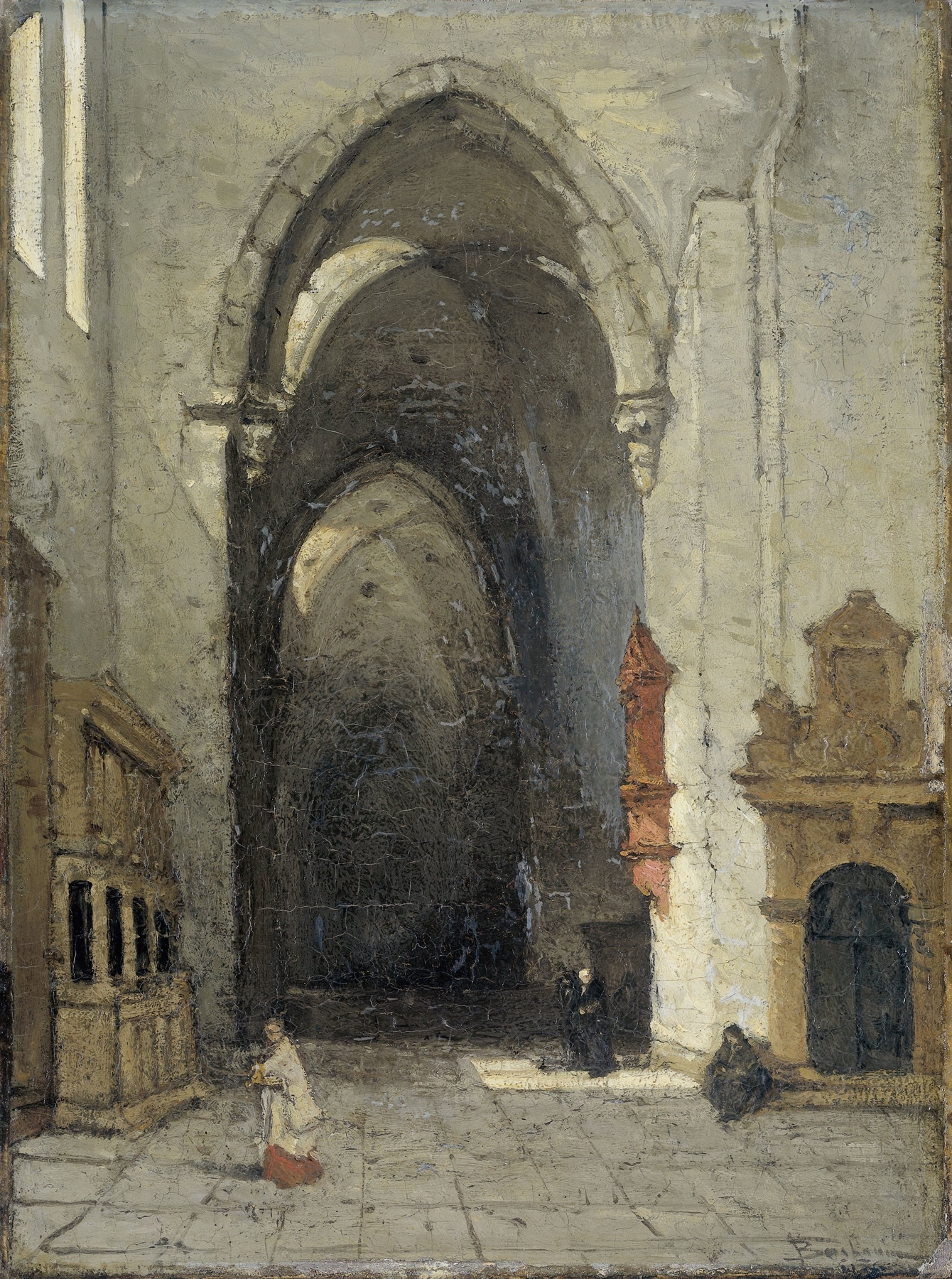
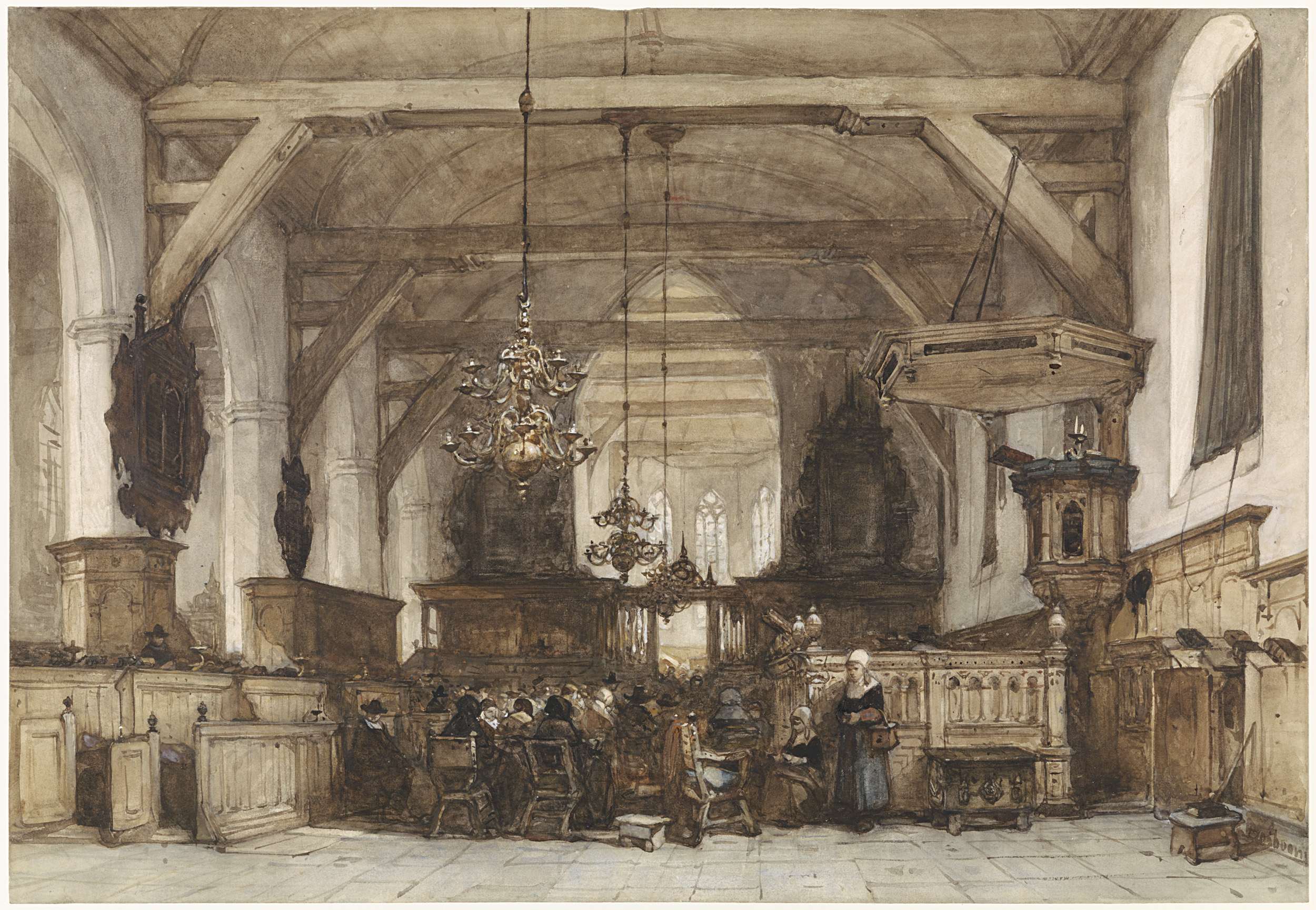
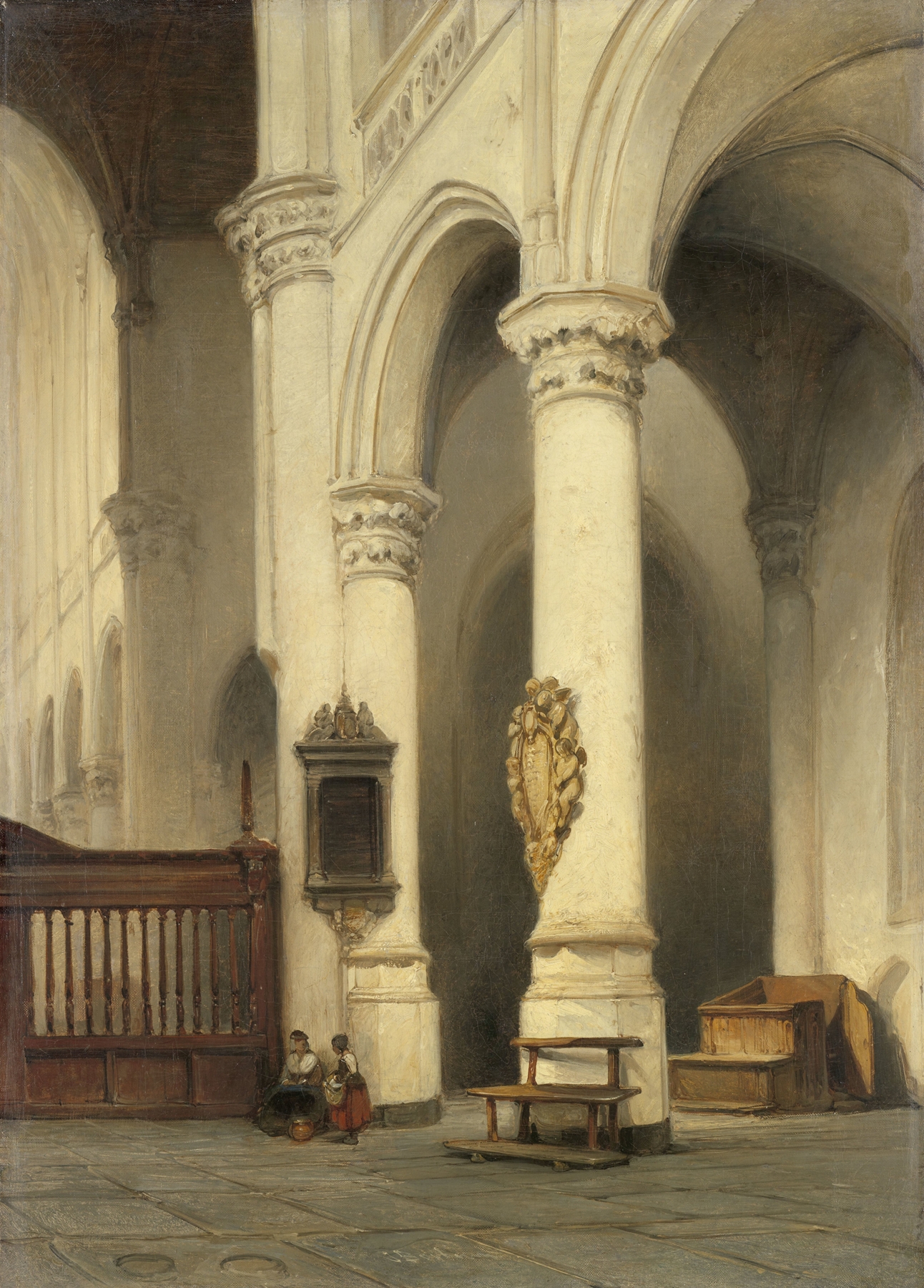
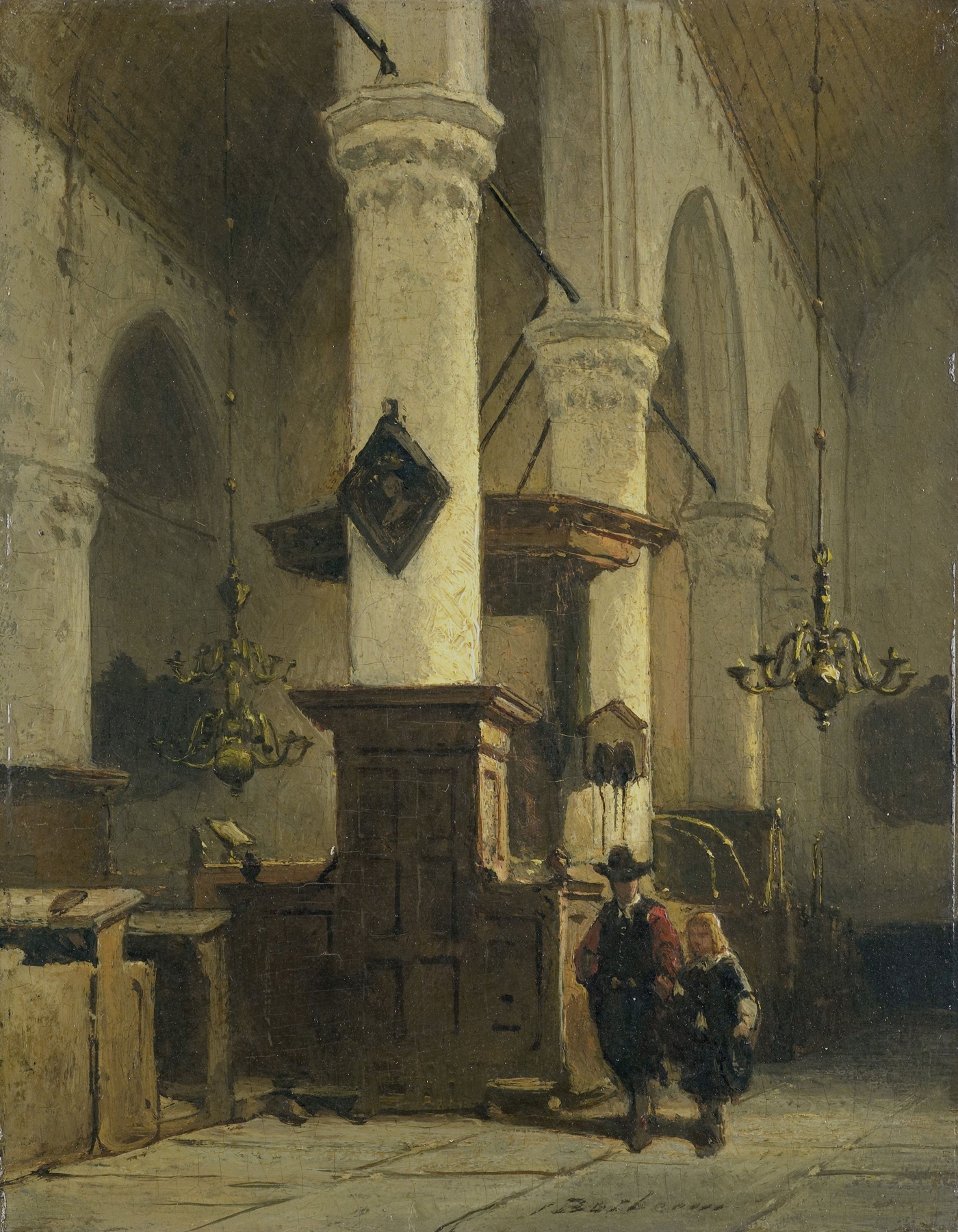
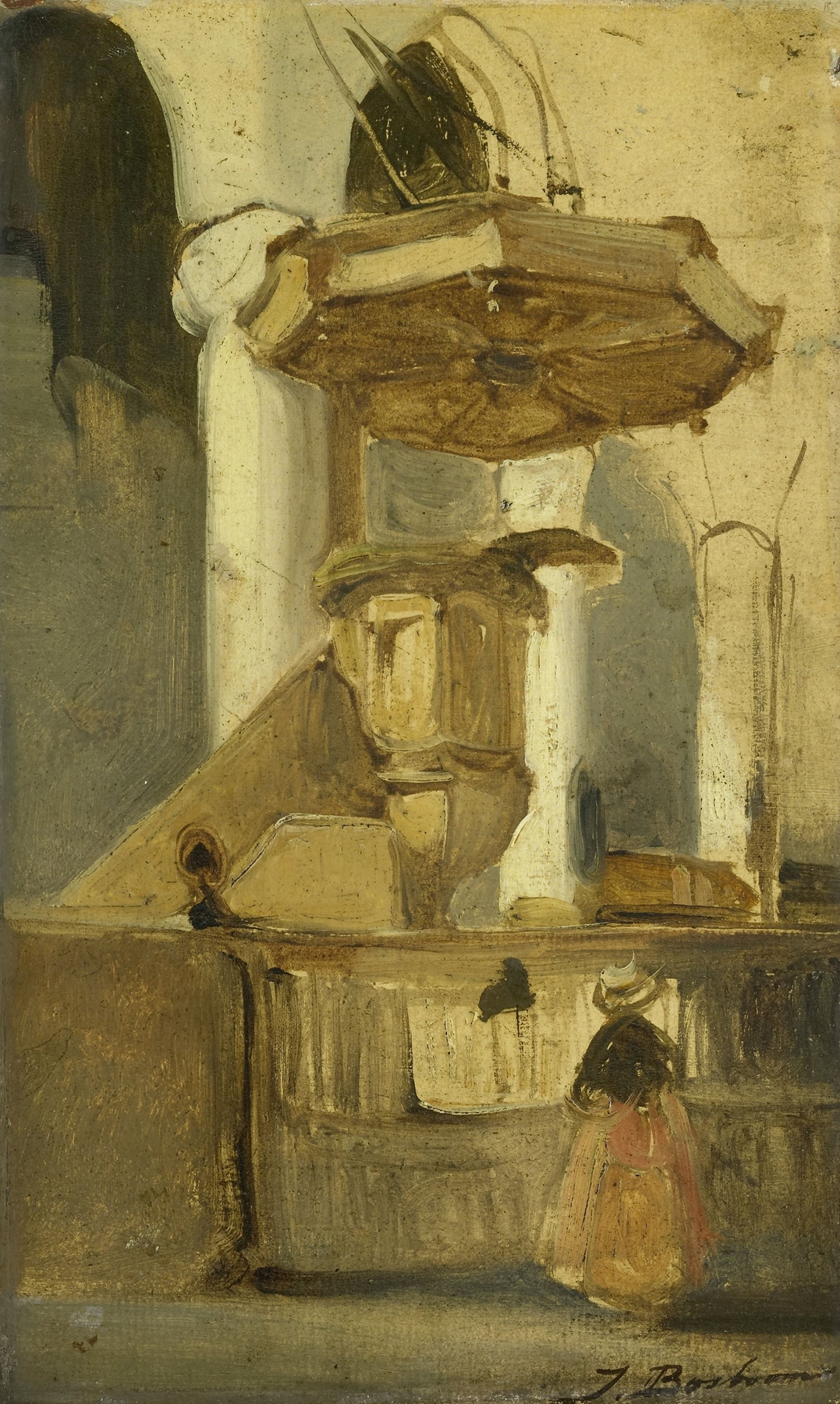
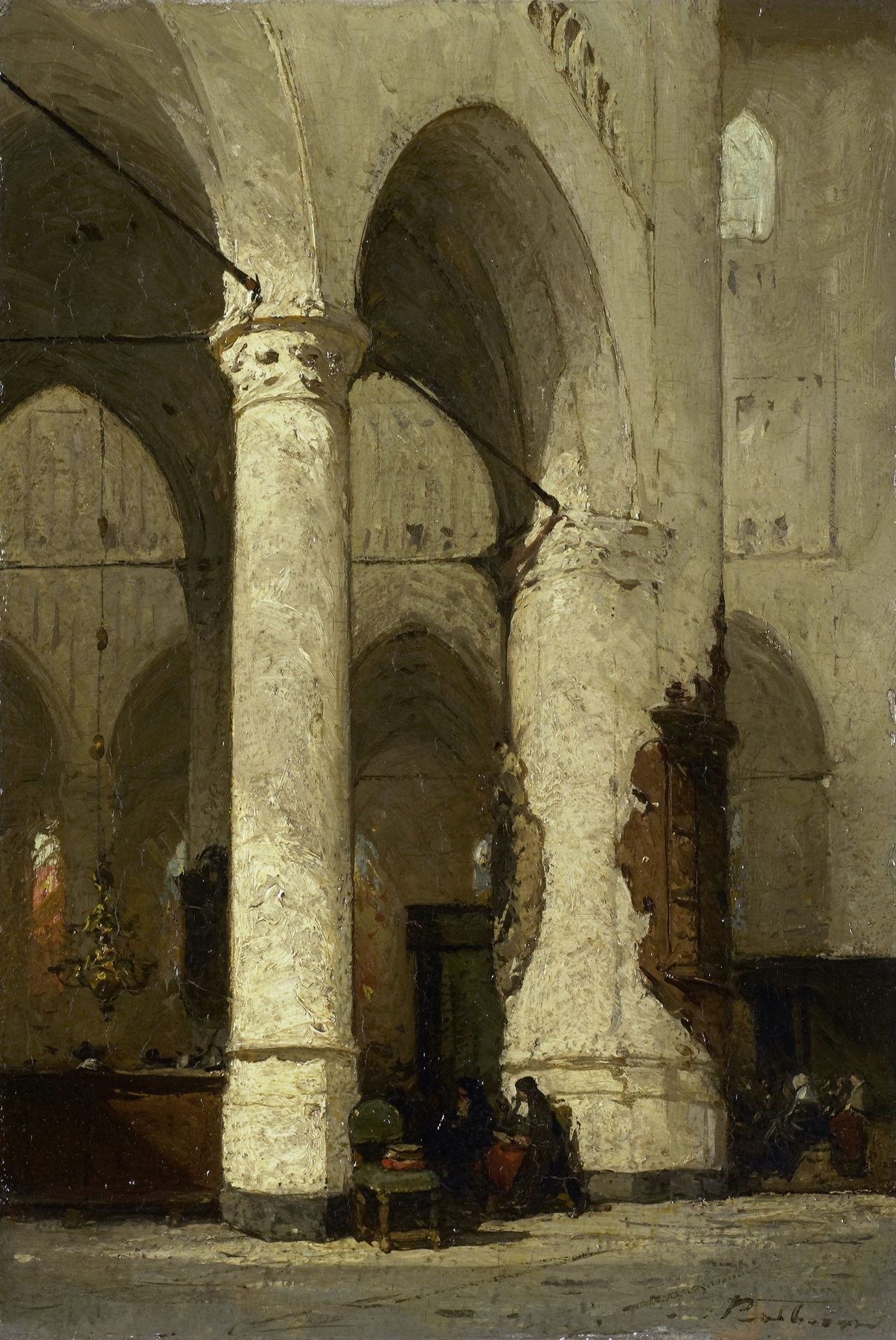
“The canvas doesn’t lie — it simply waits.” Within the solemn confines of an empty church, a stillness hangs in the air, echoing with the whispers of long-lost prayers and silent fears. Shadows sweep across the intricate architecture, their shapes forming dark corners that seem to harbor secrets, while the cool light filtering through stained glass hints at the spiritual fervor once alive in this sacred space. Look to the left at the towering columns that rise like sentinels, their stone facades adorned with delicate carvings, each telling a story of devotion. Focus on the interplay of light and shadow as it dances across the wooden pews, revealing rich textures and the warm tones of aged wood.
The composition guides your eye upward, where the vaulted ceiling stretches toward infinity, an invitation to contemplate both the divine and the desolate. Here, within the expansive emptiness, lies a palpable tension between reverence and abandonment. The absence of figures evokes a sense of solitude, as if the church itself holds its breath in anticipation of a congregation long since departed. Subtle contrasts emerge: the vibrant hues of the stained glass juxtaposed against the somber, muted palette of the interior evoke a haunting dichotomy of hope versus despair, light battling against the encroaching darkness of fear.
Johannes Bosboom painted this work in the mid-19th century, a time when the world was grappling with the tensions of modernity versus tradition. Living in the Netherlands, he captured the essence of sacred spaces during an era of shifting beliefs and artistic movements. The artist's meticulous attention to architectural detail reflects his deep appreciation for the cultural and spiritual significance of these sites, which were becoming increasingly overshadowed by industrial progress and changing societal values.