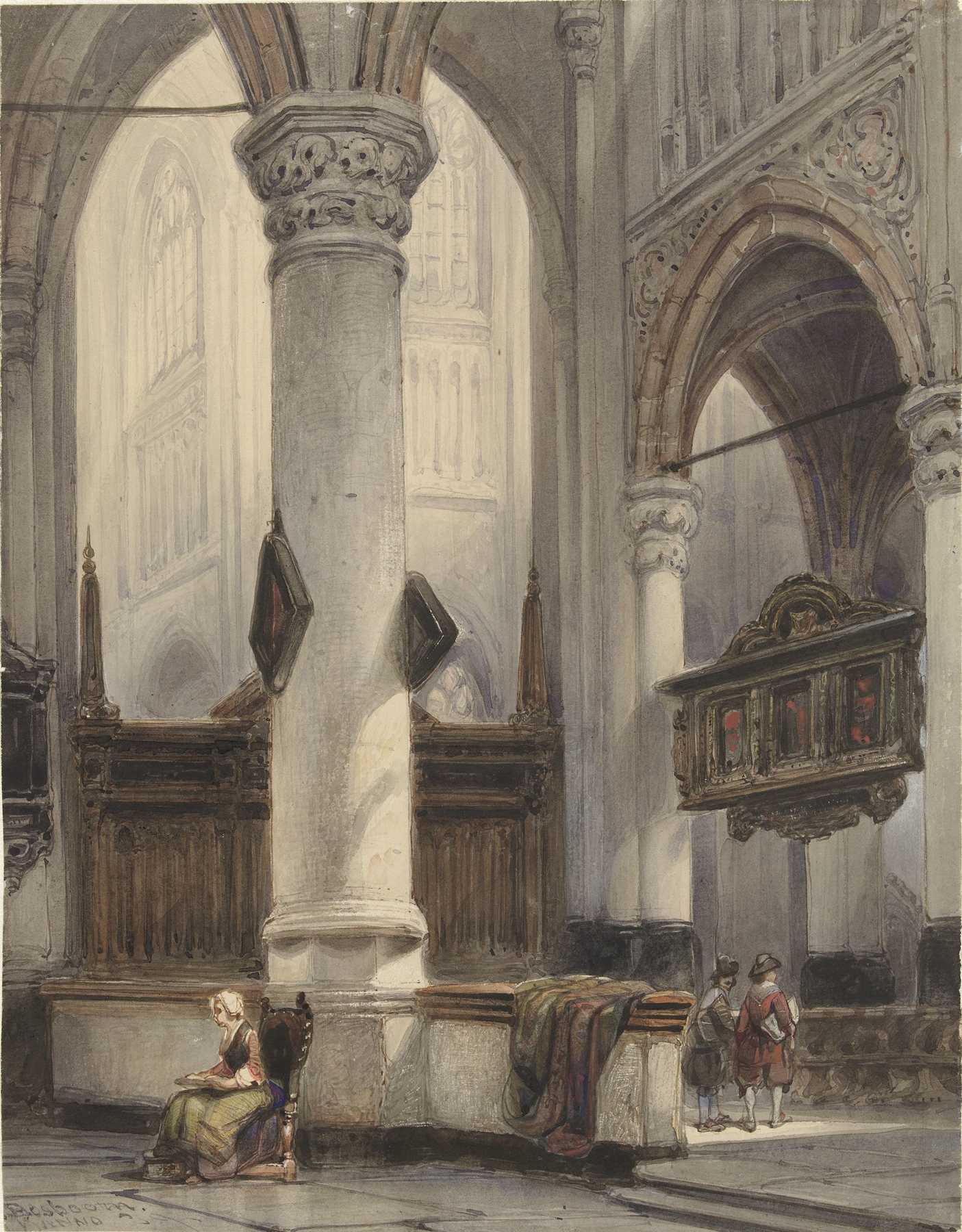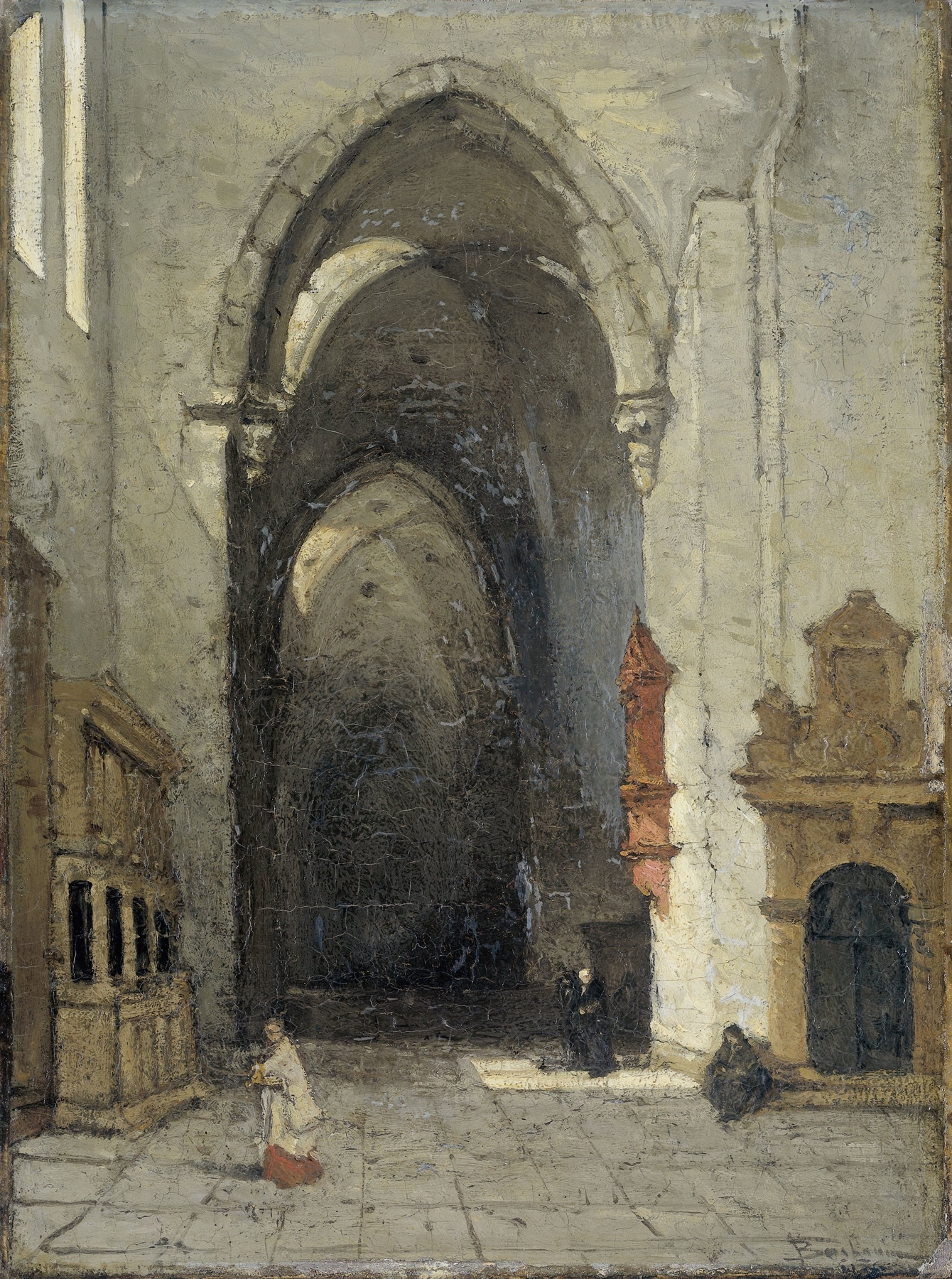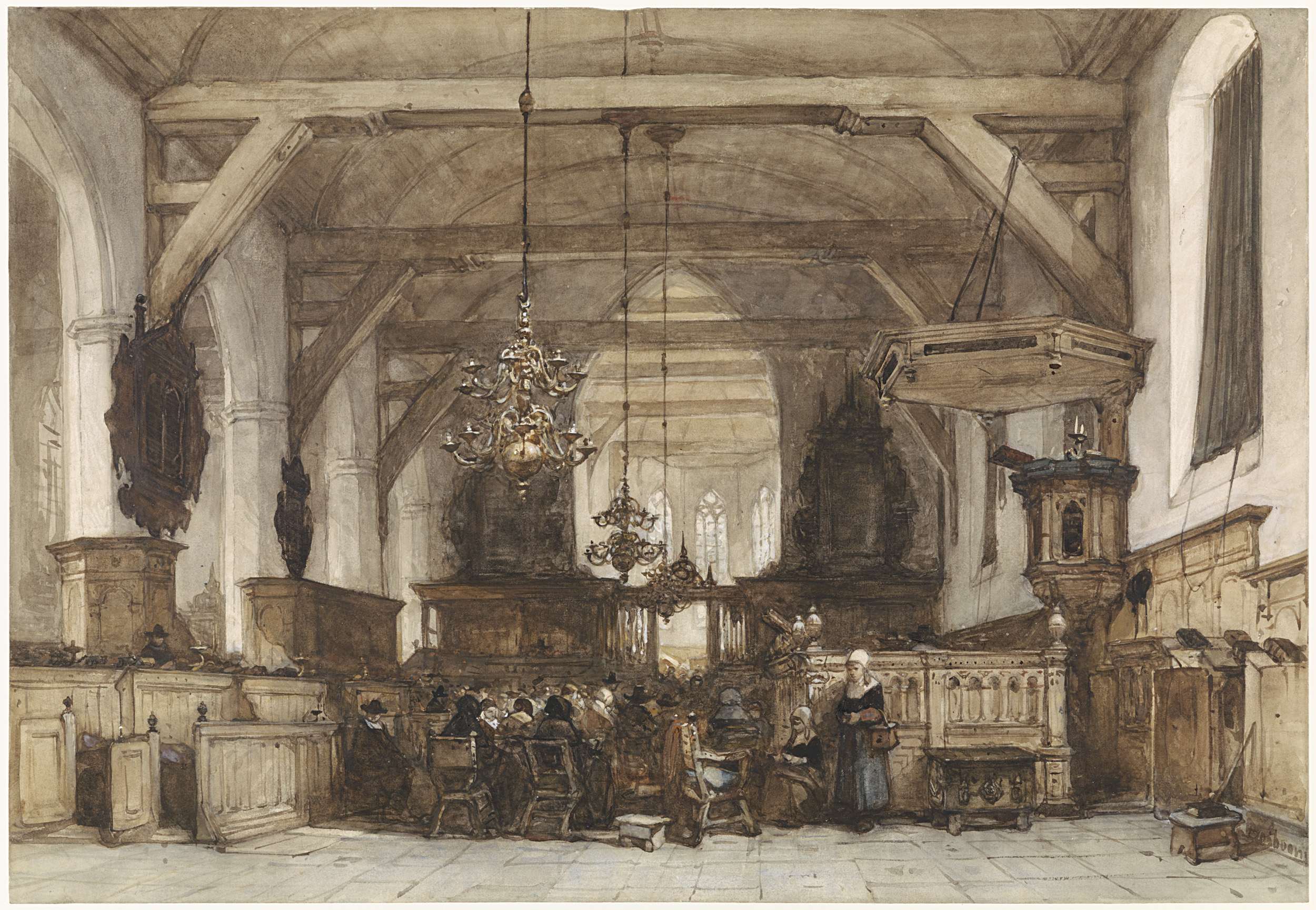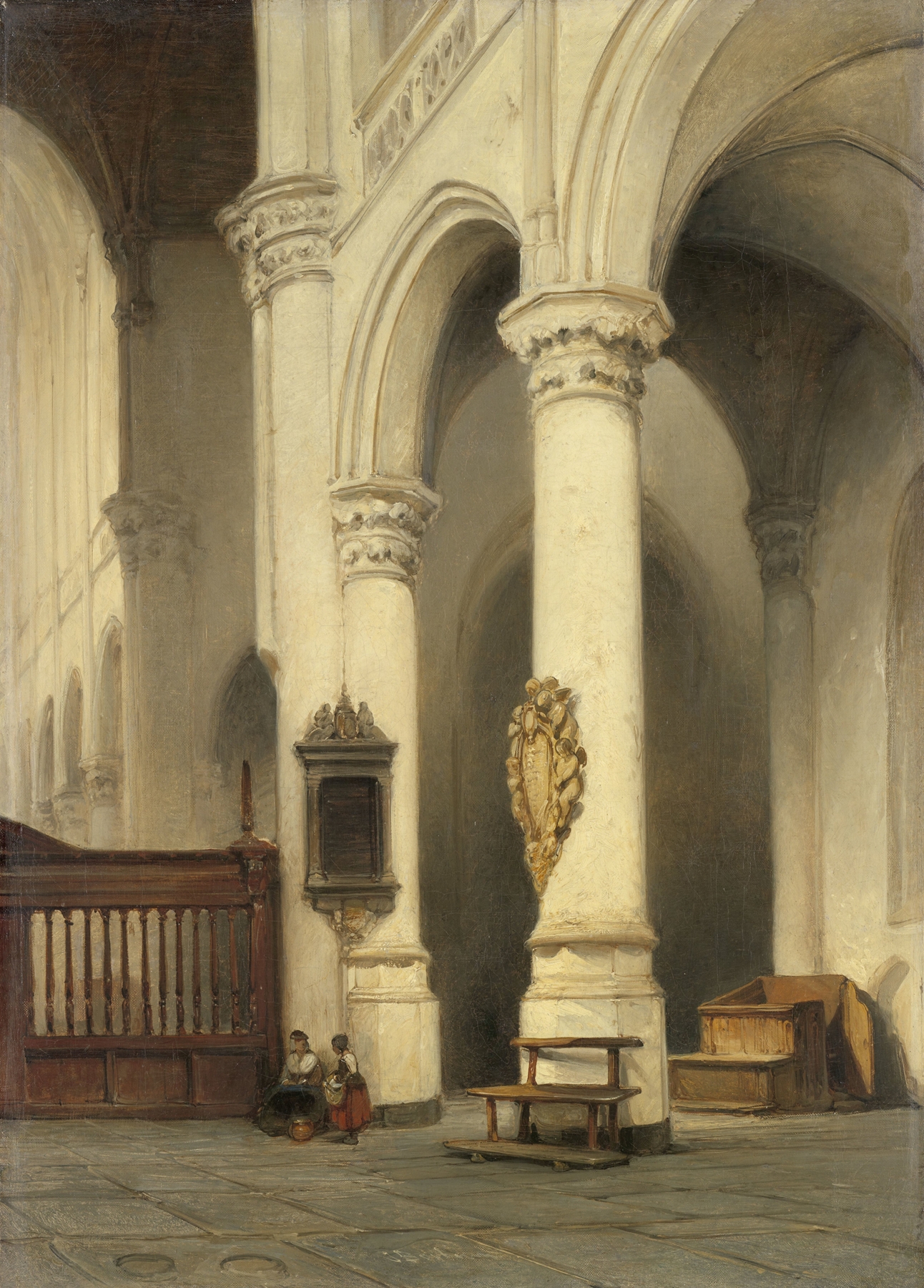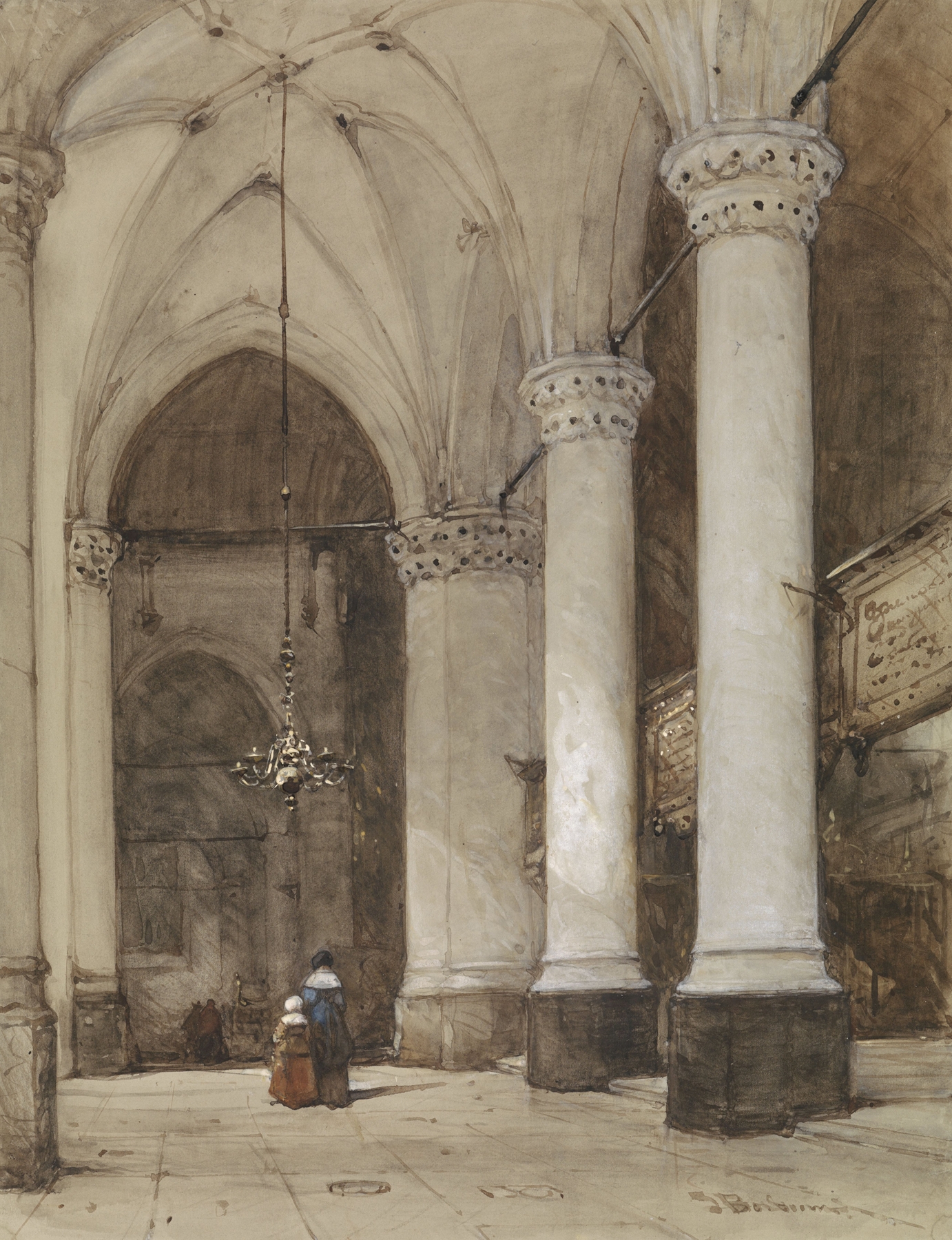
Southern aisle of the Great Church at The Hague — History & Analysis
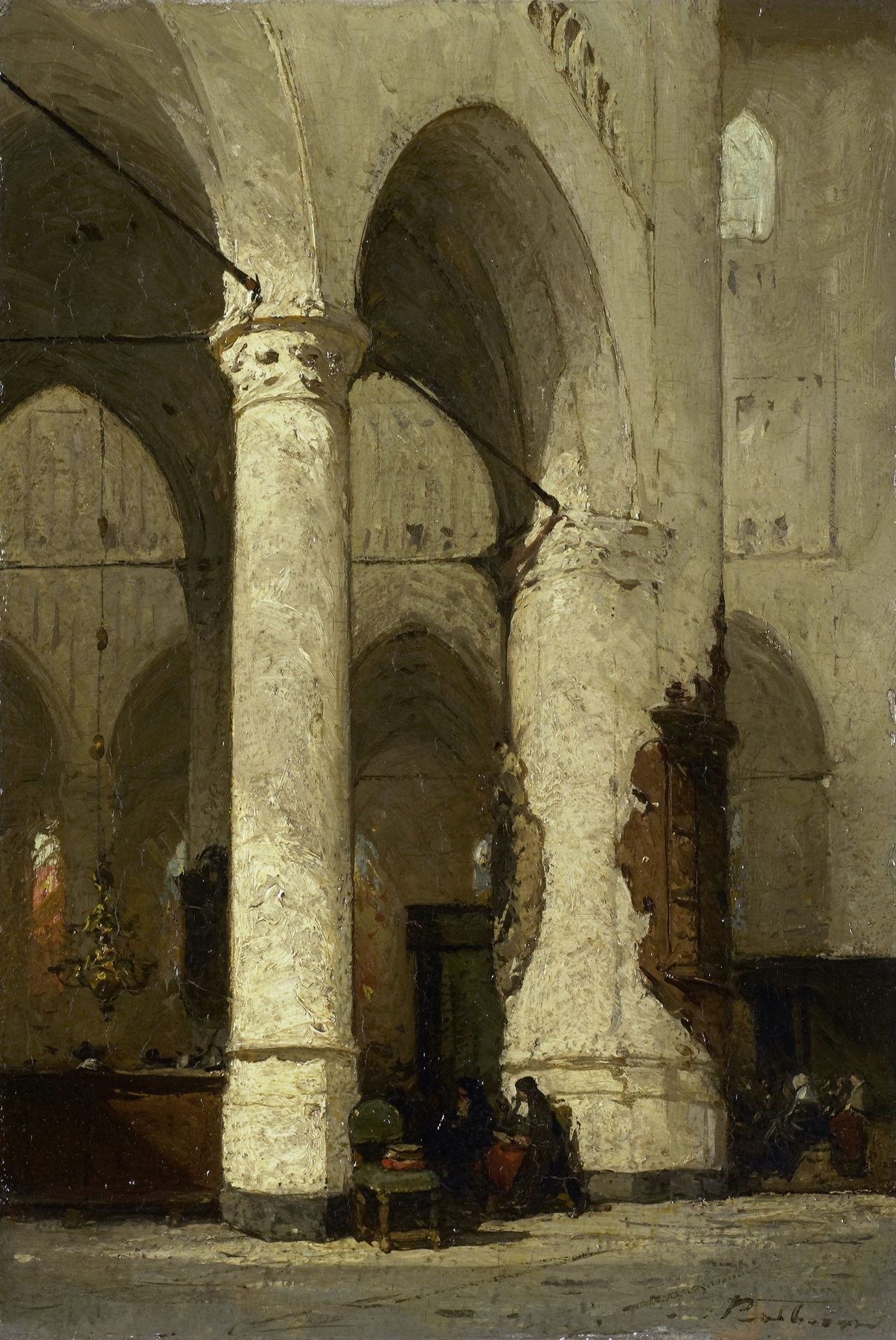
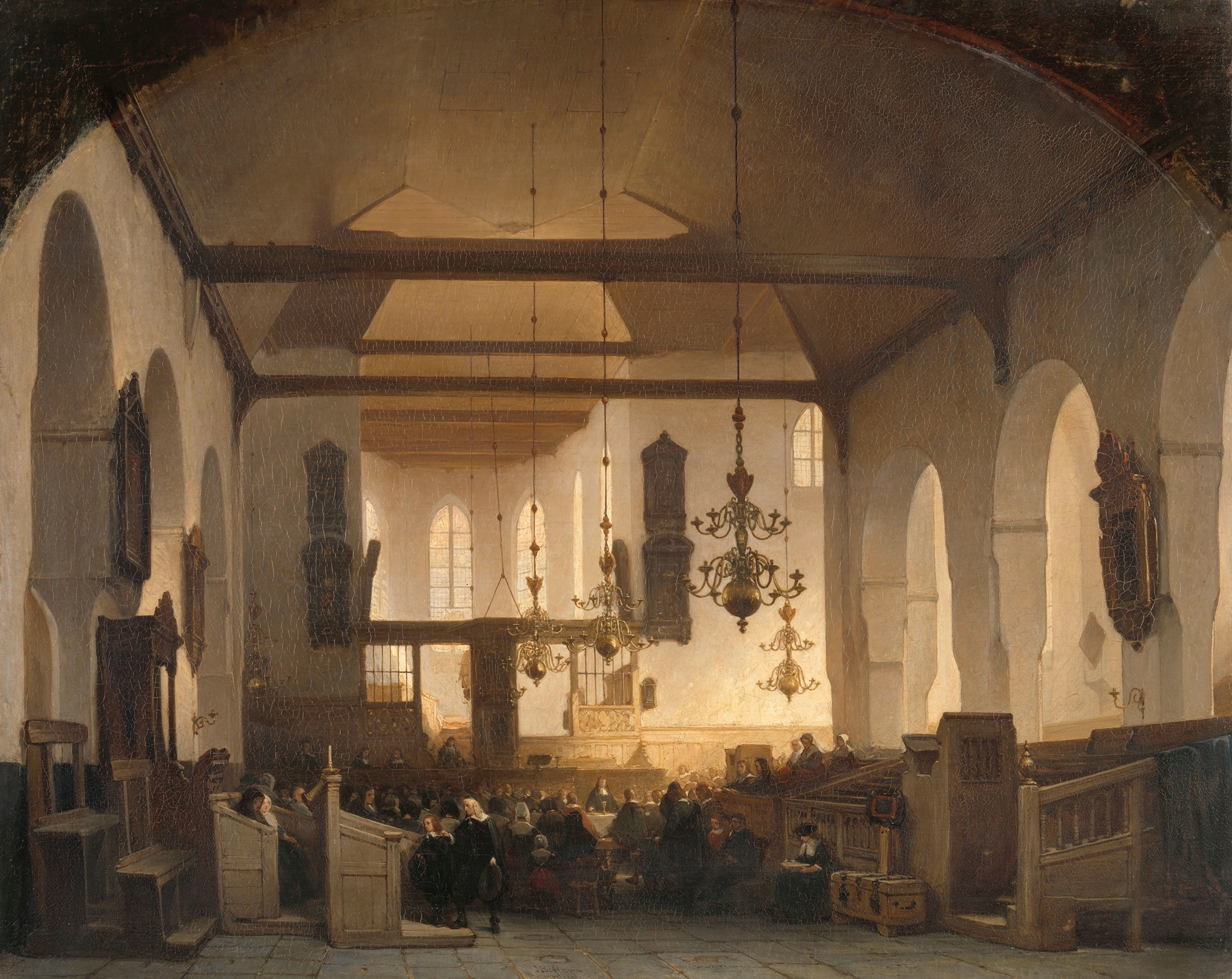
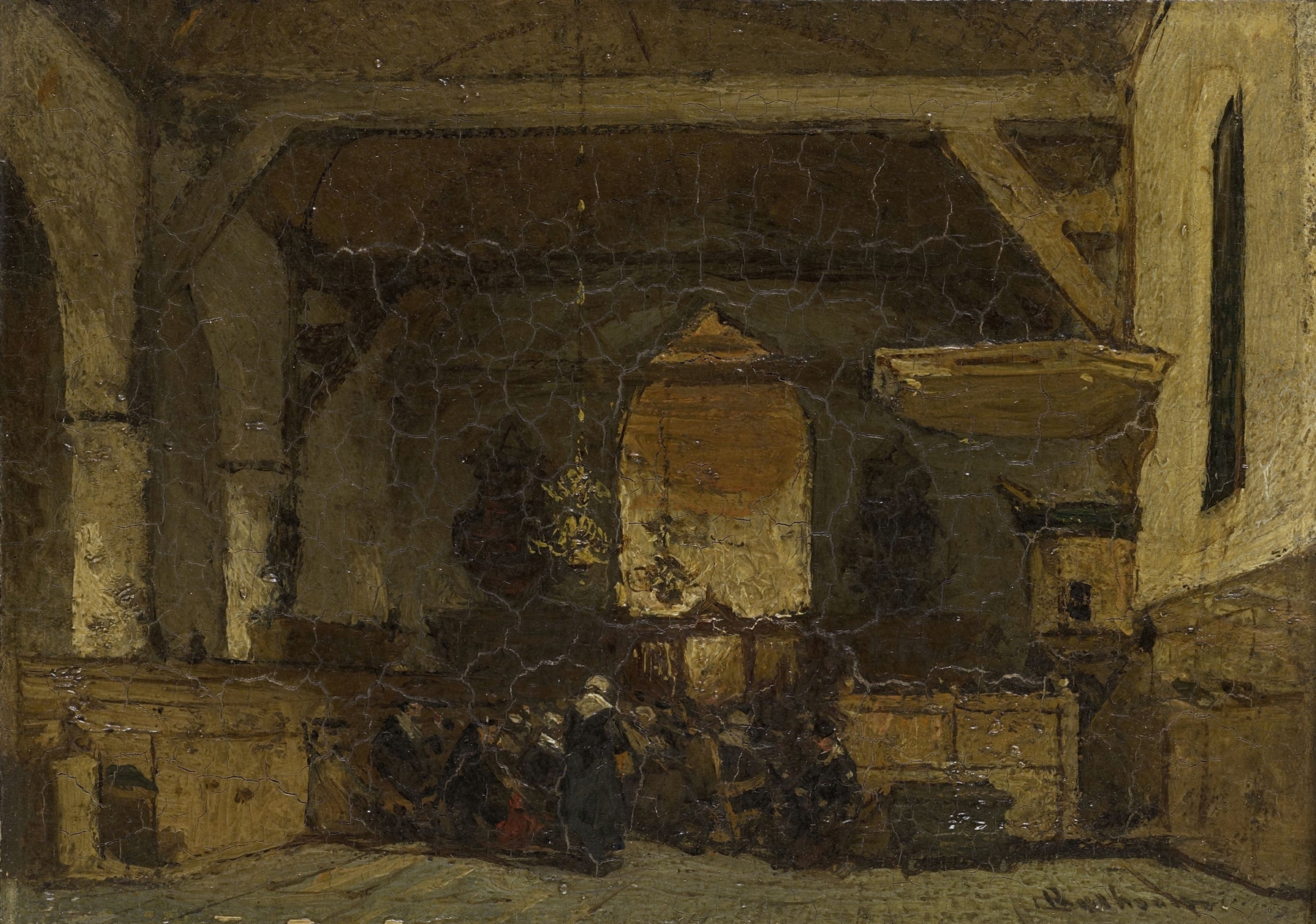
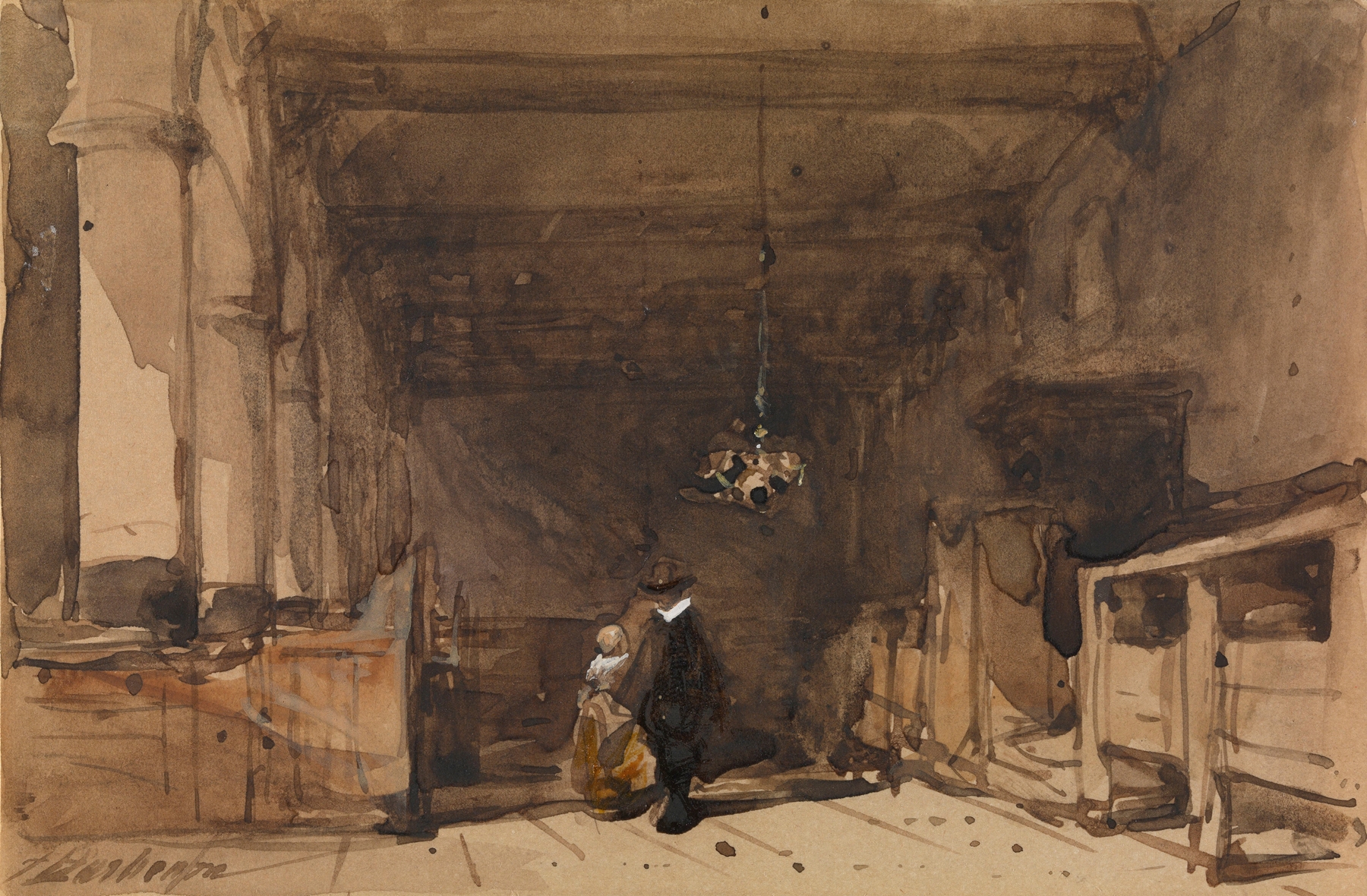
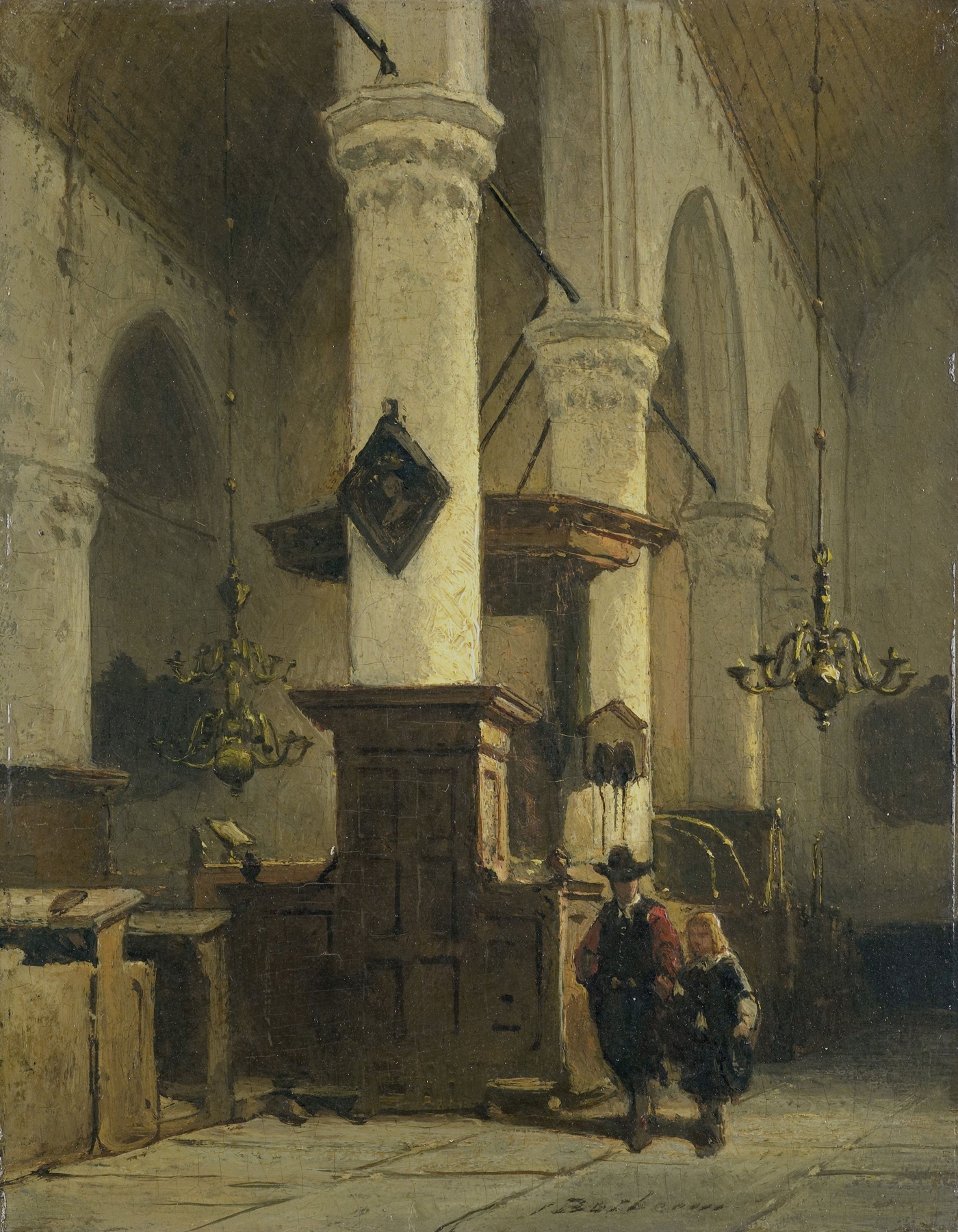
When did color learn to lie? Shadows dance across the stone floor, whispering secrets of light and form, while vibrant hues weave intricate narratives of faith and reverence. They beckon the viewer to question the truth of what is seen and what is felt beyond the canvas. Look to the left at the intricate columns that rise from the depth of the painting, each one meticulously rendered in rich browns and warm golds. Notice how the light falls upon the stone surfaces, illuminating the textures with an almost divine glow.
The interplay of light and shadow creates a sense of depth, inviting the viewer to step into the serene atmosphere of the Great Church. The soft palette, punctuated by dashes of vibrant color, reflects the tranquility of the moment captured within this sacred space. Beneath the surface, a duality emerges—where light suggests clarity, shadow evokes mystery. The architecture speaks of strength and permanence, yet the fleeting light hints at impermanence, leaving one to ponder the transience of faith in the face of time.
This contrast lays bare the emotional tensions of worship, as the church stands as a testament to human devotion surrounded by the ever-looming shadows of doubt. Johannes Bosboom painted this work between 1827 and 1891, during a period of significant change in the art world as Romanticism began to give way to Impressionism. Living in The Hague, he was influenced by the interplay of light and architecture, which was foundational in his approach. His dedication to capturing atmospheric effects was a hallmark of his style, reflecting both the beauty of Dutch churches and the spiritual reverence they inspire.