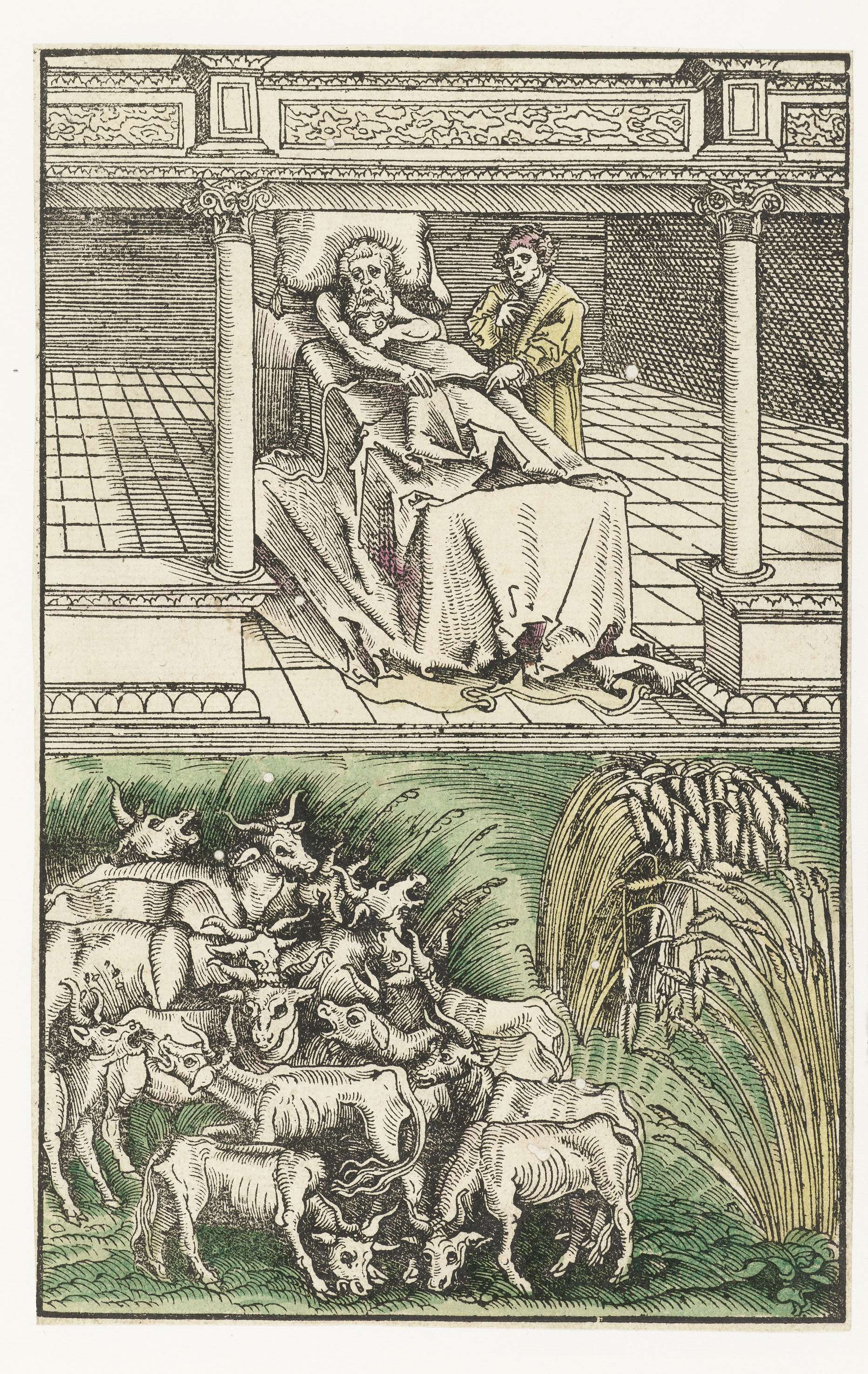
Jozef verklaart de dromen van Farao — History & Analysis
“Under the brush, chaos becomes grace.” What happens when visions of despair meet the promise of understanding? In Jozef verklaart de dromen van Farao, a profound narrative unfolds, touching upon the delicate balance between loss and hope. First, look to the center of the canvas, where a figure, Joseph, stands confidently, his vibrant robe contrasting against the muted tones of the surrounding court. The light cascades from an unseen source, illuminating his face and emphasizing the poise of his gestures as he interprets Pharaoh’s troubled dreams. Notice how the varying textures of flesh and fabric engage your senses, drawing your eye across the intricate details of this dramatic moment.
Beyond the immediate depiction lies a tapestry of emotional tensions. The way Joseph’s expression melds assurance with a hint of sorrow resonates deeply; he bears the weight of not just the Pharaoh's fate but the collective loss of his own journey. The figures around him, their faces a mix of skepticism and curiosity, echo a larger discourse on the struggle between despair and enlightenment. This scene encapsulates the duality of existence—how dreams can both enrich and devastate lives.
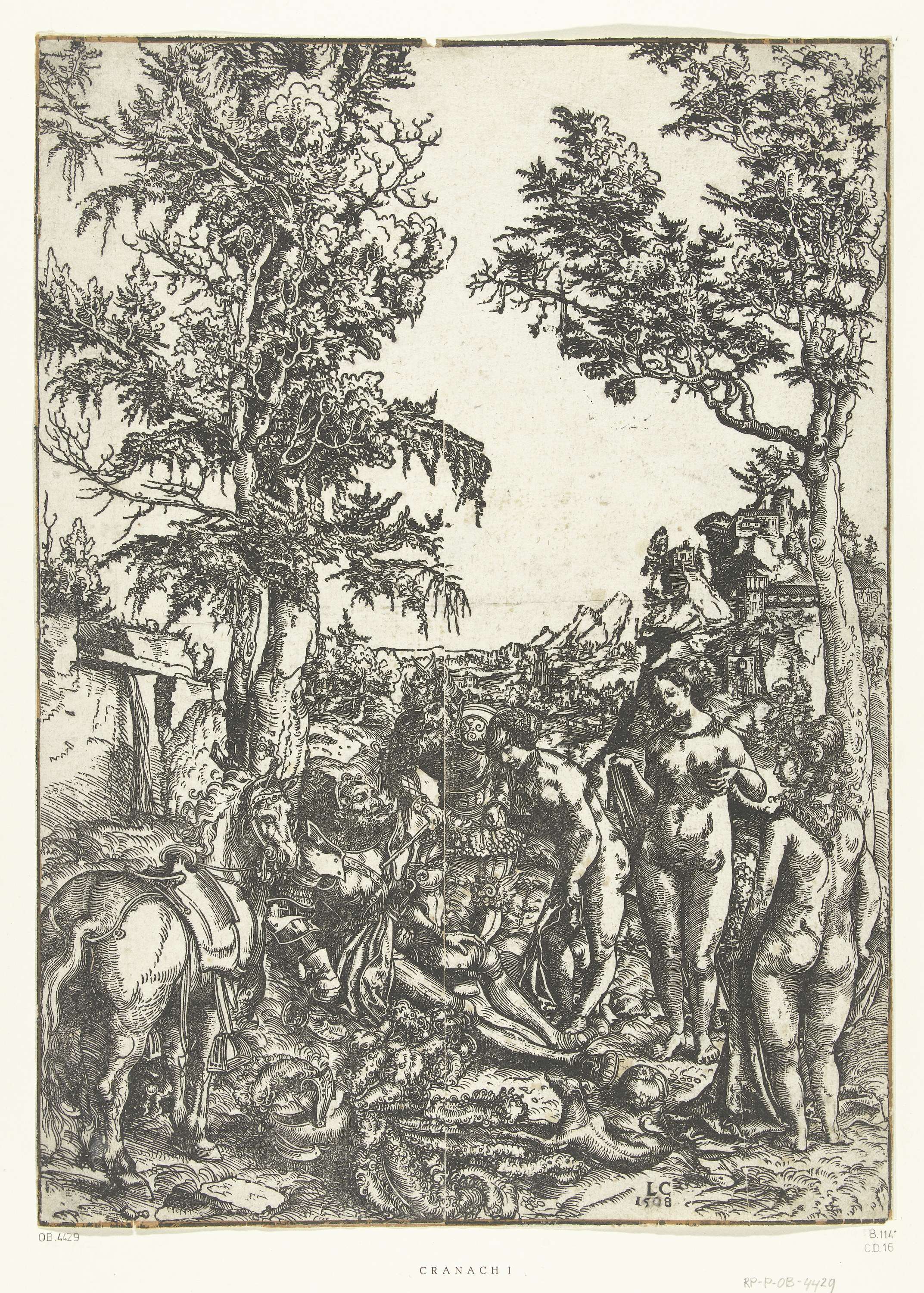
Lucas Cranach painted this piece in 1523 during a time of flourishing humanism in Germany. As a prominent artist of the Northern Renaissance, Cranach was deeply engaged with themes of mythology and morality. His works often reflected the complex interplay of religious and secular life, providing commentary that remains relevant even today. Here, he captures not merely a biblical story, but the universal experience of grappling with loss and the glimmers of grace that emerge from it.