De stigmatisatie van de heilige Franciscus — History & Analysis
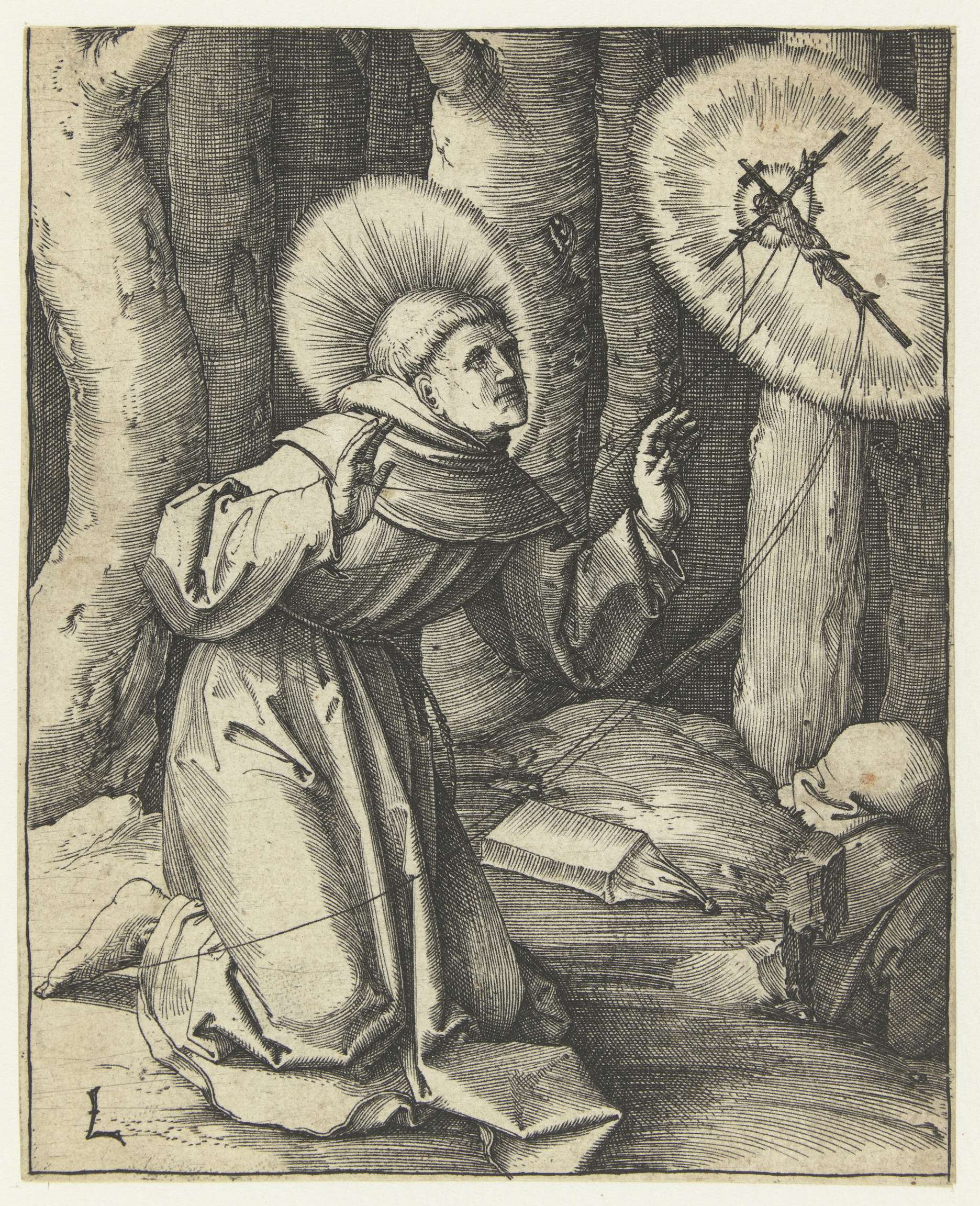
“Sometimes beauty is just pain, disguised in gold.” This sentiment resonates deeply within the haunting beauty of De stigmatisatie van de heilige Franciscus. The painting encapsulates a profound moment in the life of St. Francis, where spiritual transcendence intertwines with the agony of divine suffering—a memory etched in the soul of humanity. Look to the left at the figure of St. Francis, enveloped in a soft halo of light that draws the eye immediately.
His expression is serene yet pained, capturing the duality of his experience. The careful brushstrokes convey the texture of his coarse robe, contrasting with the ethereal quality of the heavenly light that bathes the scene. Notice how the background fades into shadow, directing our focus to his afflicted body and the marks of the stigmata, each detail meticulously rendered to evoke empathy and reverence. The juxtaposition of light and dark in this piece reveals the underlying struggle between divine grace and human despair. The tender expression on the saint's face suggests acceptance, yet the visible wounds evoke a visceral reminder of sacrifice and suffering.
Even the surrounding figures, witnessing this sacred moment, reflect a mixture of awe and sorrow, broadening the emotional narrative at play, making us contemplate our own relationship with pain and beauty. Lucas van Leyden painted this work between 1512 and 1516 during a period marked by significant changes in the artistic landscape of the Northern Renaissance. At this time, he was influenced by emerging humanist ideas, which emphasized the individual and their experiences. In the midst of a world grappling with reformations in faith and art, Leyden’s interpretation of the saint’s stigmatization offers a striking exploration of personal sacrifice, deeply resonating with the spiritual tensions of his era.