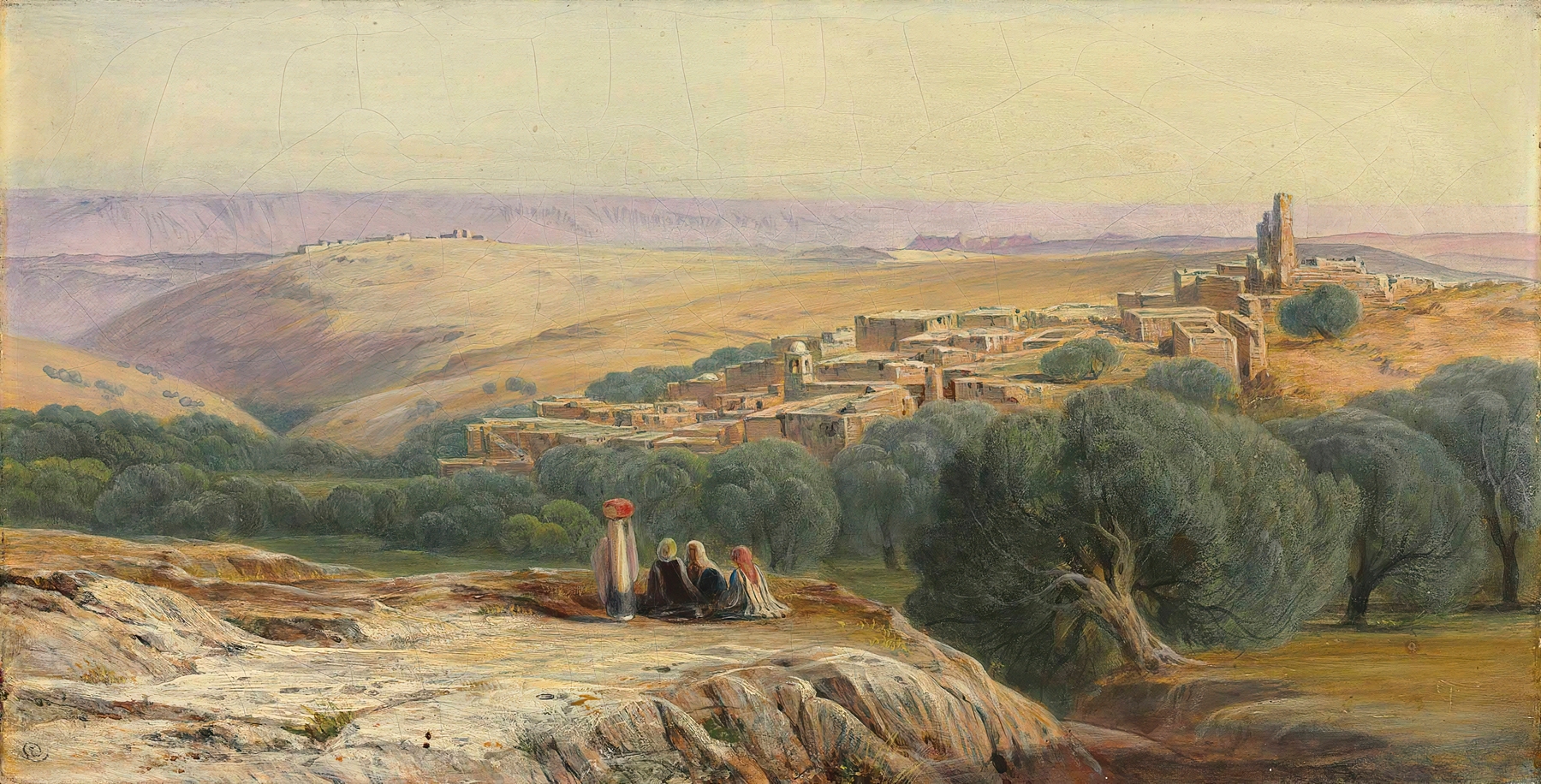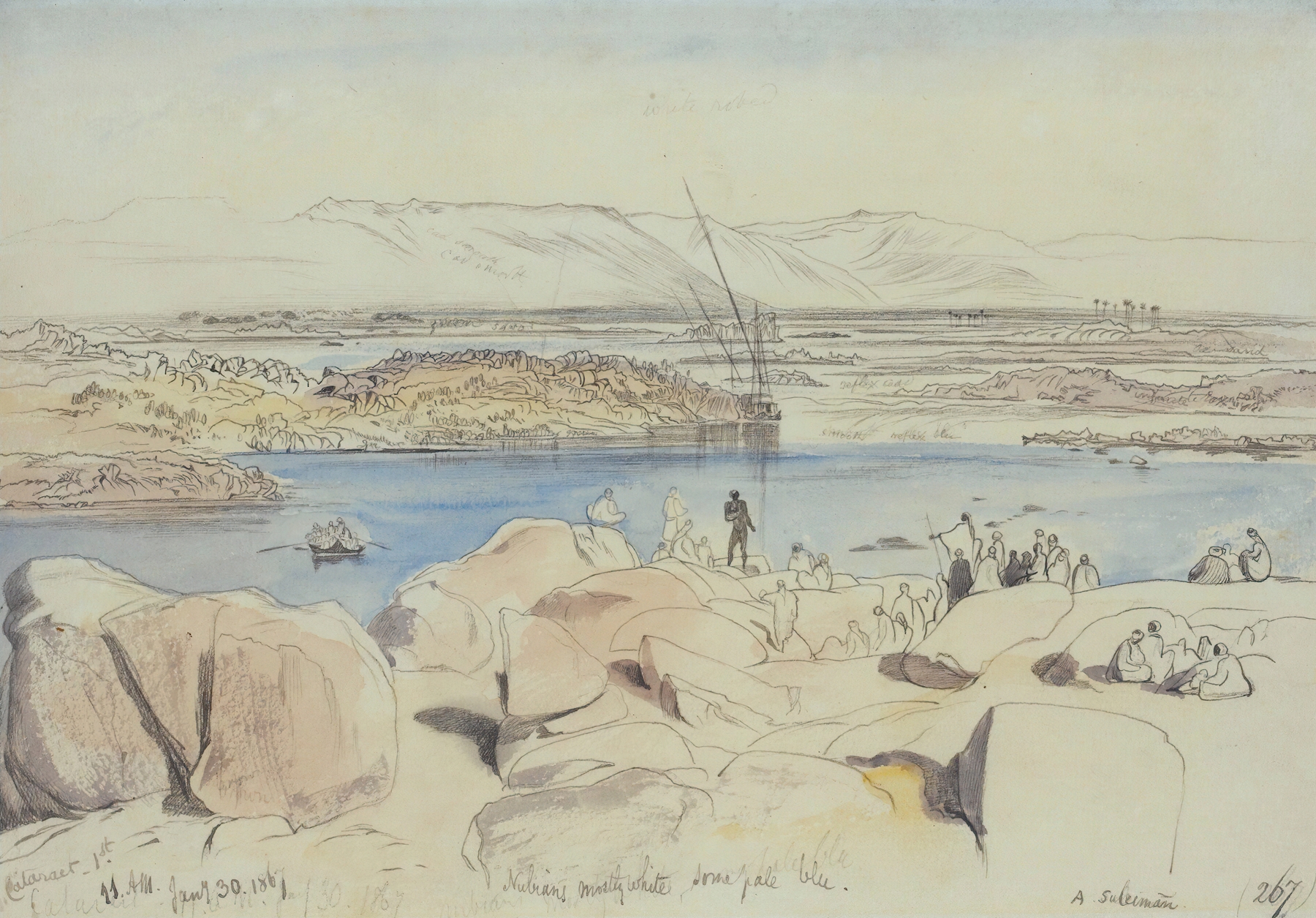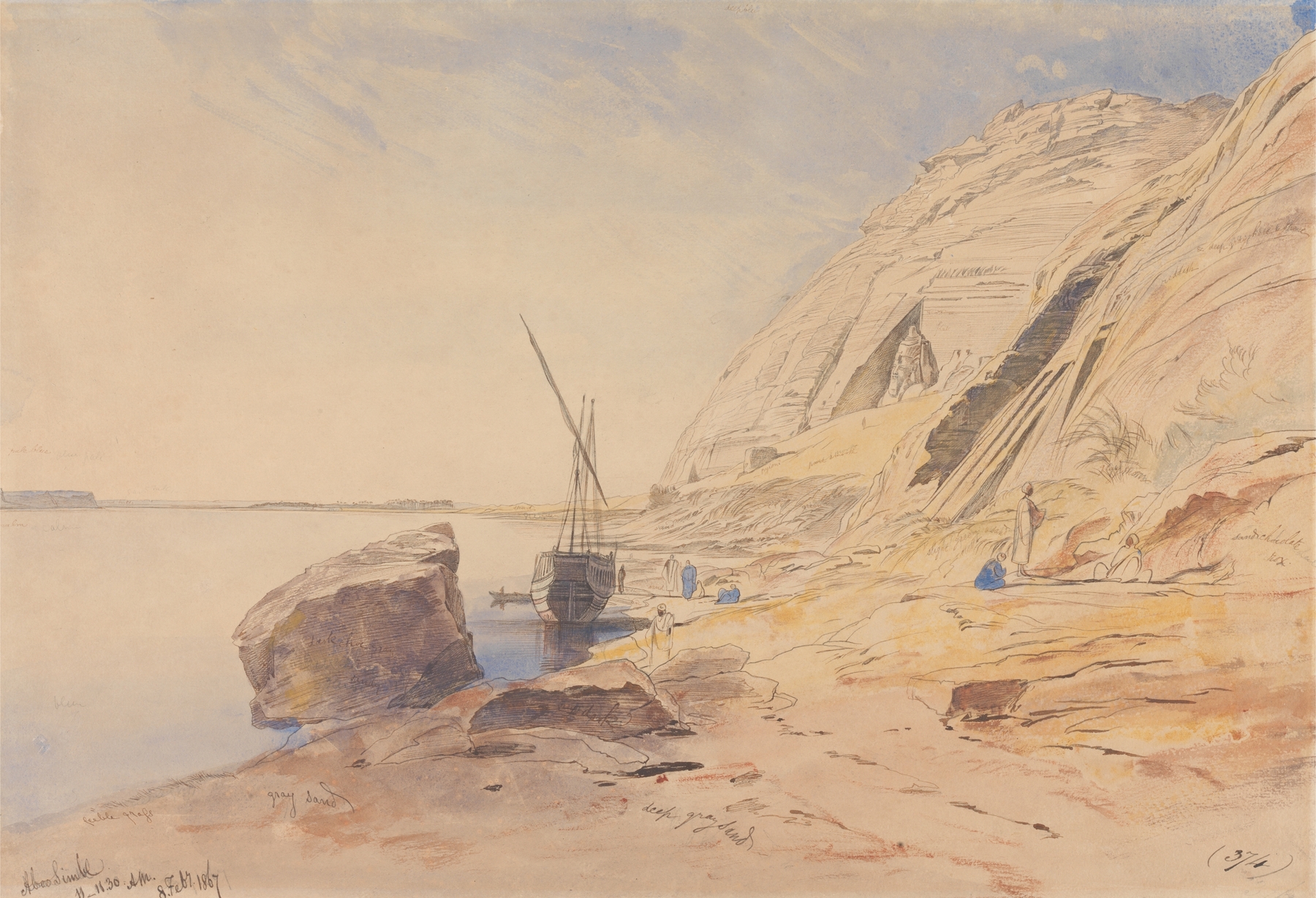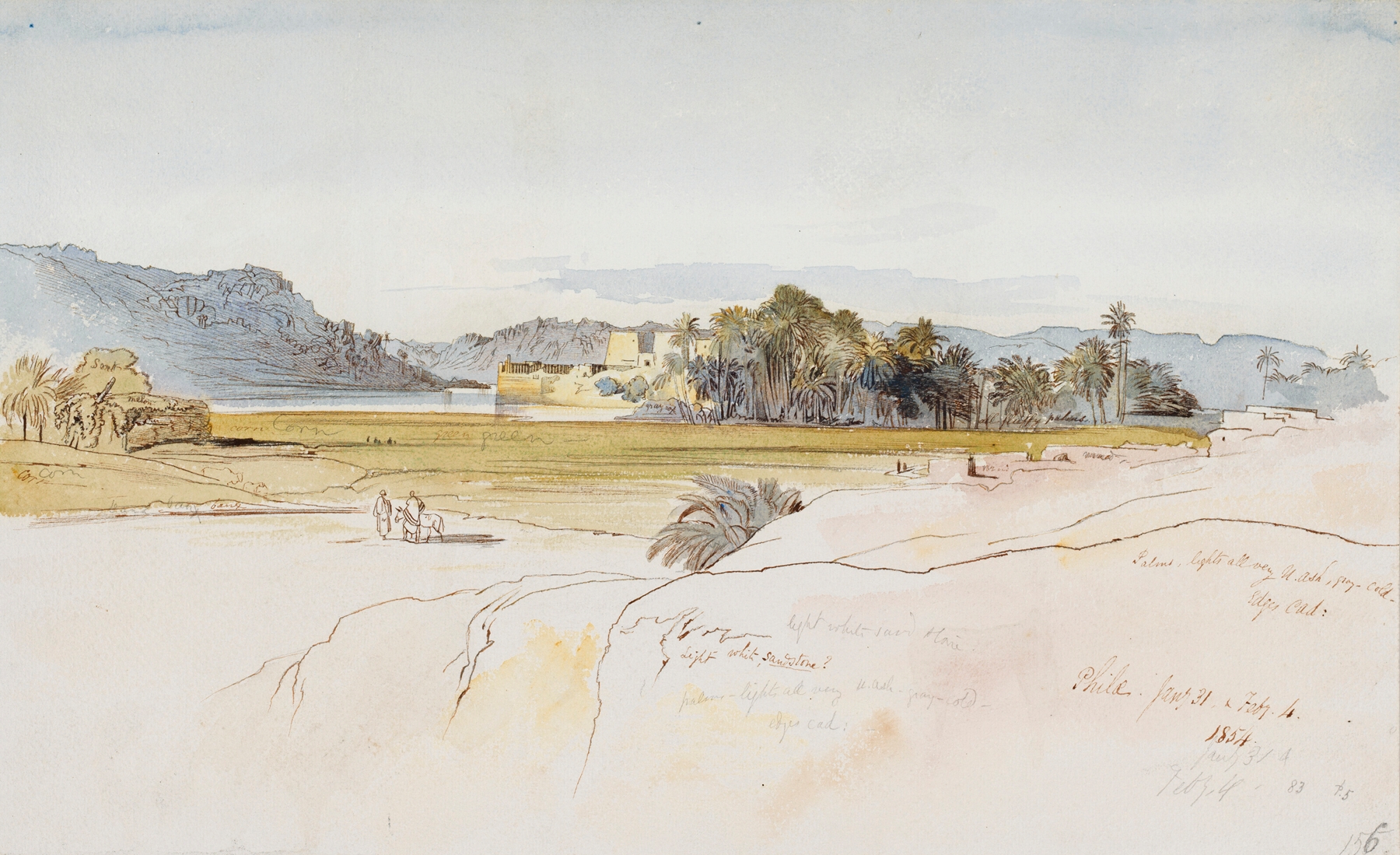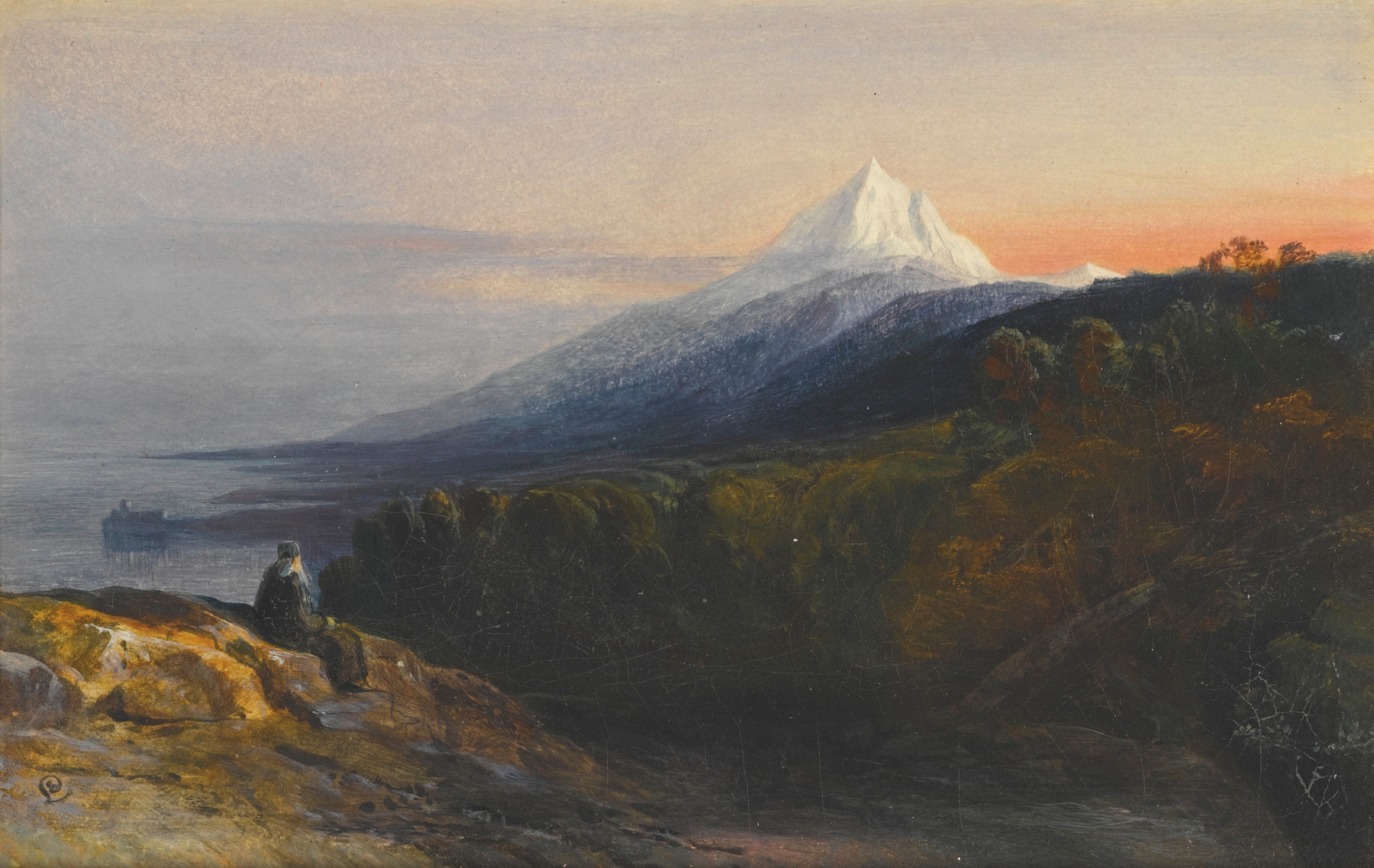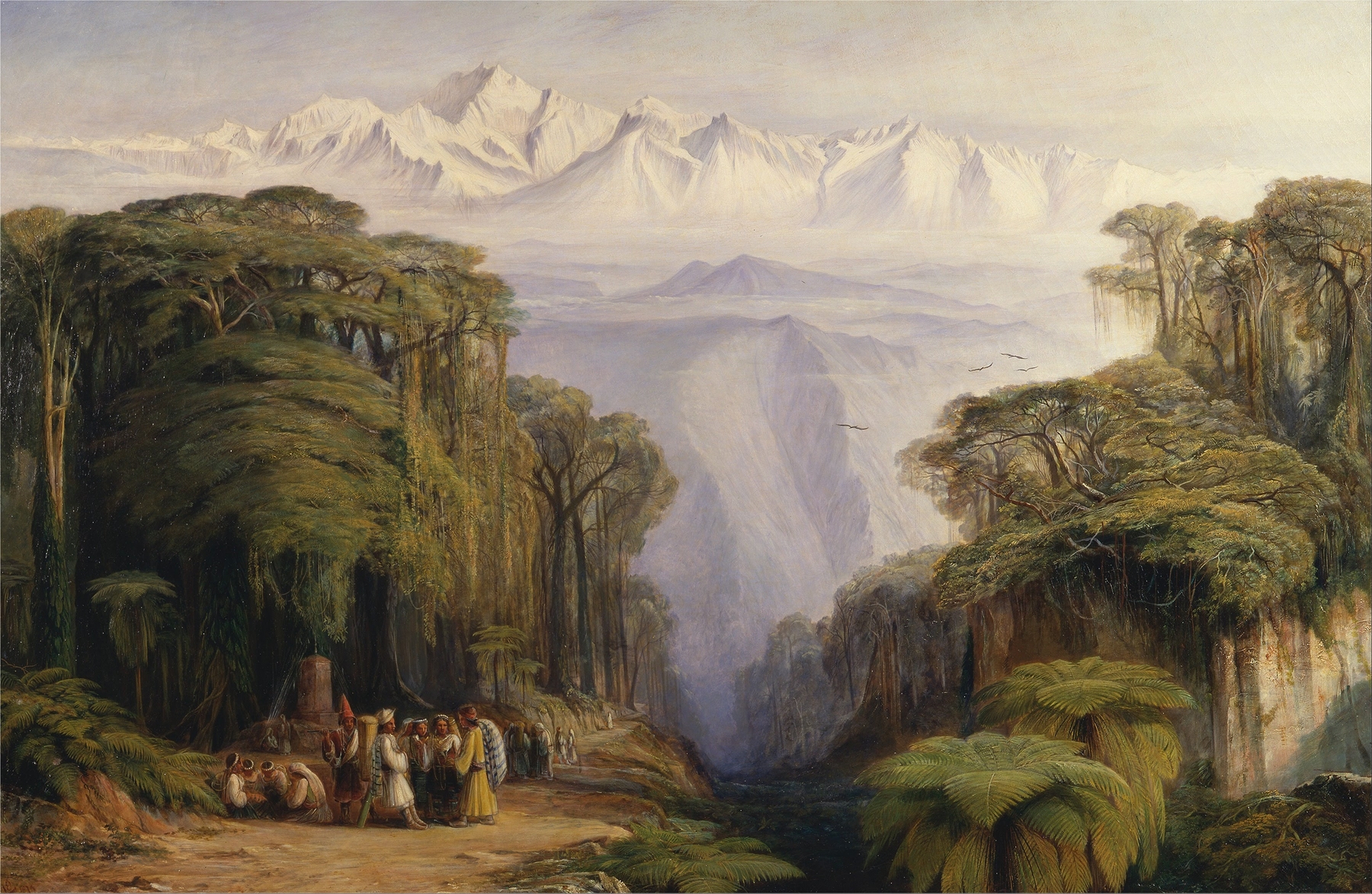
Can paint confess what words never could? In the silence of a dream, majestic peaks rise like whispers of forgotten tales, urging us to listen. Look to the left at the soaring silhouette of Kangchenjunga, its snow-capped summit glowing with a soft, ethereal light. The delicate brushwork captures the mountain's grandeur, while the gentle gradient of blues and whites evokes a serene atmosphere. Notice how the foreground is imbued with lush greenery, grounding the composition and contrasting with the formidable peak, creating a dialogue between the earth below and the heavens above. The interplay of light and shadow breathes life into the scene, inviting the viewer to embark on a journey through the landscape. Beneath the surface, a deeper narrative unfolds. The serene beauty of the mountains contrasts with the fleeting nature of human existence, suggesting that while nature stands eternal, our dreams and aspirations are often ephemeral. The rich textures throughout the painting echo the tumult of emotions one might feel when confronted with such overwhelming beauty, stirring a sense of both wonder and humility. Each stroke communicates a longing for connection, both to the sublime and to ourselves. Lear painted this work during a period of personal exploration and travel, as he sought to capture the untamed beauty of the Himalayan landscape. While the exact date remains unknown, it was during his travels in the mid-19th century, a time when Europe was experiencing a burgeoning fascination with the exotic and unknown. This reflects broader artistic movements where landscapes were not merely representations but an exploration of the human spirit in the face of nature's magnificence.