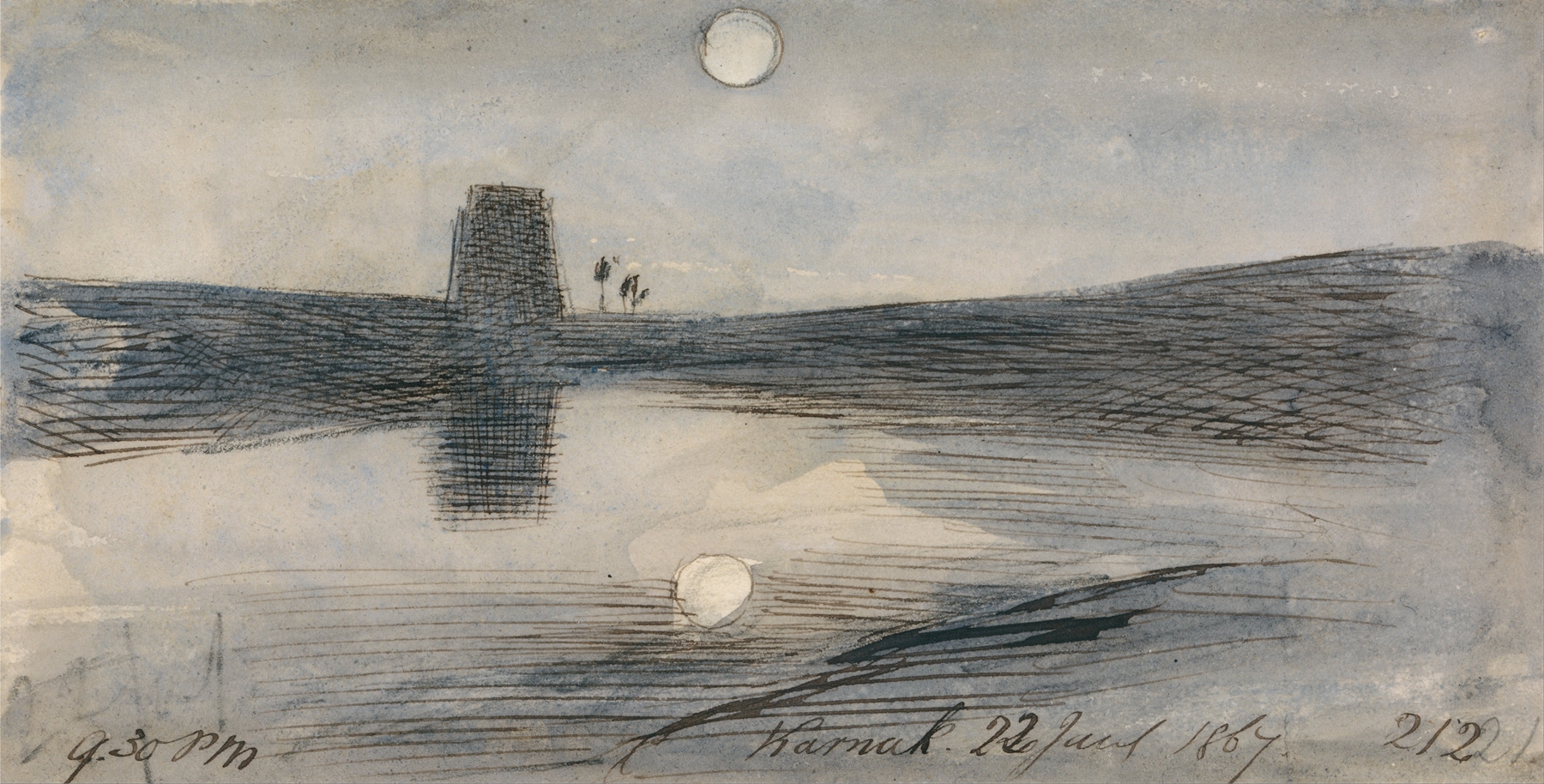
Can paint confess what words never could? In the silent embrace of twilight, *Karnak, 9-30 pm, 22 January 1867* beckons viewers into a world suspended between reality and illusion, where the void of night teeters on the edge of understanding. Look to the center, where the imposing ruins of Karnak stand resilient against the deepening blue of dusk. Notice how the artist captures the interplay of shadows and fading light, the ancient stones bathed in whispers of twilight, creating a profound sense of stillness. The brushwork is deft, an invitation to explore the textures of the crumbling columns and the intricate hieroglyphs that hint at centuries of history, while the palette dances subtly between the rich blues and the soft grays, evoking a sense of reverence and longing. Deeper meanings lie within the contrasts: the grandeur of the architecture set against the vastness of the darkening sky suggests a dialogue between human achievement and the inexorable passage of time. The void surrounding the monument emphasizes solitude, prompting reflections on mortality and legacy. Each stroke of Lear’s brush captures not just a scene, but the weight of history and the emotions of those who have gazed upon these ruins before, echoing their silent stories through the ages. During the time he created this work, Lear was traveling through Egypt, a period marked by both personal challenges and artistic exploration. The mid-19th century was a vibrant era for artists, as they began to embrace a more romantic view of nature and history, pushing boundaries in their quest for expression. Lear, known for his illustrations and poetry, infused this painting with a personal touch, revealing not just a moment in time but a deeper understanding of the eternal human experience.