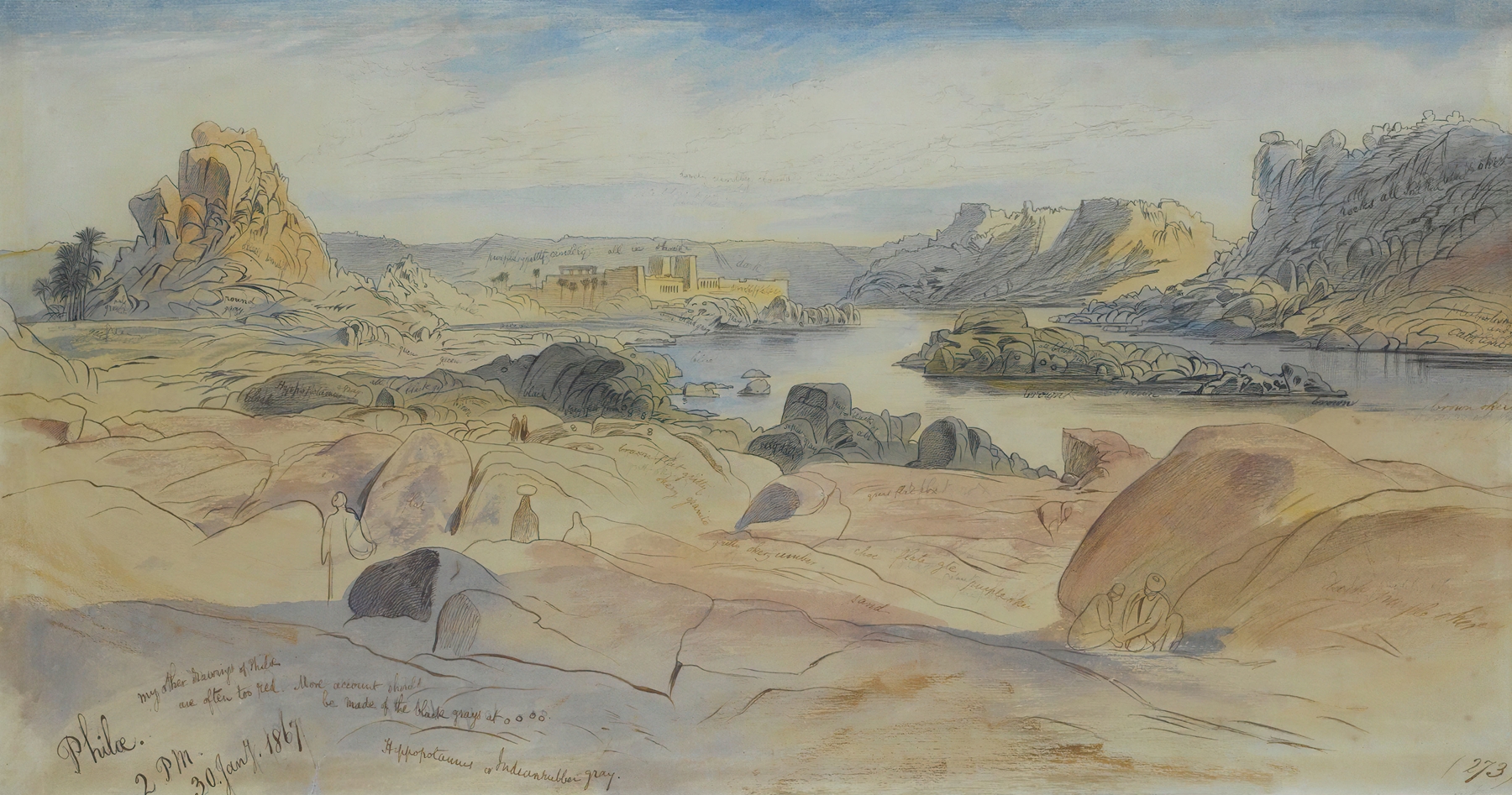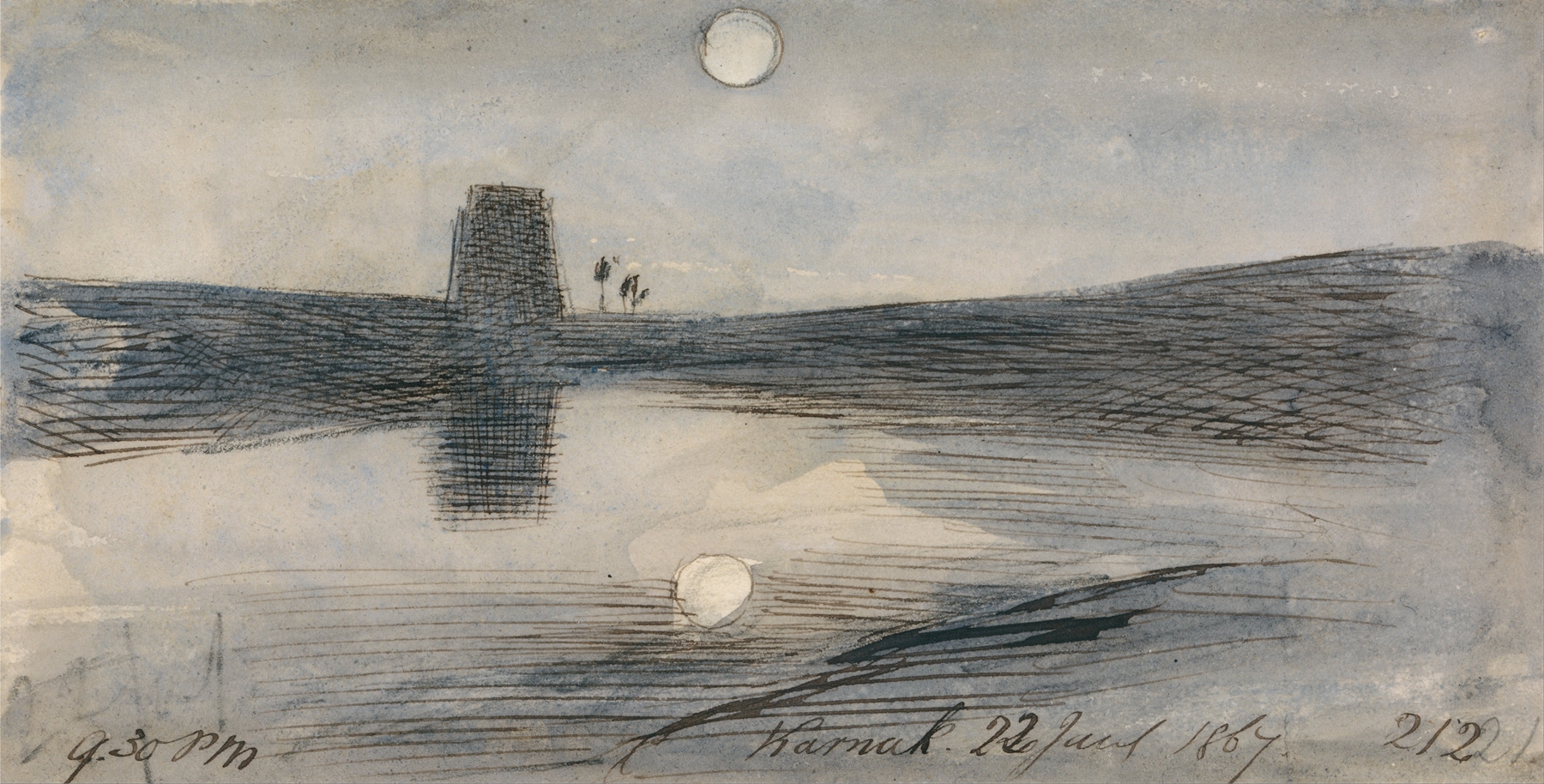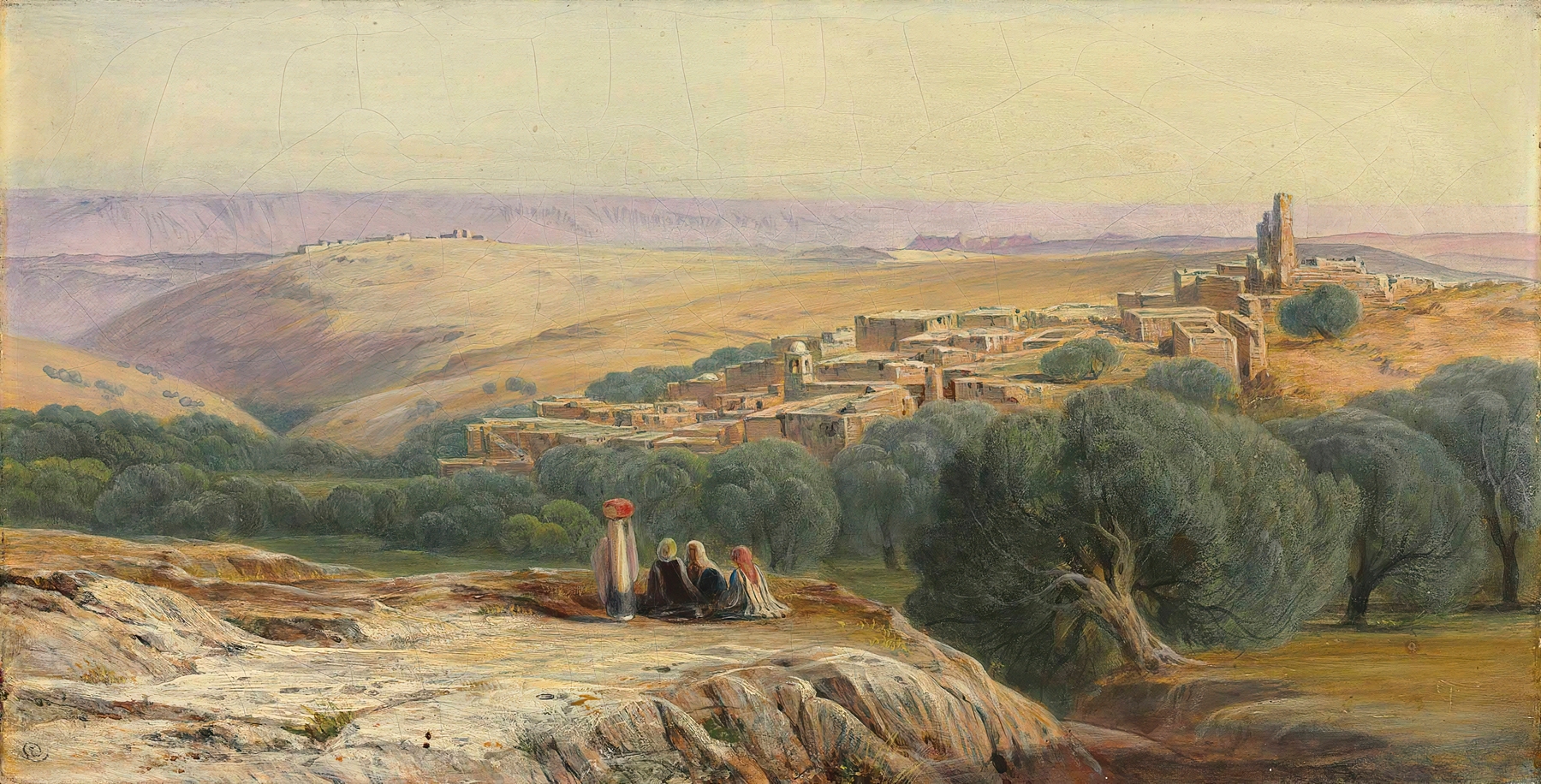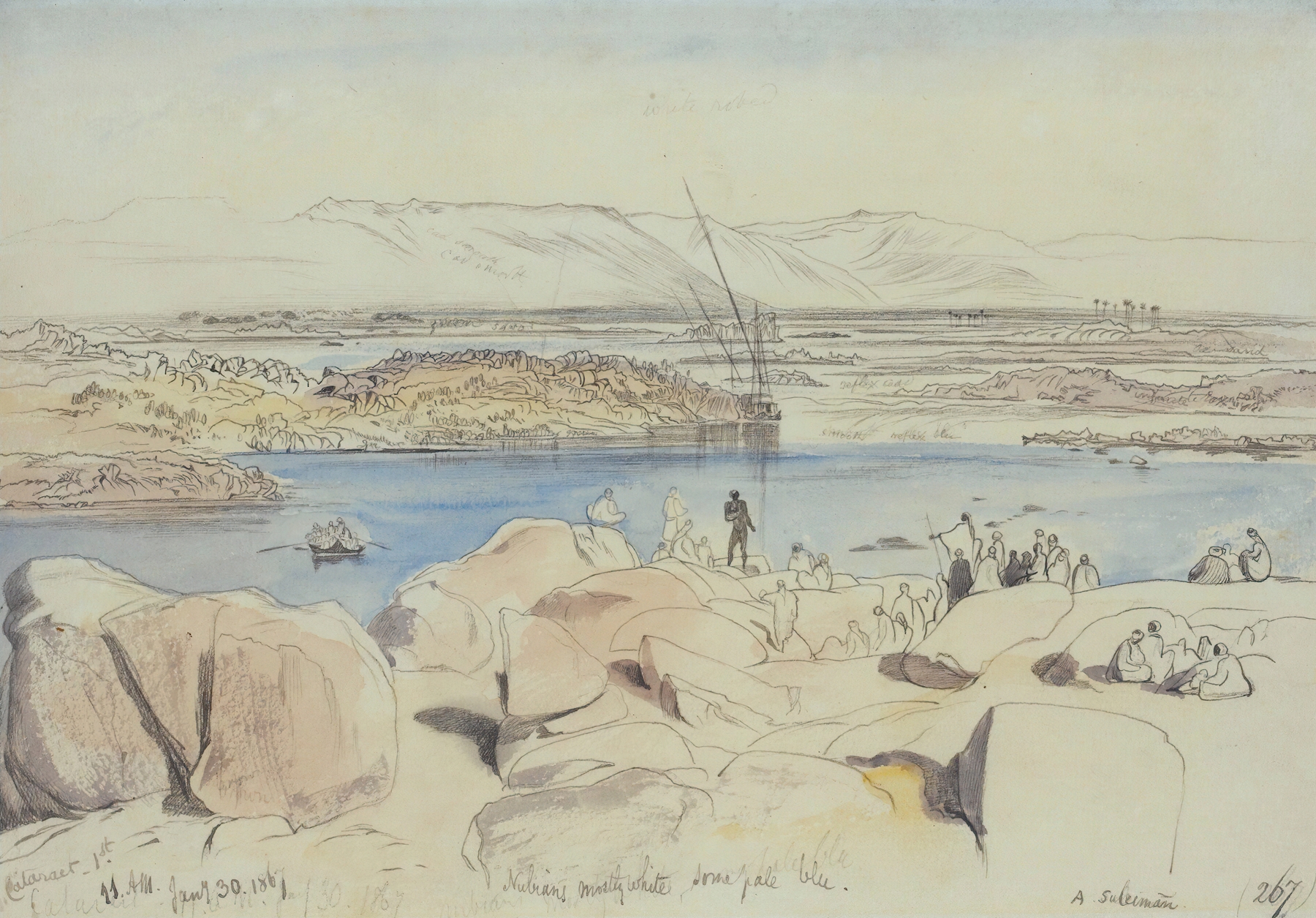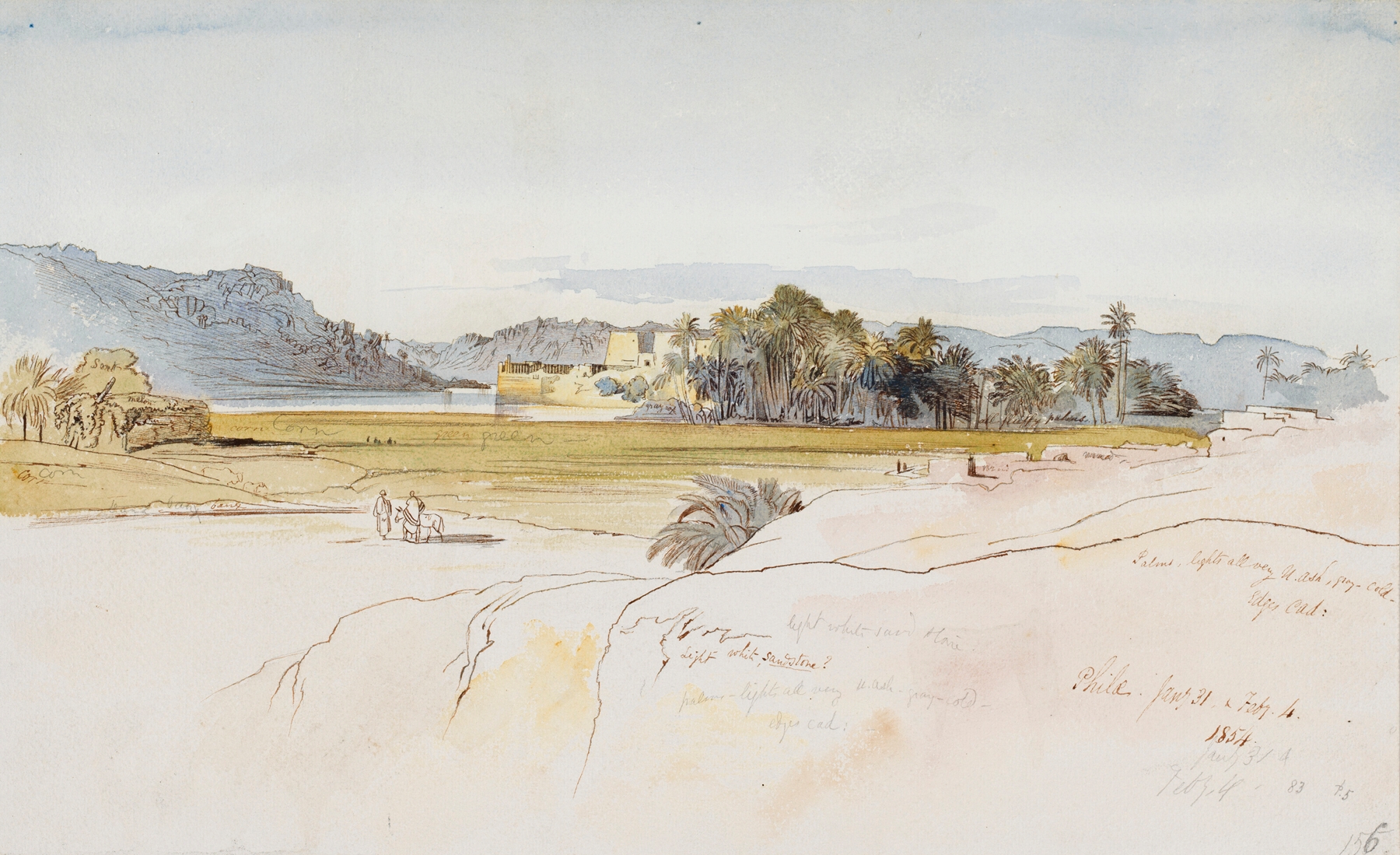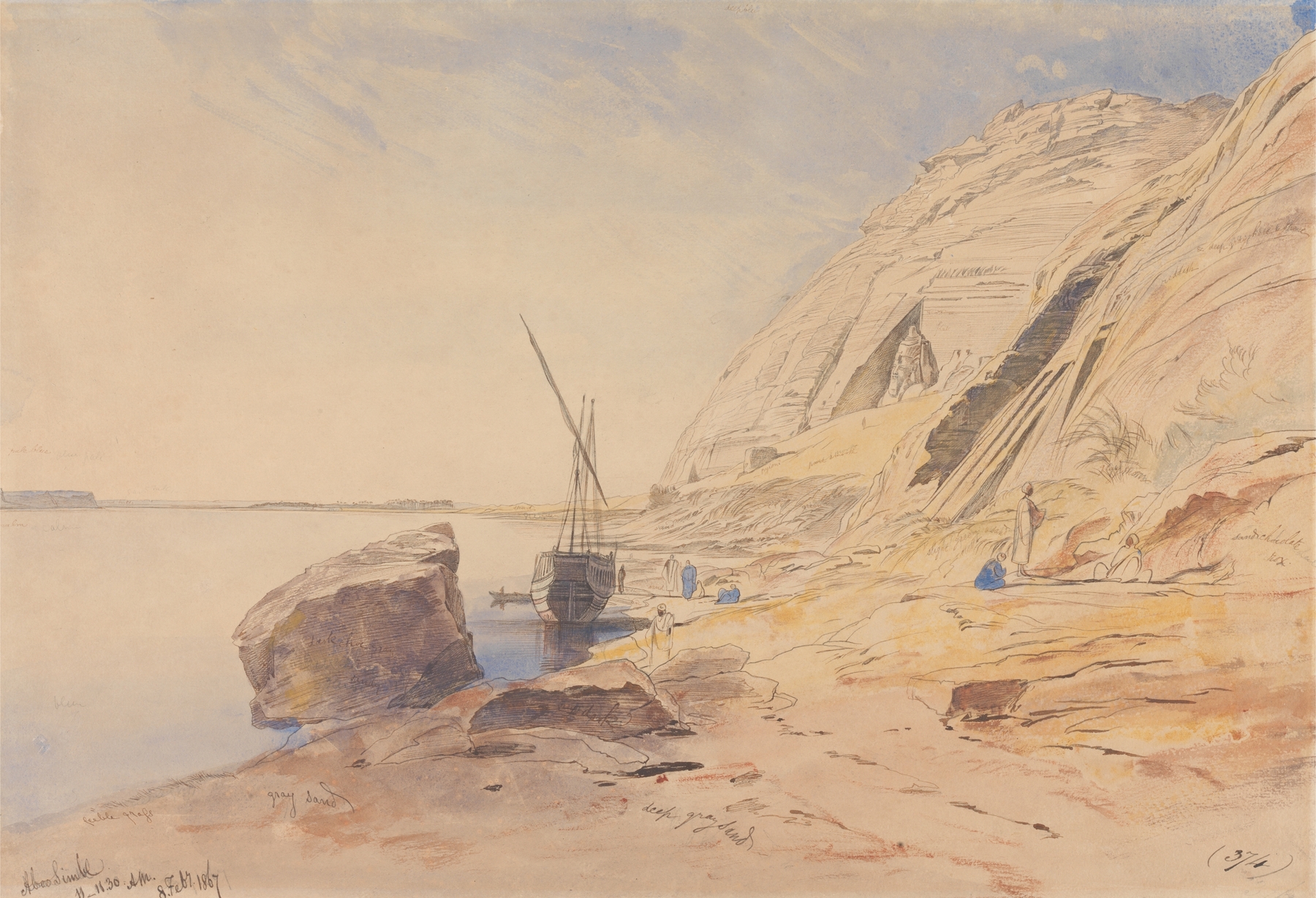
What if silence could speak through light? Edward Lear’s remarkable vision calls forth an unspoken revolution, where the very essence of stillness transforms into a vivid symphony of color and form. Look closely at the left side of the canvas, where the monumental temples of Abu Simbel rise against the stark desert landscape. The intricacies of the stone carvings draw the eye, their shadows cast by the unforgiving sun at 11:11 AM, infusing the scene with a golden glow. Notice how the deep blues and ochres interplay, highlighting the textures of the ancient architecture while the sky looms expansively above, a vast canvas of serenity that contrasts with the solidity below. Delve deeper, and you'll uncover the subtle tension between permanence and transience—a reminder of the fleeting nature of time against the backdrop of history. The light, soft yet potent, caresses the age-old stones, evoking a sense of reverence and contemplation. This moment, frozen in time, speaks volumes about the cultural significance of the monuments and their connection to both the past and the present, suggesting that even in silence, there is a powerful call for change. Lear created this captivating work during a transformative period in the 19th century, while traveling in Egypt. The allure of the ancient world inspired a revival of interest in classical themes within art, as well as a growing fascination with the cultures encountered during the wave of exploration and imperialism. It was a time when the dialogue between East and West began to flourish, reflecting the broader societal shifts that would shape the future of art and human understanding.