Kruisdraging, Veronica met de zweetdoek, Kruisoprichting, Kruisiging — History & Analysis
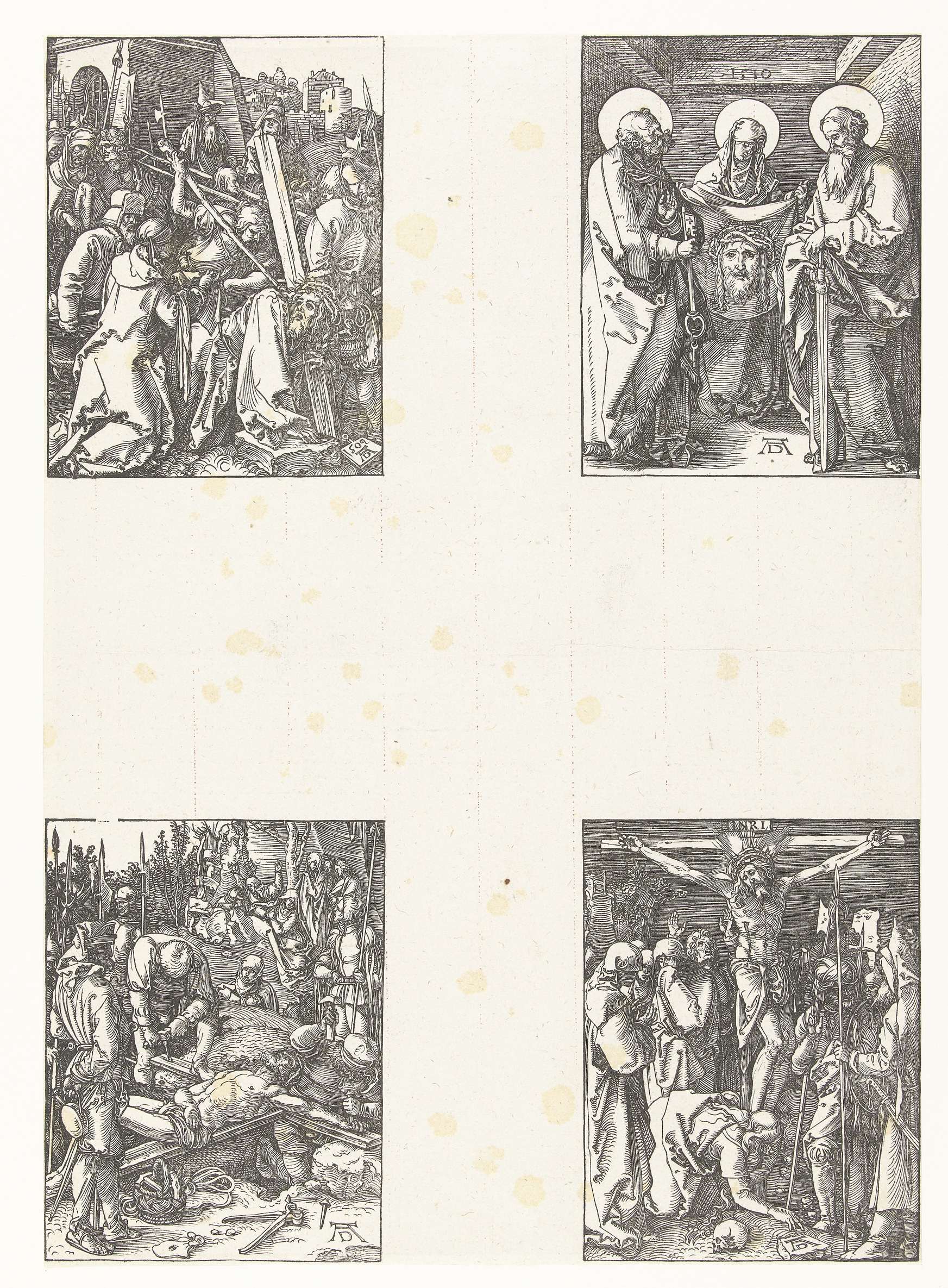
Could a single brushstroke hold eternity? In the hands of a master, the answer resonates through the ages, capturing fleeting moments and monumental truths alike. In this intricate work, the viewer's eye is immediately drawn to the figure of Veronica, her delicate features illuminated against the somber backdrop of the crucifixion scene. Focus on the striking contrast between her vibrant garment and the muted colors of the surrounding figures, each stroke revealing both emotion and reverence.
The composition, masterfully balanced, guides the gaze toward her outstretched hands, offering the cloth—a symbol of compassion amidst suffering—anchoring the viewer in both time and narrative. Upon closer inspection, one notices the subtle tension between light and shadow, accentuating the anguish of those near the cross. The agony etched on the faces of the bystanders presents a profound commentary on grief and sacrifice, while Veronica's calm determination offers a glimmer of hope. The intricate details of drapery and texture reflect Dürer’s innovative techniques and reveal the emotional weight carried within the scene, inviting introspection on themes of faith, resilience, and the human condition.
Created in the early 16th century, during a period of intense religious reformation, this piece reflects Dürer’s deep engagement with the spiritual struggles of his time. Working in Nuremberg, he drew upon the contemporary dialogues of faith and art, infusing his pieces with a revolutionary spirit that challenged perceptions and conventions. This artwork stands as a testament to the transformative power of art, bridging the sacred and the secular, while echoing the complexities of human experience.