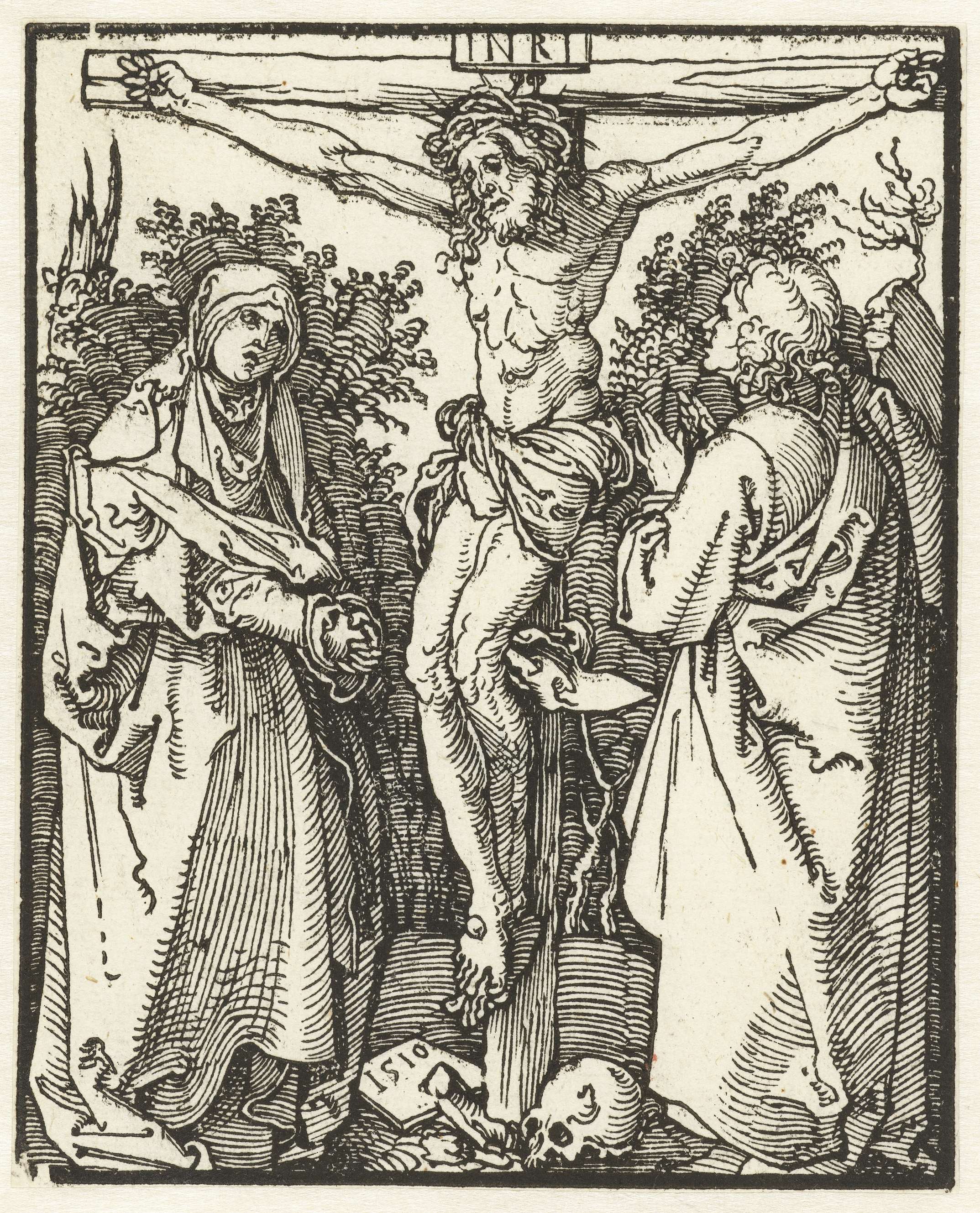
When did color learn to lie? In the depths of *Kruisiging*, Dürer unveils a moment of pure ecstasy intertwined with agony, where the divine intersects with the human experience. The vibrant hues challenge our perception, begging us to question the authenticity of the emotions they convey. Look to the center, where the crucified figure is suspended between life and death. The stark contrast of reds and blues draws the eye immediately, emphasizing not only the physical pain but also the spiritual transcendence. Notice how the intricate details of the figures surrounding him draw you into their despair—each face carved with meticulous precision, their expressions a tapestry of grief and reverence. Shadows cradle the contours of the body, giving depth and a palpable sense of weight, while the light illuminates the scene, transforming anguish into a haunting beauty. Amid the suffering, the painting reveals the complexity of faith—a struggle that mingles hope with despair. The positions of the figures suggest conflict; their gestures oscillate between prayer and mourning. The backdrop itself acts as a silent witness, the dark clouds swirling ominously, hinting at the tumultuous nature of belief during this era. This juxtaposition of ecstasy and torment encapsulates the inner conflict faced by humanity, forcing us to confront the duality of existence. Dürer painted *Kruisiging* in 1510 while living in Nuremberg, a city at the heart of the Renaissance's intellectual revival. During this time, he was deeply influenced by both humanist ideals and the growing tensions of the Reformation. The work reflects the evolving landscape of faith and artistry, capturing his struggle to reconcile the spiritual and the corporeal in a rapidly changing world.