La halte des chameliers — History & Analysis
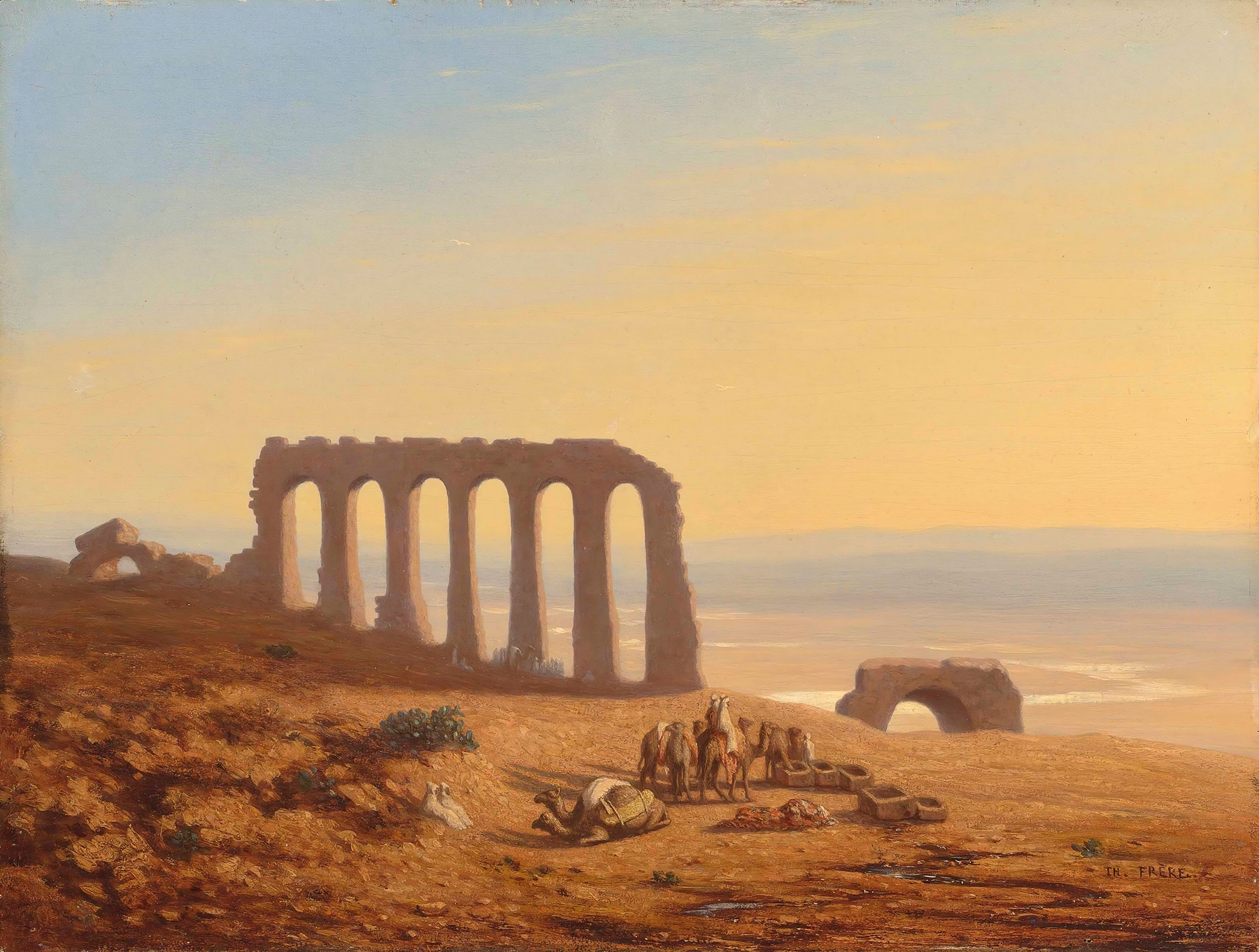
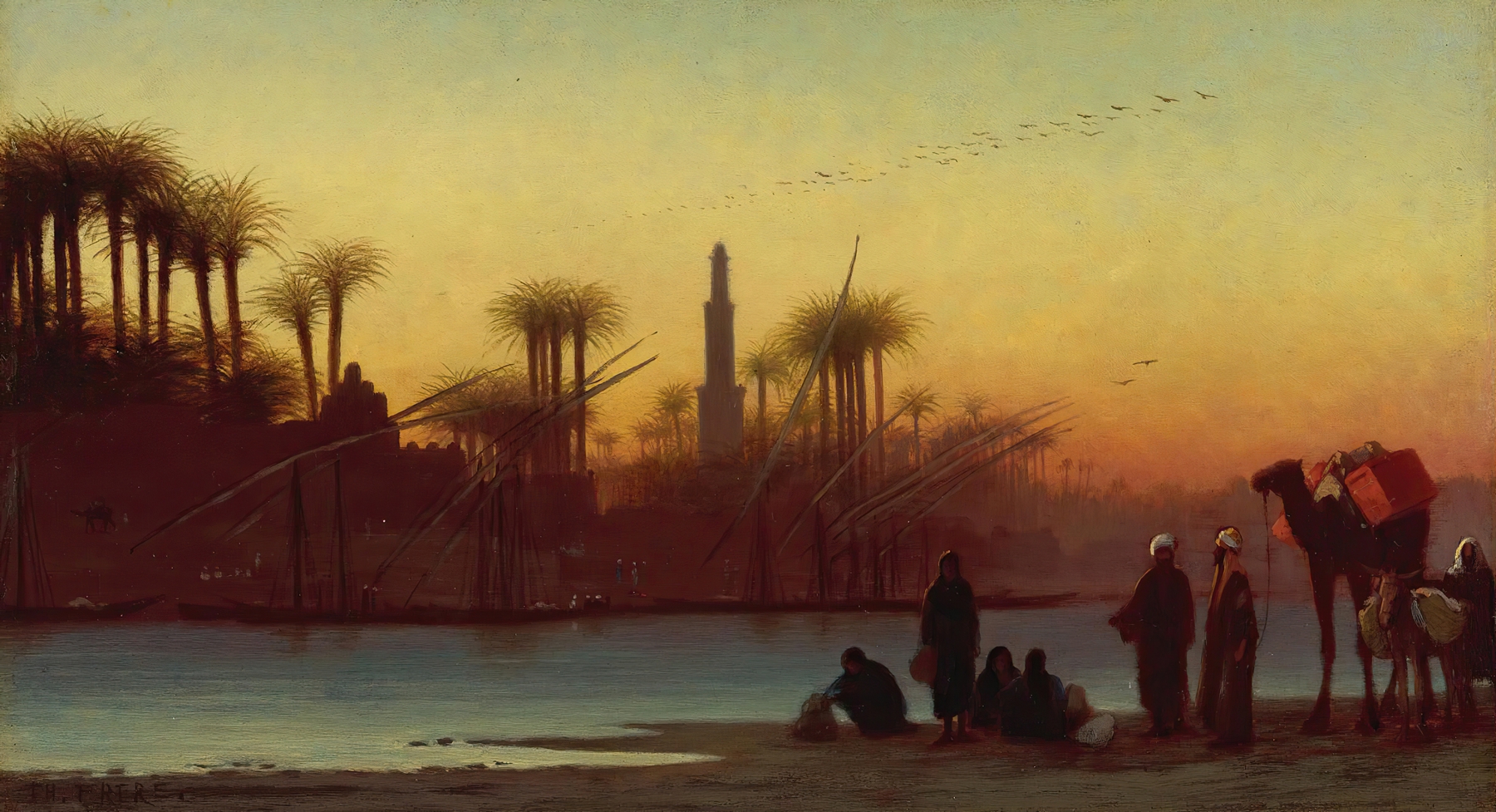
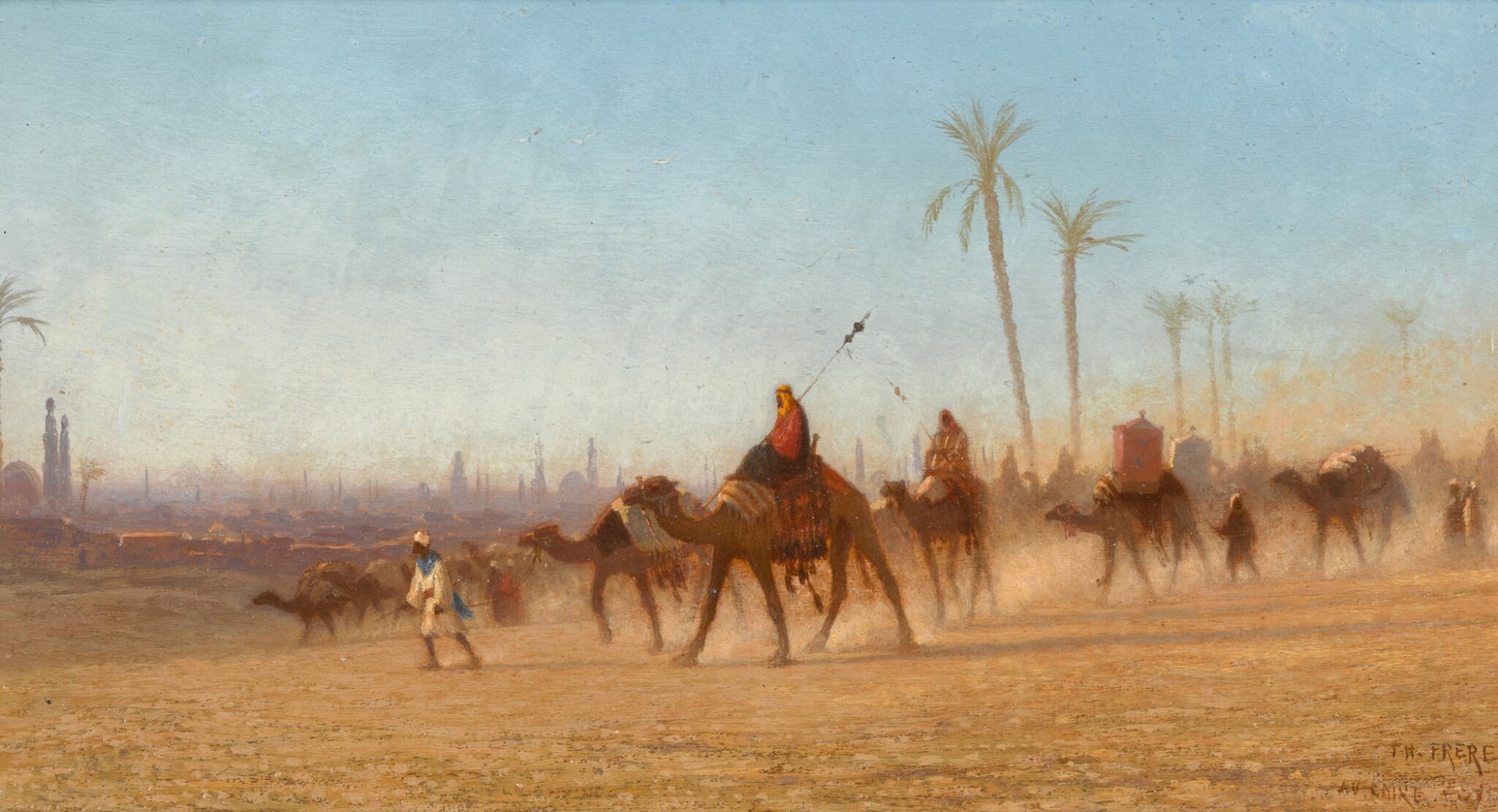
What if silence could speak through light? In La halte des chameliers, tranquility envelops the desert scene, inviting viewers to ponder the stories whispered by the soft hues of the setting sun. Look to the left at the camels, their silhouettes gently outlined against a canvas of warm golds and deep oranges. The masterful brushwork captures the texture of the sand, rendering it almost tactile, while the nuanced shadows hint at the lengthening day. Notice how the fading sunlight dances across the travelers’ faces, illuminating expressions of weariness yet peace.
Each element, from the flowing drapery of their garments to the delicate positioning of the camels, guides the eye into a serene moment captured in time. Beneath the sunlit surface lies a profound contrast between the harshness of the desert and the refuge of companionship. The stillness of the scene suggests a pause in their arduous journey—an unspoken bond among the travelers that transcends words. This serene gathering reflects a shared human experience, capturing fleeting moments of connection amidst life’s relentless challenges.
The interplay of light and shadow not only enhances the visual allure but also evokes a sense of awe at the beauty found in stillness. Frère painted this piece during the 19th century, a time when he was deeply influenced by the exoticism of North Africa. Living in France, he sought inspiration from his travels in the Maghreb, where he captured the essence of local life. This work fits into a wider trend in art that explored themes of travel and cultural interaction, reflecting both a personal journey and the broader fascination with distant lands during the period.