Landscape in the Style of Ancient Masters: after Gao Kegong (1248-1310) — History & Analysis
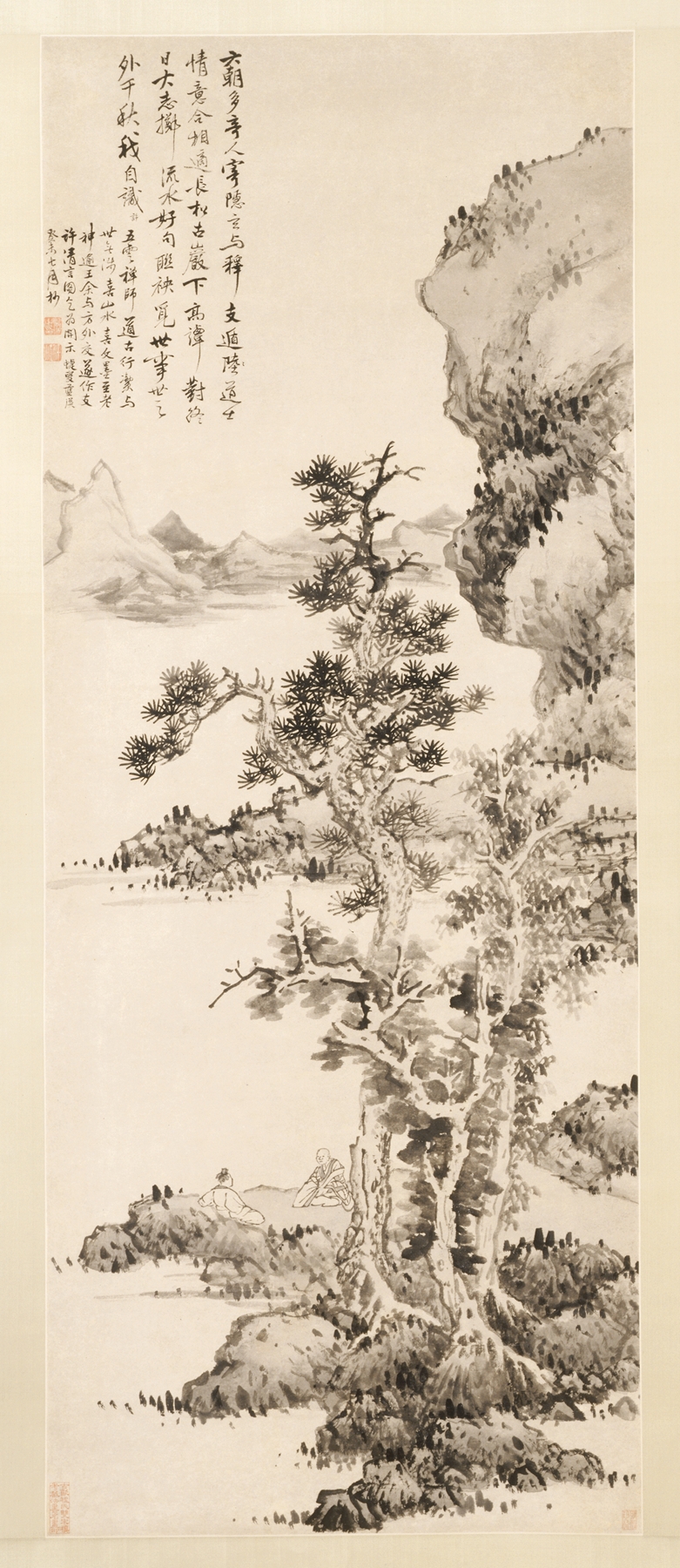
“Every brushstroke is a heartbeat remembered.” In a world where memories fade like mist over mountains, each line and color tells a story of longing and reverence for the past. How do we capture the essence of what once was, the echoes of ancient masters lingering in the air? Look to the sweeping hills that dominate the canvas; their gentle undulations guide your eye through the landscape, reminiscent of the serene vistas of Gao Kegong. Notice how the ink flows elegantly, creating a sense of depth and tranquility, with delicate strokes that mimic the soft embrace of nature.
The muted palette of greens and grays harmonizes, while subtle washes of blue invoke an ethereal quality, as if the painting itself breathes with life and nostalgia. Within the composition, the contrasts between the lush foreground and the distant, misty peaks evoke a profound sense of separation. The interplay of shadow and light reveals an emotional tension— a yearning for connection to the past that remains just out of reach. The solitary figure, barely discernible against the landscape, embodies the universal struggle to find solace in a world steeped in history, as their gaze seems to wander, searching for lost moments.
In 1642, during the Ming dynasty, the artist found inspiration in ancient traditions while living in a time of political upheaval and cultural transformation. As Lan Ying painted this work, he sought to bridge the gap between eras, capturing the essence of a rich heritage while infusing it with his own artistry. This painting stands as a testament to the enduring power of memory and the artistic journey through which it unfolds.