Landscape in the Style of Ancient Masters: After Gao Shangshu, Following Dong Yuan and Ju Ran, and Later in the Style of Mi Fu — History & Analysis
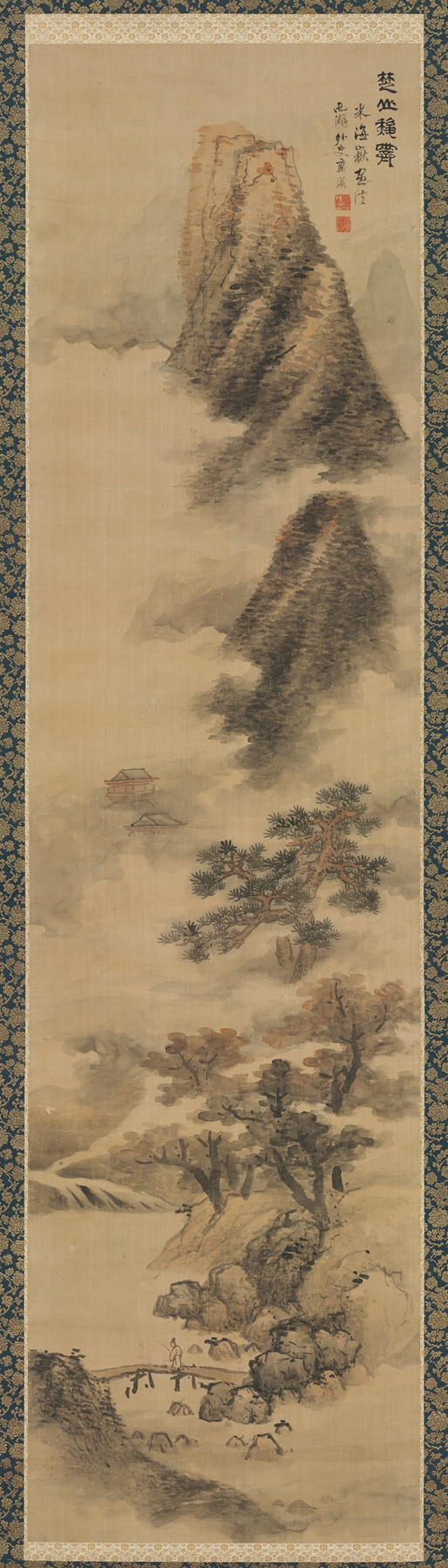
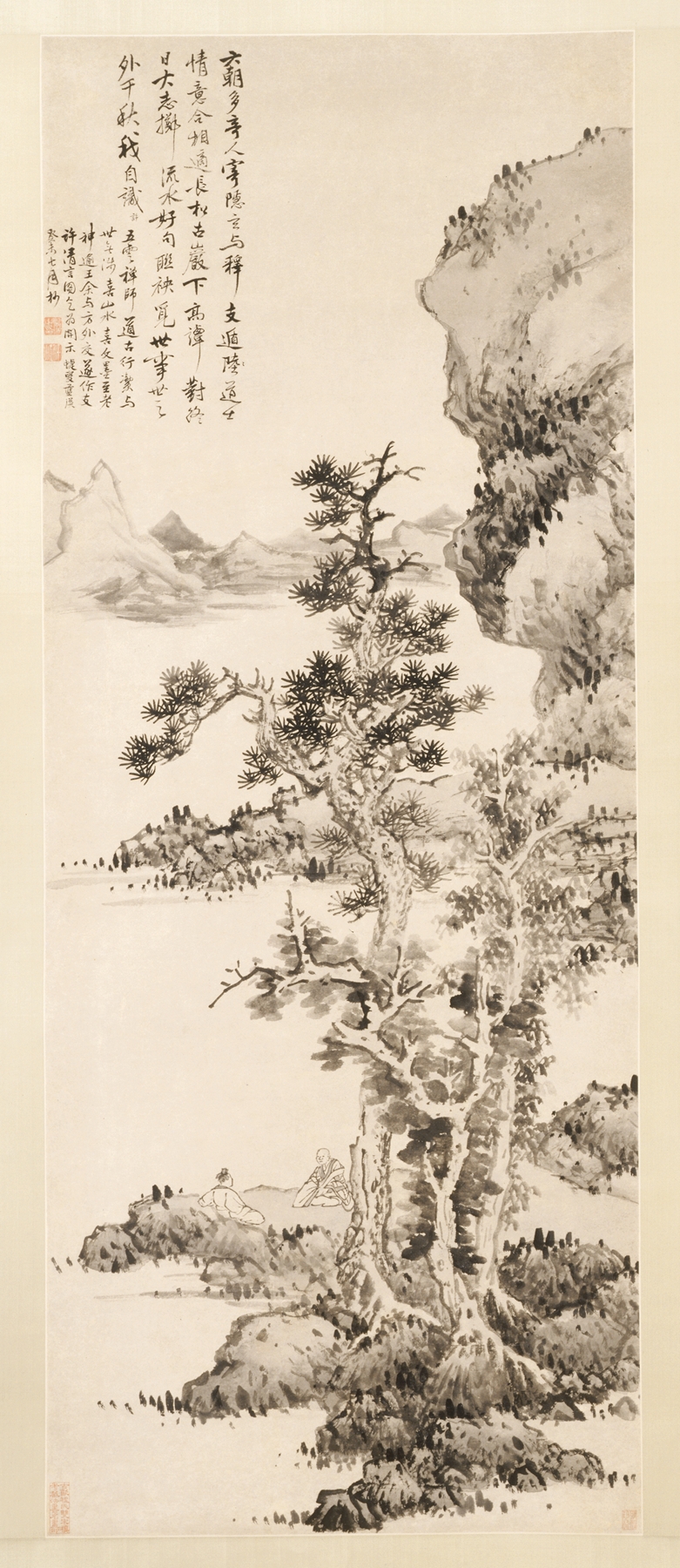
Could beauty survive in a century of chaos? In a world rattled by upheaval, the delicate balance of light and nature emerges in a painting that whispers of tranquility amid tumult. Look to the gentle undulations in the foreground, where the vibrant greens of the landscape cradle clusters of ancient trees. Notice how the brushstrokes execute a harmonious dance, flowing with the contours of hills that stretch into the horizon.
The play of light, captured in soft washes of color, creates a serene atmosphere while the pale blues and muted earth tones evoke a quiet nostalgia, reminiscent of classical Chinese artistry. As the viewer journeys deeper into the composition, subtle contrasts begin to reveal themselves. The interplay between the shadowed valleys and illuminated peaks symbolizes the dualities of life: serenity and turmoil, permanence and transience. Hidden among the foliage, tiny figures engage in daily activities, their presence a reminder of humanity’s enduring spirit in nature's embrace—a poignant reflection of Lan Ying's era, where beauty clashed with the harsh realities of existence.
In 1642, the artist crafted this work in the midst of the Ming dynasty's decline, a time marked by political strife and cultural transformation. Lan Ying drew inspiration from the techniques of ancient masters while establishing his unique voice in a shifting artistic landscape. As he painted in Zhejiang province, he sought to revive the spirit of classical landscape painting, presenting a sanctuary that transcended the chaos surrounding him.