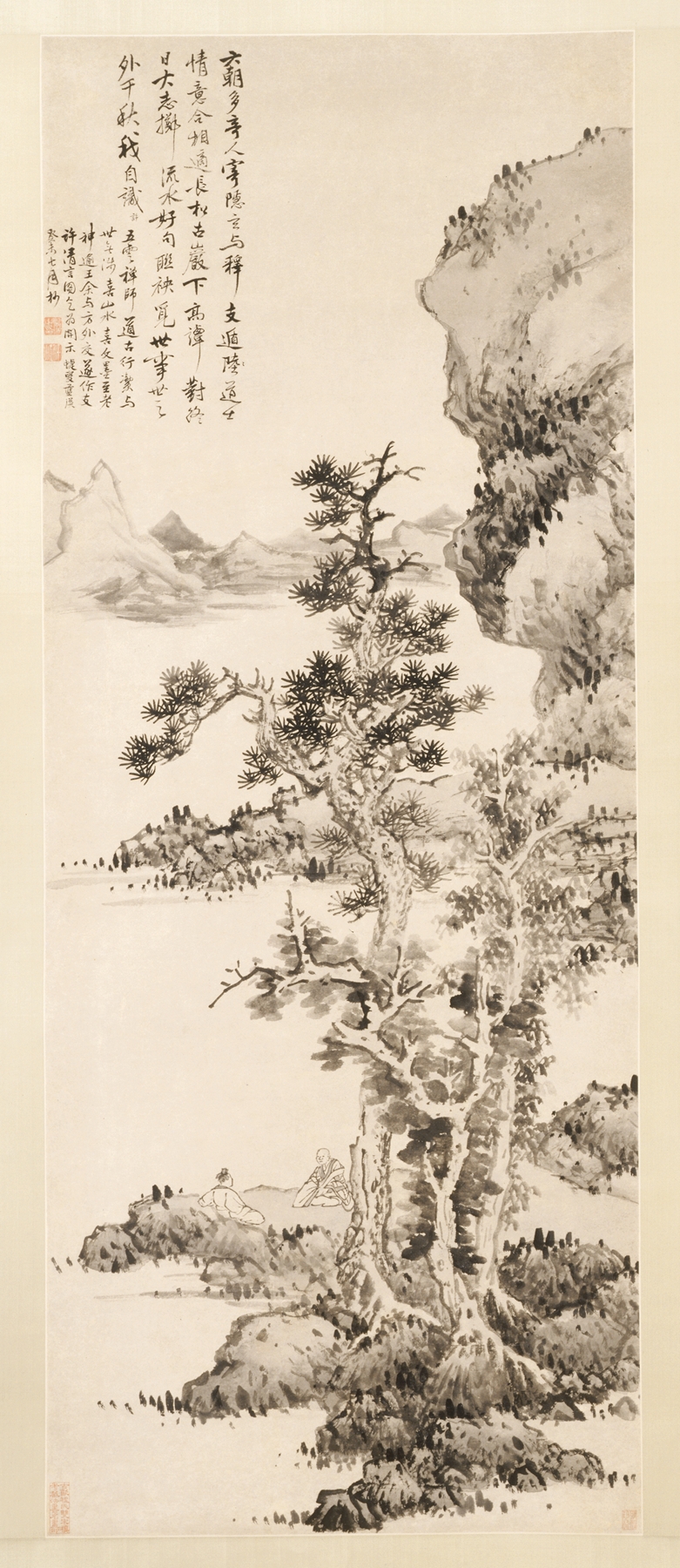
Clearing Autumn Mists in the Chu Mountains — History & Analysis
Where does light end, and longing begin? In the haunting interplay of fog and shadow, we find the essence of fear lurking just beneath the surface. Look to the center of the painting, where mist drapes over the rugged peaks of the Chu Mountains, softening their sharp edges. The subtle gradation of blues and greys creates a sense of both distance and intimacy, drawing the viewer into a landscape that feels both familiar and foreign. Notice how the artist uses delicate brushstrokes to evoke the ephemeral quality of fog, allowing it to cradle the mountain tops while leaves of deep ochre peek through, hinting at the season's change.
Each stroke breathes life into the scene, embodying a delicate balance between clarity and ambiguity. As you delve deeper, tension unfurls within the mingling hues. The light that breaks through the mist suggests hope, yet it also casts an eerie glow that amplifies a sense of foreboding. The juxtaposition of the vivid autumn colors against the cool, enveloping fog creates a dialogue between transience and permanence — a reminder that beauty often exists alongside uncertainty.
It is this tension that invites the viewer to confront their own fears, as the landscape becomes a mirror reflecting the intricate dance of light and shadow within one’s psyche. In the 1600s, Lan Ying painted this masterpiece while navigating a changing artistic landscape in China, marked by the Ming dynasty's decline. Living in a time of political unrest and personal struggles, he sought solace in nature, translating his emotional landscape into visual poetry. This work is not just a representation of his surroundings but a profound exploration of the human experience, capturing the duality of beauty and fear that resides within us all.