Landscape near Pont-Aven — History & Analysis
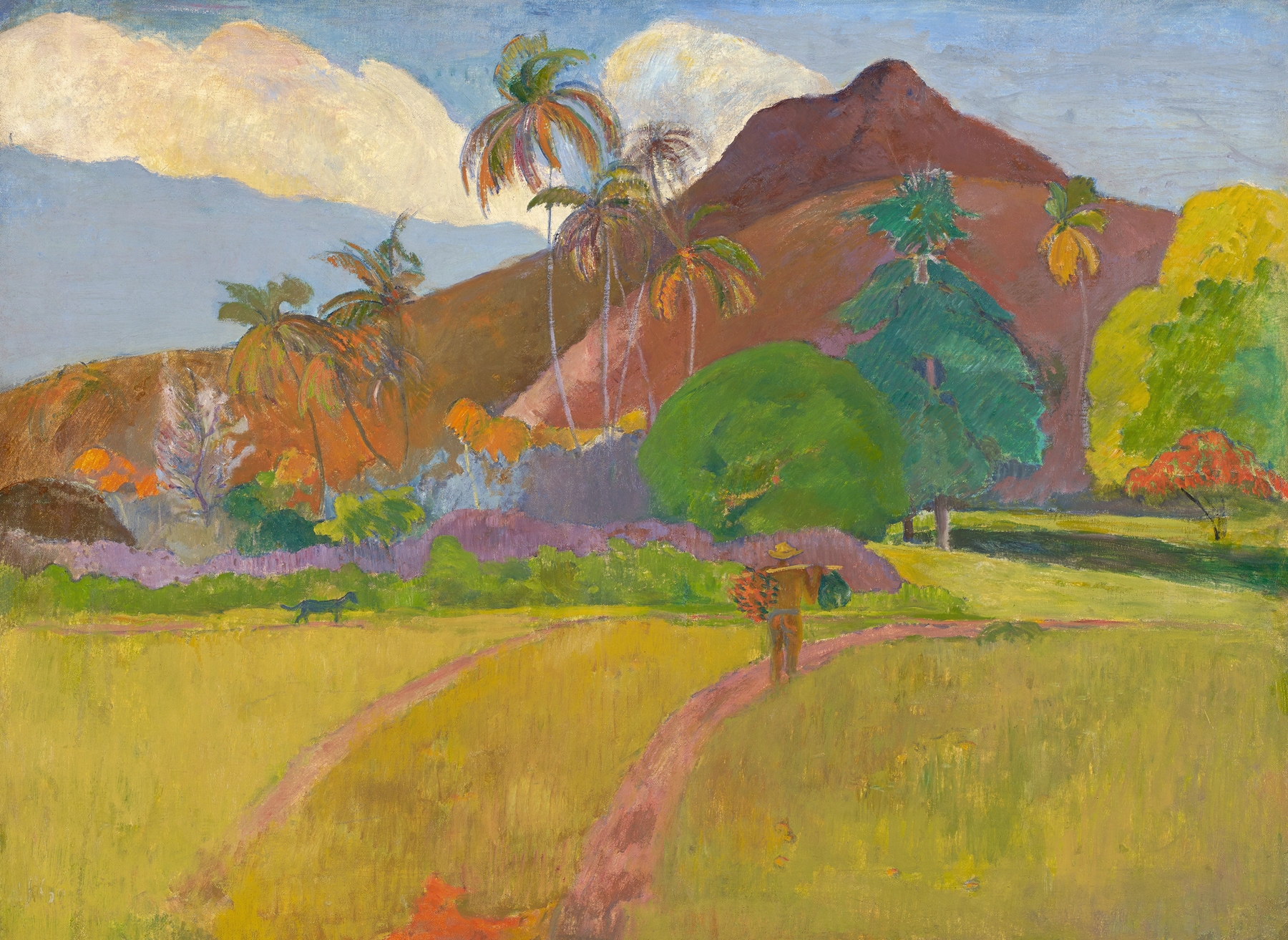
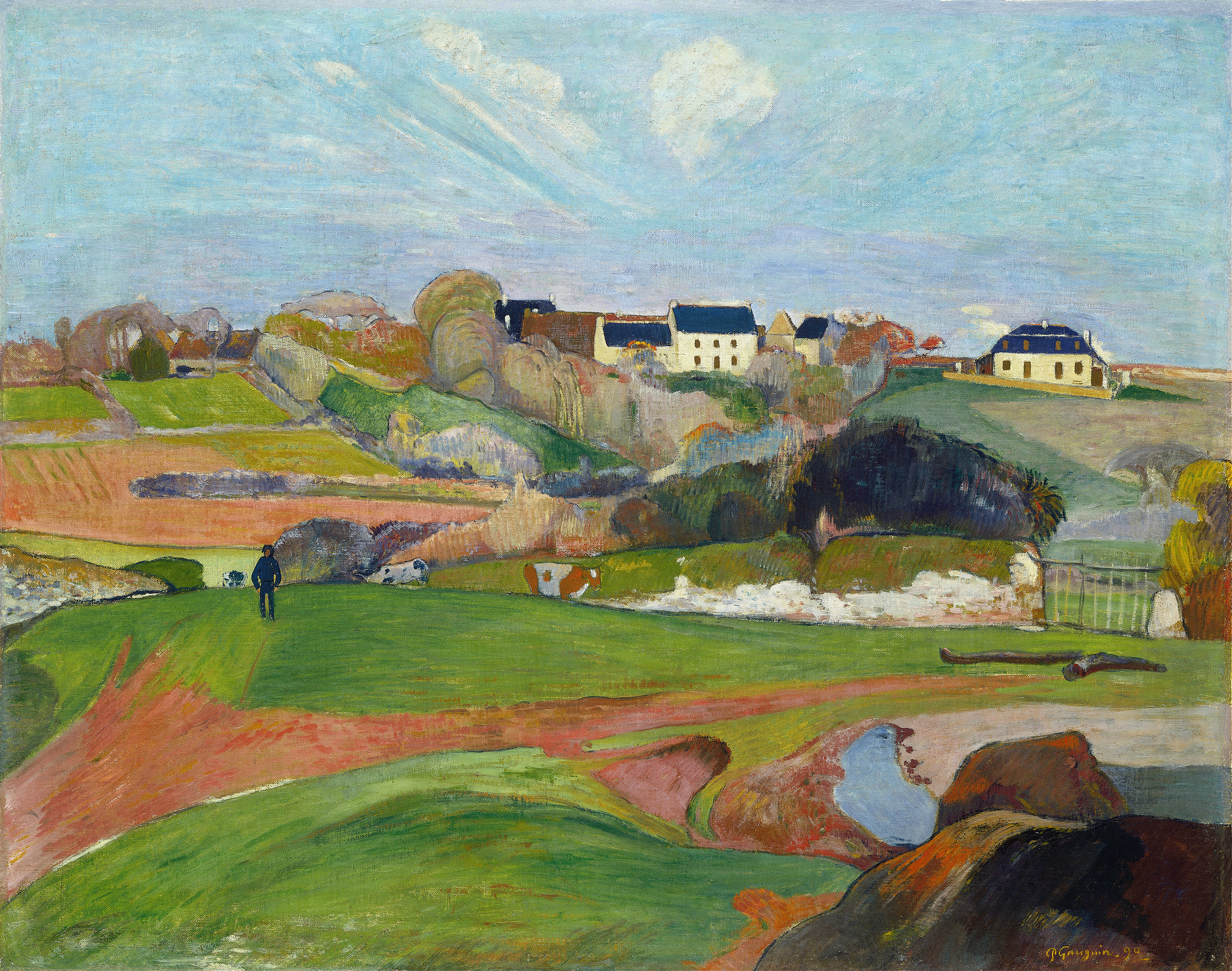
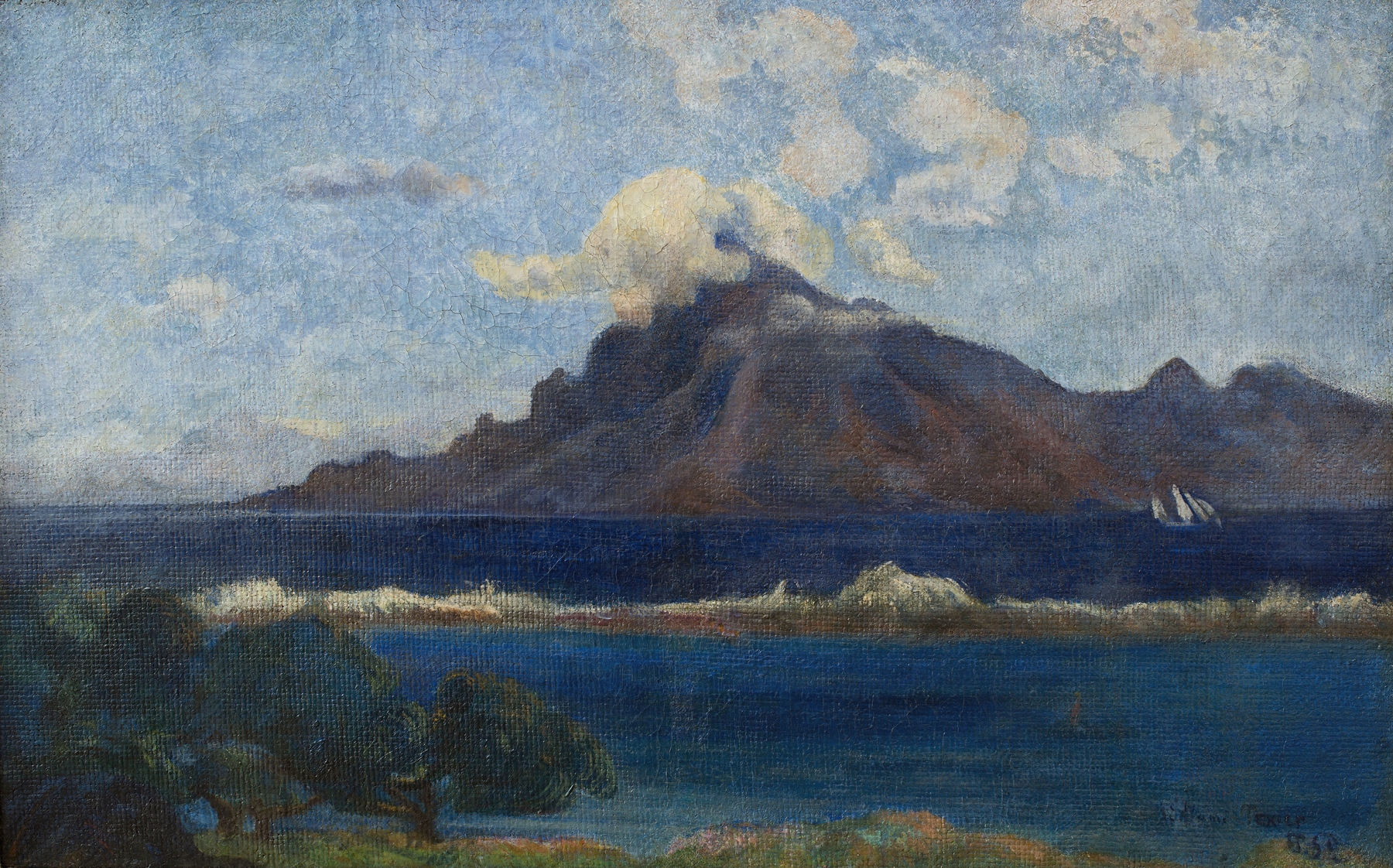
Who listens when art speaks of silence? In Landscape near Pont-Aven, vibrant colors converge to narrate a story that transcends mere representation, inviting introspection and connection. Look to the left at the undulating hills, clothed in shades of emerald and gold, each stroke of paint revealing the artist's emotional resonance with the landscape. The sky bursts with brisk blues and soft whites, inviting the viewer's gaze to travel upwards, where it meets the horizon — a seamless blend of nature’s palette that lies just beyond the trees.
Notice how the bold, unblended colors are not just depictions of the land, but an expression of joy, evoking the warmth of a late afternoon sun. In this work, Gauguin captures an essence of harmony and tranquility, yet beneath its serene surface lies a tension between the natural and the idealized. The dappled light filtering through the leaves suggests a fleeting moment, while the absence of human figures denotes solitude. Each brushstroke vibrates with an intensity that leads us to reflect on our own encounters with nature, encouraging us to find our own silence within this beautiful chaos.
Painted during a pivotal time in his life in 1888, the artist sought refuge in the Breton countryside after his disillusionment with Parisian art circles. Embracing a post-impressionist vision, he was determined to transcend the confines of conventional painting, experimenting with color and emotion as a means of expression. In this larger context, Landscape near Pont-Aven stands as a testament to his evolving artistic voice and the transformative power of place.