Village in Martinique (Femmes et Chevre dans le village) — History & Analysis
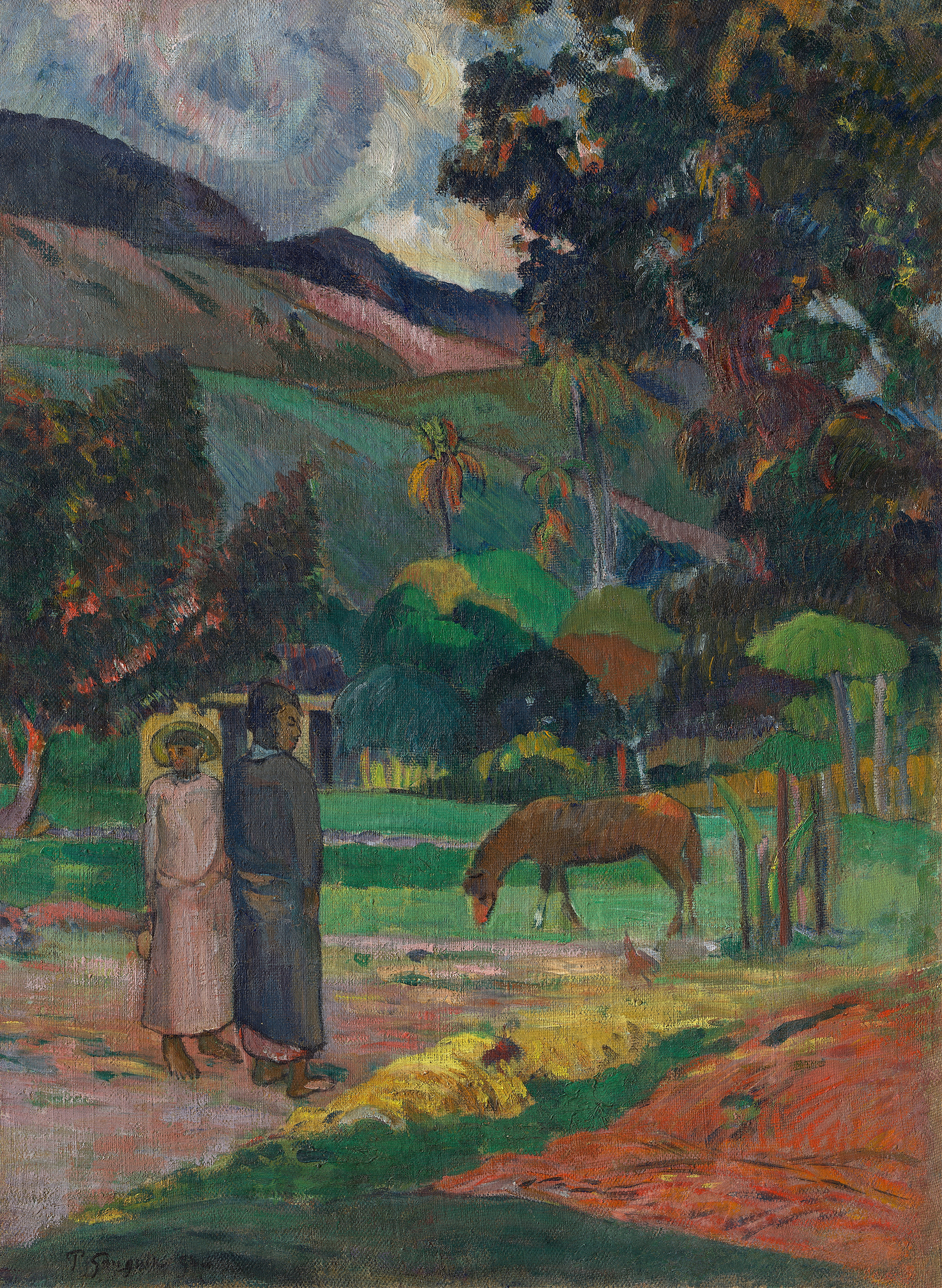
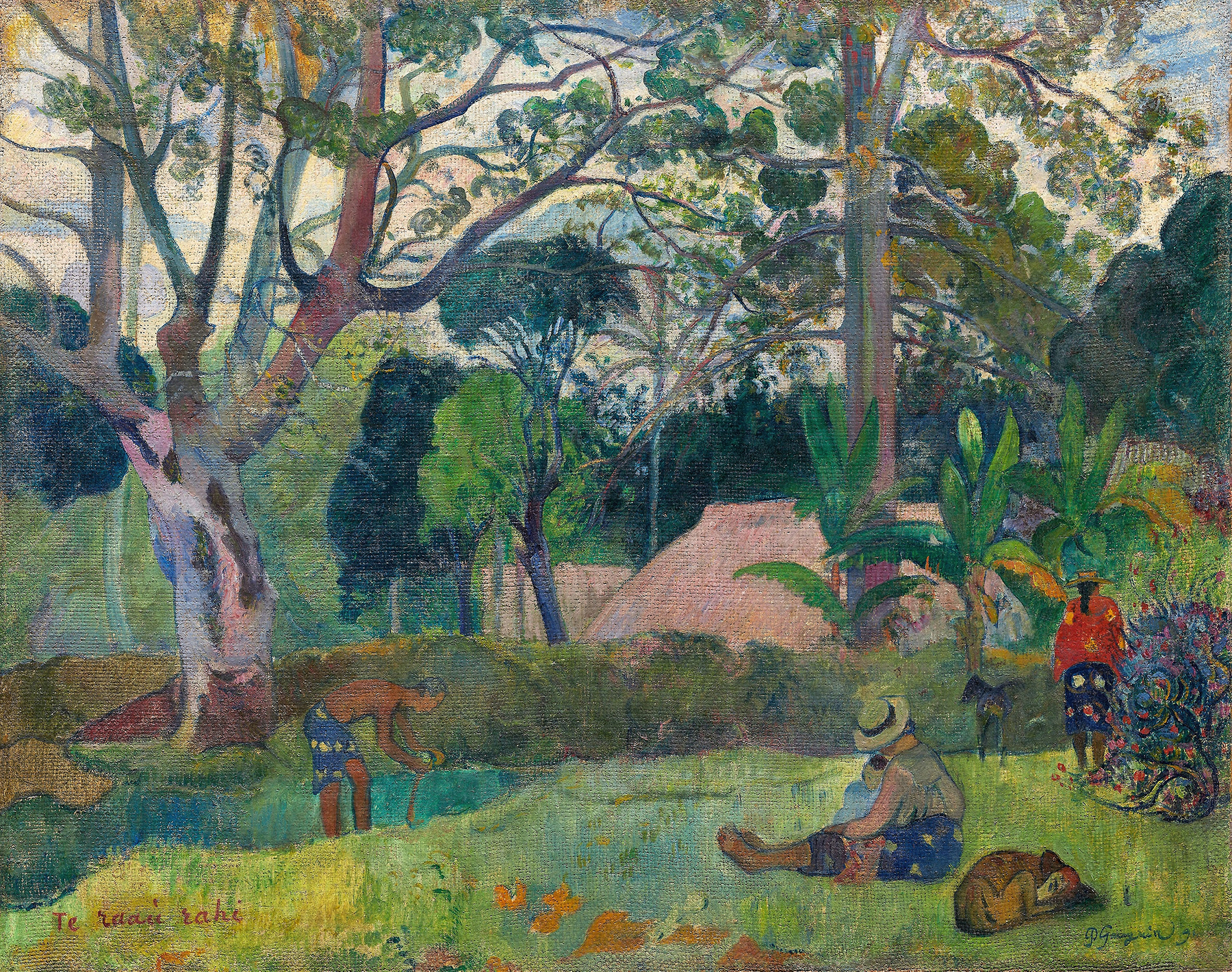
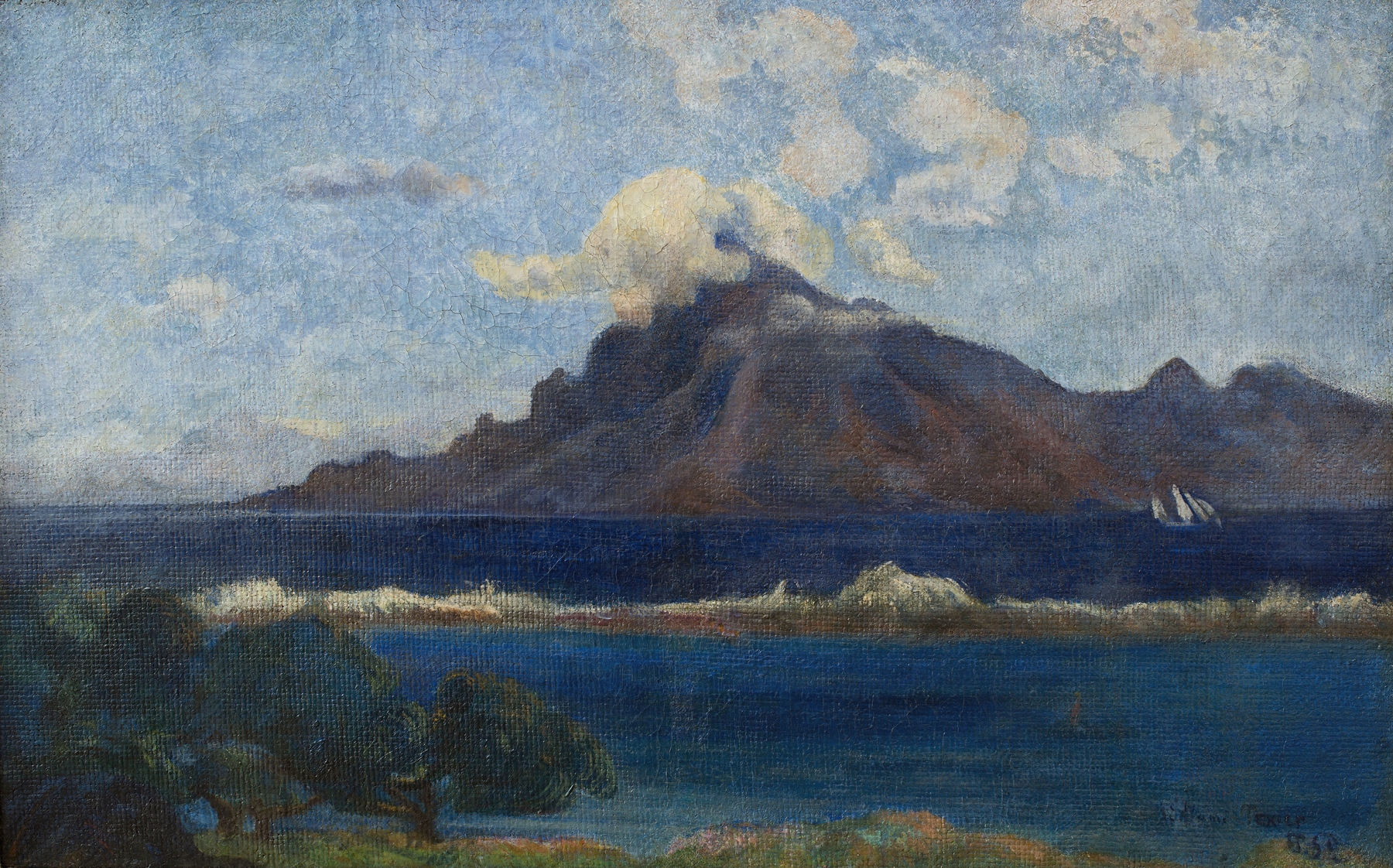
Could beauty survive in a century of chaos? This question lingers in the air as one gazes upon the tranquil yet poignant scene captured in this artwork, where melancholy whispers through the vibrant hues and the textured strokes of the canvas. Look to the center of the painting, where a cluster of women and goats sit in quiet communion, their forms rendered in earthy tones that echo the warmth of the Caribbean sun. The background, awash with lush greens and blues, invites the viewer’s eyes outward to the rolling hills and distant horizon, creating a sense of peaceful isolation that contrasts with the figures’ stillness.
Notice how Gauguin employs a blend of bold color and simplified shapes, forming a harmonious composition that celebrates both the beauty of everyday life and the weight of underlying sorrow. The juxtaposition of the women’s serene expressions and the goats’ unassuming presence suggests a tension between joy and sadness—a reminder of life’s dualities. The lush landscape, while inviting, hints at the complexities of existence for these figures, who embody both the vibrancy of their surroundings and the melancholy of their circumstances. Each stroke carries the weight of life’s simple yet profound struggles, making the viewer ponder the stories behind their gazes.
In 1887, amidst his transformative journey in Tahiti and later Martinique, Gauguin sought to escape the constraints of European society, embracing themes of primitivism and spirituality. This period marked a crucial turning point in his career, as he sought to convey deeper emotional truths through color and form. The world of art was shifting, with movements like Impressionism paving the way for more expressive and personal interpretations, allowing artists like him to explore the complexities of the human experience.