Tahitian Landscape — History & Analysis
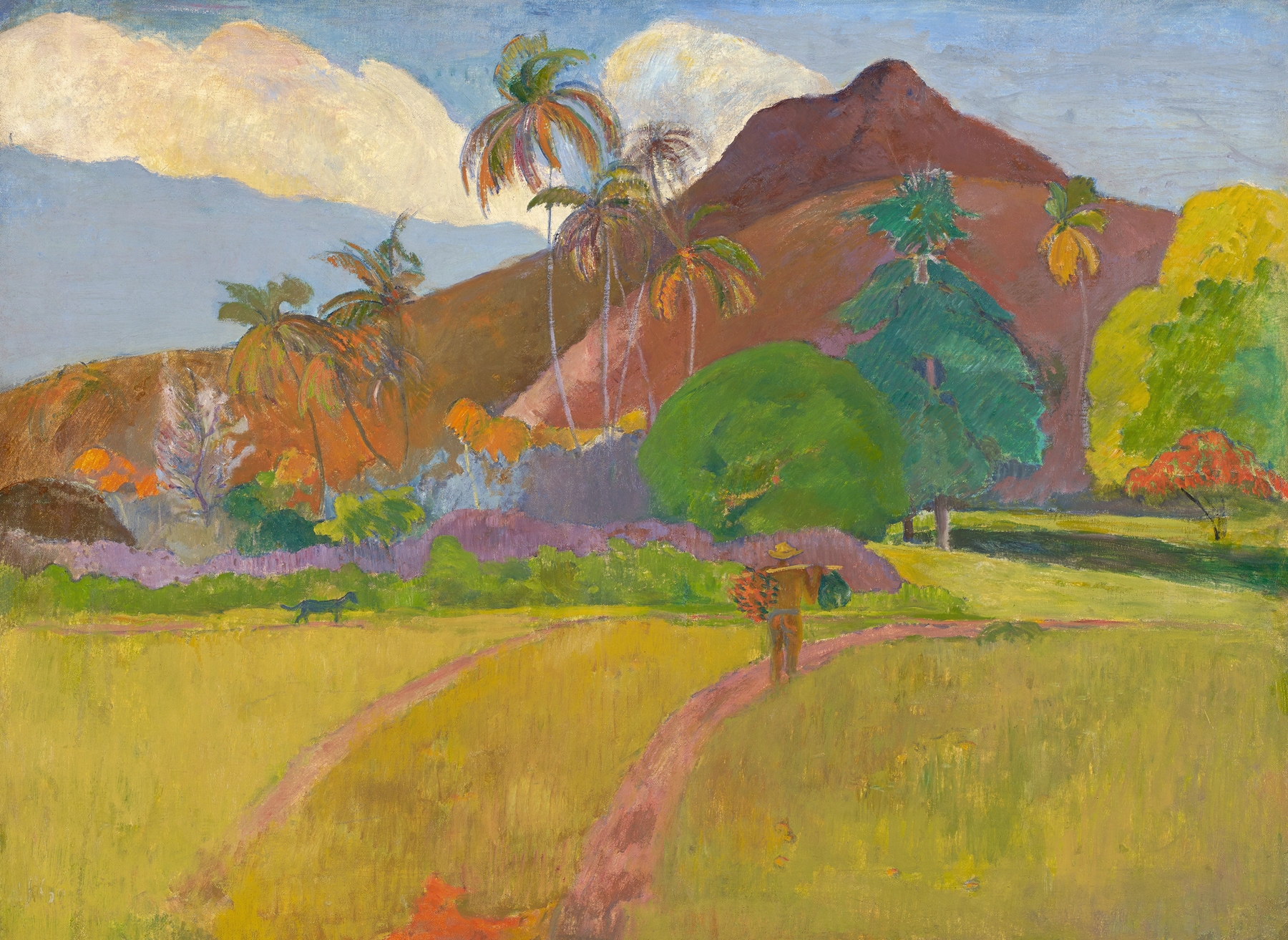
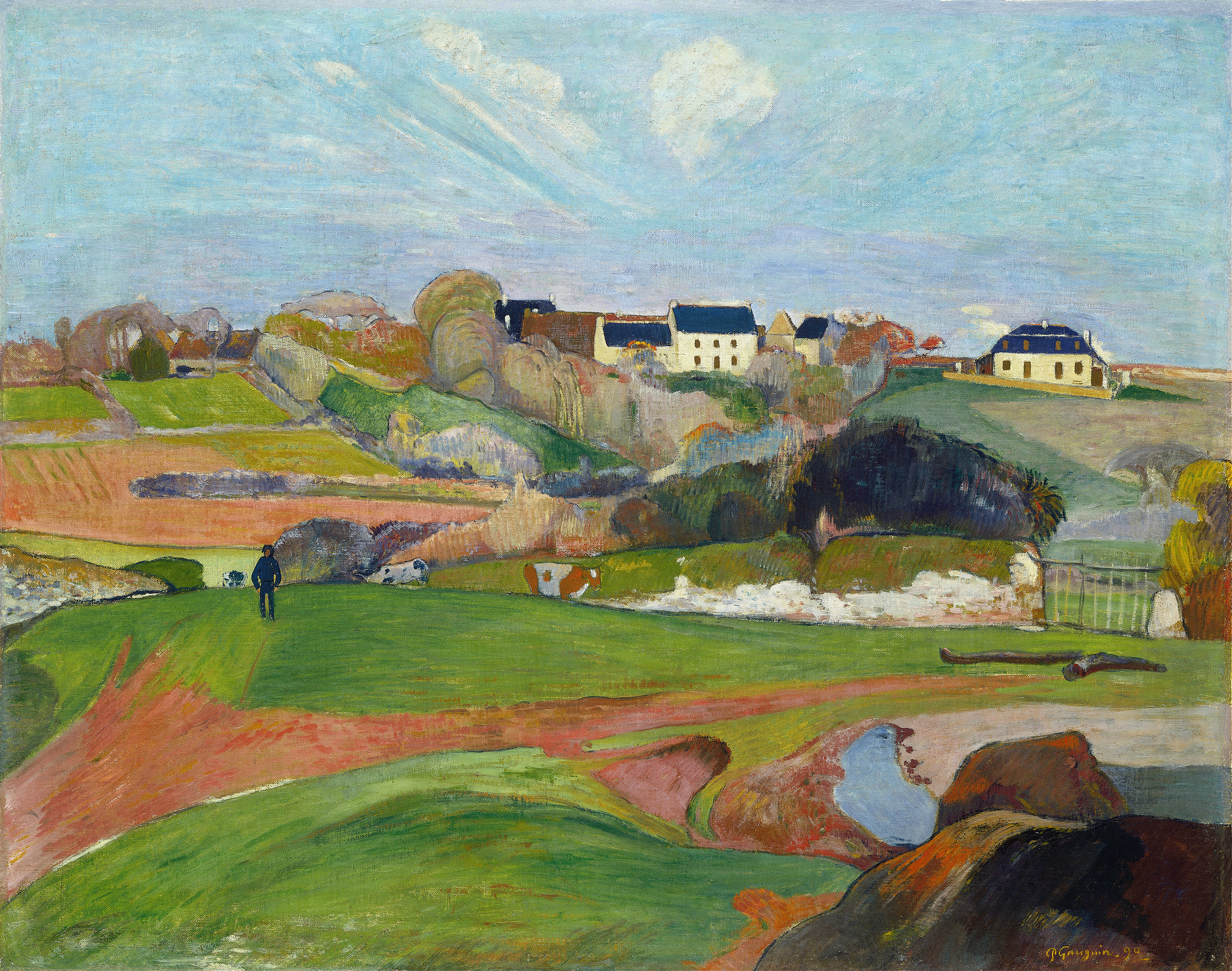
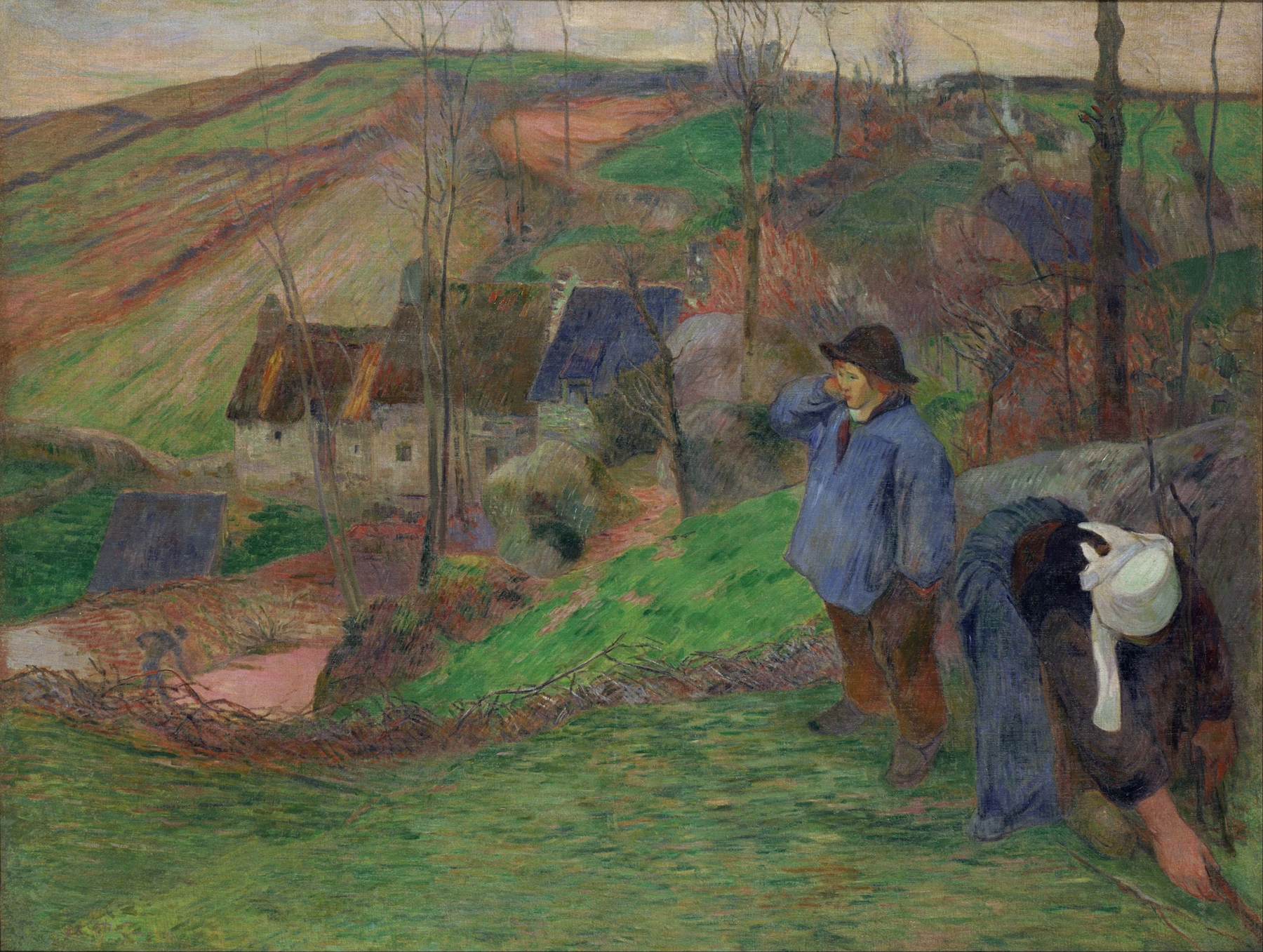
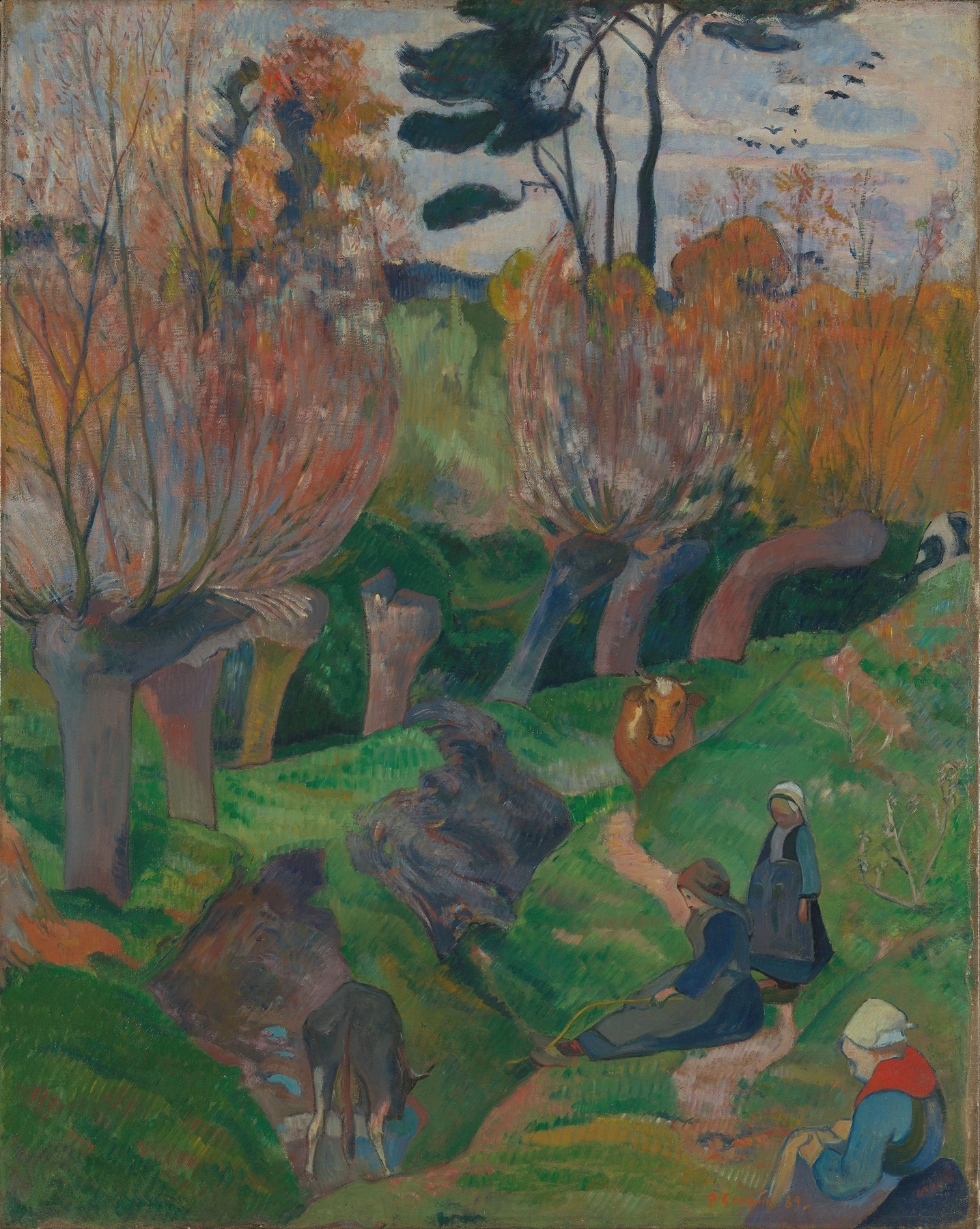
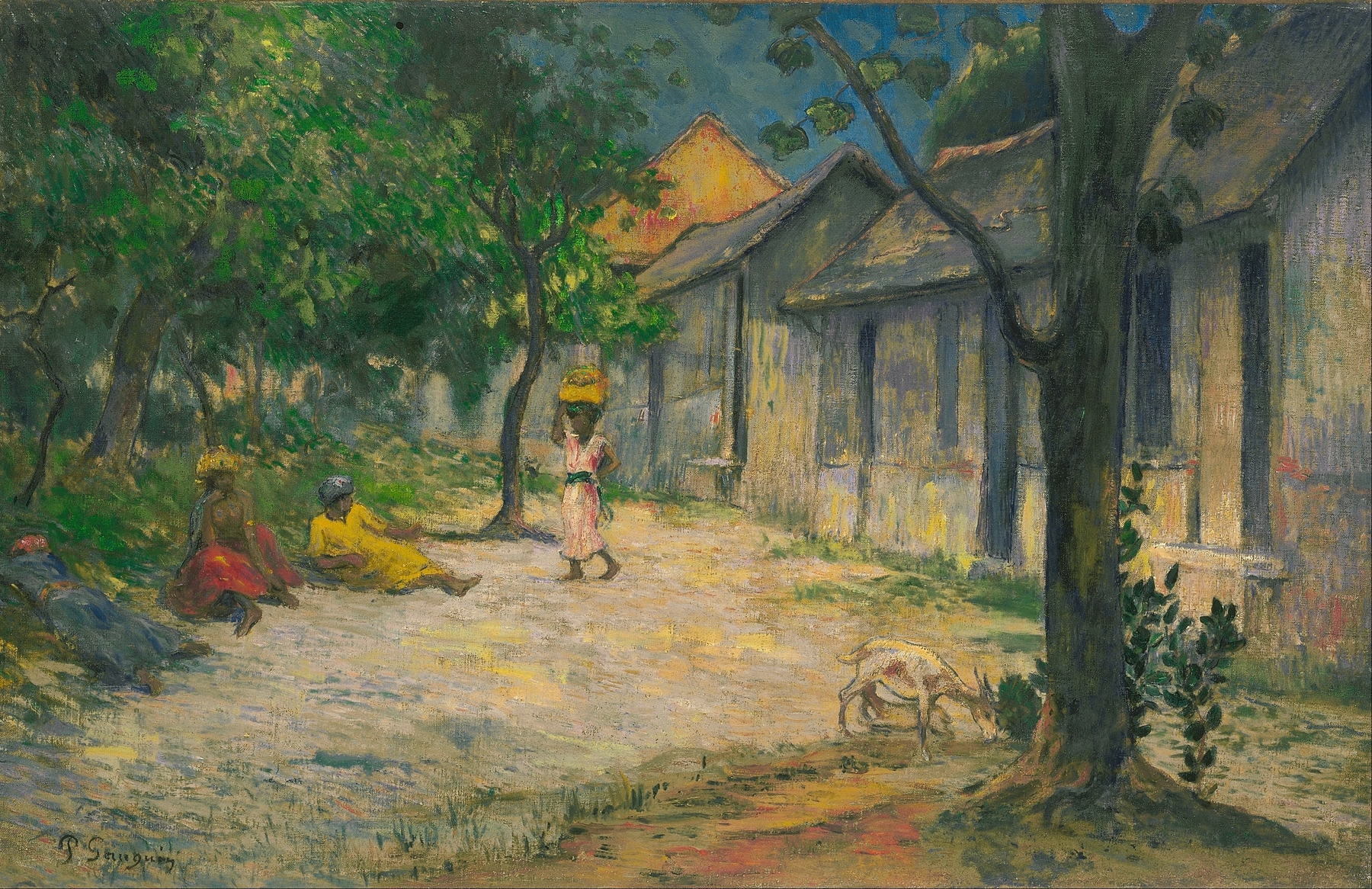
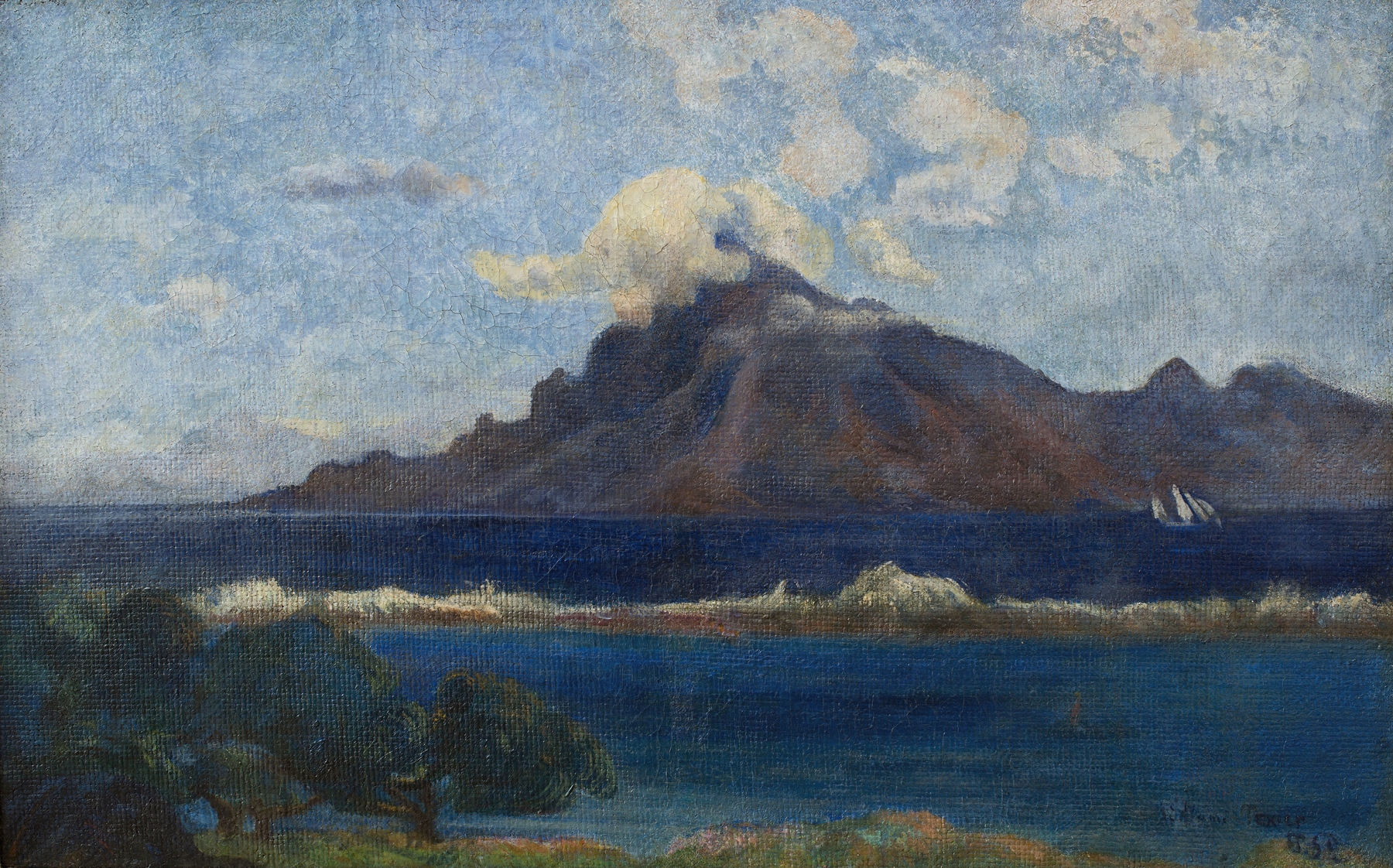
Can beauty exist without sorrow? In Tahitian Landscape, the vivid hues evoke a sublime sense of awe, beckoning the viewer into a world where nature and emotion intertwine. Look to the left at the deep greens and vibrant pinks, grounding the composition in lush foliage that envelops the scene. The bold brushstrokes create an almost tactile quality, inviting exploration of the textured landscape. Notice how the light cascades across the vibrant sky, transitioning from soft yellows to fiery oranges, imbuing the canvas with a sense of movement and time.
The juxtaposition of the serene palm trees against the tumultuous clouds above suggests an inner turmoil beneath the surface beauty of Tahiti. Delve deeper into the contrast between the tranquil foreground and the chaotic skies. This duality reflects the conflicted emotions Gauguin often experienced, as he sought solace in the exotic landscape while grappling with his own discontent in life. The way the natural beauty flourishes amidst this tension amplifies the question of whether true peace can exist in a world fraught with complexity and pain.
Each brushstroke serves as a reminder of the fleeting nature of happiness, underscoring the bittersweet essence of existence. Paul Gauguin created this work in 1892 during his stay in Tahiti, a time when he was searching for a simpler, more authentic life away from European confines. Embracing bold colors and a unique artistic style, he aimed to capture the essence of his surroundings while also reflecting his emotional journey. This period marked a significant shift in Gauguin’s artistic vision, as he began to distance himself from impressionism, striving instead towards a more symbolic representation of life and its myriad experiences.