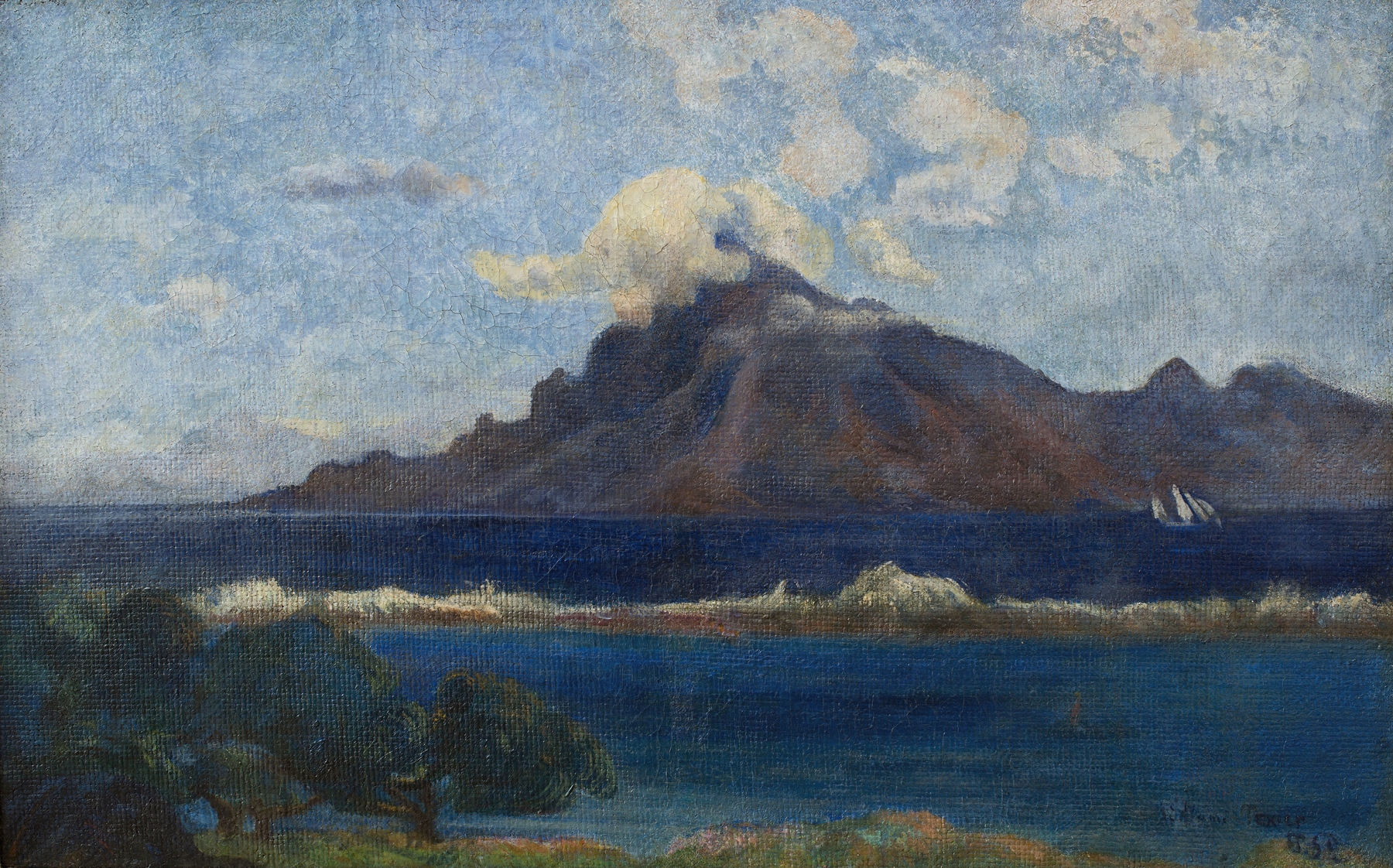
Te raau rahi (The Big Tree) — History & Analysis
“Between color and silence, truth hides.” In Te raau rahi, vibrant hues converse silently, revealing a world steeped in hope and possibility. Look to the center of the canvas, where a massive tree rises dramatically, its emerald foliage bursting with life. Surrounding it, earthy tones interweave with bright bursts of color, drawing the eye to the juxtaposition of the robust trunk against the soft, dappled ground. Notice how Gauguin’s brushstrokes create tension between the natural forms and the abstracted background, giving the viewer a sense of movement and tranquility simultaneously.
The bold colors invite you in, while the stillness of the scene beckons contemplation. Delve deeper into the layers of meaning nestled within the composition. The tree, a symbol of life and endurance, stands resilient amidst a palette that signifies the richness of the landscape. This interplay of vibrancy and solitude speaks to the hope that persists, even in the stillness of nature.
The contrasting elements suggest a balance between the chaos of life and the peace found in moments of reflection, hinting at a deeper emotional and spiritual resonance. In 1891, Gauguin created this work while living in Tahiti, seeking solace and inspiration away from the European art world’s demands. This period marked a significant shift in his artistic vision as he immersed himself in the local culture, exploring themes of spirituality and humanity. The painting embodies his longing for a return to primitive simplicity and the harmony he perceived in the natural world, encapsulating a pivotal moment in his evolution as an artist.