Paysage de Te vaa — History & Analysis
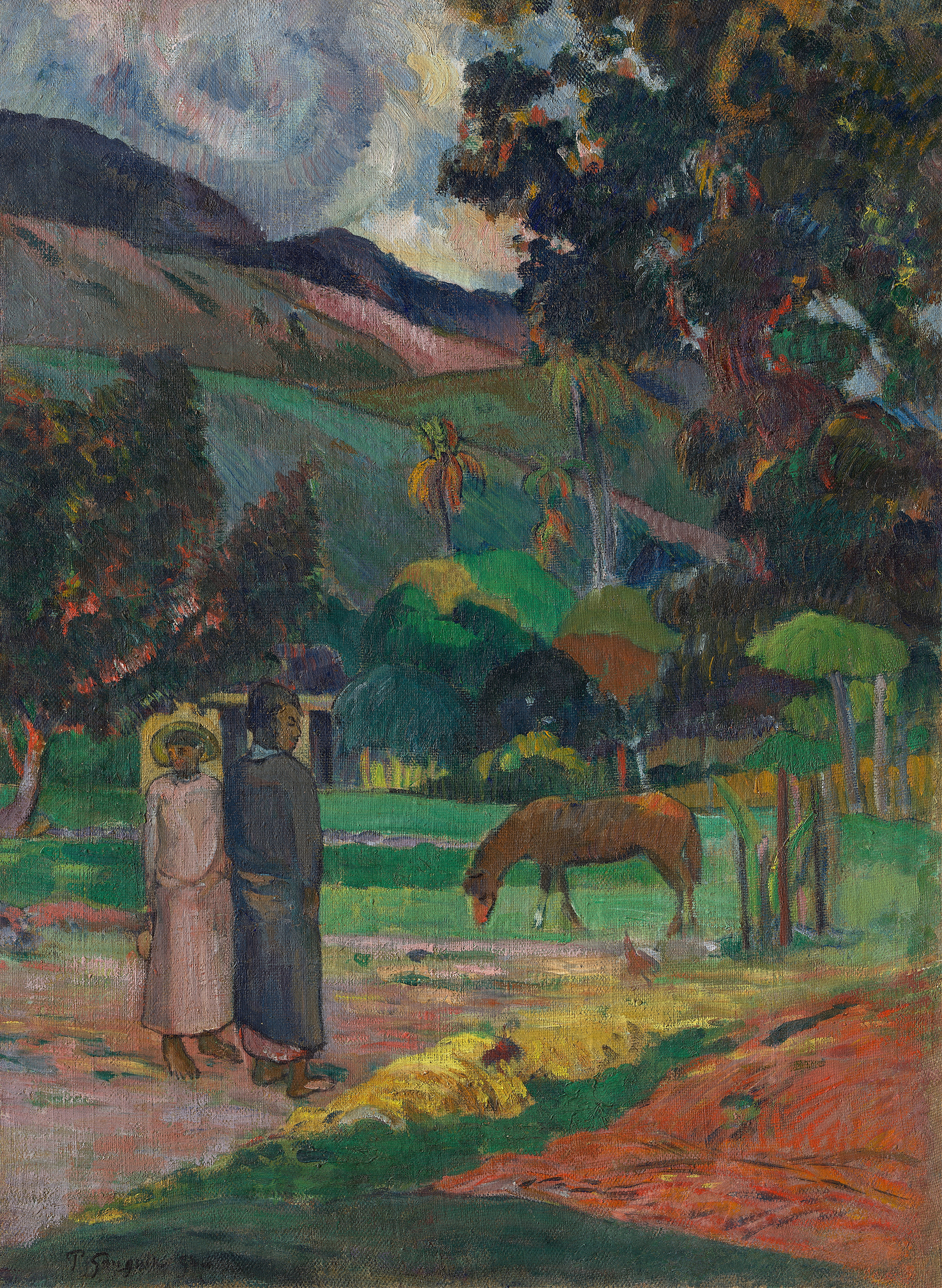
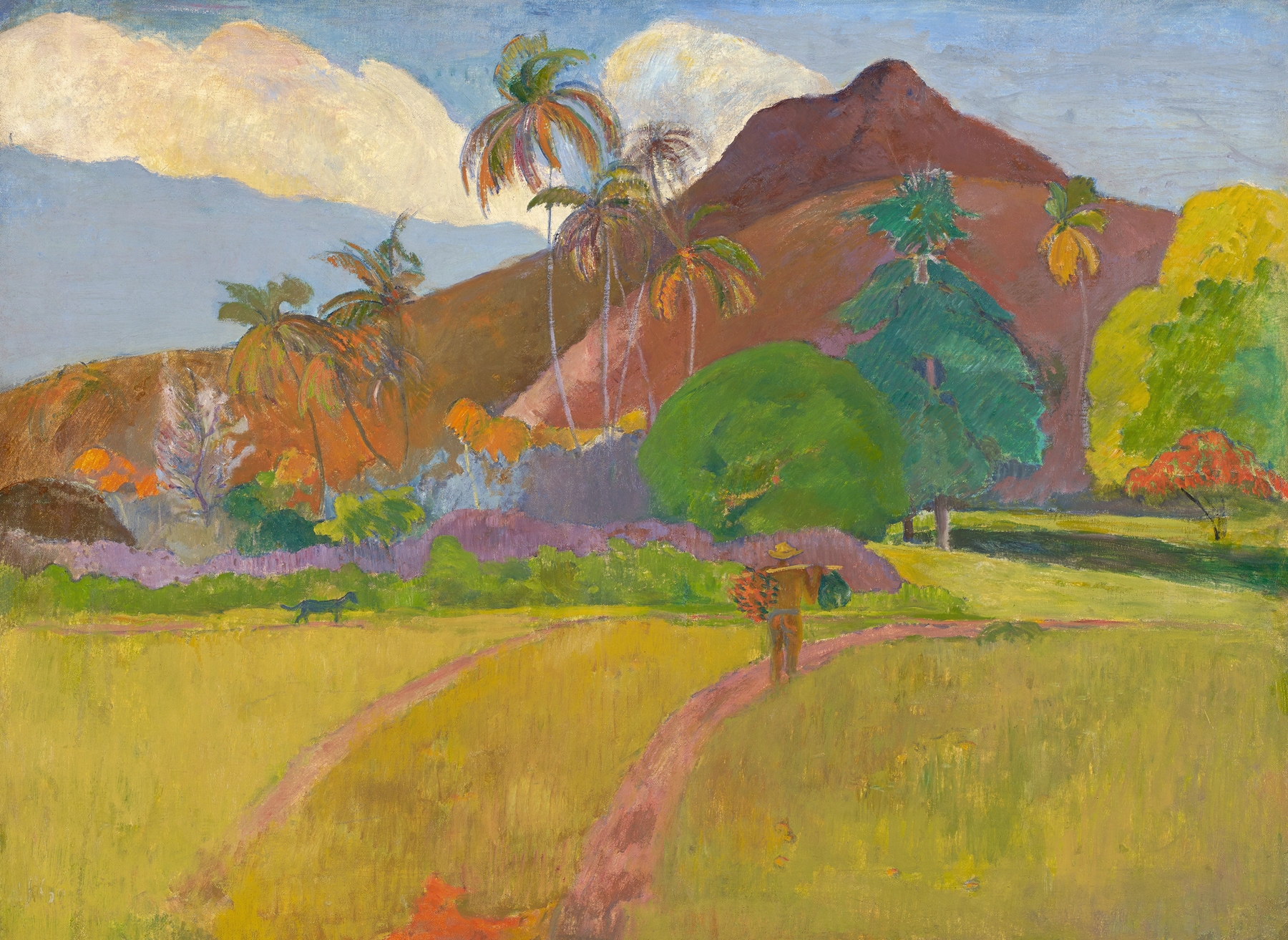
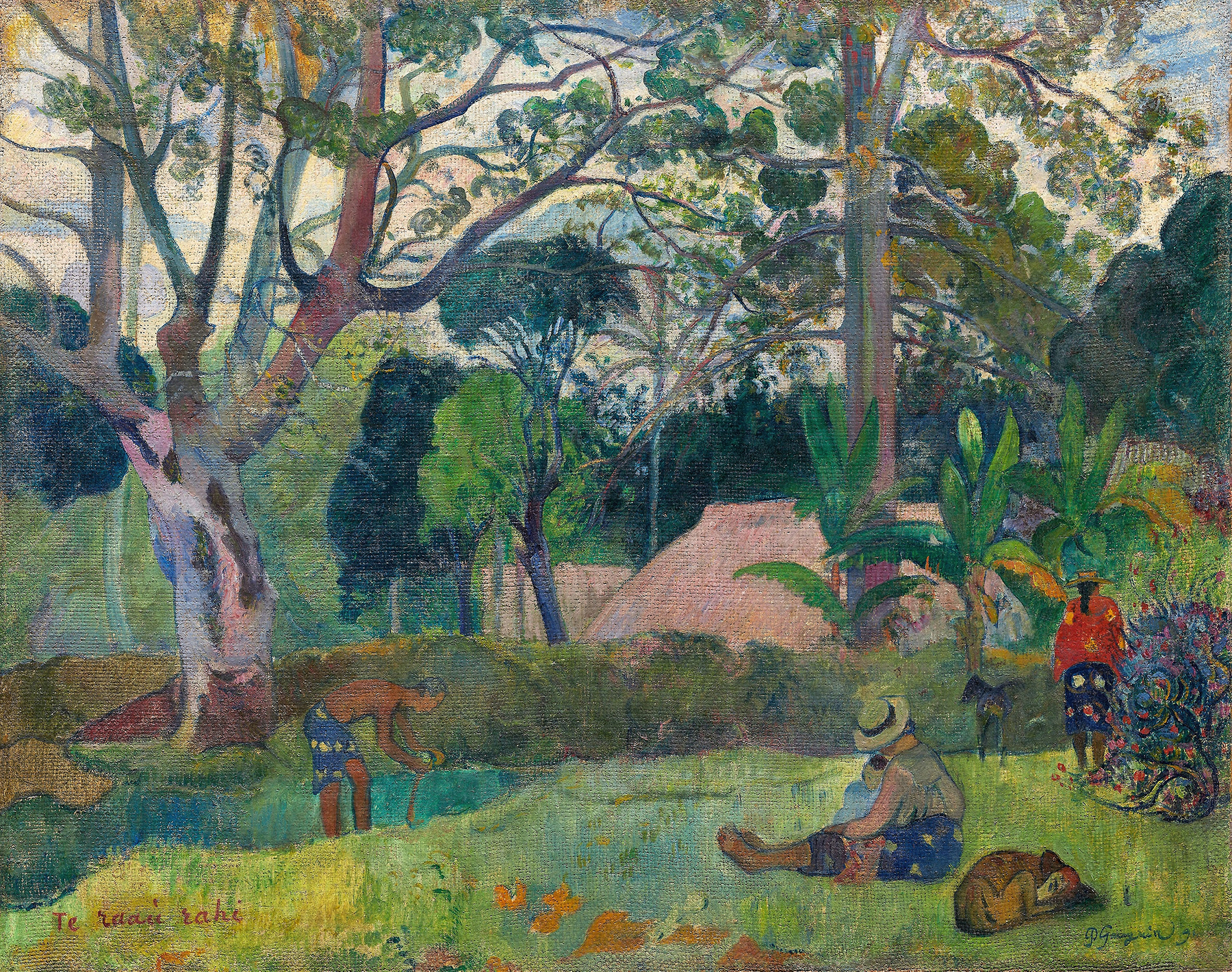
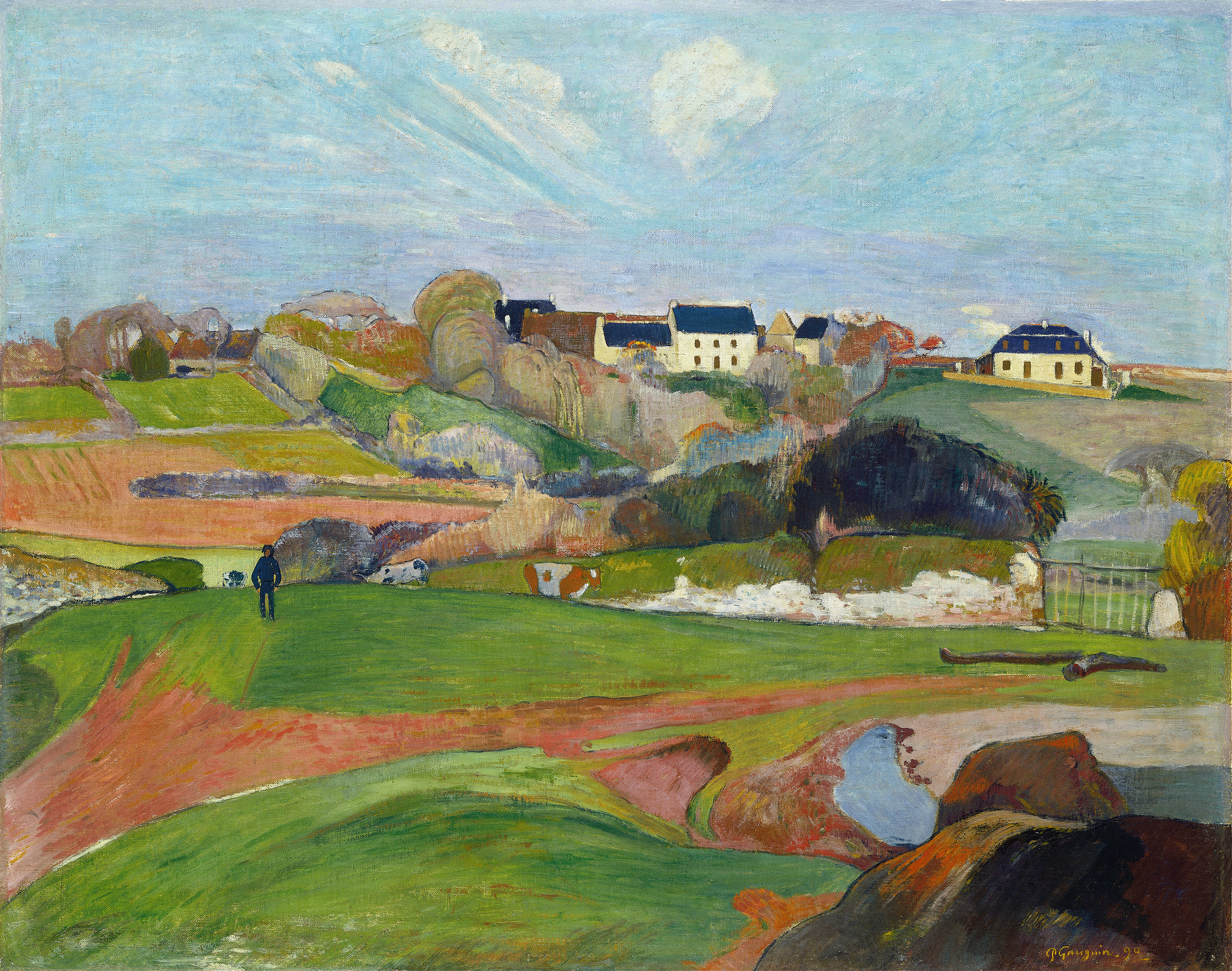
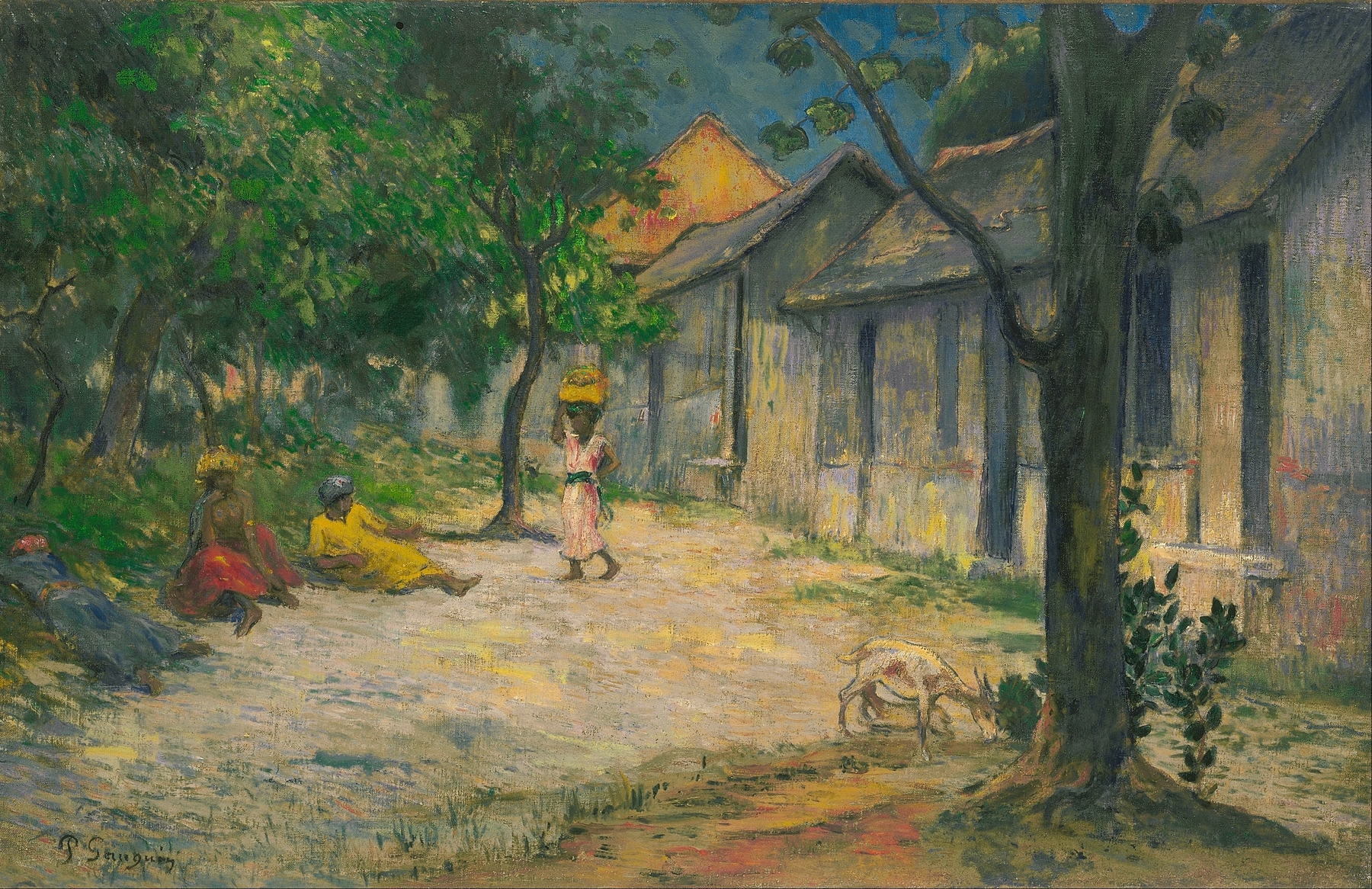
Who listens when art speaks of silence? In Paysage de Te vaa, the lush hues and tranquil forms suggest a world beyond mere representation, inviting us to transcend the mundane. Look to the left, where a vibrant green expanse unfolds, shaded by palm fronds that dance gently in the breeze. The warmth of the earth-toned sky contrasts with the cool, shaded areas of the foliage, creating a harmonious balance that draws the eye across the canvas.
Notice how Gauguin's brushstrokes convey both the solidity of the landscape and the ephemeral qualities of light, illuminating the scene with a glowing intensity that feels almost otherworldly. The painting encapsulates the tension between nature and human experience. The tranquil setting seems to whisper secrets, while the absence of figures invites contemplation on solitude and introspection. Hidden within the colors are deeper reflections on paradise lost and the yearning for a connection to something greater, echoing the artist's own spiritual quest.
This emotional landscape evokes a sense of longing, transcending physical boundaries. In 1896, Gauguin painted this piece while living in Tahiti, seeking solace and inspiration away from European society. At this time, he was grappling with his artistic identity and the impact of modernity on traditional cultures. The artwork reveals his desire to capture the essence of a world untouched by industrialization, as he navigated his path between art and personal exploration amidst a rapidly changing world.