Landscape with Two Poplars — History & Analysis
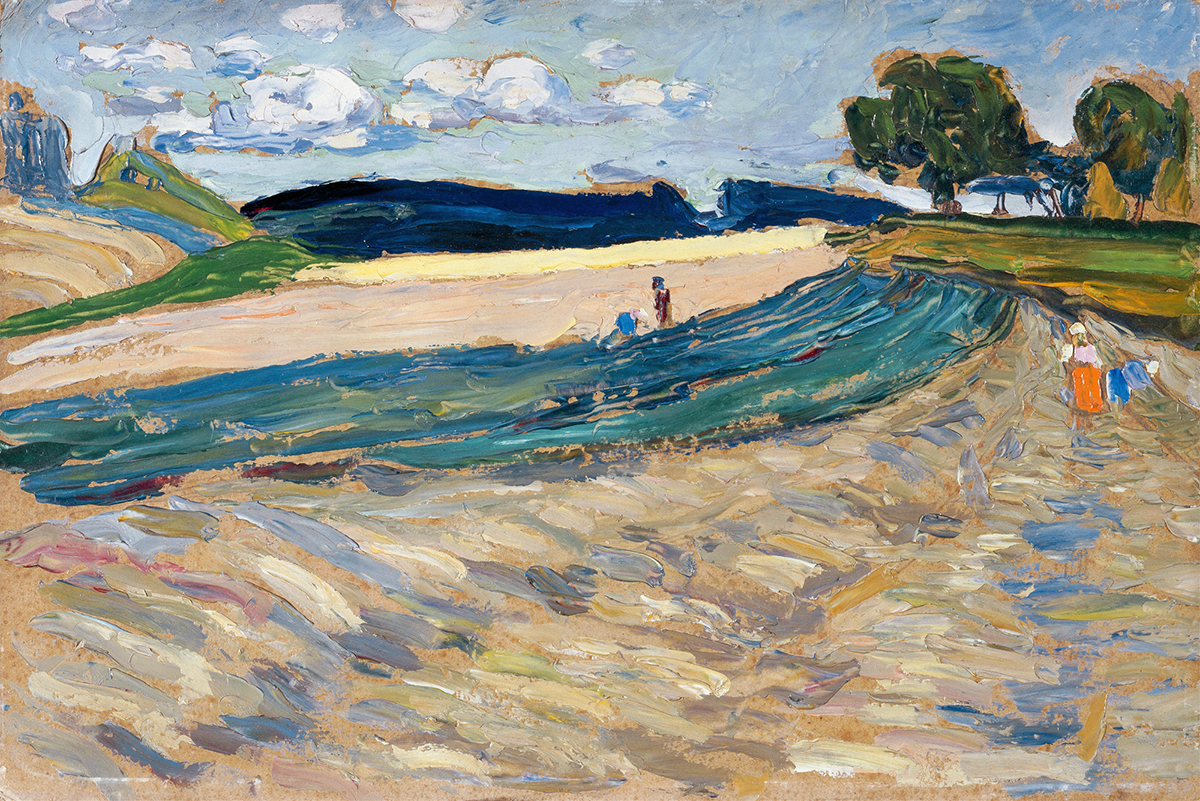
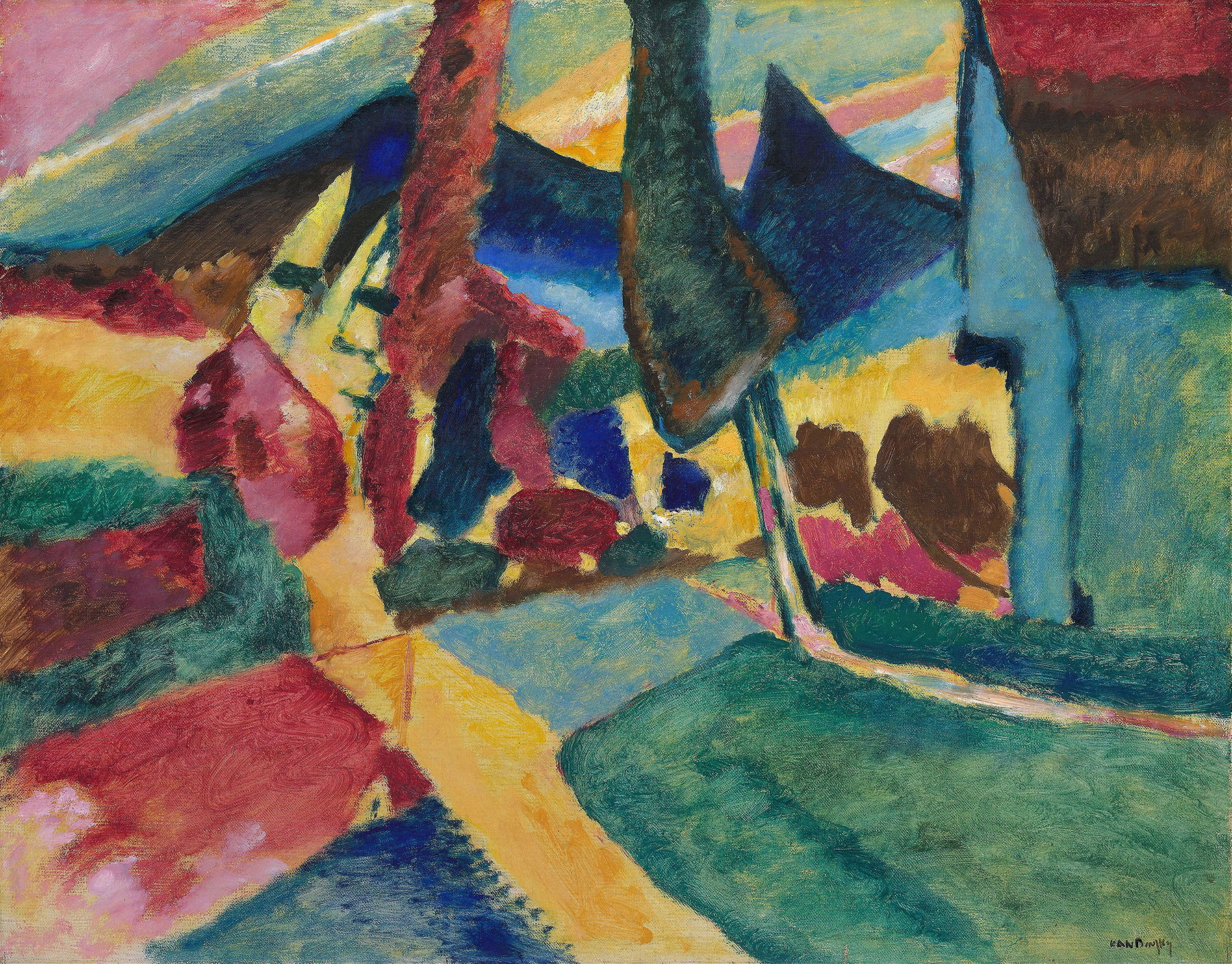
“Every silence here is a confession.” Such stillness invites a conversation with the unspoken, urging us to explore the dance of color and form that envelops the viewer. Look to the left at the towering poplars, their slender trunks reaching skyward, while vibrant hues swirl around them like whispers in the wind. Notice how the brushwork is both deliberate and free, creating a sense of movement that pulses through the canvas. Kandinsky’s palette, a vibrant blend of greens, yellows, and blues, breathes life into the landscape, establishing a rhythm that captivates yet comforts.
The juxtaposition of the solid poplars against the fluid backdrop reveals an emotional tension between stability and change. The trees stand as steadfast sentinels, yet the surrounding colors suggest an atmosphere of movement—an almost musical quality that resonates deeply with the viewer. This dynamic interplay reflects the artist’s exploration of abstraction, where the essence of nature is distilled into a symphony of forms and colors that evoke a range of feelings from tranquility to exhilaration.
In 1912, Kandinsky was living in Munich, immersed in the vibrant art scene, a time when he was beginning to shift from representational to abstract art. This period marked a pivotal moment in his career as he sought to express spirituality through color and form, influenced by the emerging ideas of modernism. As he created this piece, he engaged with the ongoing dialogue about the power of abstraction, laying a foundation for future movements in art.