Murnau – Castle and Church — History & Analysis
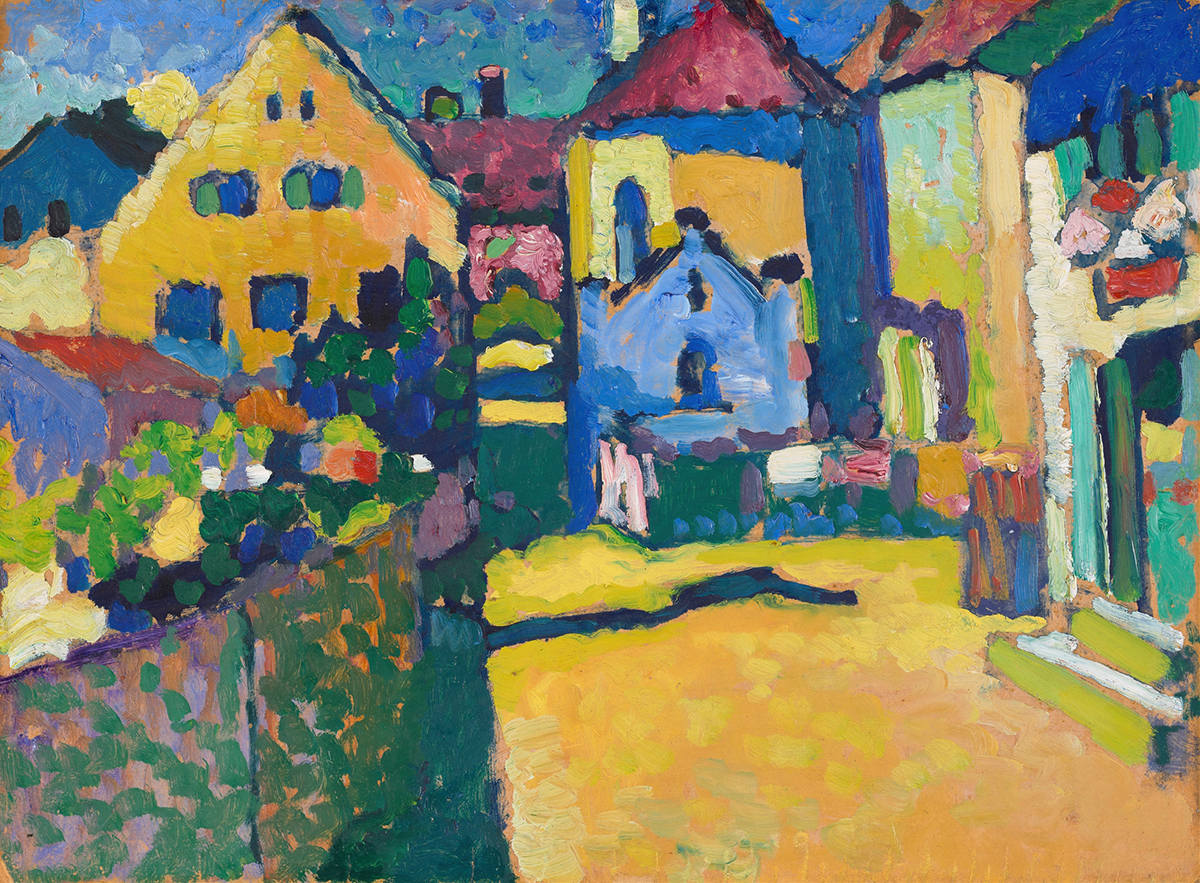
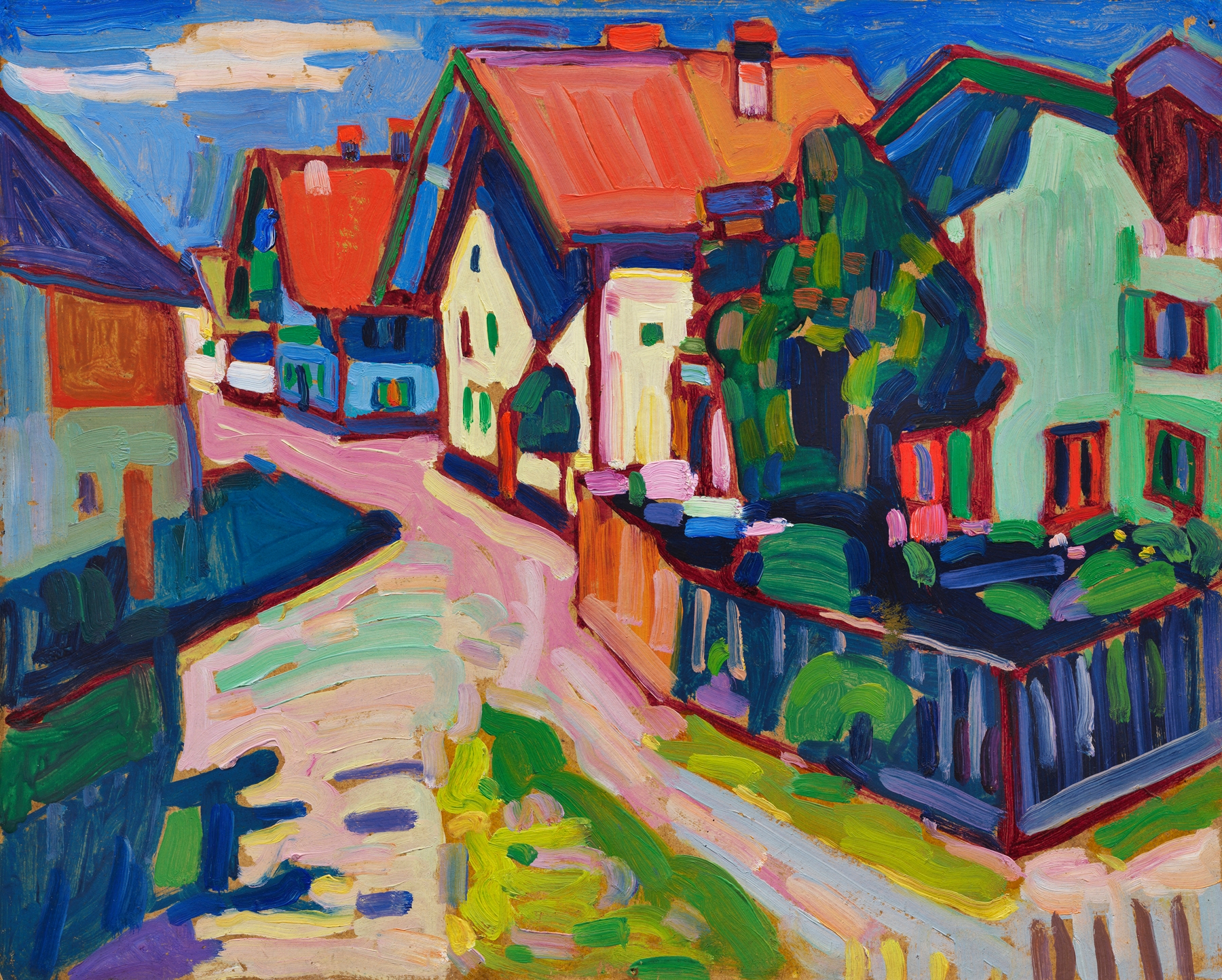
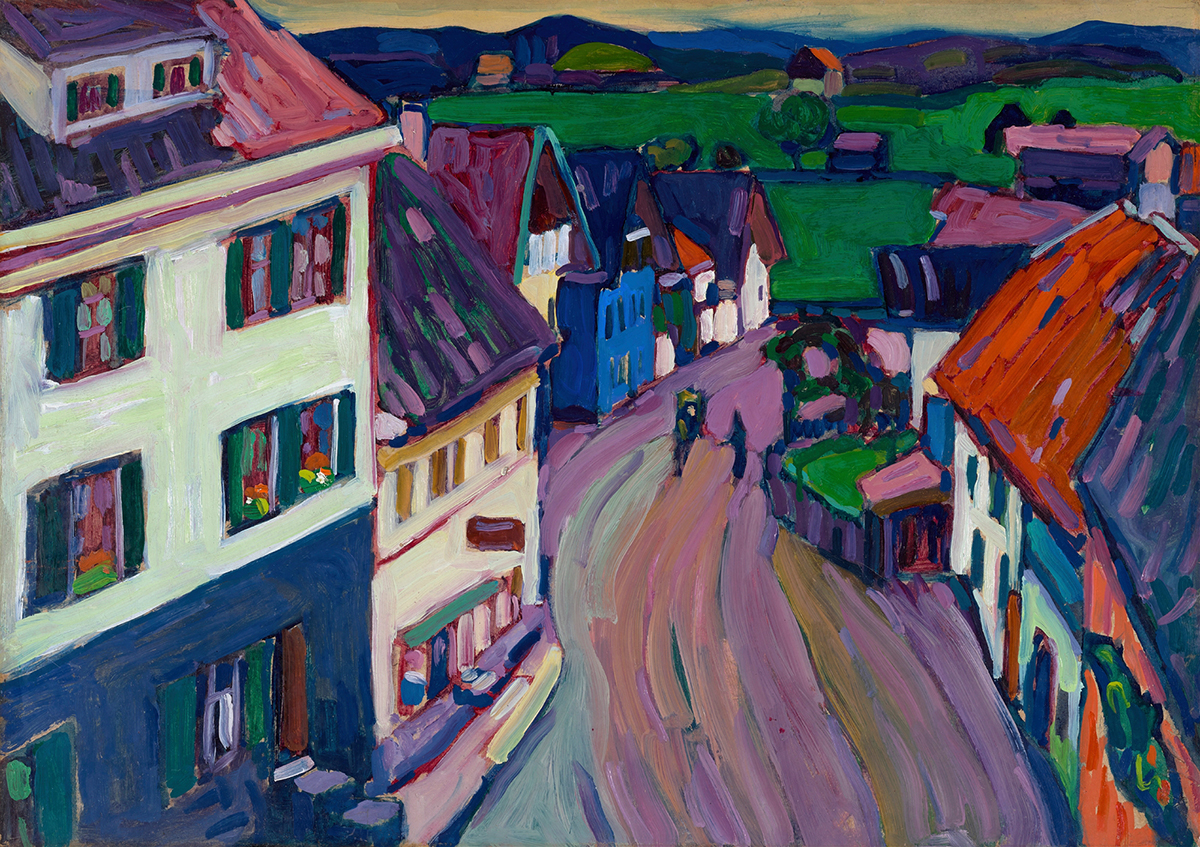
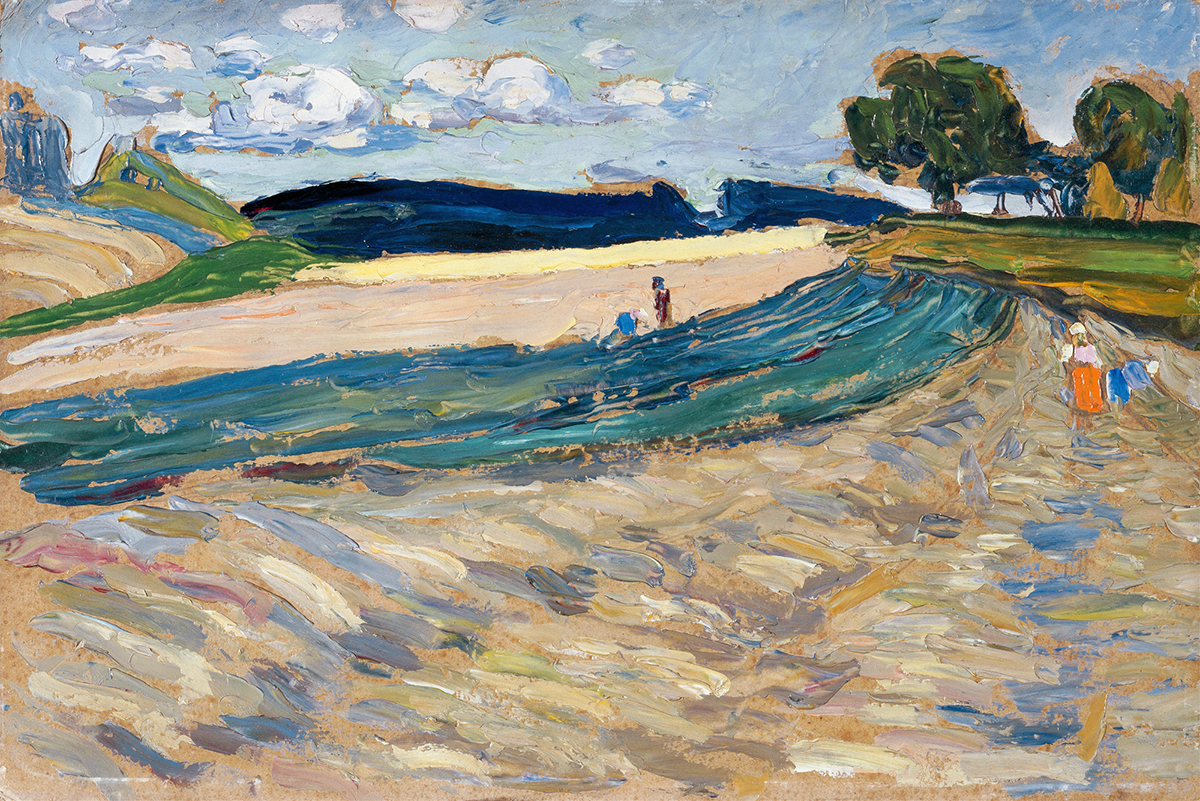
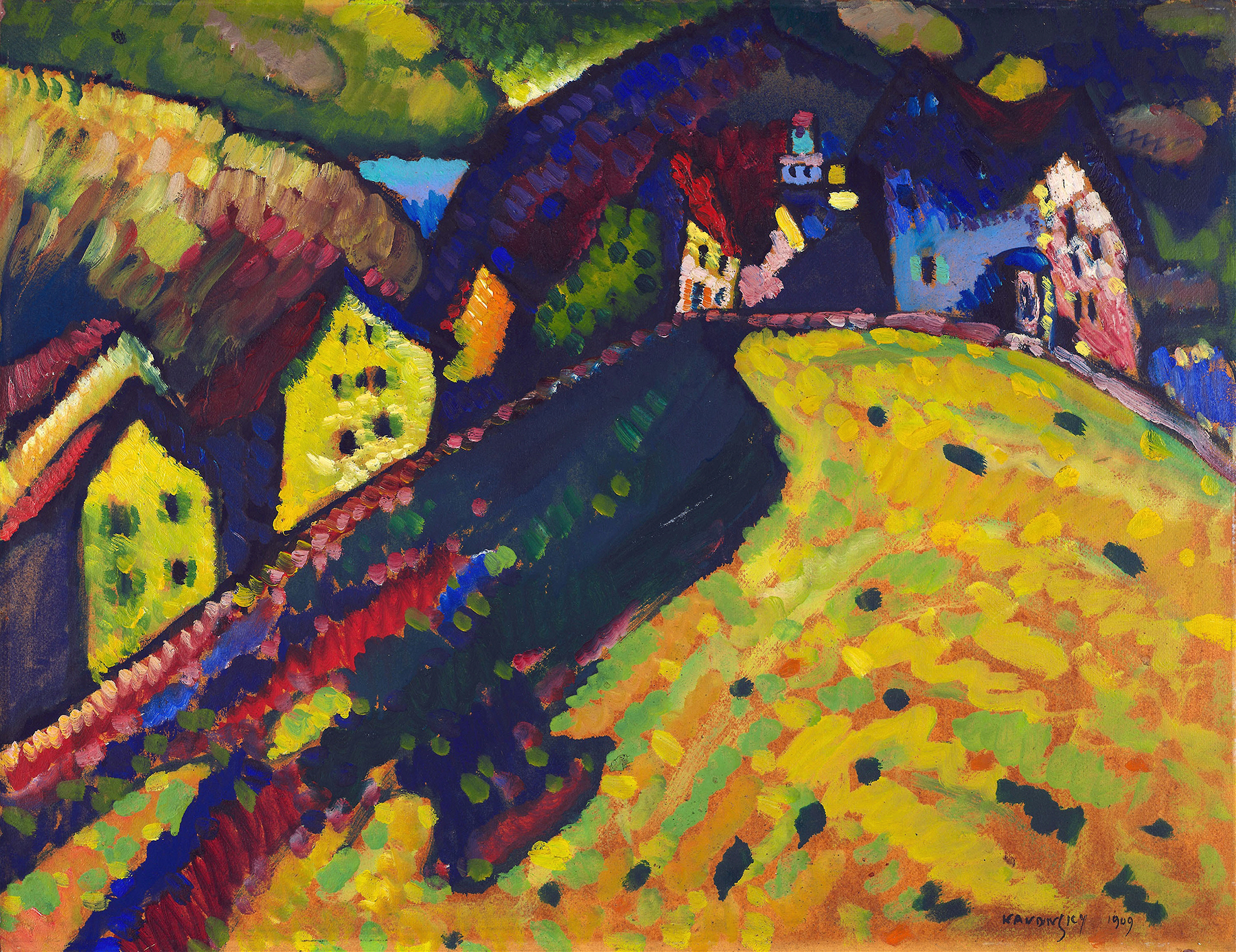
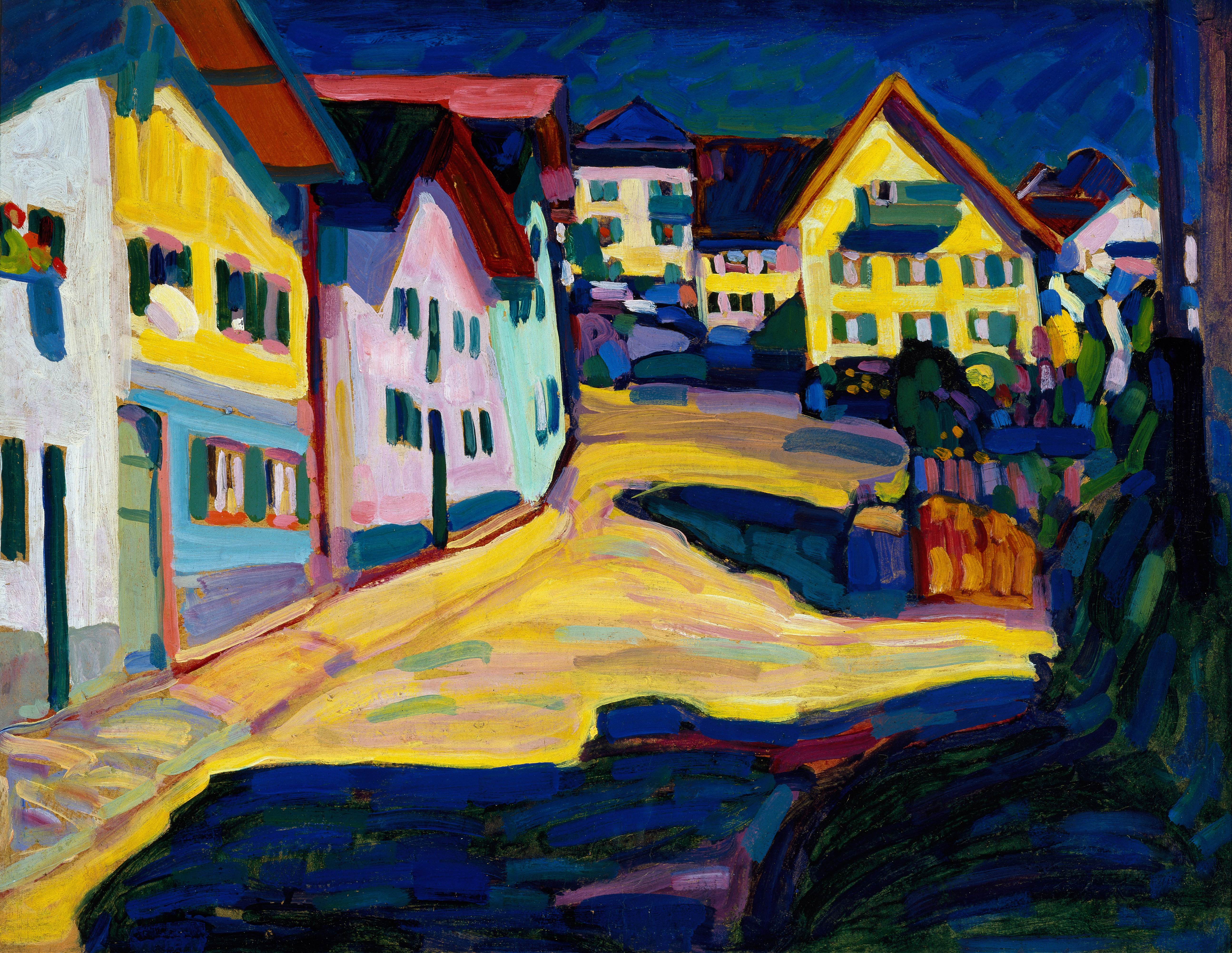
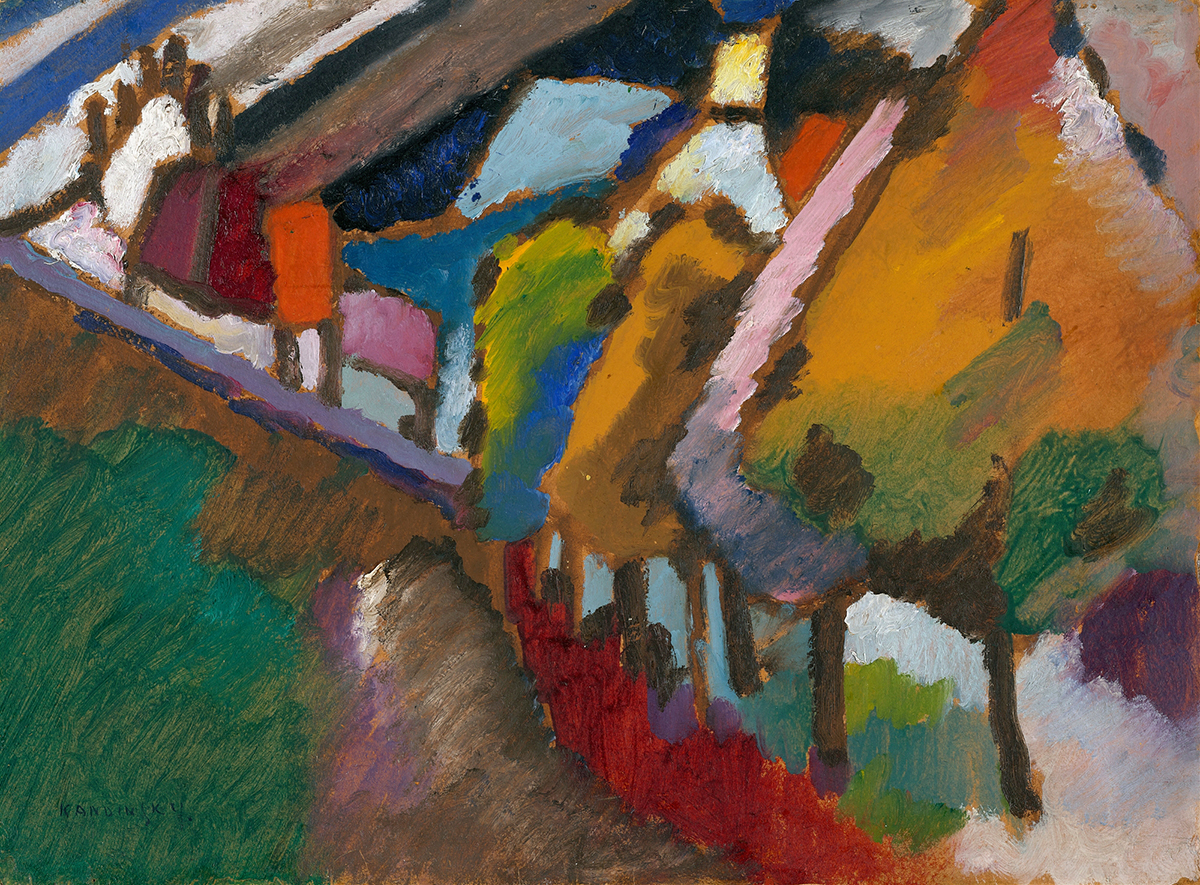
“Art reveals the soul when the world turns away.” In this quiet moment of nostalgia, the essence of memory is captured in vibrant hues and geometric forms, echoing a longing for a simpler past. Focus on the bold interplay of colors that define the landscape, with deep blues and warm yellows harmonizing in a dance of abstraction. Look to the left at the looming castle, its angular shapes standing firm against the backdrop, while the church, with its softer lines, offers a contrasting sense of serenity and grace. The entire composition is alive, yet whispers of a distant day; the brushwork pulses with emotion, inviting the viewer to explore the depths of their own recollections.
Amidst the swirling colors, one can discern a juxtaposition of stability and spirituality. The castle, a symbol of earthly power and permanence, is counterbalanced by the church, evoking a transcendent connection to the divine. This duality reflects an internal struggle; as time marches forward, the past and its memories cling tightly to the present, creating an atmosphere of yearning and introspection. The viewer is compelled to examine their own relationship with nostalgia and the passage of time.
In 1909, Kandinsky was living in Germany, deeply immersed in the vibrant art scene of Munich. This period marked a significant turn in his career, as he began to explore abstraction and the emotional power of color. The world was on the brink of change, with modernism beginning to reshape artistic landscapes, and Kandinsky’s work at this moment reflected both personal and collective yearnings for connection amidst the chaos of a rapidly evolving world.