Landschap met veerpont en wachtende reizigers aan oever van de Tiber — History & Analysis
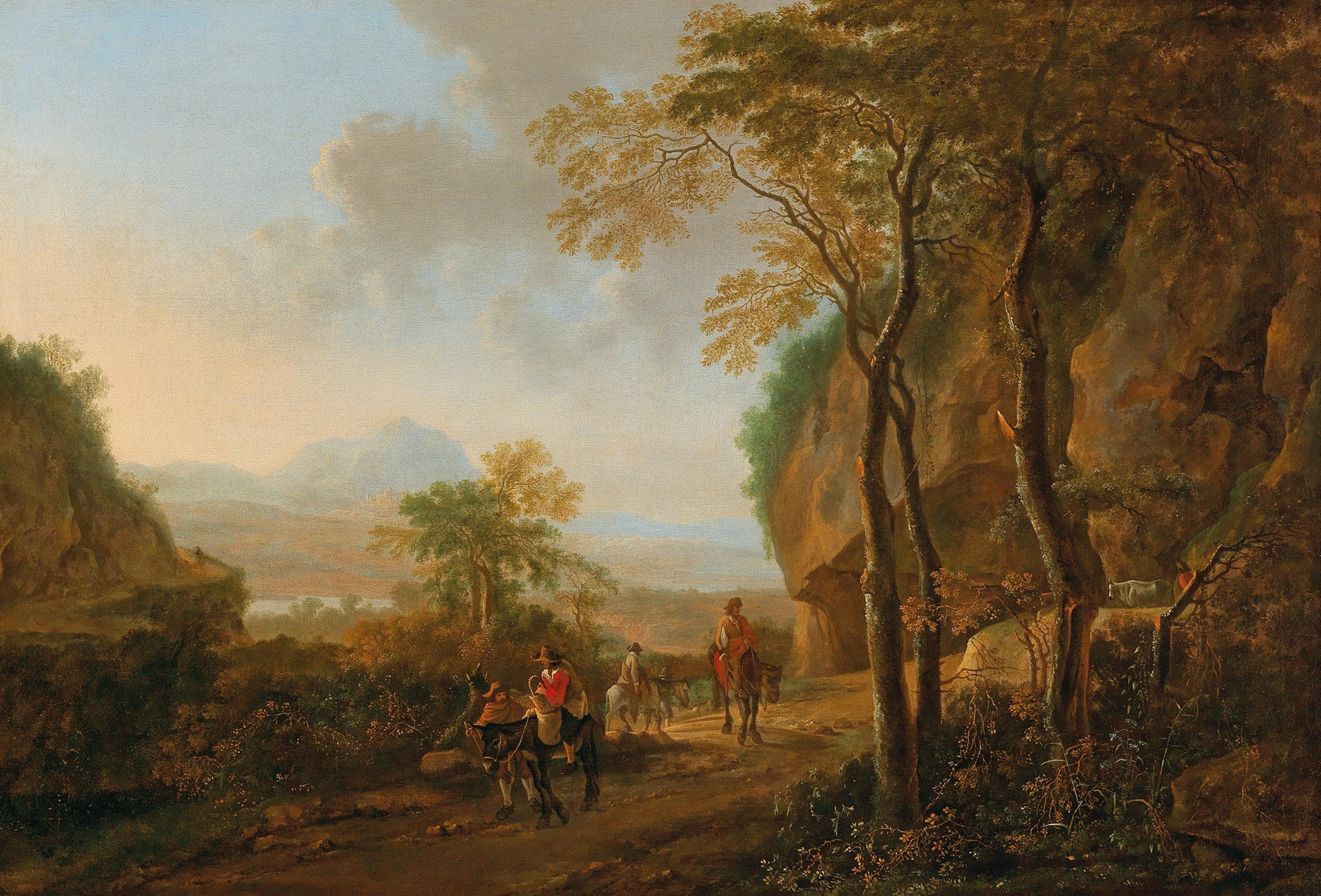
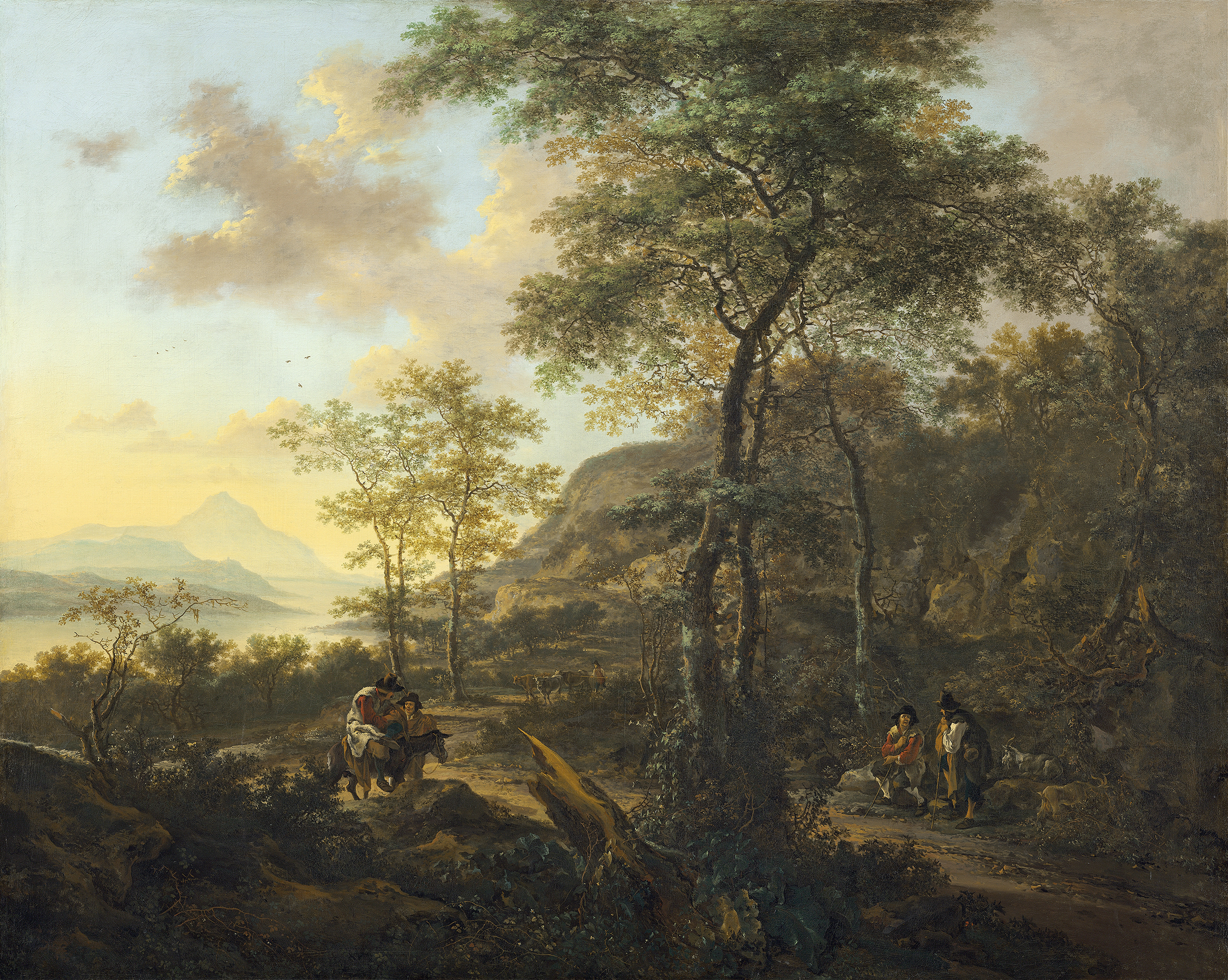
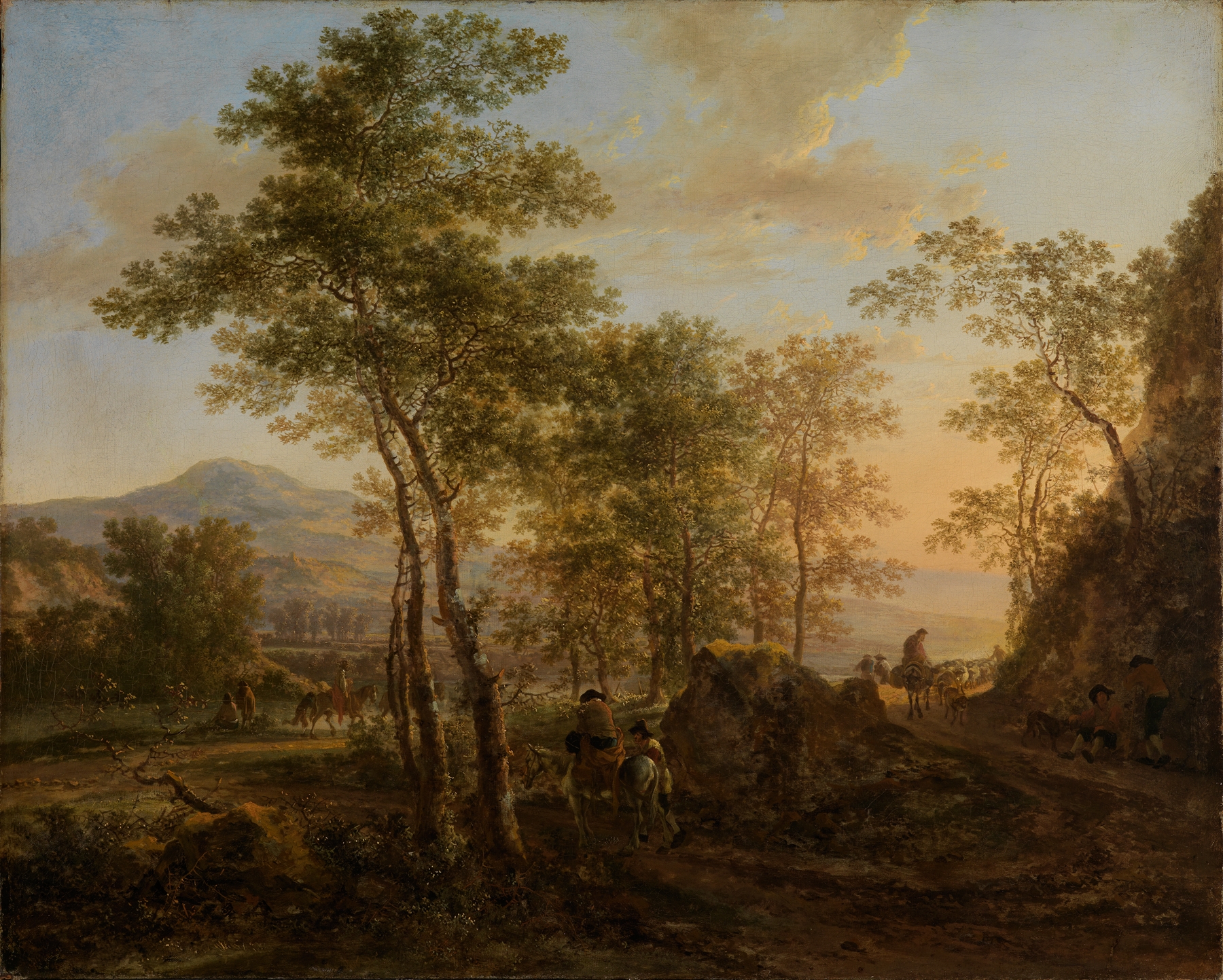
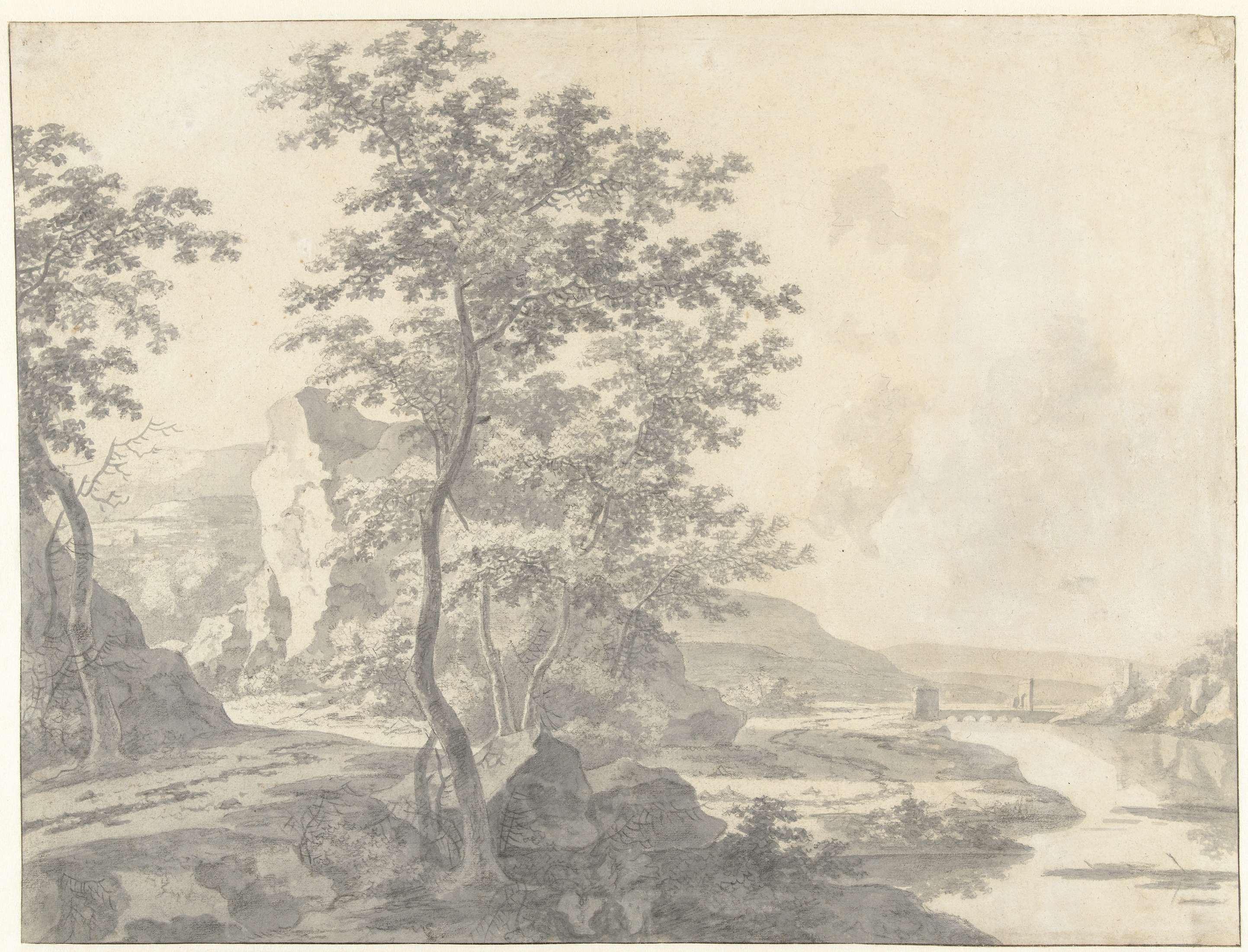
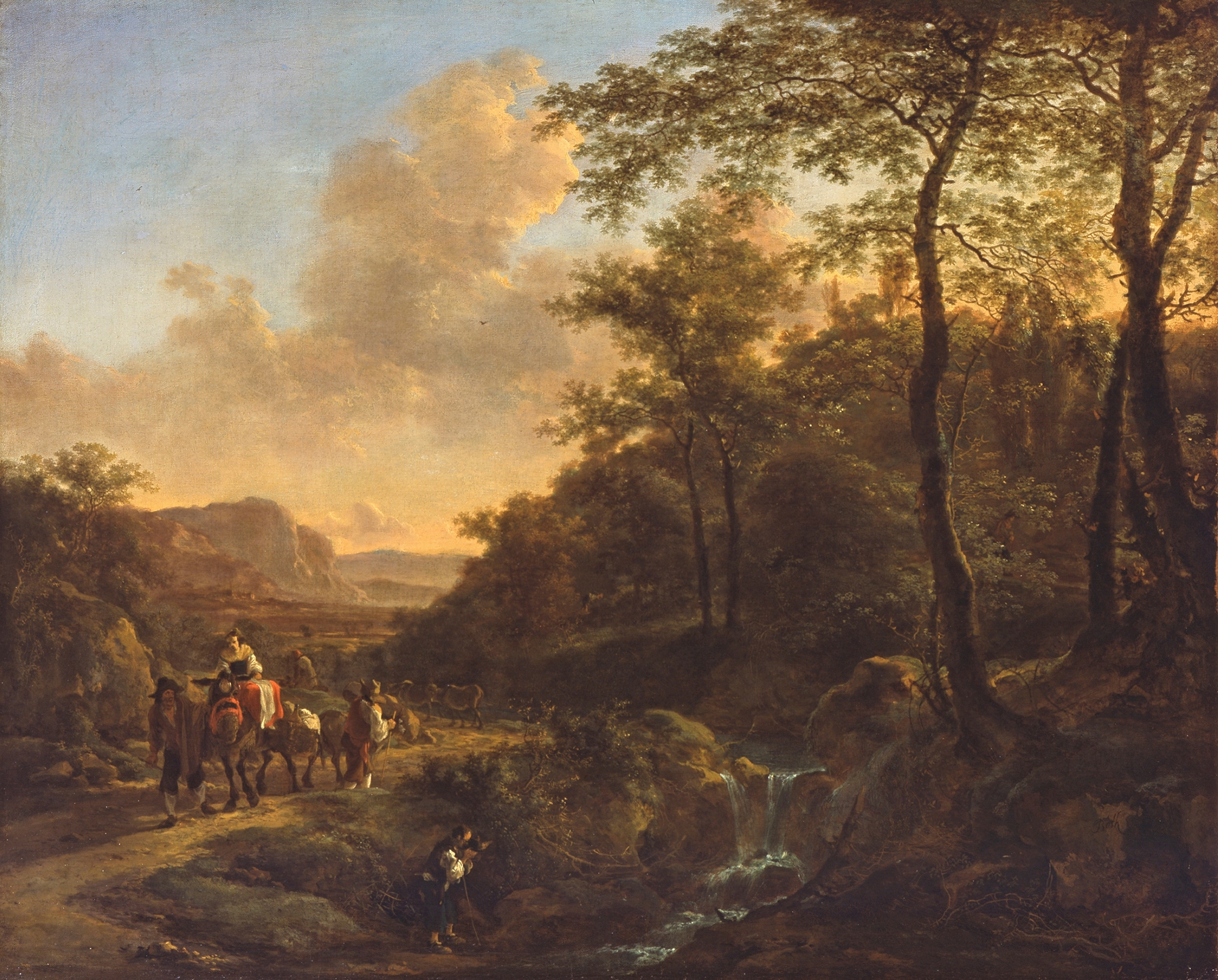
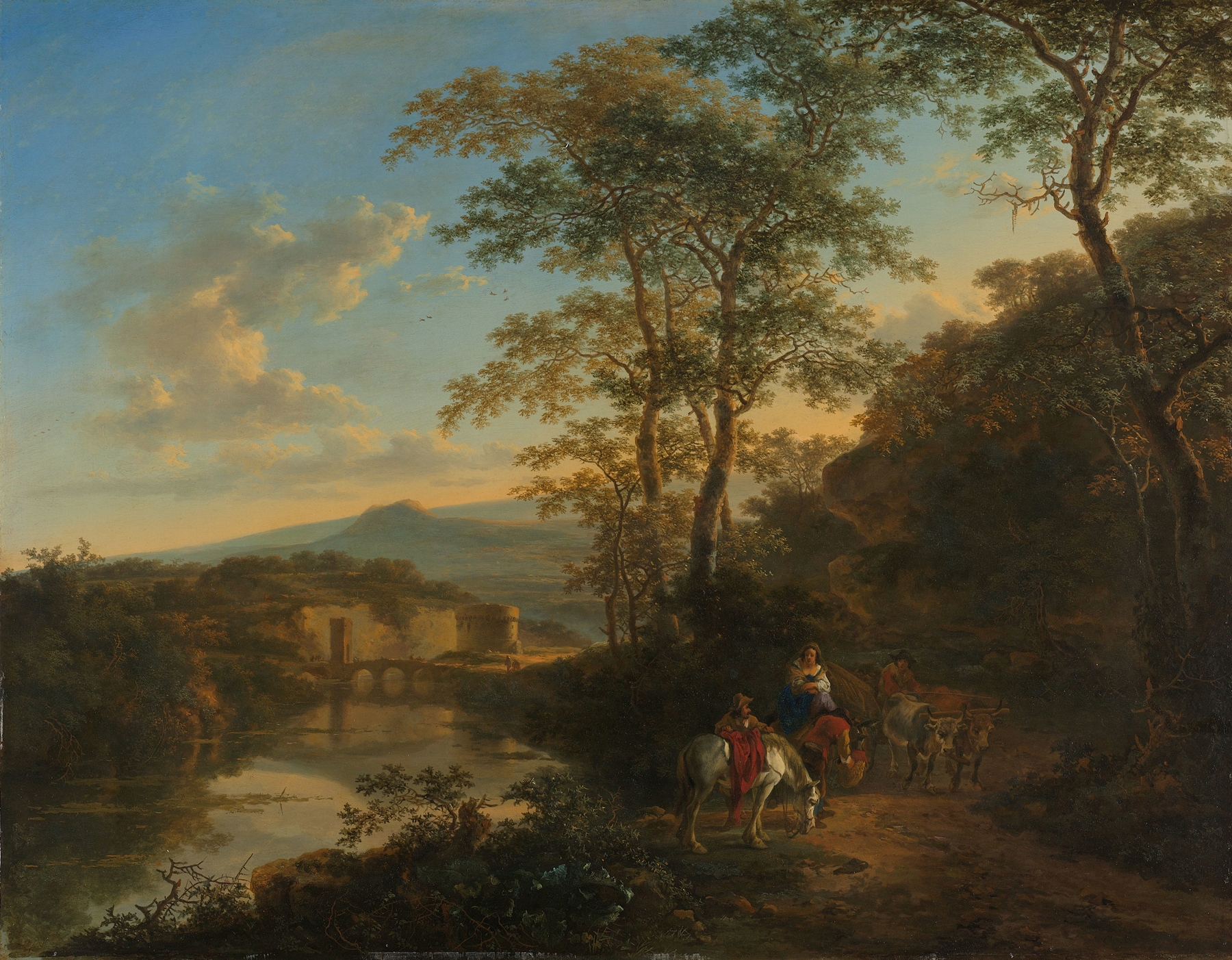
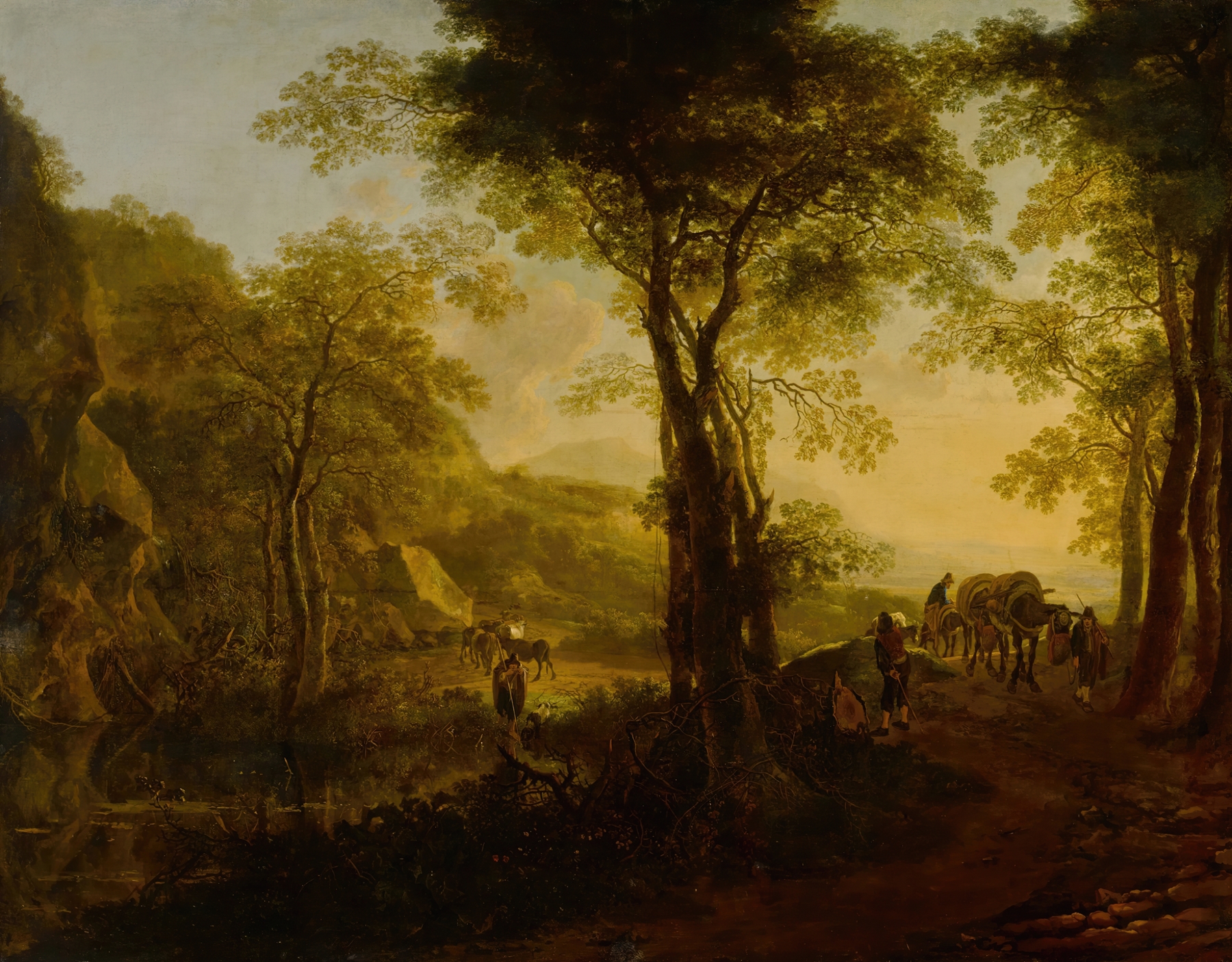
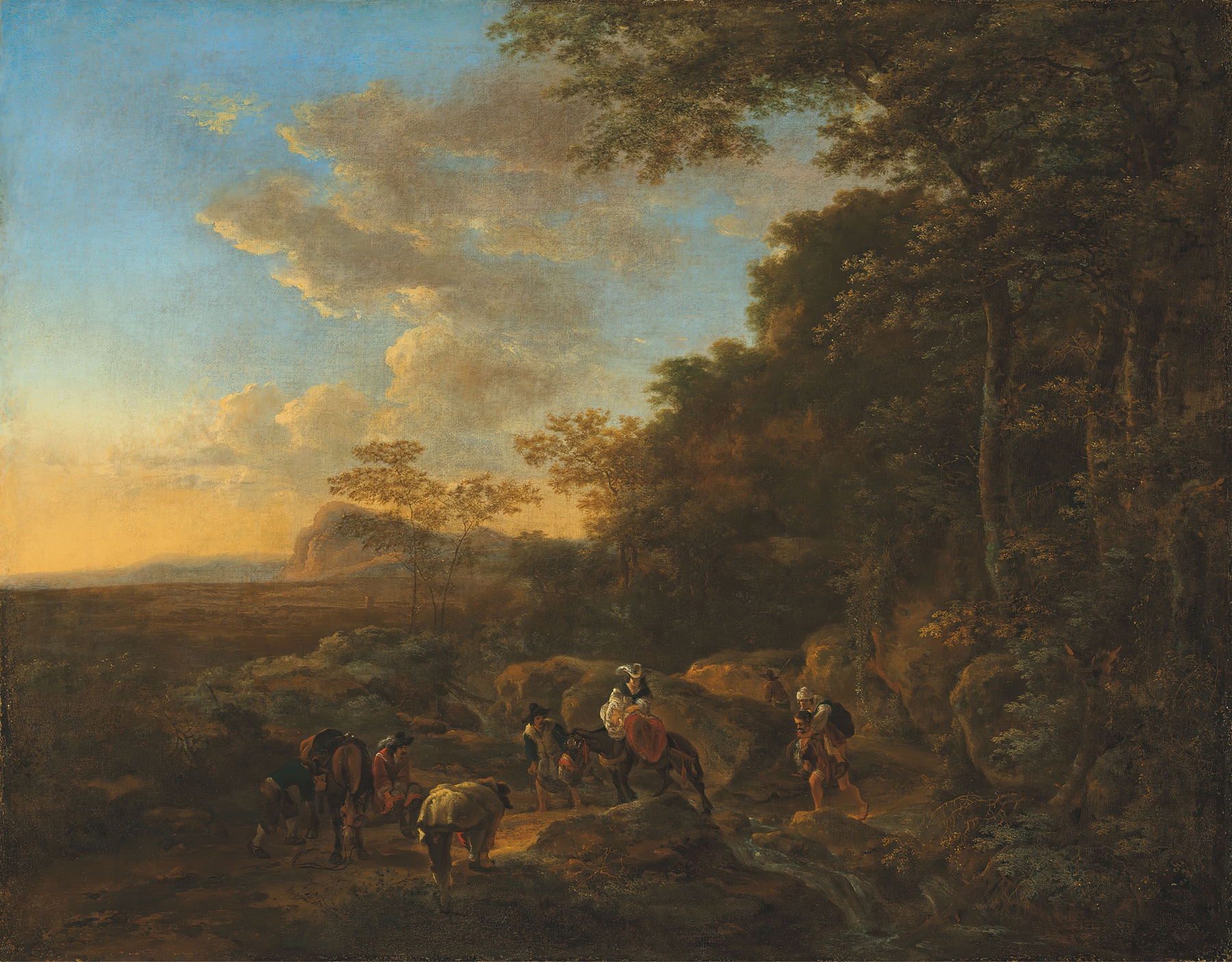
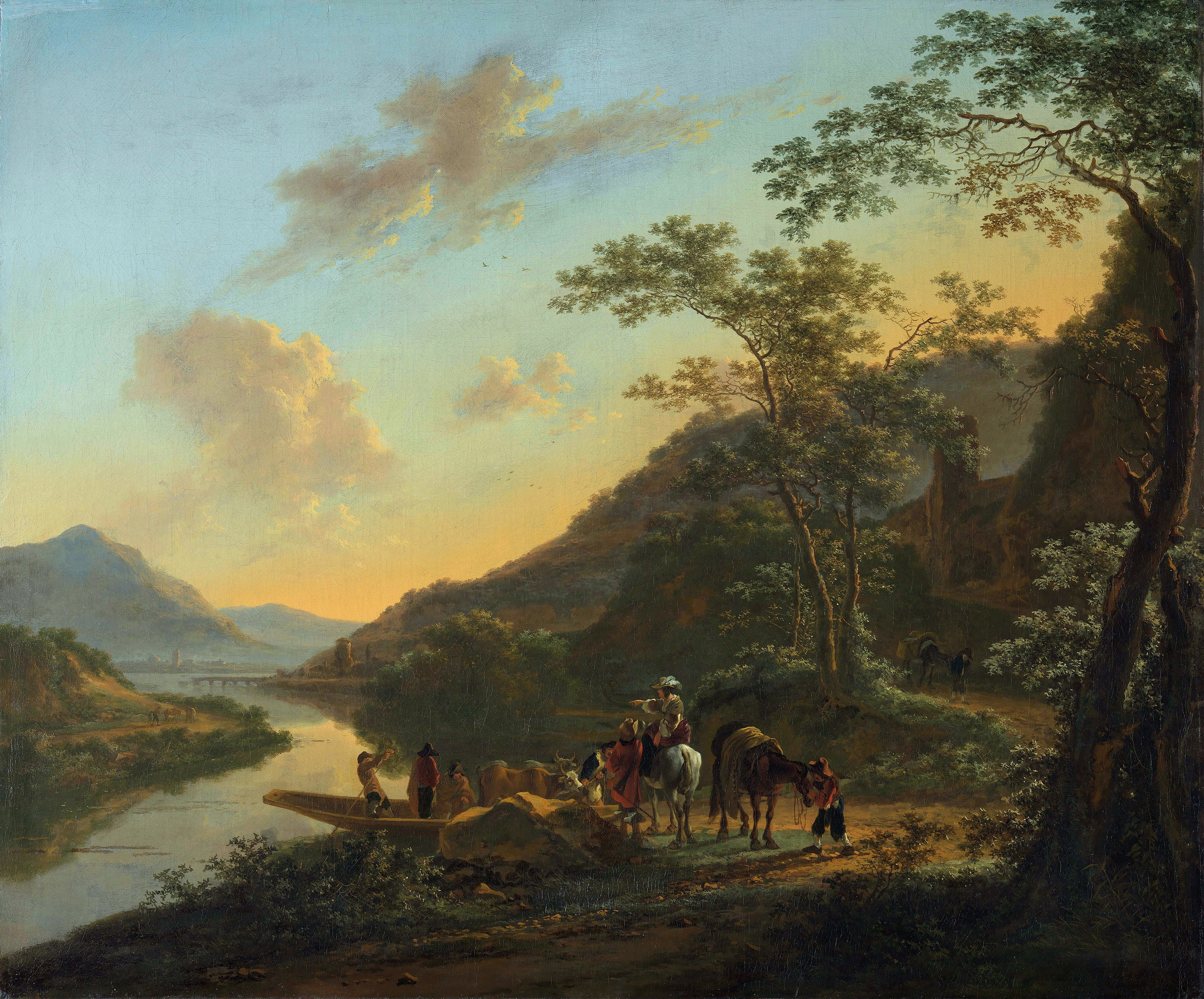
“The canvas doesn’t lie — it simply waits.” In the serene embrace of a riverside, shadows ripple across the landscape, beckoning the viewer to discover the stillness before a journey. The moment holds the promise of both departure and arrival, an awakening to the endless possibilities that lay ahead. Look to the left at the gently rolling hills, drenched in soft, golden light that dances upon the verdant foliage. The river, a reflective ribbon, bisects the canvas, drawing our gaze toward the waiting figures on the bank. The muted palette, with its earthy greens and warm browns, creates an inviting atmosphere, while the faint hints of blue in the water suggest a tranquil depth.
The composition masterfully balances the natural elements, guiding the eye toward the distant ferry, a lifeline between worlds. Yet, it is in the small details where the emotional tension resides. The solitary figures, poised in anticipation, embody both hope and uncertainty, their postures revealing a moment suspended in time. The gentle ripples on the Tiber mirror their restless spirits, hinting at stories untold and lives intertwined.
This landscape transcends mere depiction; it captures the essence of an inward journey as much as an outward one, inviting contemplation of what lies beyond the horizon. Created between 1642 and 1652, this work emerged during a period of significant change in the Netherlands, where genre painting was flourishing. Jan Both was deeply influenced by the natural beauty surrounding him, seeking to capture the subtle magic of everyday life. His time spent in Italy also left an indelible mark on his style, merging northern realism with the softer light and atmospheric effects characteristic of the Italian landscape tradition.