London Bridge — History & Analysis
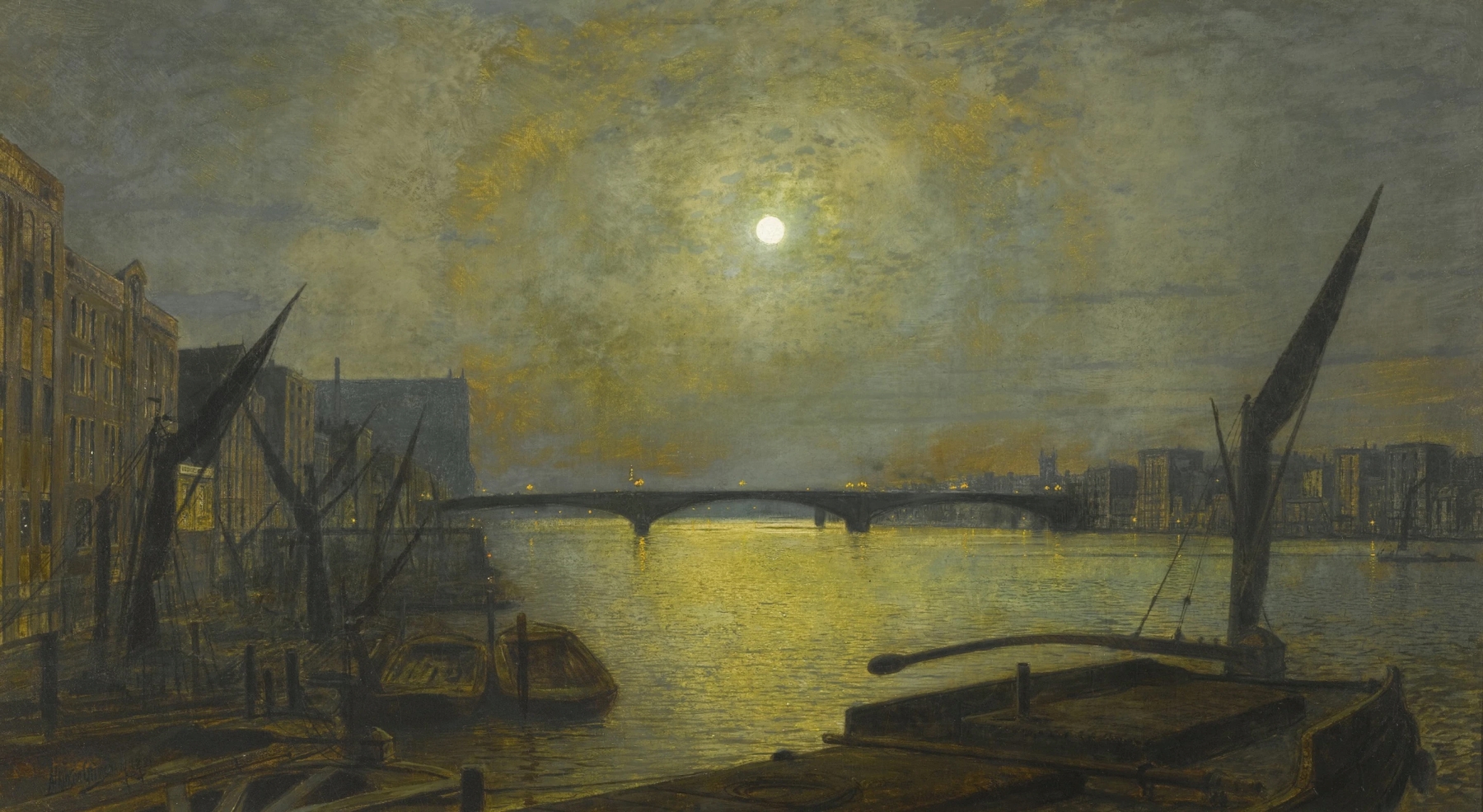
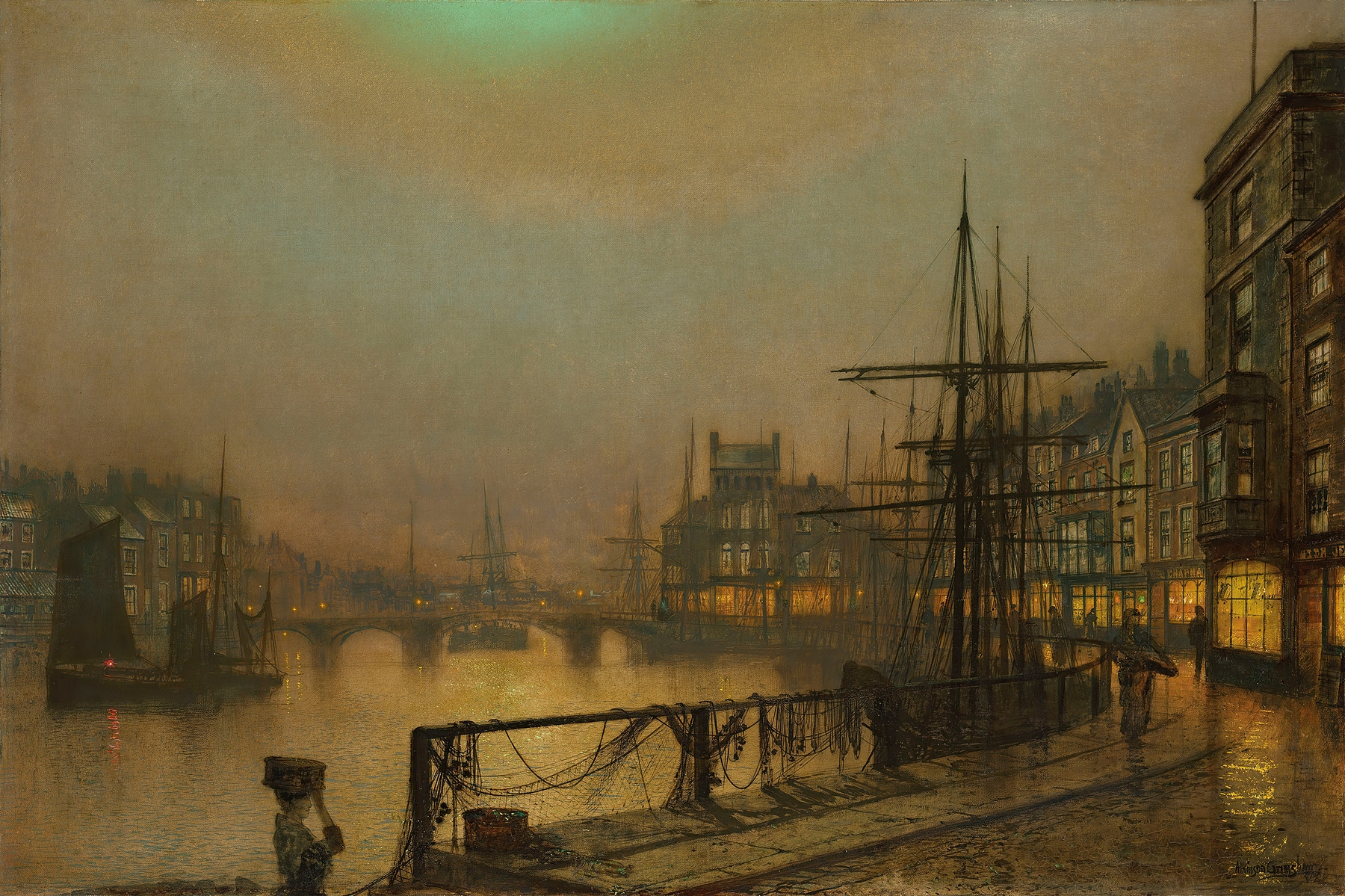
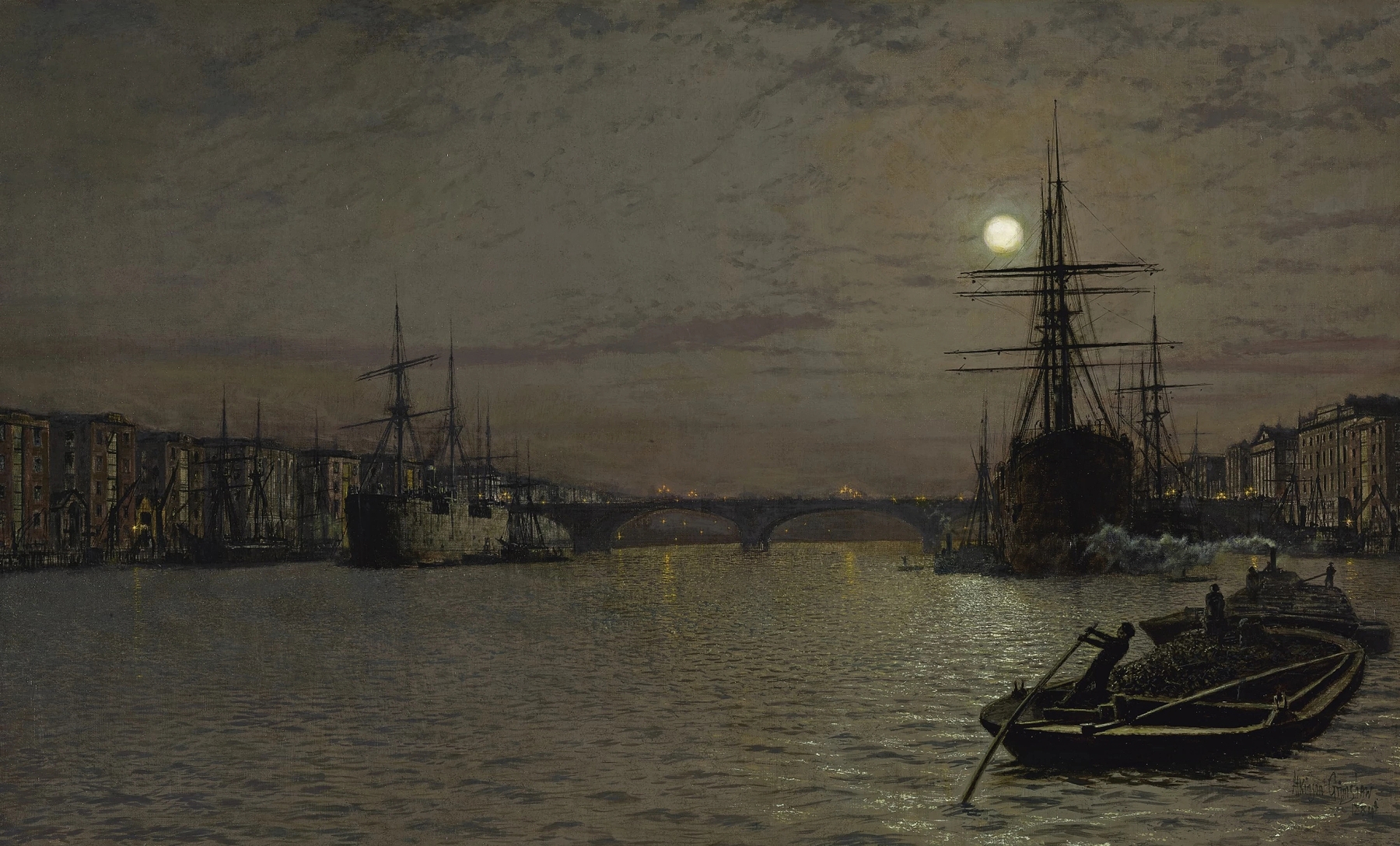
What if silence could speak through light? In John Atkinson Grimshaw’s London Bridge, the interplay of luminous twilight and the quiet solitude of the city whispers the unfulfilled longing that haunts its streets. Focus first on the bridge itself, arching gracefully across the river, bathed in a soft, golden glow. Notice how the warm hues of the setting sun contrast with the cool blues of the water below, creating a harmonious balance. The delicate brushwork captures the rippling reflections, drawing your gaze into the depths of the scene.
Shadows extend from the bridge, inviting you to explore the quiet passage into the heart of the city, while the lanterns begin to flicker, hinting at the life that stirs beneath the twilight. As you delve deeper, consider the figures on the bridge, small and almost ghost-like, their presence evoking a sense of yearning. The weight of their isolation is palpable against the expansive backdrop of the bustling city. The contrast between the vibrancy of the illuminated architecture and the muted figures speaks to the tension of desire—an urge to connect amidst the anonymity of urban life.
Each element in the composition serves to amplify this poignant theme, where light becomes a vessel for hope and unfulfilled aspirations. Grimshaw painted London Bridge in 1883 while residing in West Yorkshire. This period marked a time of change in his life; he was grappling with personal loss and a declining health that would soon affect his artistic output. The late Victorian era also experienced significant urban development, which influenced his focus on landscapes that depicted the interplay between nature and the encroaching city, reflecting both beauty and melancholy in the modern world.