Low Tide, Beachmont — History & Analysis
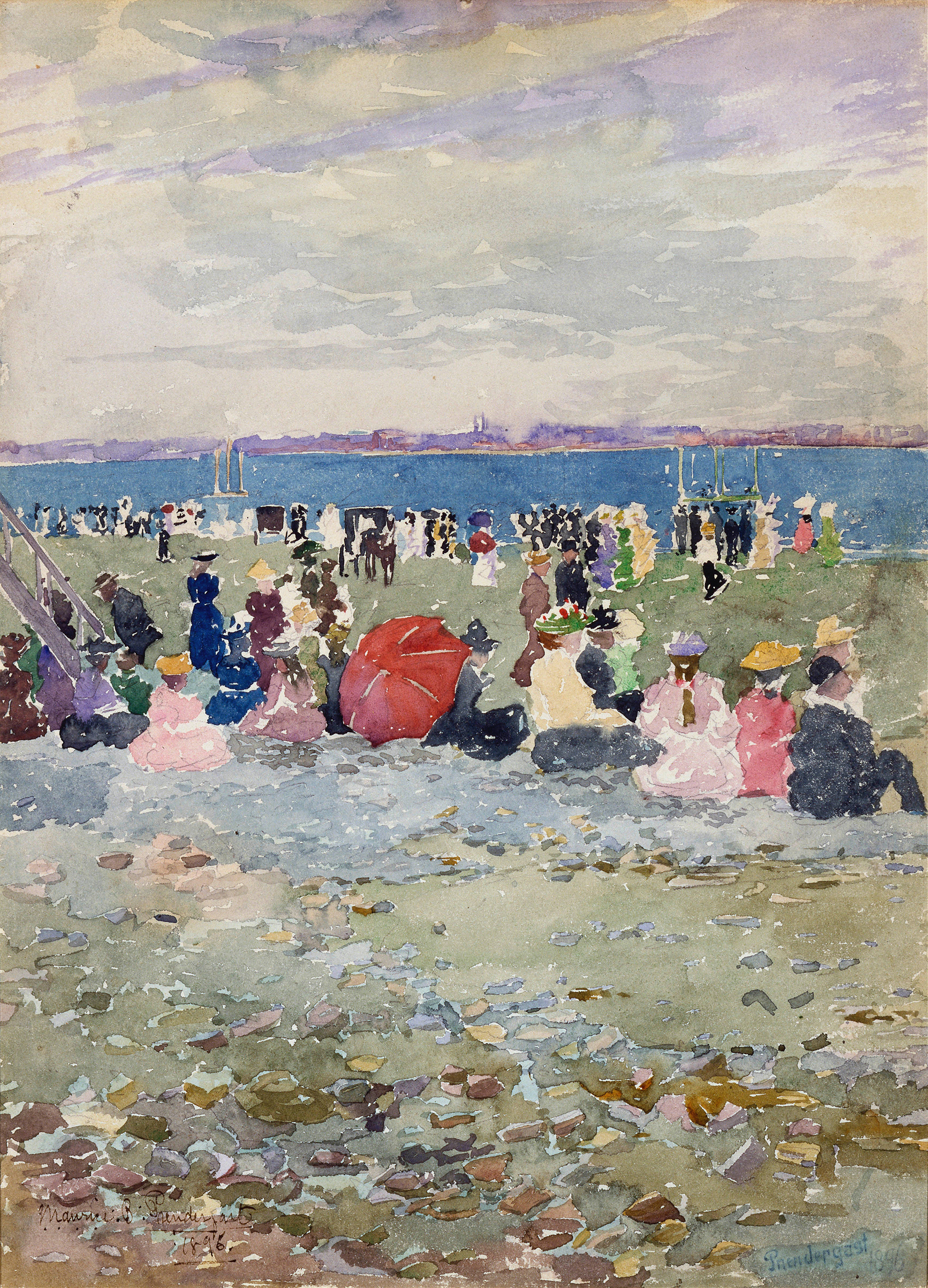
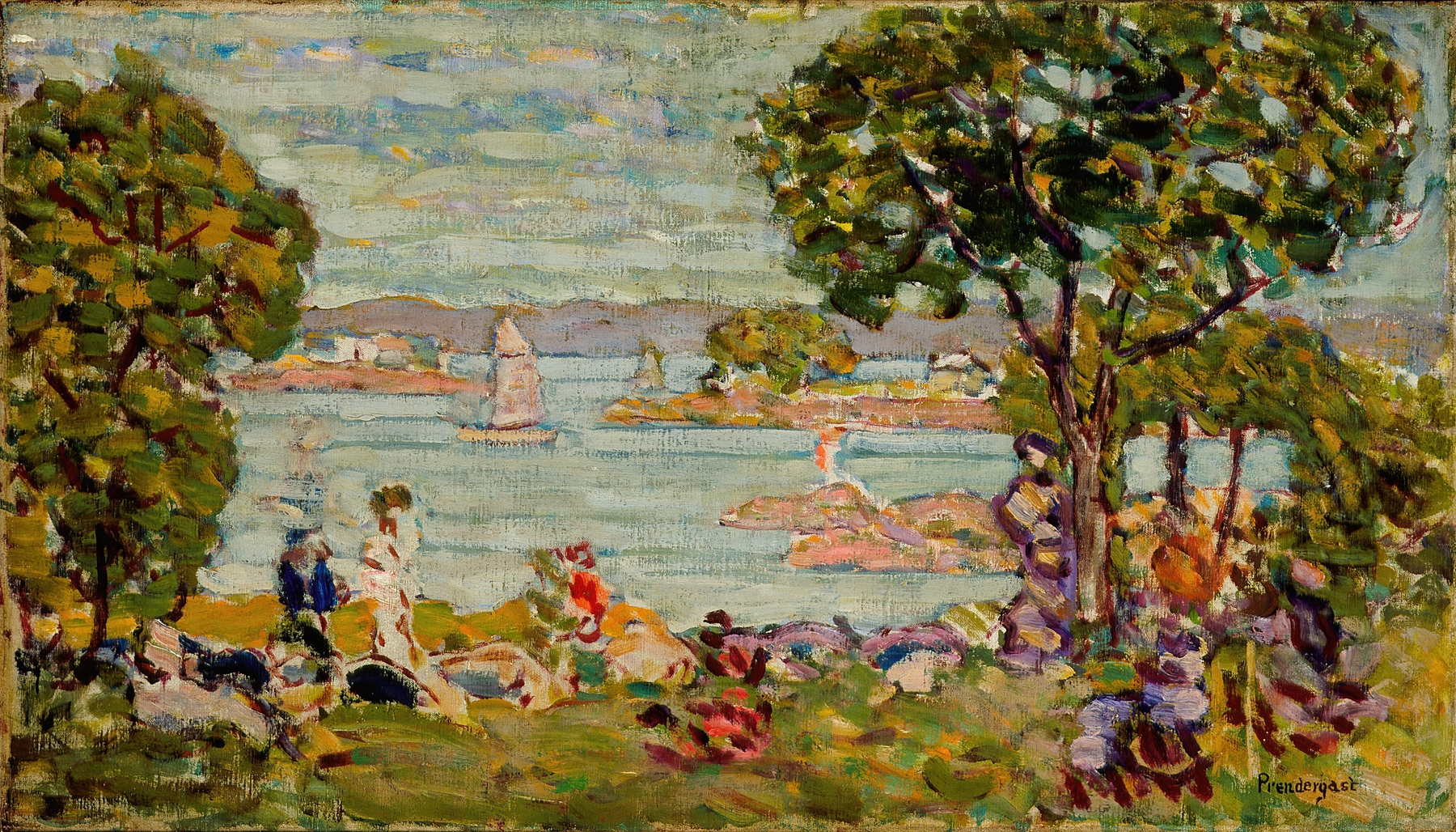
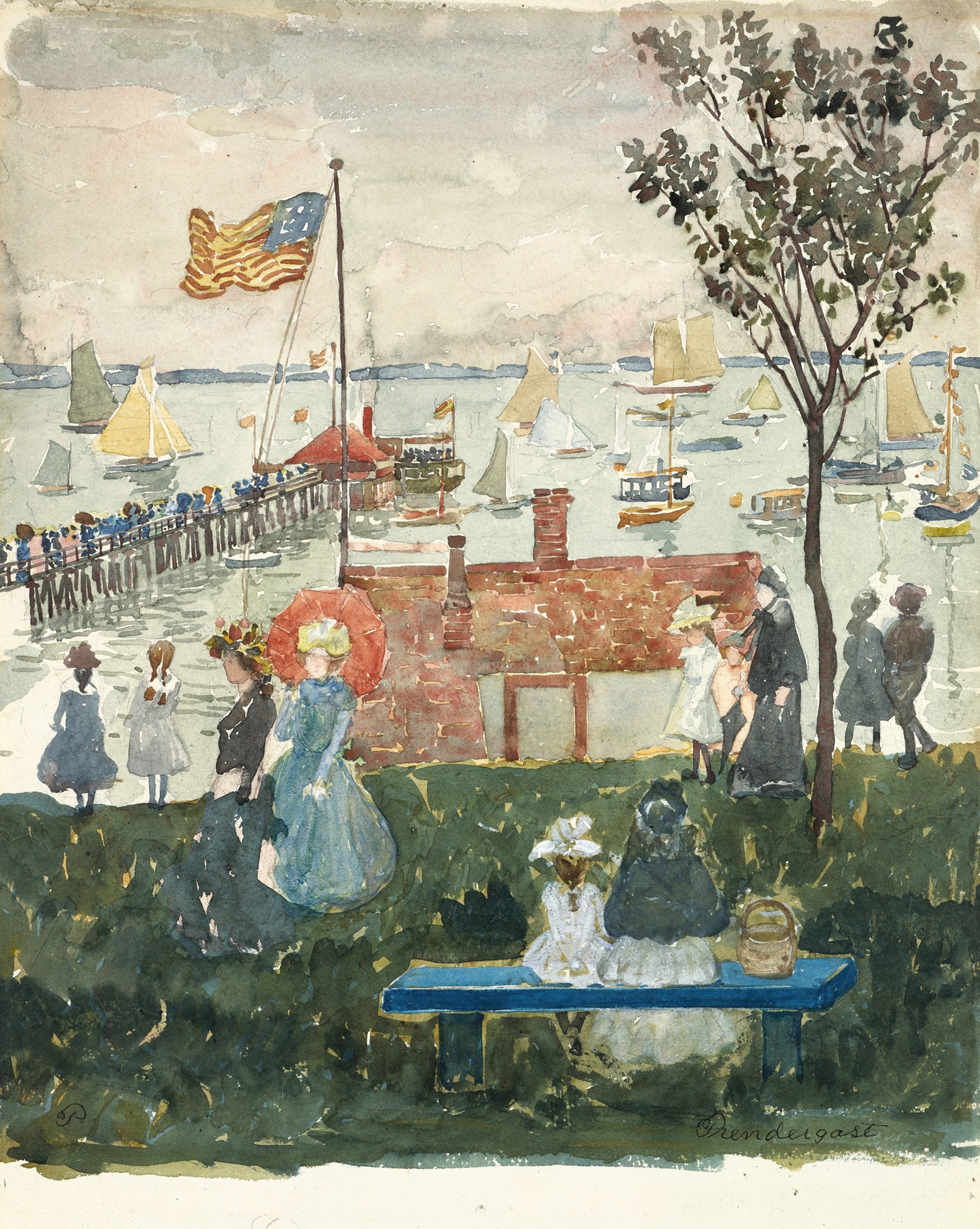
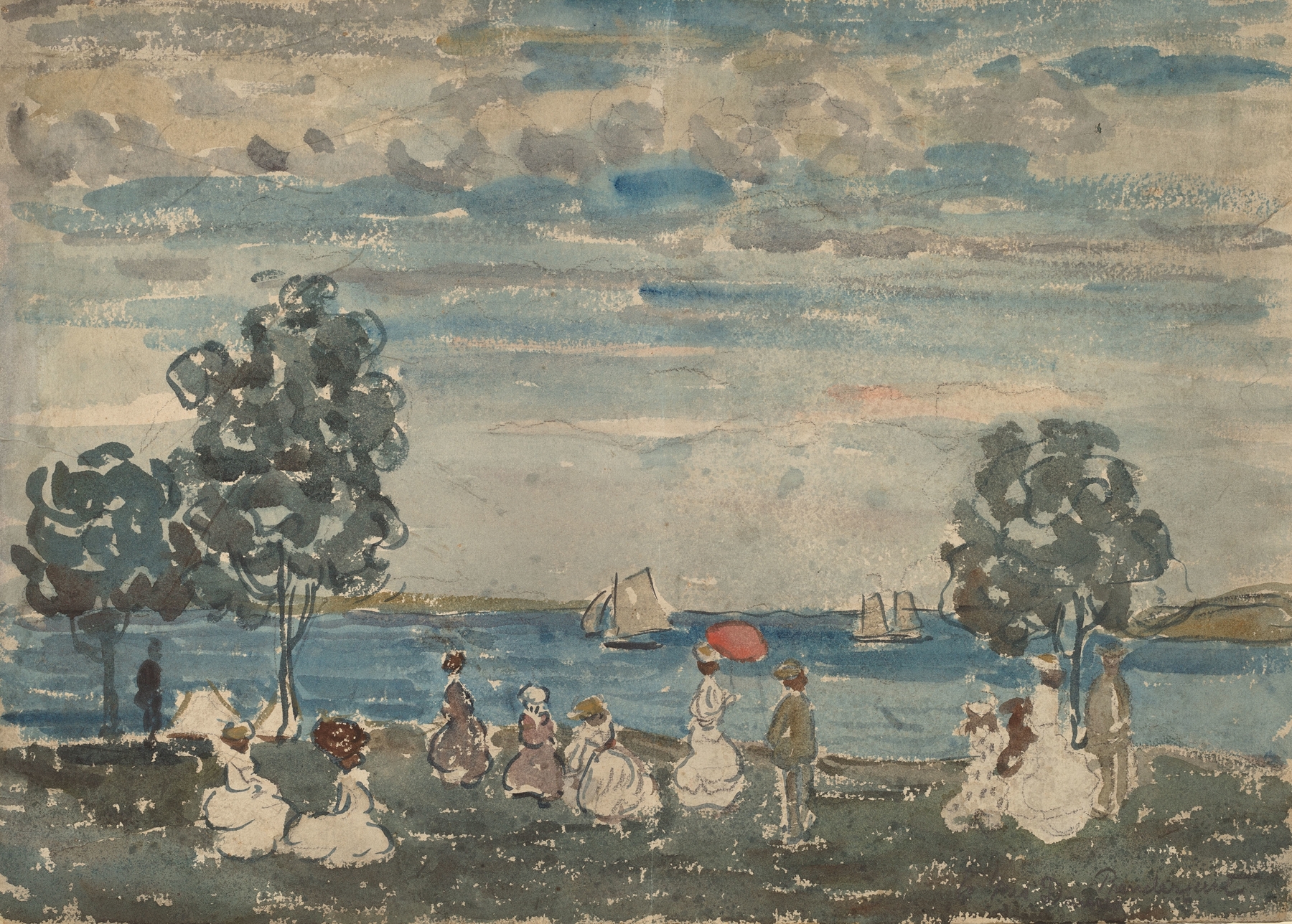
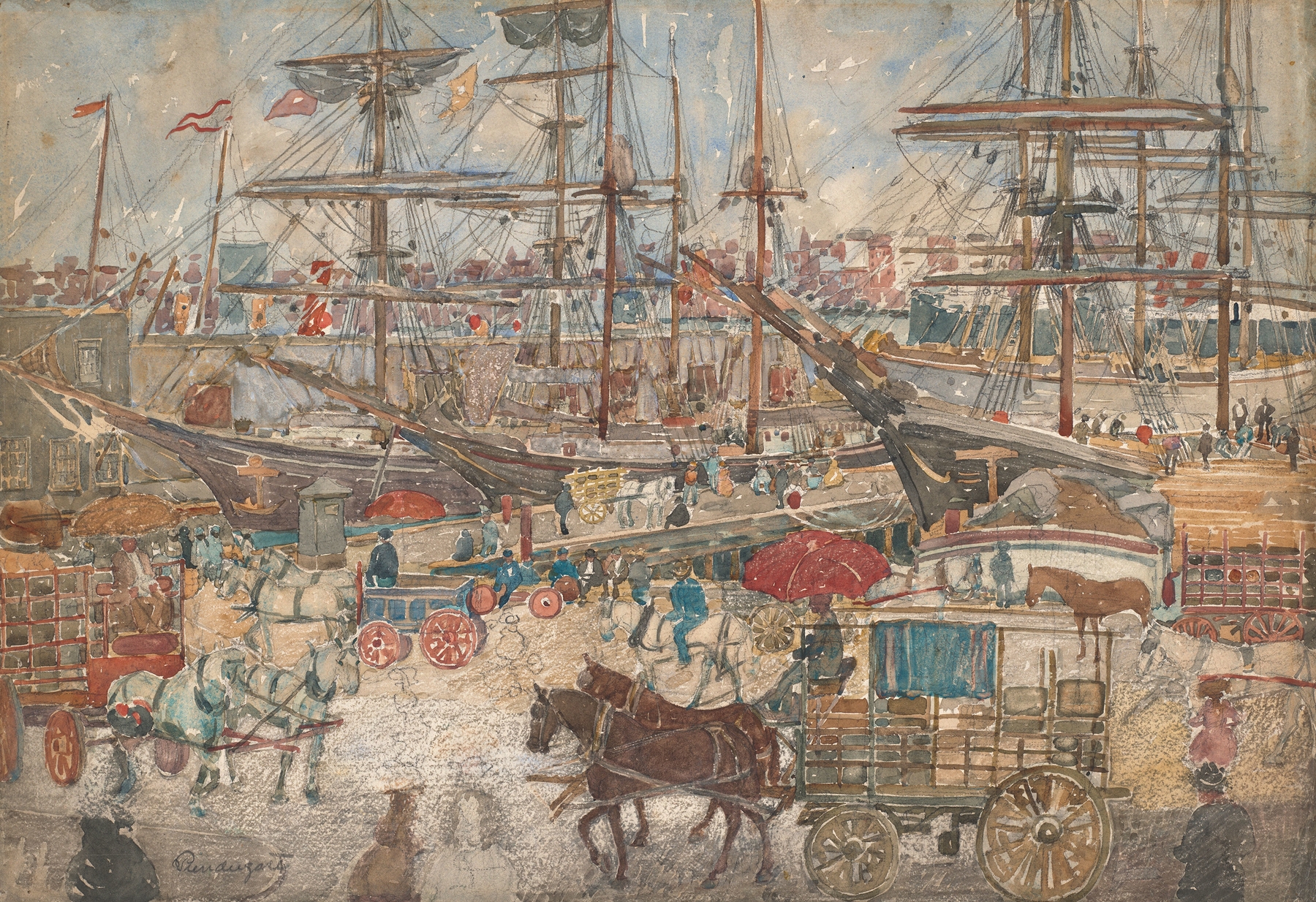
When did color learn to lie? In Low Tide, Beachmont, vivid hues murmur secrets of rebirth and renewal, inviting the viewer to explore the deeper truths hidden beneath the surface. Look to the center of the canvas, where a group of bathers animatedly engage with the shimmering sea. The interplay of blues and greens evokes the gentle rhythm of the tide, while the warm pops of red and yellow in the figures' clothing create a striking contrast against the cool shoreline.
The brushwork is fluid and expressive, capturing the sense of movement as bodies bend and stretch, each gesture full of life and spontaneity. Yet, the painting reveals more than a carefree day at the beach. Notice how the light dances upon the wet sand, almost illuminating the transitions between the solid and the ephemeral, suggesting the idea of fleeting moments. The contrasting figures—some submerged in joyful revelry, others standing apart in contemplation—heighten the emotional tension, reflecting both solitude and community amidst the embrace of nature.
This duality invites viewers to ponder their own connections and disconnections, making the scene resonate on a personal level. Created between 1900 and 1905, this work emerges from Prendergast's time in Boston, where he was part of the vibrant circle of American Impressionists. The period was marked by an exploration of color and form, influenced by European movements yet distinctly American in its spirit. As society grappled with modernization, Prendergast found solace in the natural world, depicting leisure as a canvas for introspection and renewal.