Mahana no atua (Day of the God) — History & Analysis
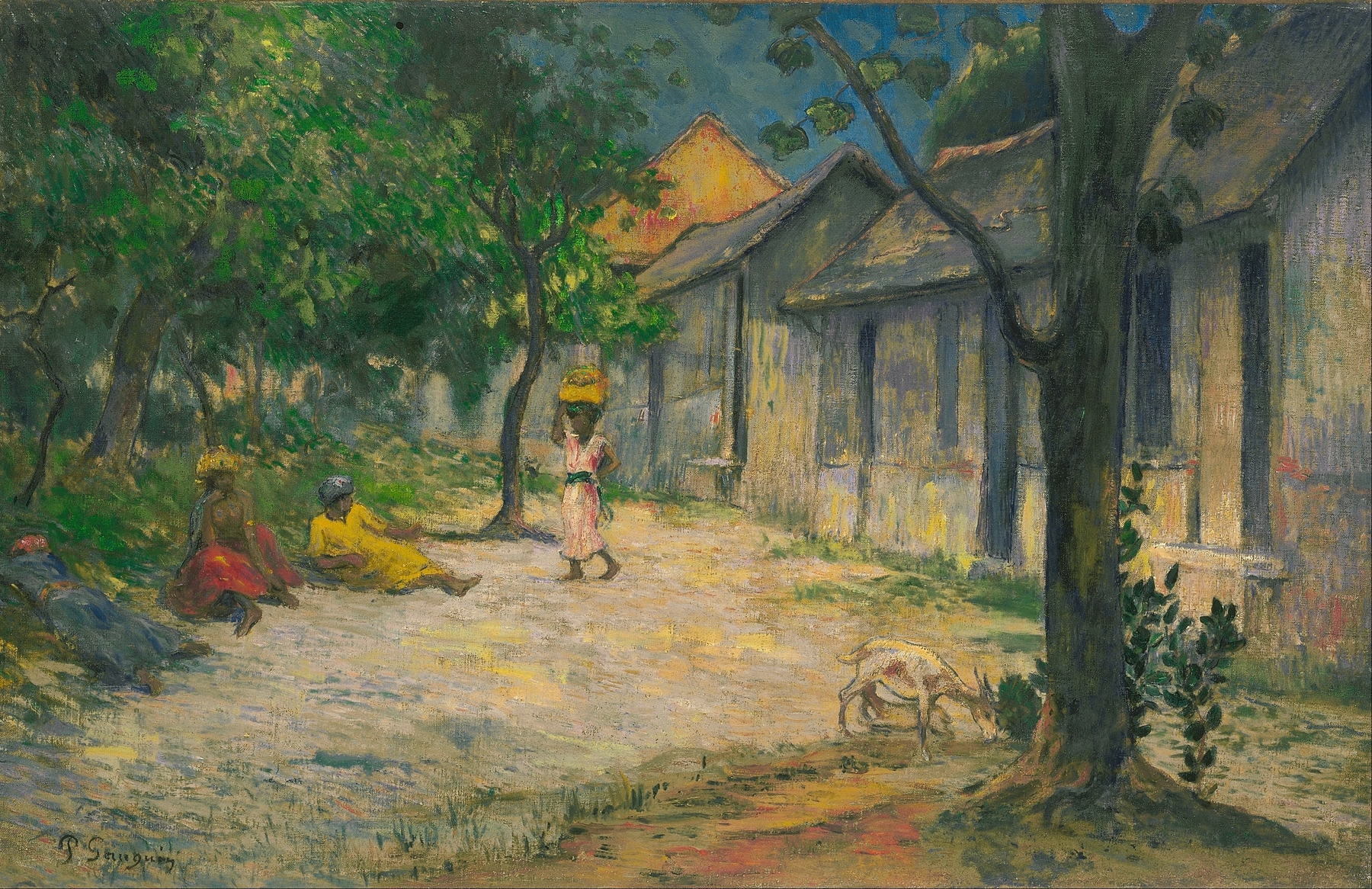
When did color learn to lie? In the vibrant strokes of this painting, one might wonder if the hues speak truthfully of the human experience or veil a deeper emptiness within. Look to the foreground, where a group of figures reclines in a lush, tropical landscape, their bodies rendered in bold, flat colors. The intense blues and greens envelop them, yet there is a disquieting stillness that fills the air. Focus on the way the bright reds and yellows highlight the figures' skin tones, contrasting sharply with the deep, shadowy foliage behind them.
This choice of palette not only draws the viewer’s eye to their languid postures but also hints at a surreal quality, as if the scene teeters on the edge of reality and dream. Beneath the vibrant surface, this work whispers of existential contemplation. The stark juxtaposition of the figures’ serene expressions against the chaotic backdrop evokes a sense of isolation amidst beauty. Symbolic elements, like the fruit that lies untouched, resonate with the theme of emptiness, suggesting desire unfulfilled.
What might seem like a celebration of life is imbued with a sense of longing, a profound commentary on the human condition that lingers in the mind after the first impression fades. In 1894, Gauguin was living in Tahiti, seeking solace from European society and yearning for a more primal existence. This period marked a turning point in his artistic career as he embraced bold colors and simplified forms, distancing himself from traditional artistic conventions. His time on the island, filled with both inspiration and a sense of dislocation, shaped not only this piece but also his broader exploration of culture, identity, and the search for meaning.