Mannen en een muilezel bij de Via Appia — History & Analysis
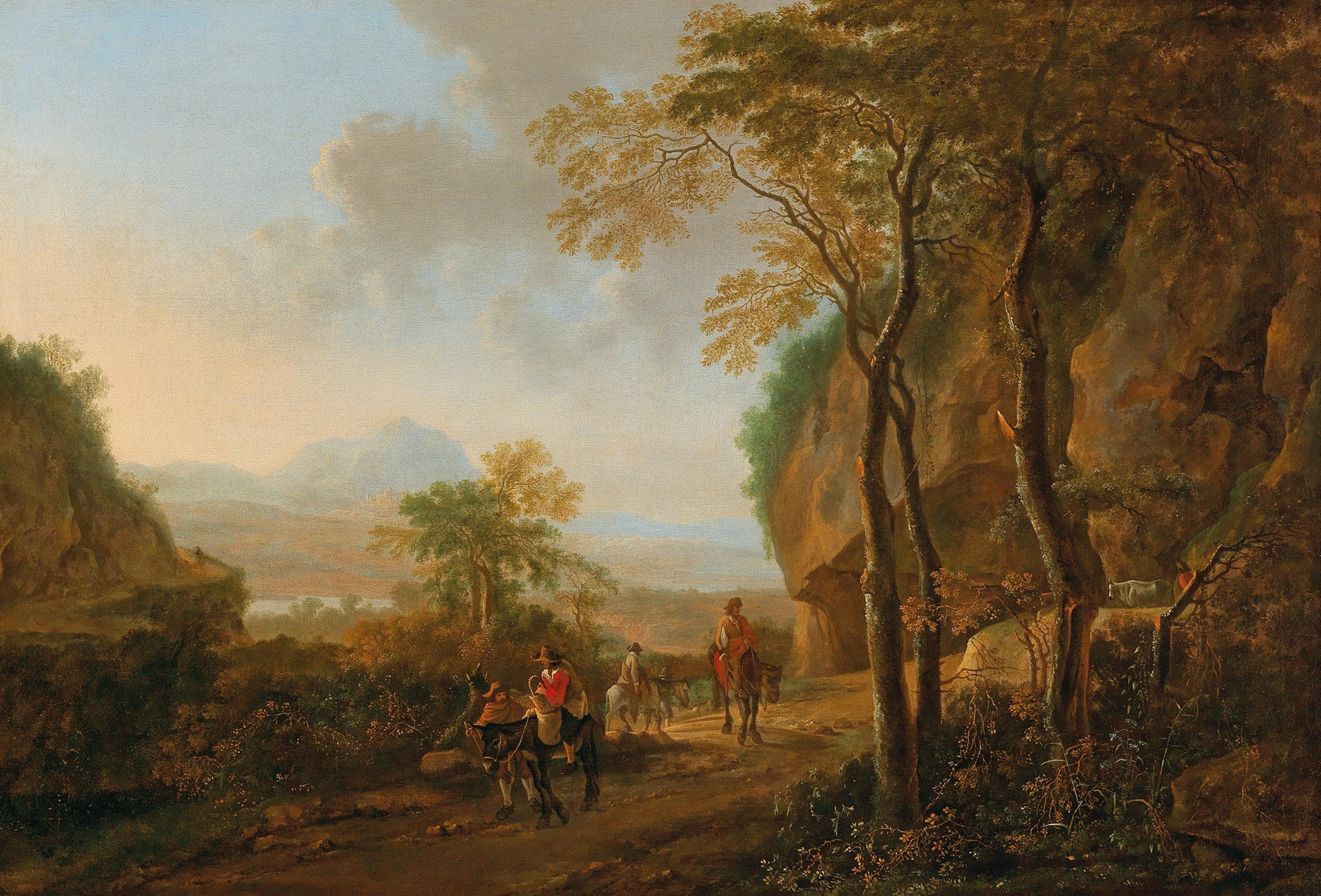
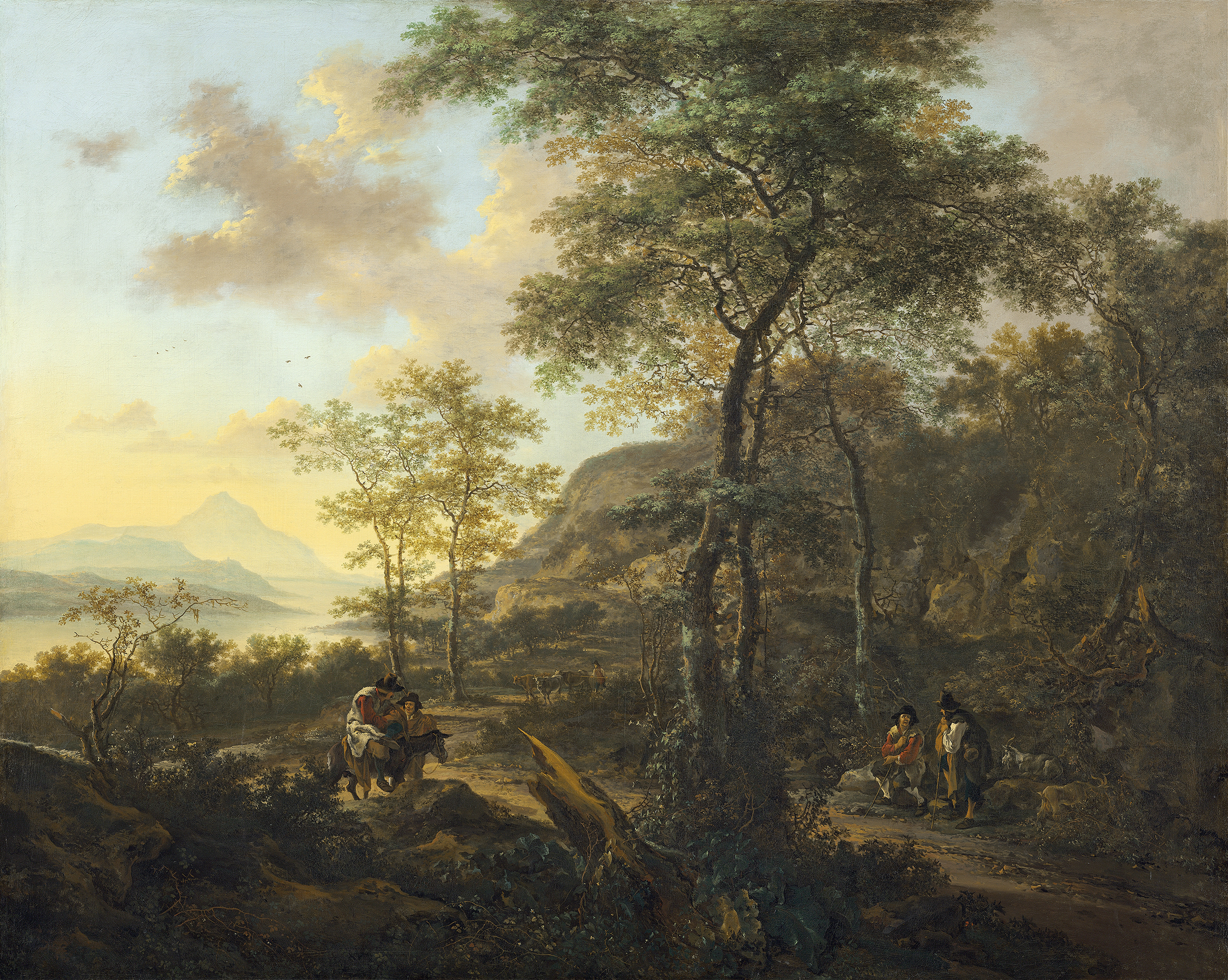
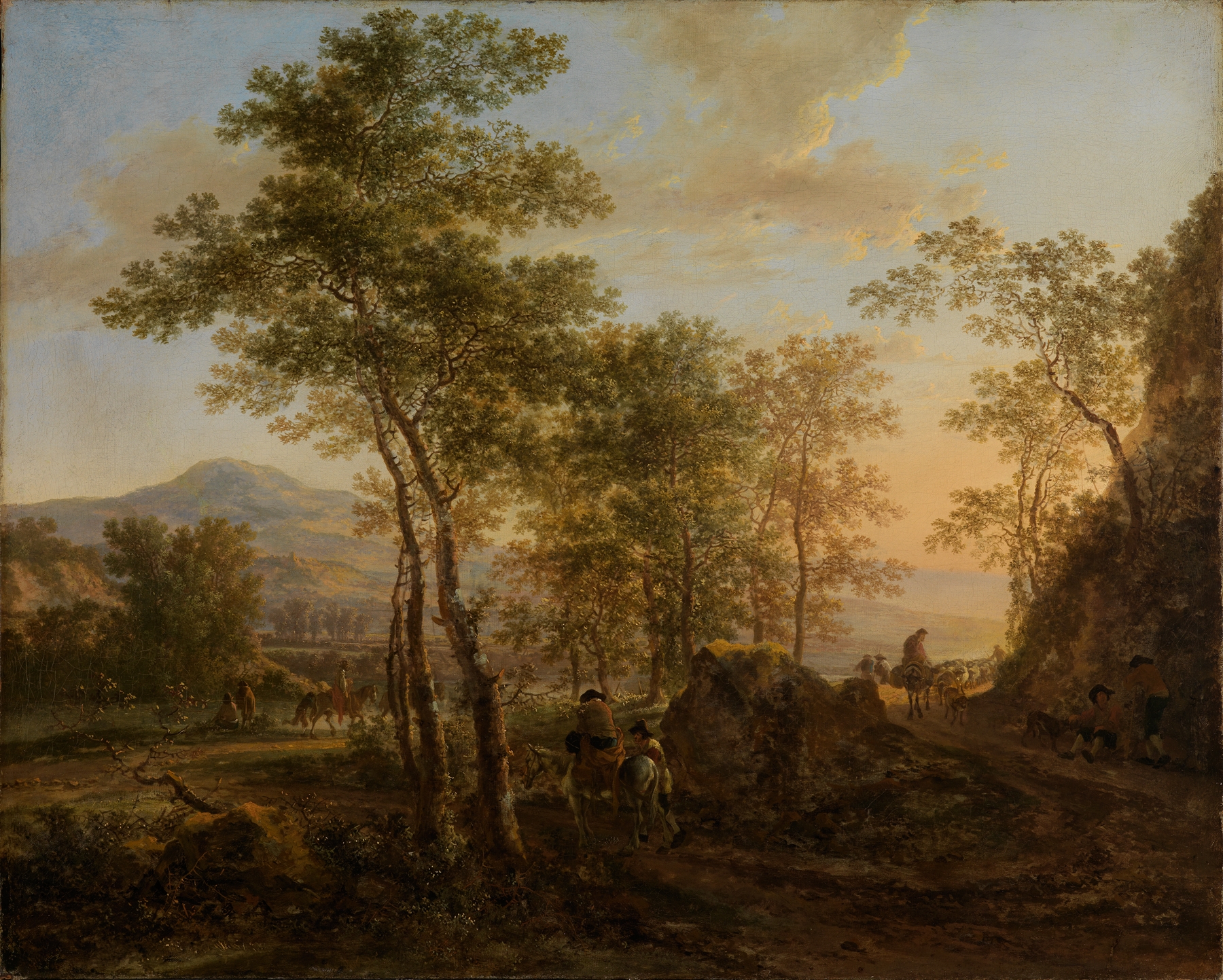
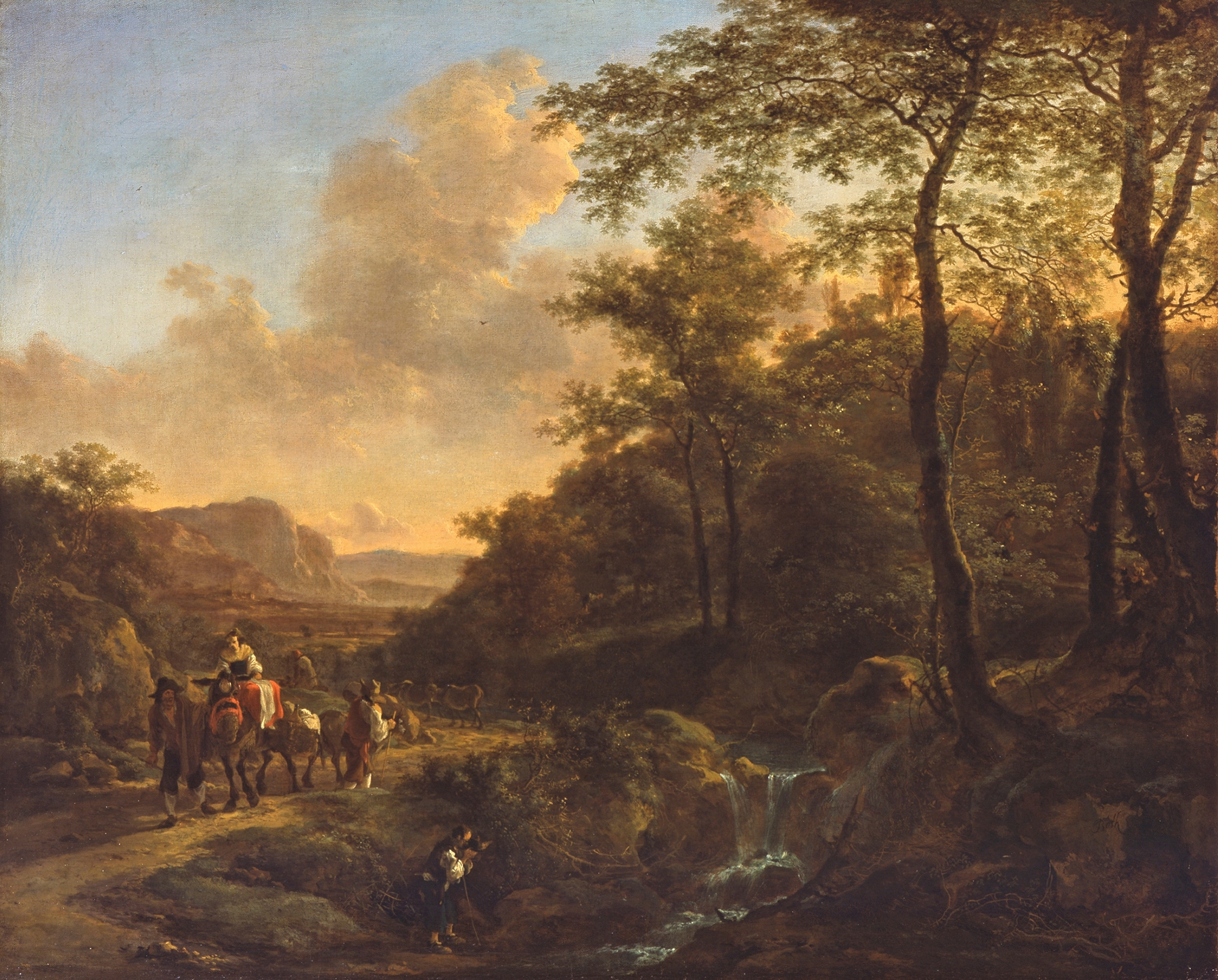
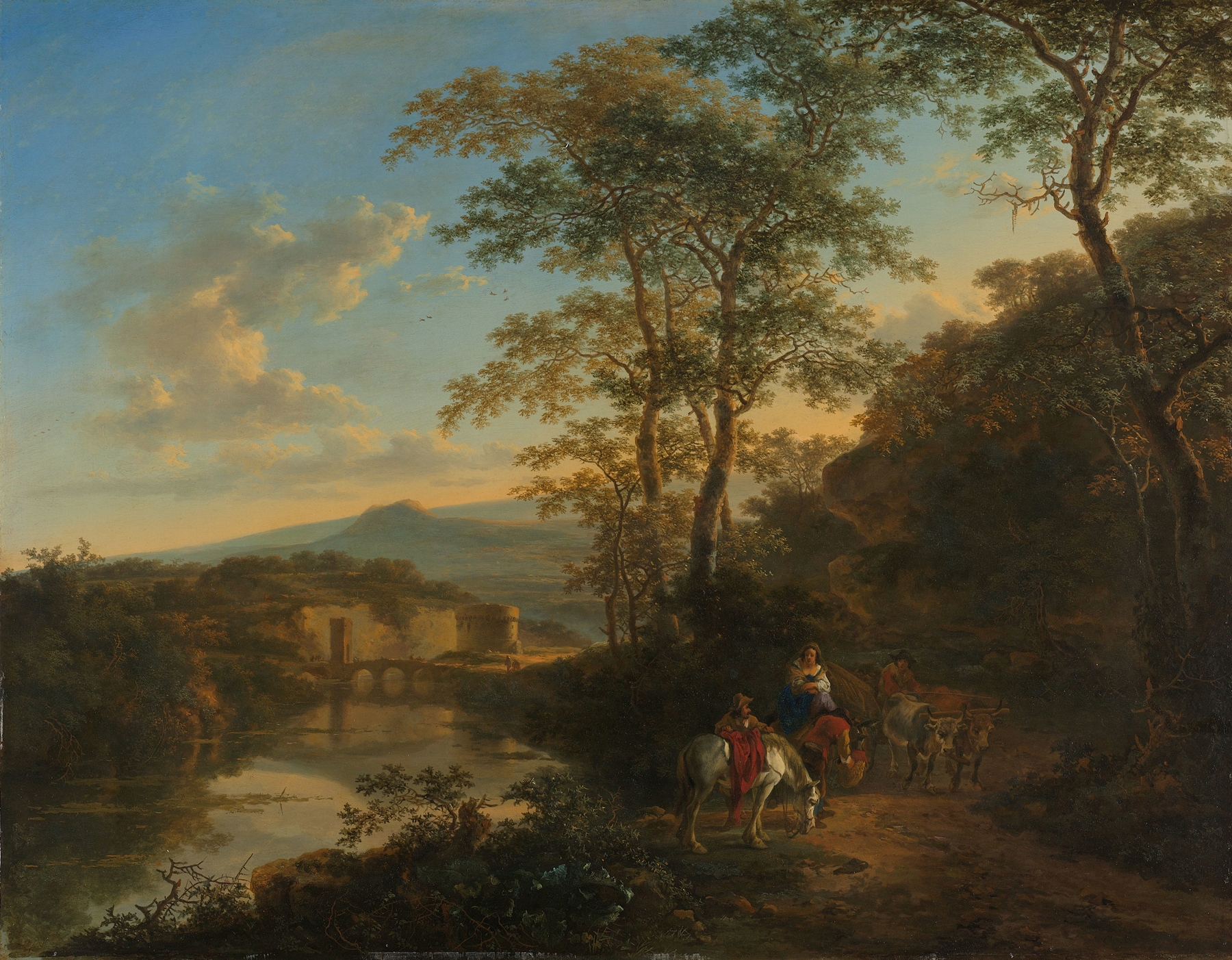
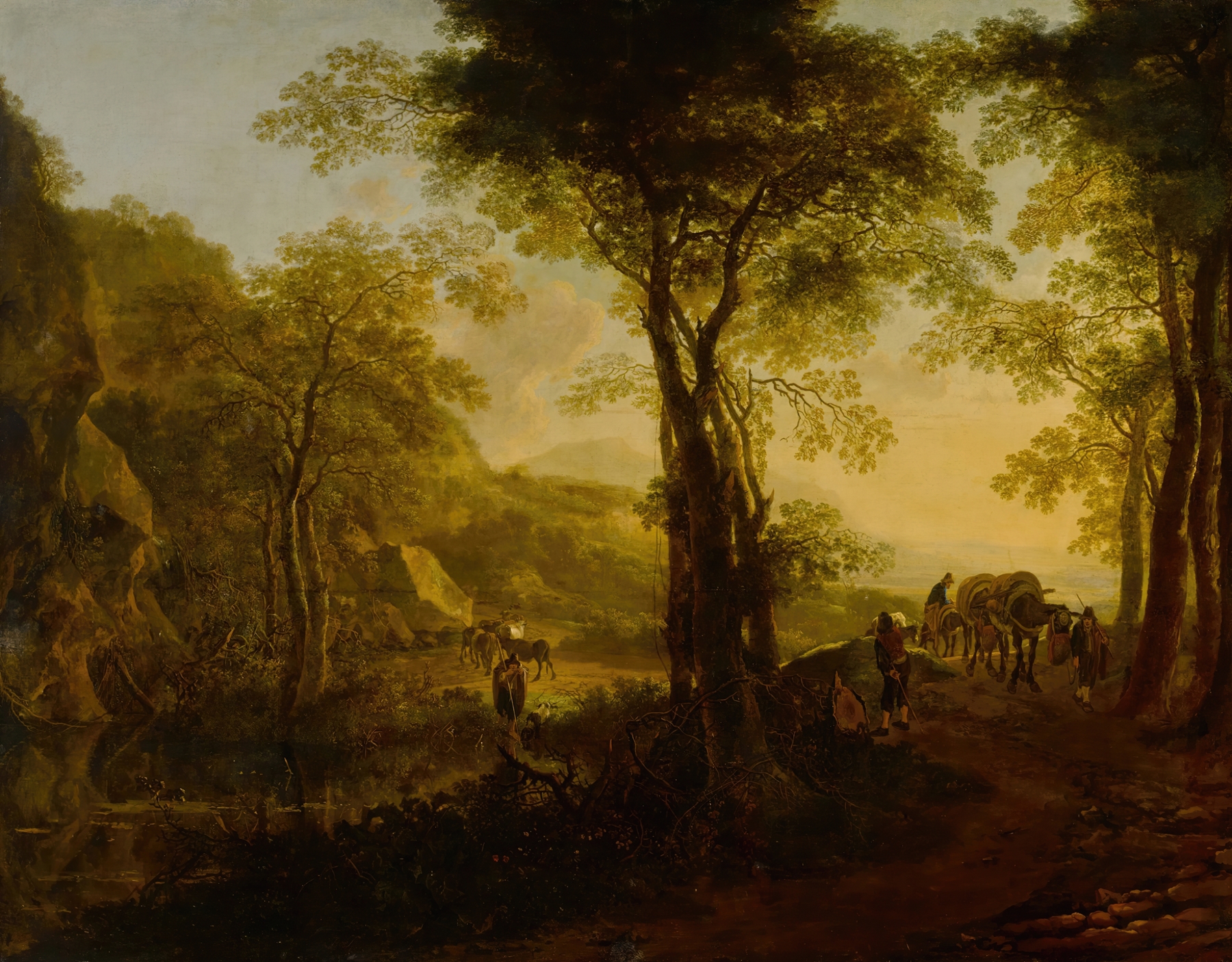
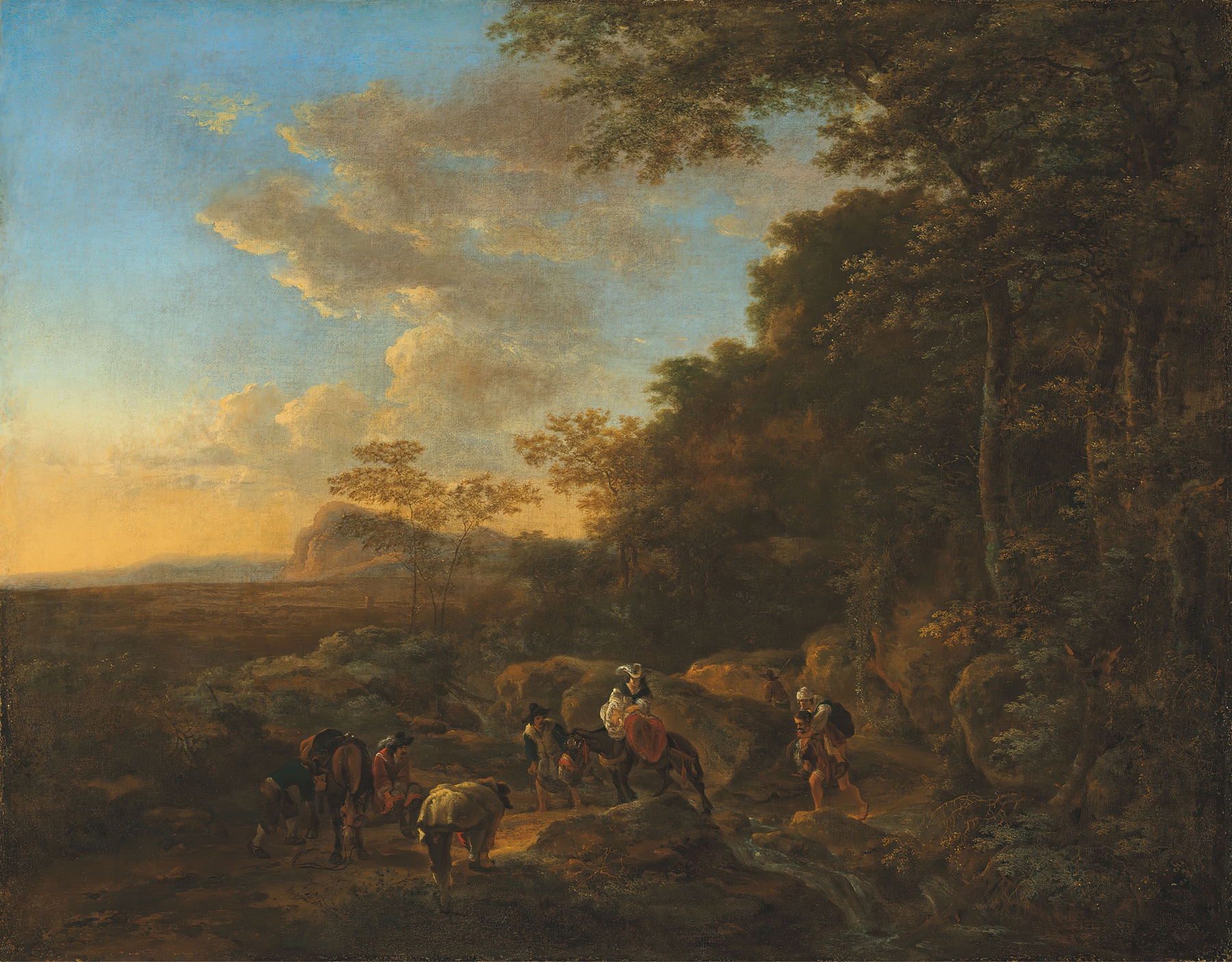
“Every silence here is a confession.” Beneath the weight of history, shadows stretch across the ancient Via Appia, revealing untold stories of travelers long past. Each figure silhouetted against the sun speaks volumes without uttering a word, and the interplay of light and dark dances in poetic contrast. Look to the center of the canvas, where the figures of men and a mule create a striking focal point. The distinct shapes emerge from a backdrop of lush greenery, meticulously painted to convey both movement and stillness. Notice how the dappling sunlight filters through the leaves, casting intricate patterns on the ground and highlighting the earthy tones of the landscape, bringing a vibrancy that contrasts with the deeper shadows of the men.
This careful manipulation of light not only guides the eye but also evokes a sense of serene solitude. Beneath the surface, the tension between the figures and their environment speaks to a deeper narrative. The juxtaposition of the sturdy mule against the graceful lines of the landscape suggests themes of burden and freedom. Each shadow reveals a hidden dimension of the men, hinting at their weariness from travel or contemplation of their journey.
The interplay of light and shadow serves as a metaphor for the duality of existence, exploring both the weight of life’s demands and the liberation found in the open road. In the early 17th century, during a time of artistic exploration in the Dutch Golden Age, Mannen en een muilezel bij de Via Appia was created by Jan Both. Residing in Italy, Both drew on the southern landscape, imbuing his work with a sense of place while also shaping the emerging genre of landscape painting. The artwork reflects both his personal experiences and the broader trends of his time, as artists turned their eyes toward the natural beauty that surrounded them, seeking to capture the essence of existence in a single frame.