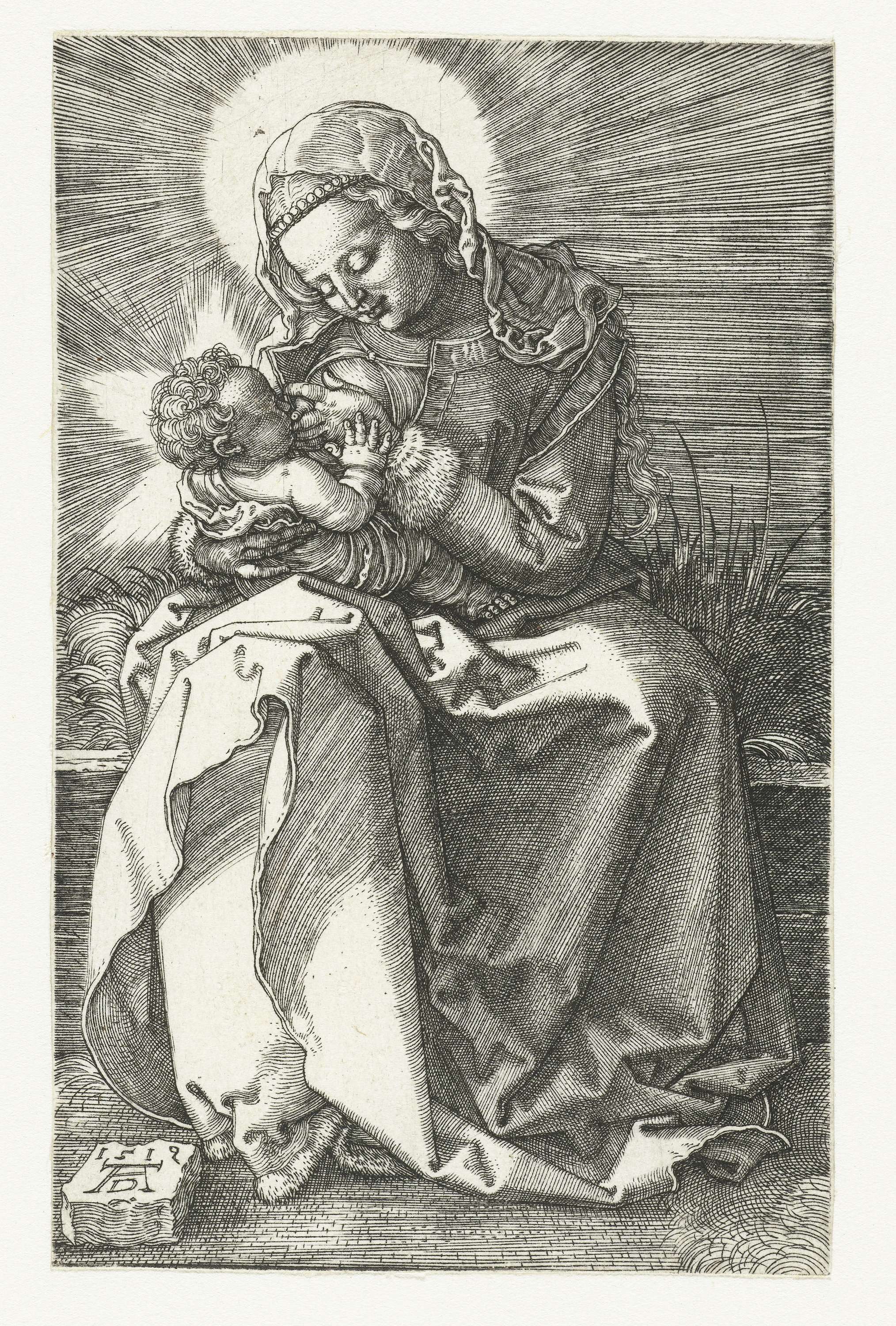
What if silence could speak through light? In Albrecht Dürer’s *Maria met kind aan de borst*, the stillness resonates with a profound, almost sacred movement, inviting us to contemplate the weight of motherhood and the divine. Look to the center of the canvas, where the figures of Mary and the Christ child are anchored in a serene embrace. The gentle curve of her body, painted in soft, natural hues, draws the eye with a tenderness that radiates warmth. Notice how the light gracefully caresses their forms, illuminating the delicate folds of her garment while casting soft shadows that deepen the sense of intimacy. Every stroke unveils a moment suspended in time, where both maternal affection and spiritual reverence coalesce. Yet, beneath the surface of this serene tableau, deeper narratives emerge. The intricate details of the drapery reveal Dürer’s mastery in rendering texture, suggesting the heaviness of responsibility that mothers bear. The subtle positioning of the child’s hand—almost reaching out—evokes a sense of potential and growth, hinting at the duality of innocence and the looming trials of life. This rich tapestry of contrasts between the calmness of the present and the anticipation of what is to come adds layers to their silent communion. In 1519, Dürer was navigating a turbulent period marked by personal loss and shifting artistic ideals. Recently returned from a trip to the Netherlands, he was immersed in the tensions between the traditional and the emerging styles of the Renaissance. This artwork reflects not only his technical prowess but also a deep engagement with the human experience, capturing a poignant moment as the world around him changed dramatically.