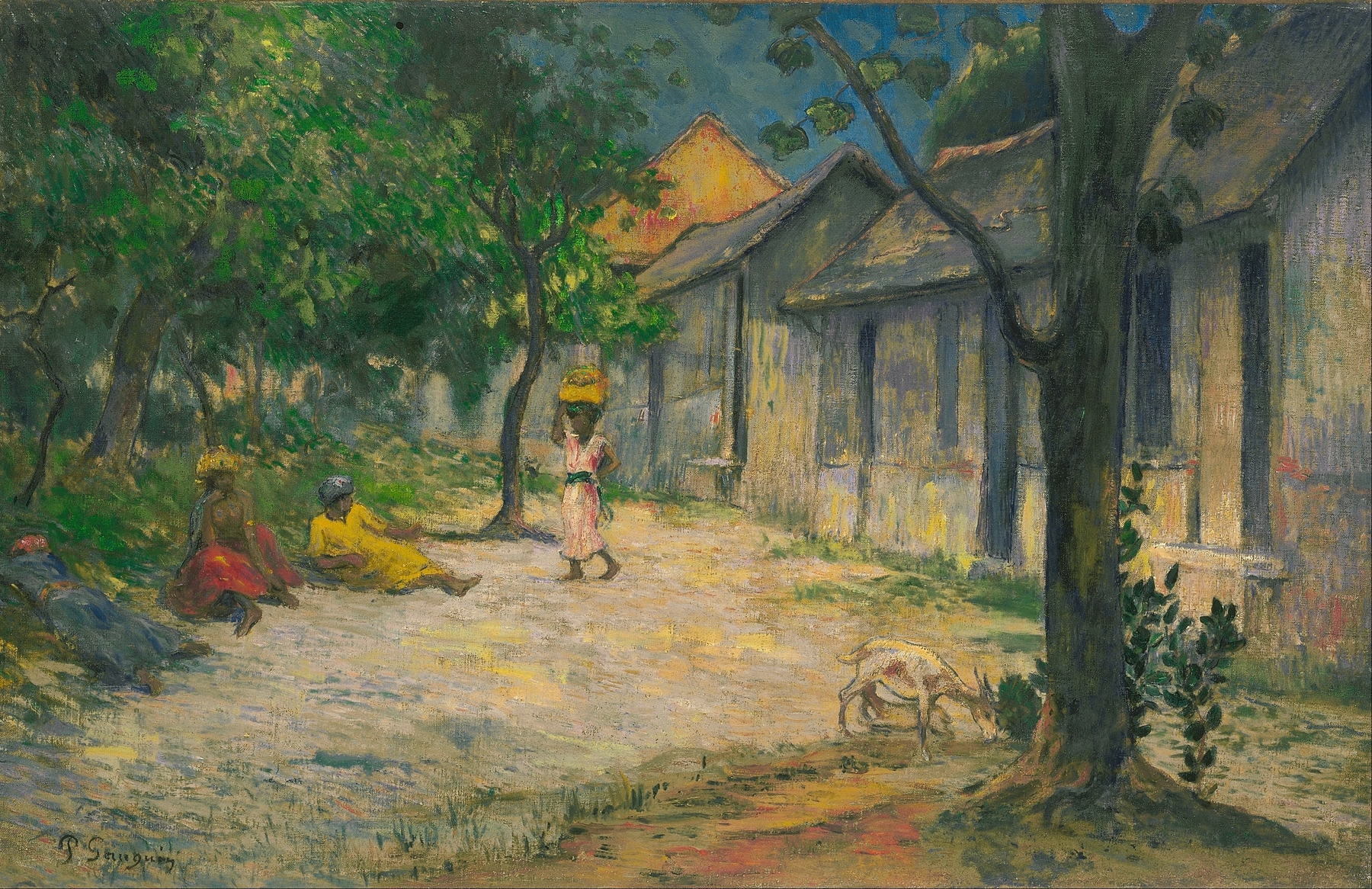
Merahi metua no Tehamana (Tehamana Has Many Parents or The Ancestors of Tehamana) — History & Analysis
What if beauty was never meant to be finished? In Merahi metua no Tehamana, Gauguin invites us to ponder this question as he captures the essence of a fleeting moment, a synthesis of cultural identity and the passage of time, delicately painted against the backdrop of decay. Look closely at the central figure of Tehamana, her serene expression framed by lush, vibrant flora. Notice how the colors pulse with life—deep greens and rich yellows—juxtaposed against the muted browns of her skin. The composition draws your eye first to her gaze, a quiet strength that seems to transcend the canvas, beckoning the viewer to explore her world of ancestry and belonging.
The brushstrokes are both bold and gentle, embodying the duality of strength and vulnerability. Delve into the layers of meaning woven into the piece. The juxtaposition of Tehamana's youth with the aged figure of the grandmother to the left evokes the cycle of life and the concept of lineage. The floral elements surrounding them symbolize both beauty and decay, hinting at the impermanence that permeates existence.
This tension between vibrancy and decline serves as a reminder that every generation carries the weight of those before, beautifully imperfect yet deeply connected. In 1893, amidst his tumultuous existence in Tahiti, Gauguin painted this work, seeking solace and inspiration in a foreign land. This period marked a pivotal moment in his artistic journey, as he endeavored to escape European conventions and embrace the rawness of indigenous life. The world was in flux, and his exploration reflected a longing for authenticity, revealing the significance of heritage in shaping individual identity.