Močarina pod Slaneckým hradom — History & Analysis
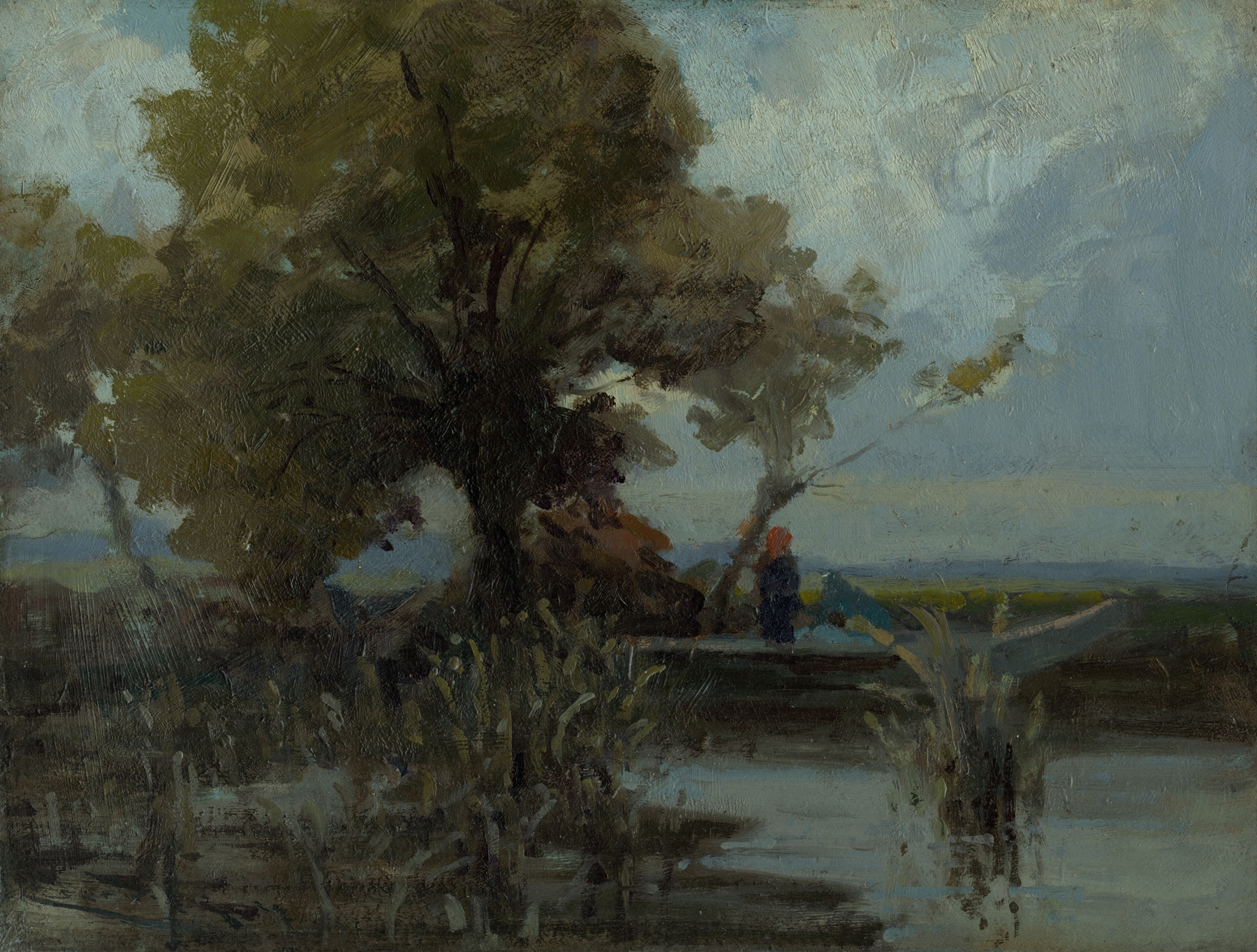
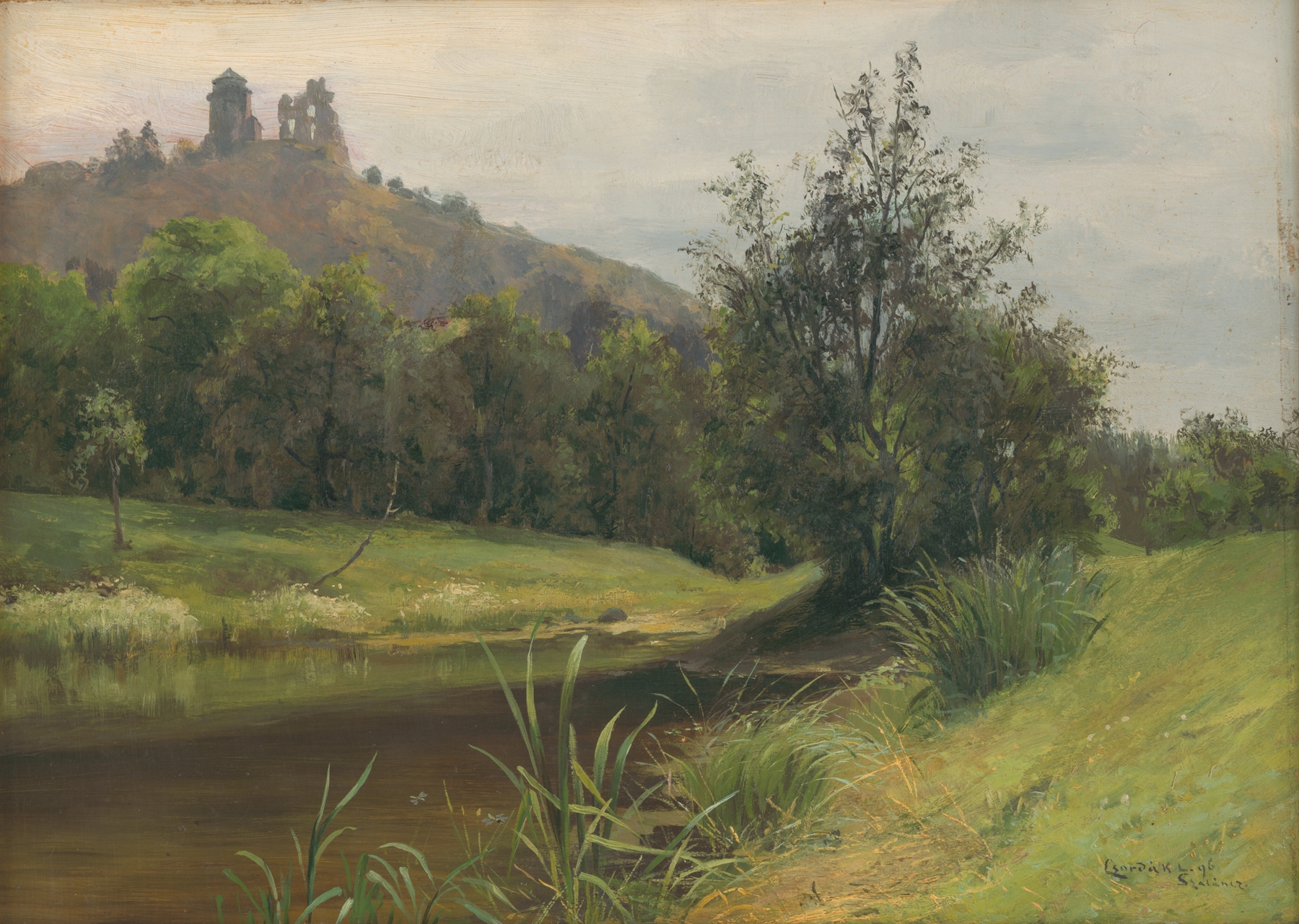
Can beauty exist without sorrow? In the gaze of a tranquil landscape, the answer lingers like a whisper among the reeds. Look to the foreground of Močarina pod Slaneckým hradom, where the still waters of a marsh reflect the delicate hues of twilight. The soft greens and blues meld seamlessly, inviting you deeper into the serene composition. Notice how the warm glow of the setting sun dances across the water, casting long shadows that elongate the landscape and create a poignant contrast between light and dark.
The painter’s meticulous brushwork combines realism with a dreamlike quality, capturing not just the scene, but the delicate balance of nature's beauty. Diving deeper, there is an emotional resonance beneath the tranquil surface. The marshland, often overlooked, symbolizes a landscape rich with legacy and history, echoing the passage of time. The majestic Slanecký castle perched above serves as a reminder of human endeavor and endurance, while the serenity of the marsh suggests a quiet resilience, unyielding in the face of change.
This juxtaposition creates a tension between the transient beauty of nature and the permanence of man-made structures, evoking a sense of nostalgia for what once was. In 1896, Ľudovít Čordák painted this work during a significant period of national awakening in Slovakia. His brush captured a pivotal moment when artists sought to express cultural identity amidst the burgeoning modernism of the time. As Čordák delved into the landscapes of his homeland, he reflected not only his personal experiences but also the broader societal shifts around him, forging a connection between legacy and the natural world that resonates to this day.