Moonlight — History & Analysis
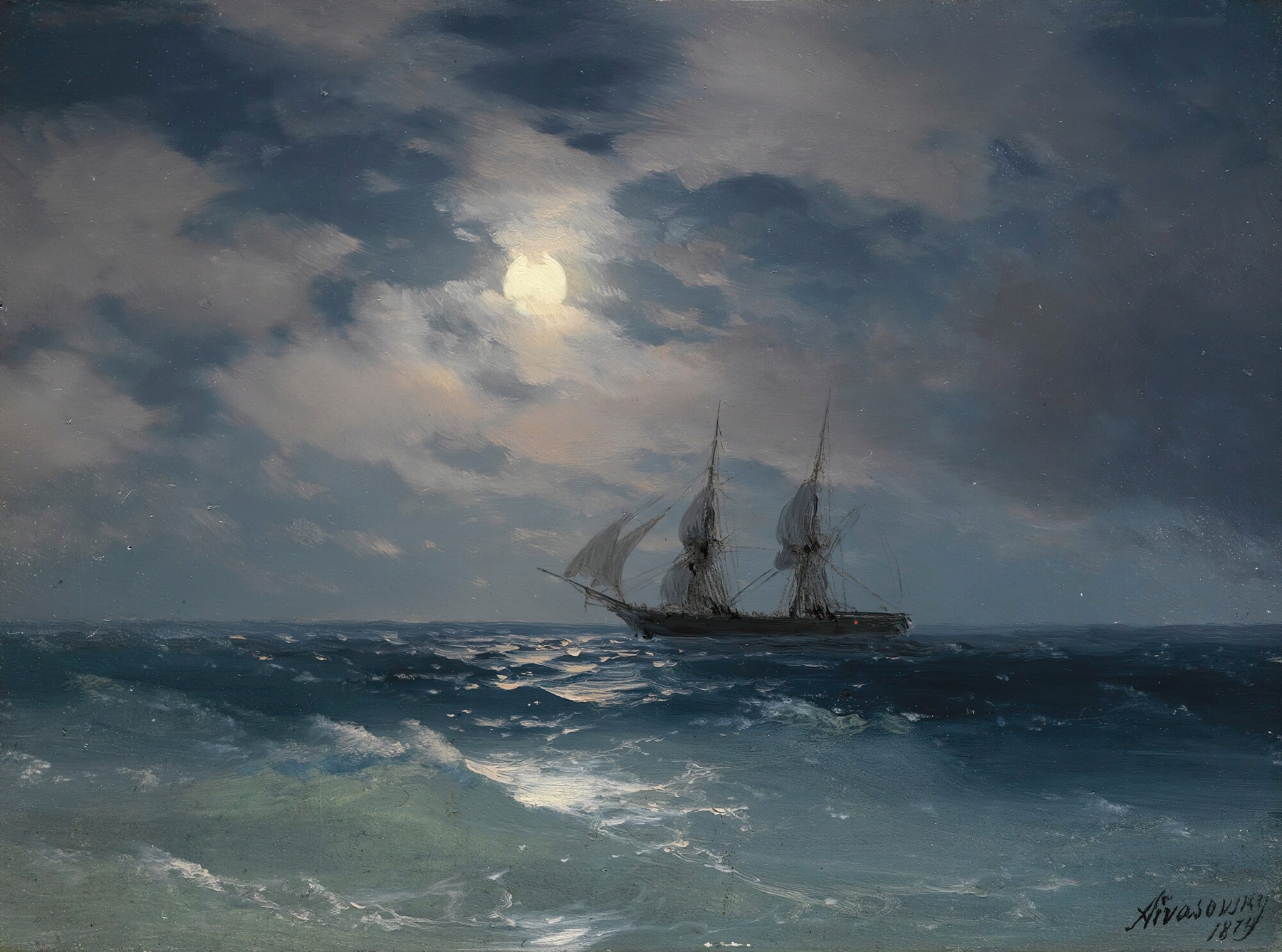
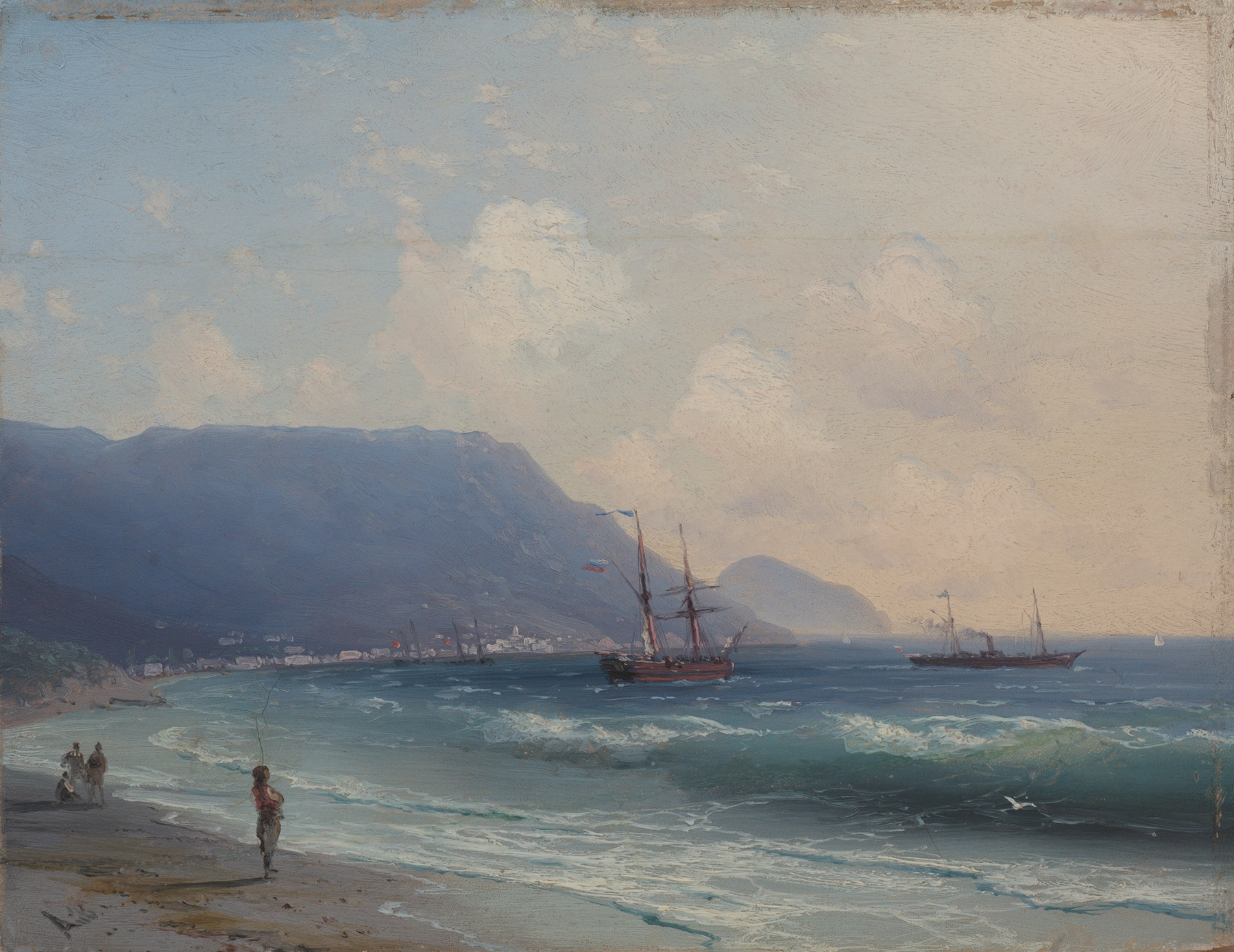
Could beauty survive in a century of chaos? In Moonlight, the answer quietly unfurls upon the canvas, inviting us to immerse ourselves in a dreamlike realm where serenity reigns amidst the tumult of life. Look to the center where a luminous moon casts its silvery glow across the water, creating a pathway of shimmering light that beckons the viewer's gaze. Aivazovsky's technique is masterful; the delicate brush strokes evoke a sense of fluidity in the waves, while the deep blues and grays build a tranquil yet mysterious atmosphere.
The stillness of the surface contrasts with the dynamic play of light, inviting contemplation and reflection on the very nature of existence. Beneath the tranquil surface lies a tension between night and day, shadow and light. The moon, strong yet gentle, symbolizes hope and guidance, while the darkened corners suggest the unknown and the fears that linger in the depths. This juxtaposition reveals a narrative of resilience, embodying the struggle to find peace and beauty, even when faced with the darkness surrounding it.
Painted in 1899, this piece came during a period of great transition for Aivazovsky, who was both celebrated and challenged in his artistic endeavors. In this time, he navigated the complexities of a changing world, where the tumult of societal upheaval contrasted sharply with his lifelong dedication to capturing the sea's sublime beauty. This painting stands as a testament to his unwavering belief in art’s ability to transcend chaos, capturing an ethereal moment that resonates through history.