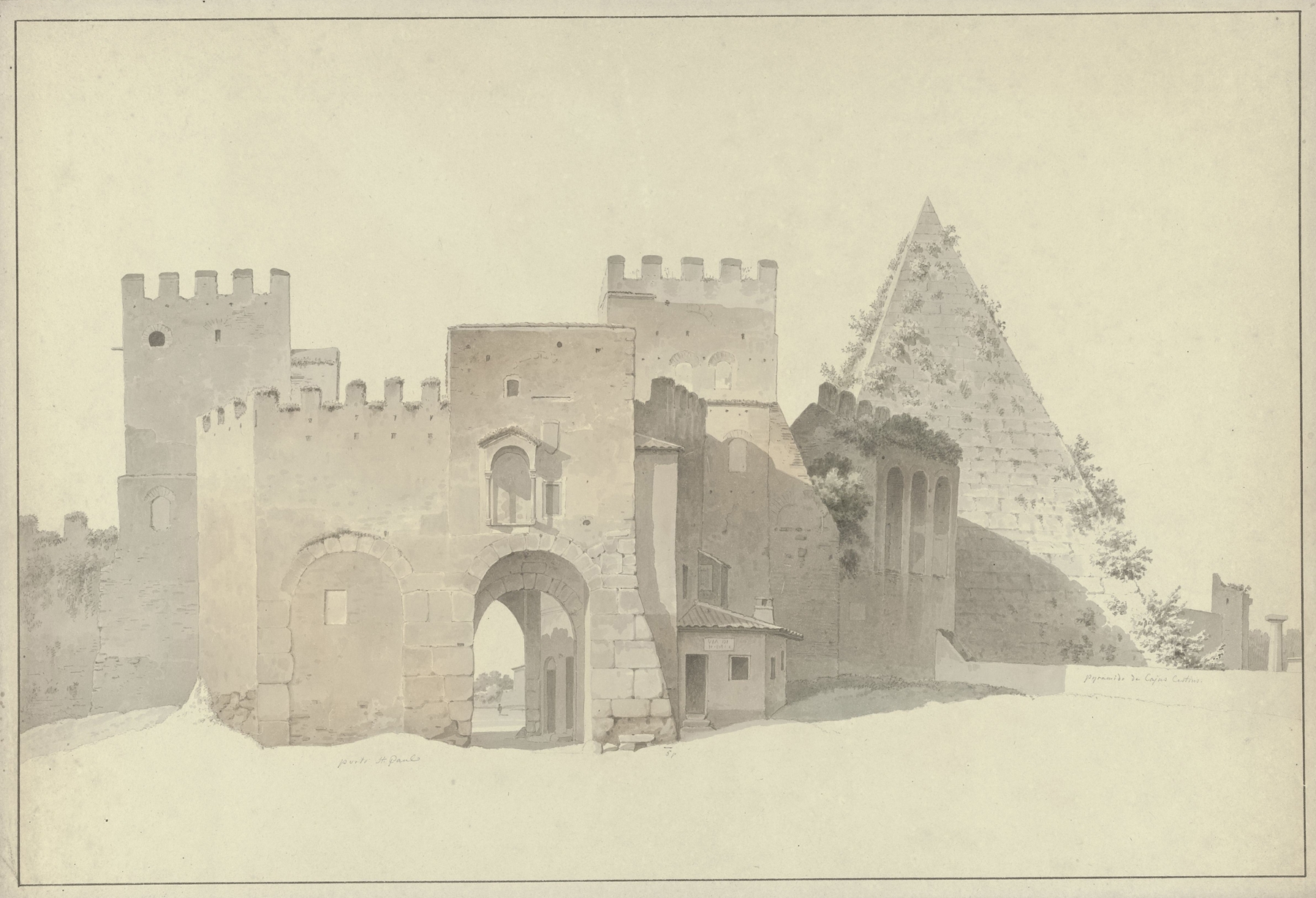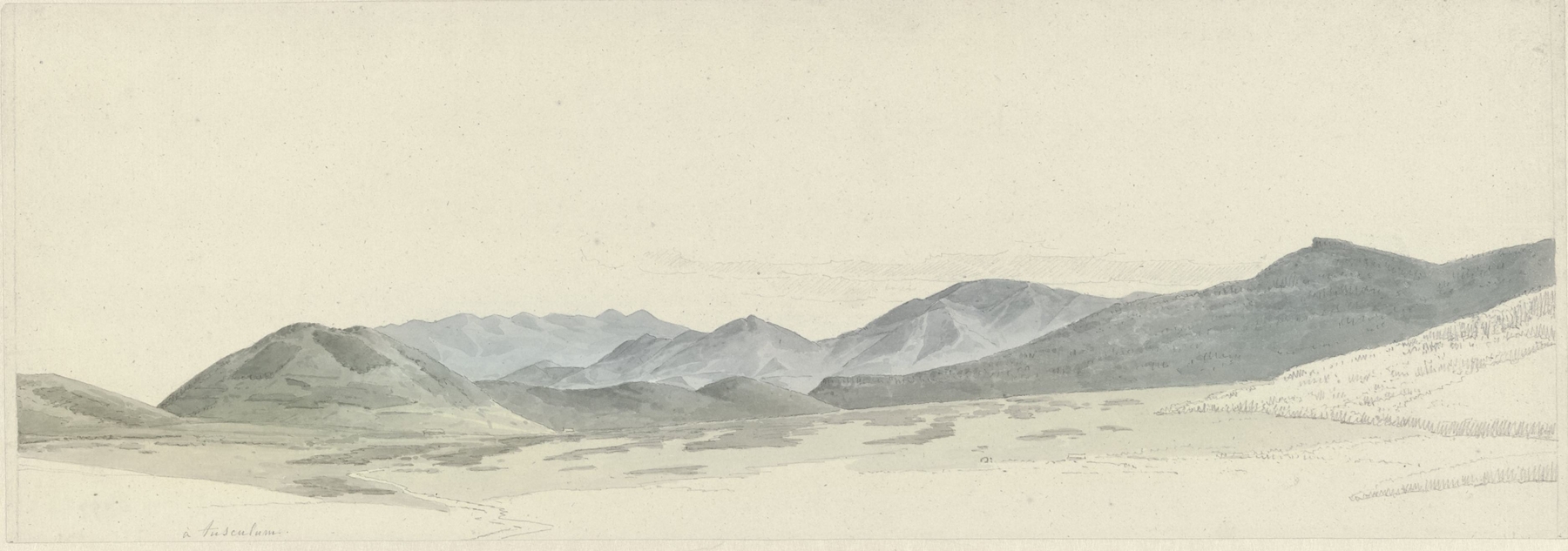
Mountain Landscape at Tusculum — History & Analysis
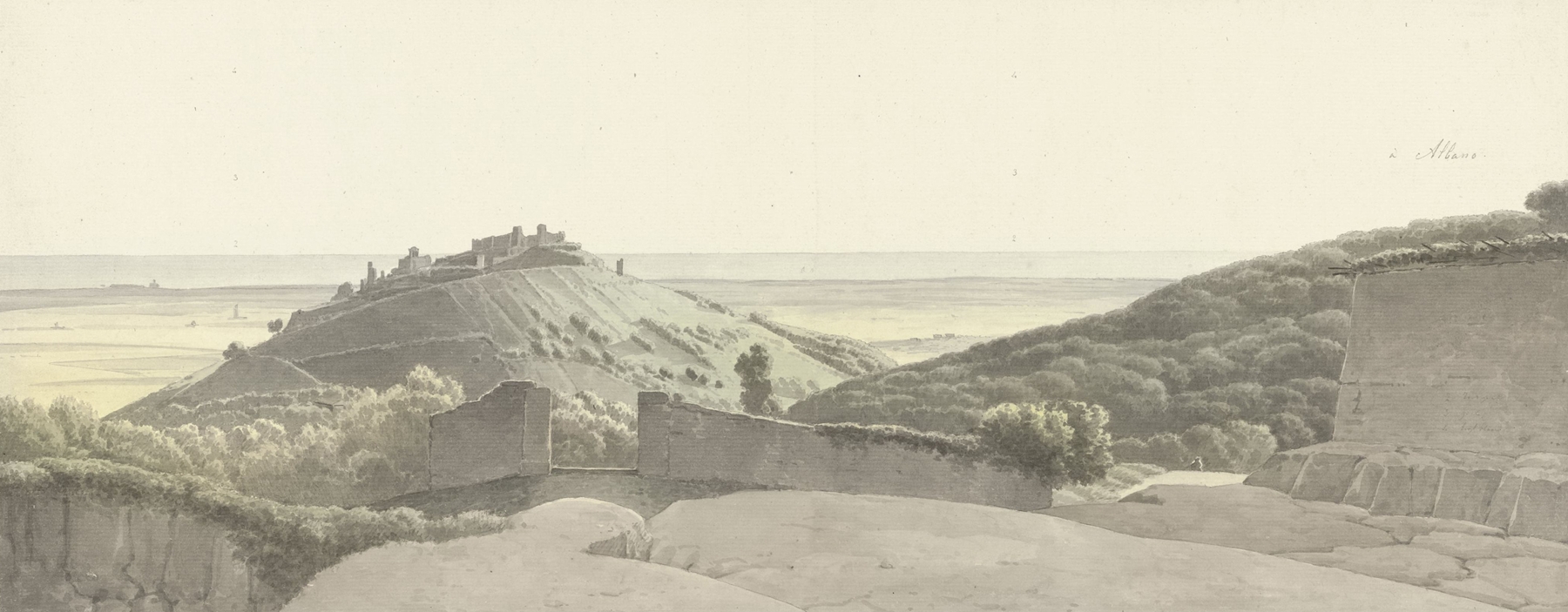
Could beauty survive in a century of chaos? In a world increasingly marked by conflict and disarray, the quiet solitude of a landscape speaks volumes of the human experience. Look to the left at the somber outline of distant mountains, their rugged peaks contrasting against the soft, inviting sky. The palette consists of muted greens and browns, evoking a sense of tranquility amidst the tumult. Notice how the light breaks gently across the canvas, illuminating patches of grass and whispering to the viewer of both stillness and yearning.
Each stroke by the artist reveals meticulous attention to detail, inviting one to linger, to breathe in the serenity enclosed within this painted realm. Beneath the surface of this idyllic scene lies a profound sense of loneliness. The solitary tree, poised almost defiantly on the hilltop, serves as a poignant reminder of isolation amidst grandeur. Its twisting limbs reach out, yearning for companionship yet standing resolute against the vastness around it.
This interplay between the expansive landscape and the lone figure encapsulates the emotional tension between nature's magnificence and human solitude, inviting contemplation about one's place in the world. During the years 1809 to 1812, the artist captured this moment while residing in the Netherlands, a period marked by political unrest following the Napoleonic Wars. As traditional art forms began to yield to new romantic ideals, he navigated the shifting tides of his contemporaries, seeking solace in landscapes that spoke to the inner turmoil of the human condition. In Mountain Landscape at Tusculum, Knip carved out a space where beauty mingles with an echo of loneliness, whispering truths that resonate even today.