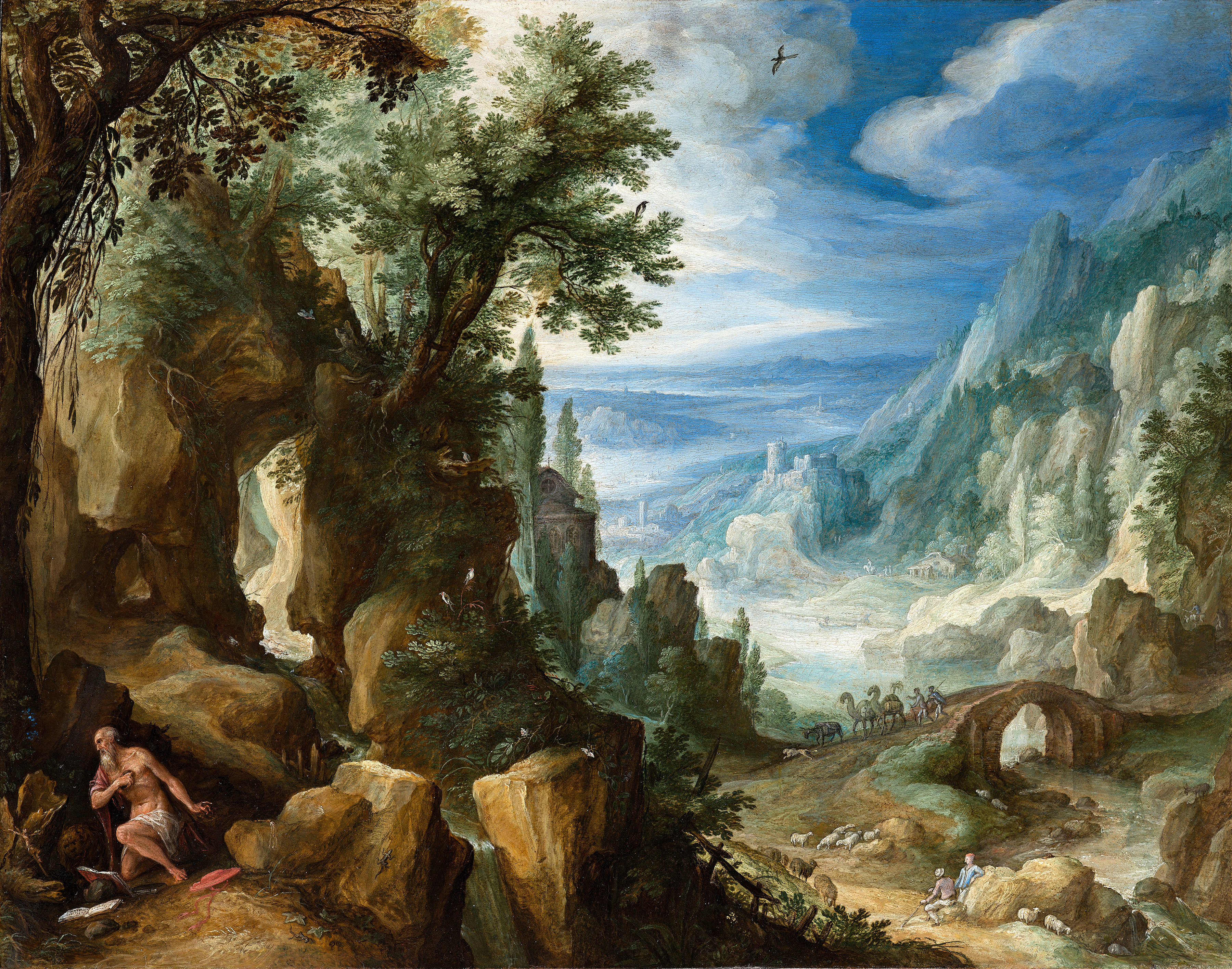
Mountainous Landscape with Saint Jerome — History & Analysis
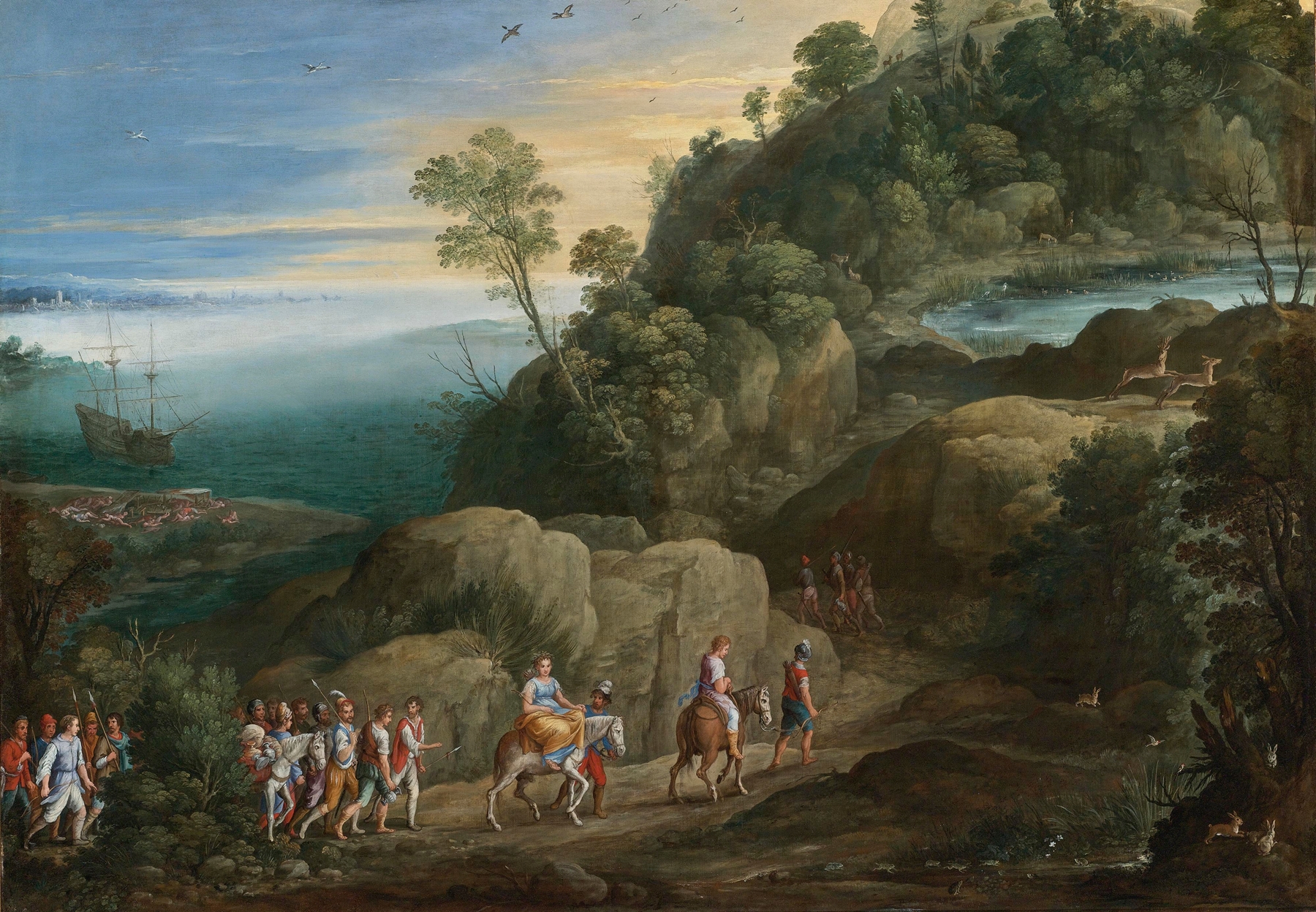
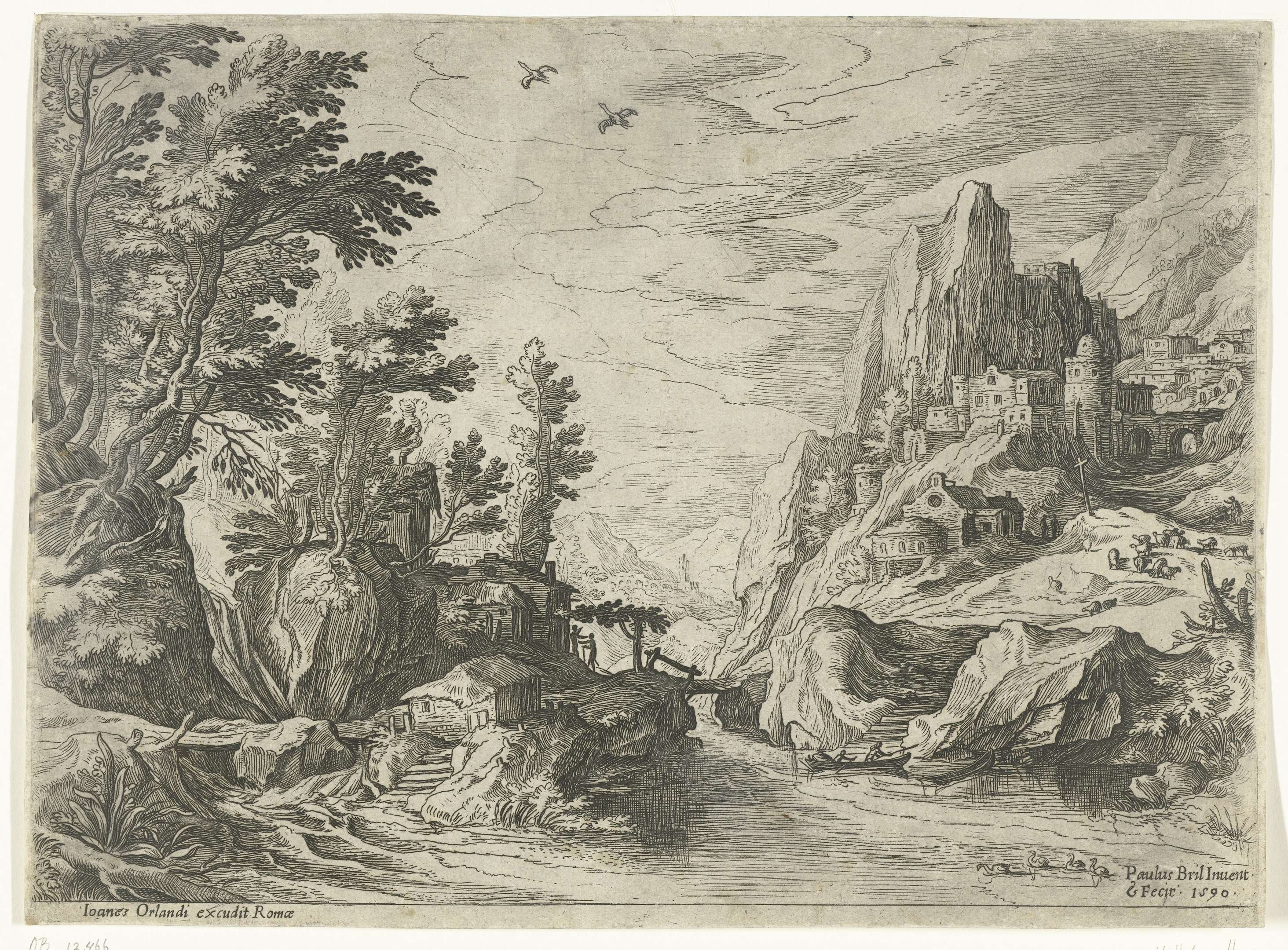
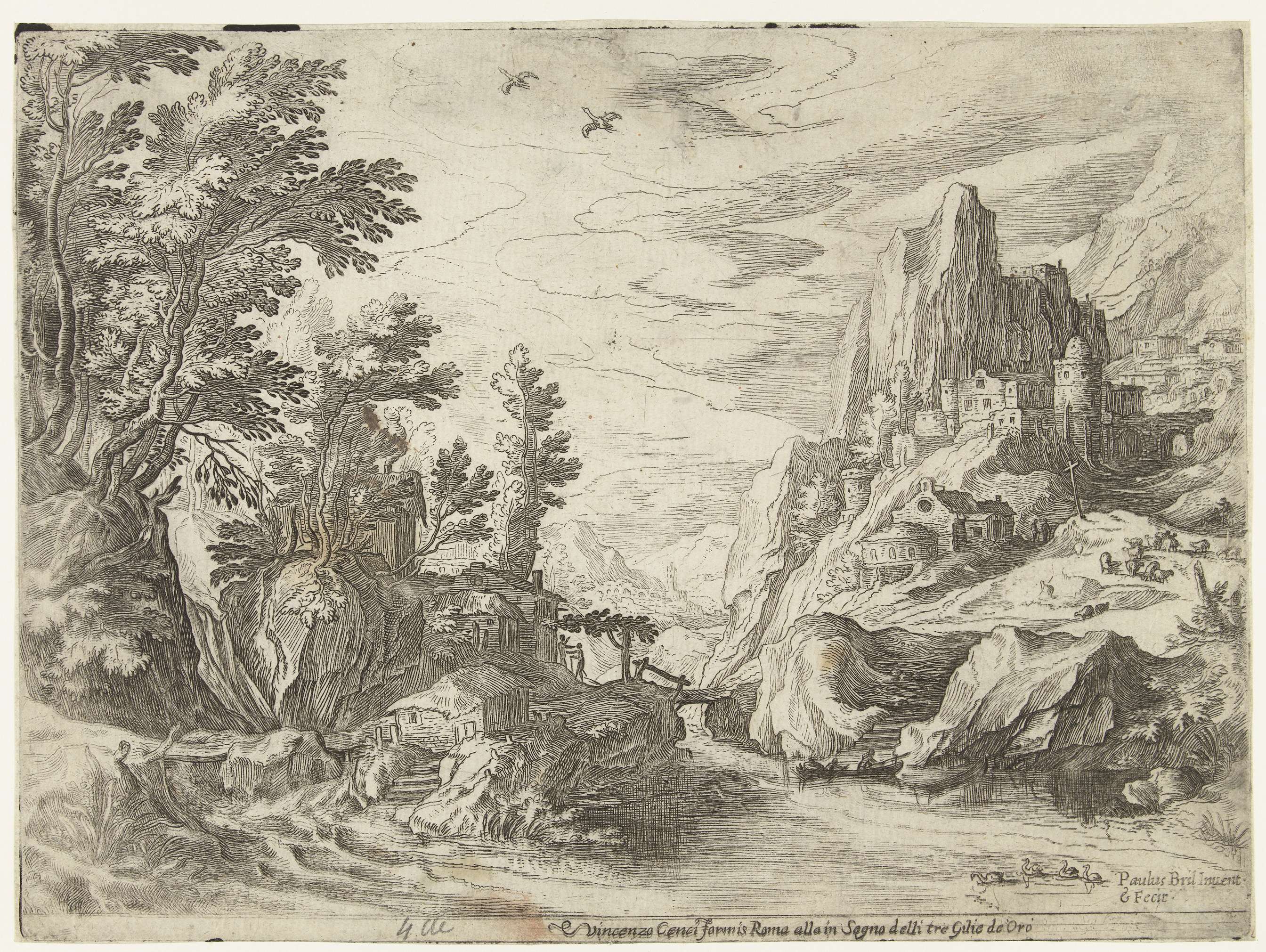
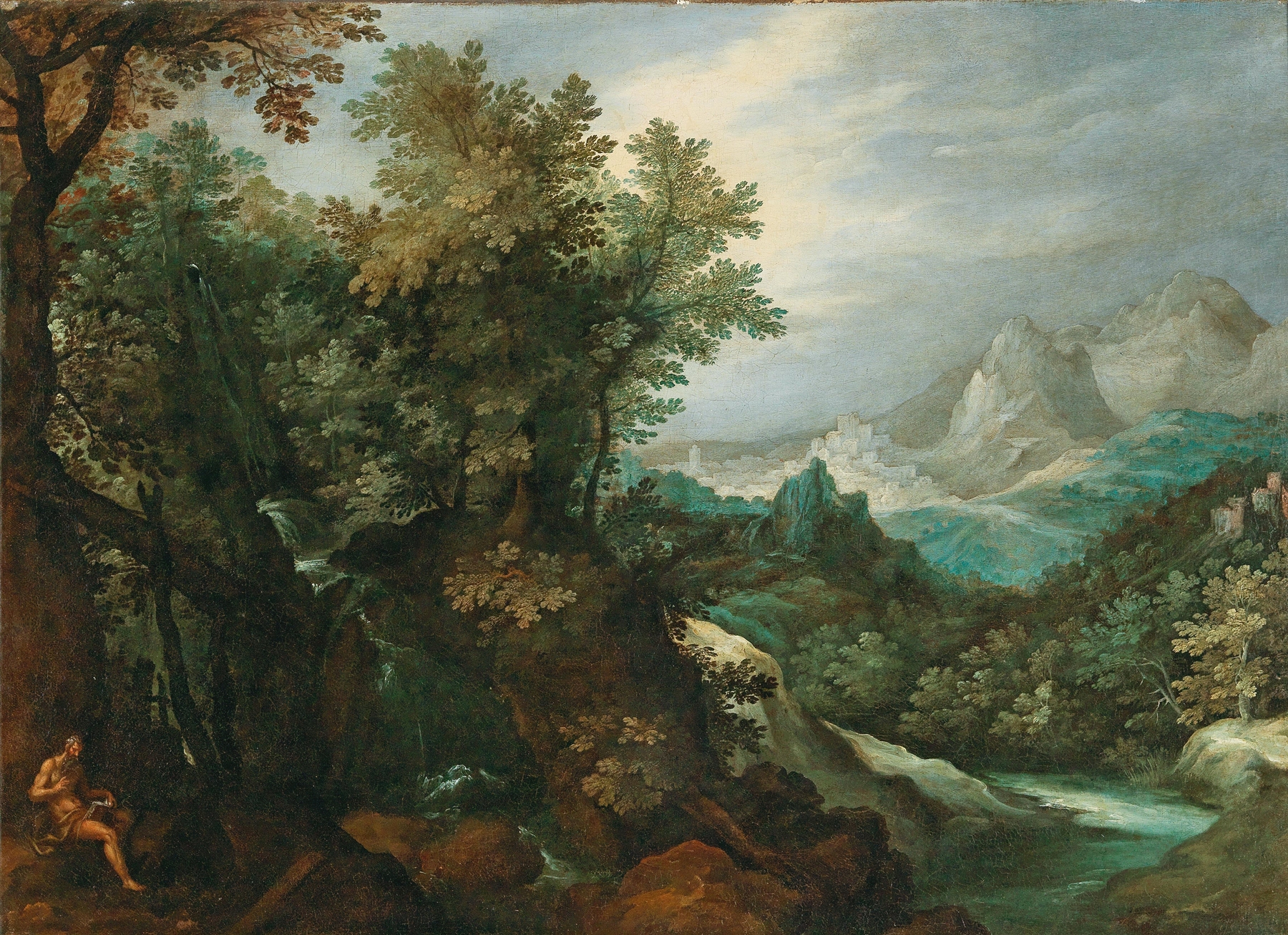
“To paint is to remember what time wants us to forget.” In the vast expanse of the mountains, there emerges a sense of enduring hope, depicted through the quiet presence of Saint Jerome amid nature's majesty. Look to the left at the towering, craggy peaks that stretch toward the heavens, their rugged surfaces kissed by the soft glow of a golden sunset. Notice how the vibrant greens and earthy browns of the valley below contrast with the cool, silvery blues above, creating a harmonious balance between the earthly and the divine.
The careful brushwork reveals a meticulous attention to detail, drawing the eye into the folds of the landscape and inviting contemplation into its depths. At the center, Saint Jerome stands in contemplative solitude, an embodiment of faith amidst the grandeur of creation. His presence hints at the tension between human vulnerability and the everlasting strength of the mountains, invoking a dialogue between the transient and the eternal.
The delicate play of light and shadow across his figure suggests the weight of introspection, while the expansive vista beyond serves as a reminder of hope that persists even in moments of isolation. In 1592, Bril painted this work during a period marked by the Counter-Reformation, when art sought to engage the viewer on both intellectual and spiritual levels. Residing in Rome, he was influenced by the merging of naturalism and emotional depth within the art community, using his unique vision to explore themes of faith and resilience against the backdrop of an evolving artistic landscape.