Mountainous Landscape with Waterfall — History & Analysis
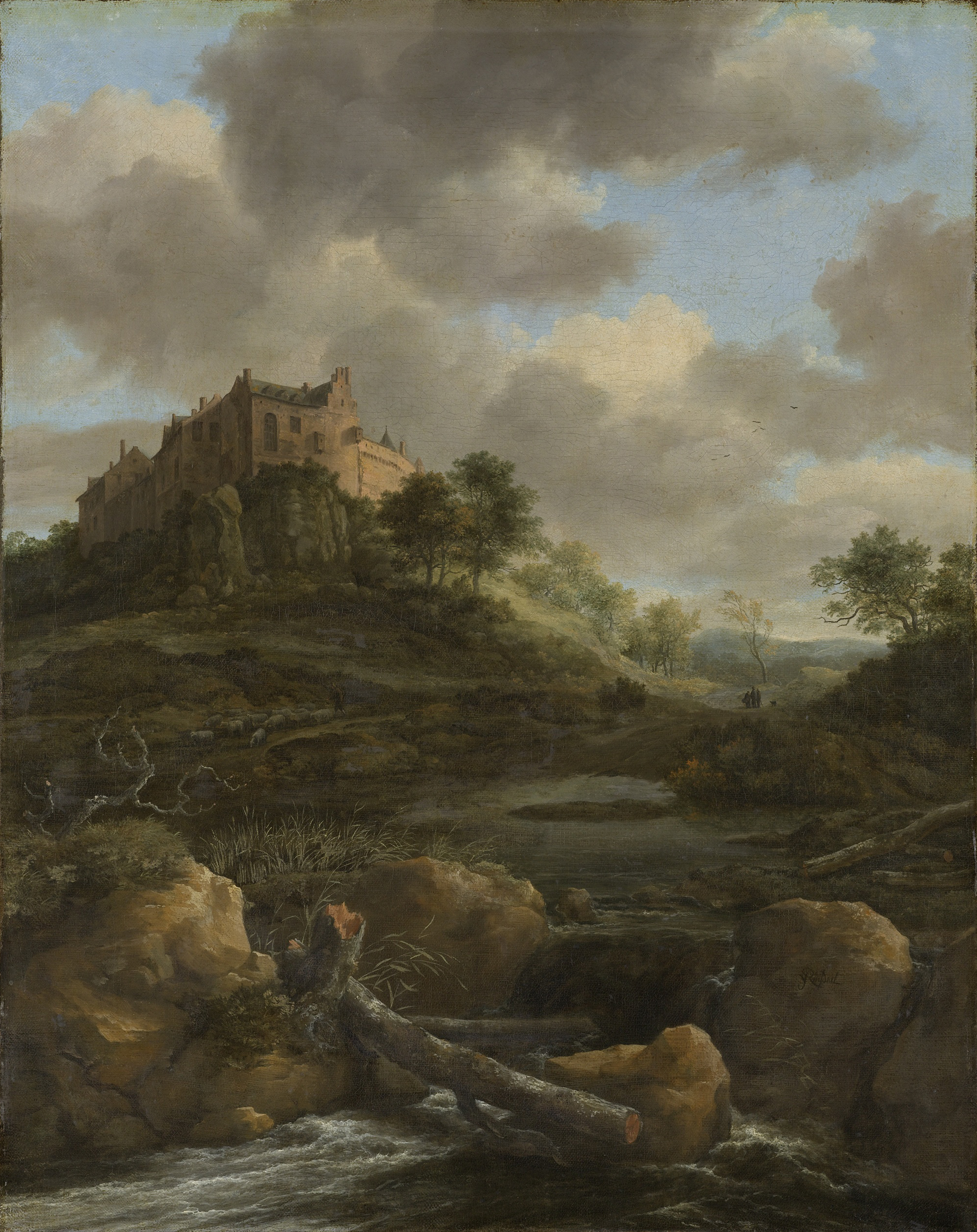
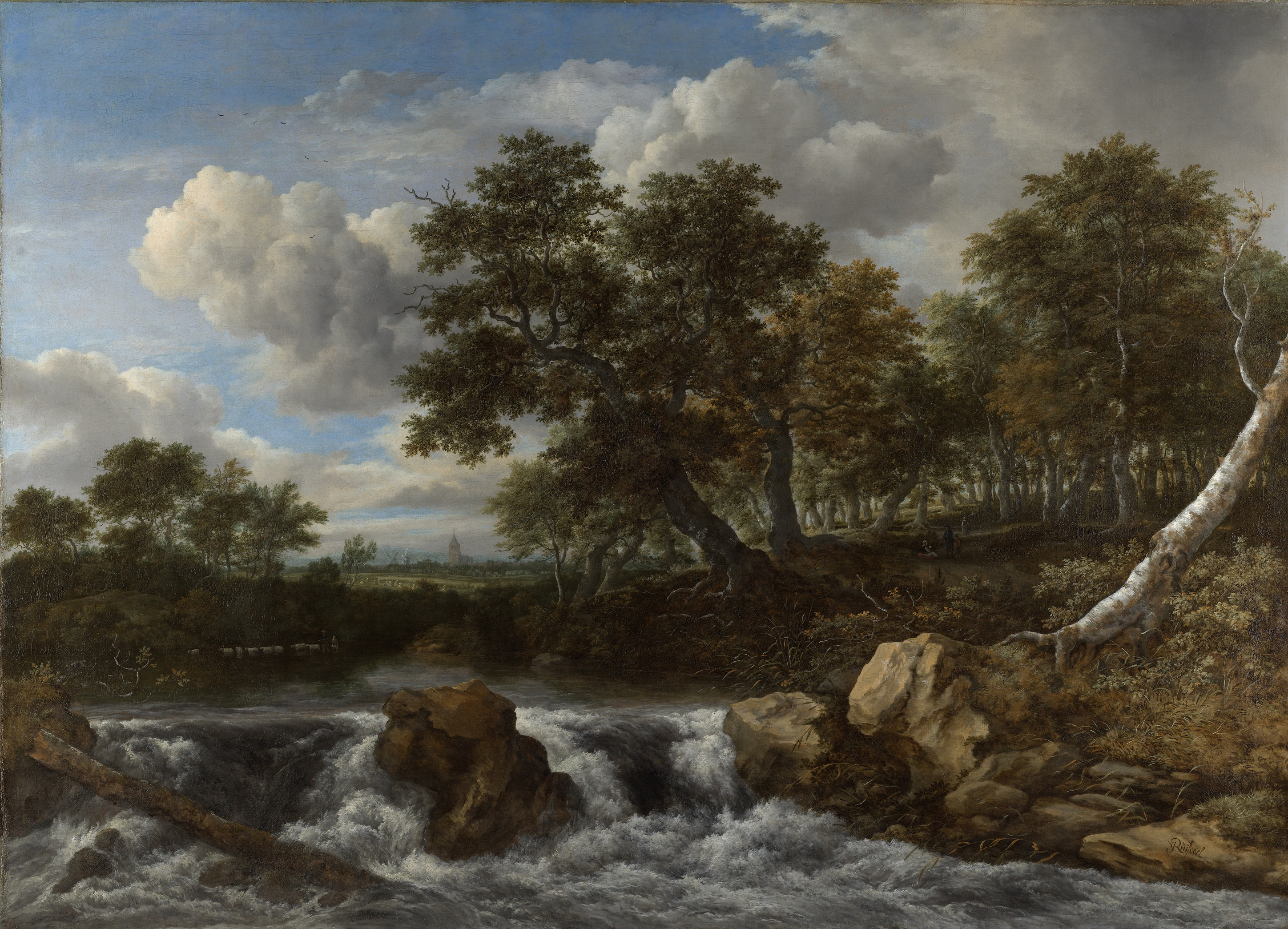
Can beauty exist without sorrow? In Jacob Isaacksz van Ruisdael’s Mountainous Landscape with Waterfall, the answer is woven into the fabric of nature itself, where serenity dances alongside the echoes of hidden turmoil. Look to the left, where towering, rugged mountains rise majestically against a vast sky washed in soft blues and whites, their summits kissed by sunlight. The waterfall cascades down the rocky terrain, its frothy waters glistening like diamonds as they plunge into the tranquil pool below.
Notice how the lush greens of the surrounding foliage, rendered with delicate brushstrokes, contrast with the earthier tones of the rocky outcrop, creating a dynamic interplay that pulls the viewer’s eye across the landscape. Beneath the idyllic scenery lies a narrative of contrasts. The serenity of the waterfall, so inviting and peaceful, masks the monumental power of nature that shapes this scene. The juxtaposition of the gentle stream and the imposing mountains evokes a sense of both tranquility and latent danger, suggesting that beauty and chaos coexist in our world.
Furthermore, the painting invites contemplation of life’s complexities—how moments of peace often emerge from turbulent histories, reflecting the viewer’s own experiences of joy intertwined with sorrow. Created between 1650 and 1682, this landscape emerged during a time when Dutch artists embraced nature's grandeur in their works. Ruisdael was amidst a flourishing art scene that sought to capture the sublime elements of the natural world, depicting not just beauty but also the emotional depth it imparts. As a prominent figure in the Dutch Golden Age, his landscapes reveal a keen understanding of light, texture, and composition, revealing the divine in the mundane and the profound in the picturesque.