Negress and the Buzzards — History & Analysis
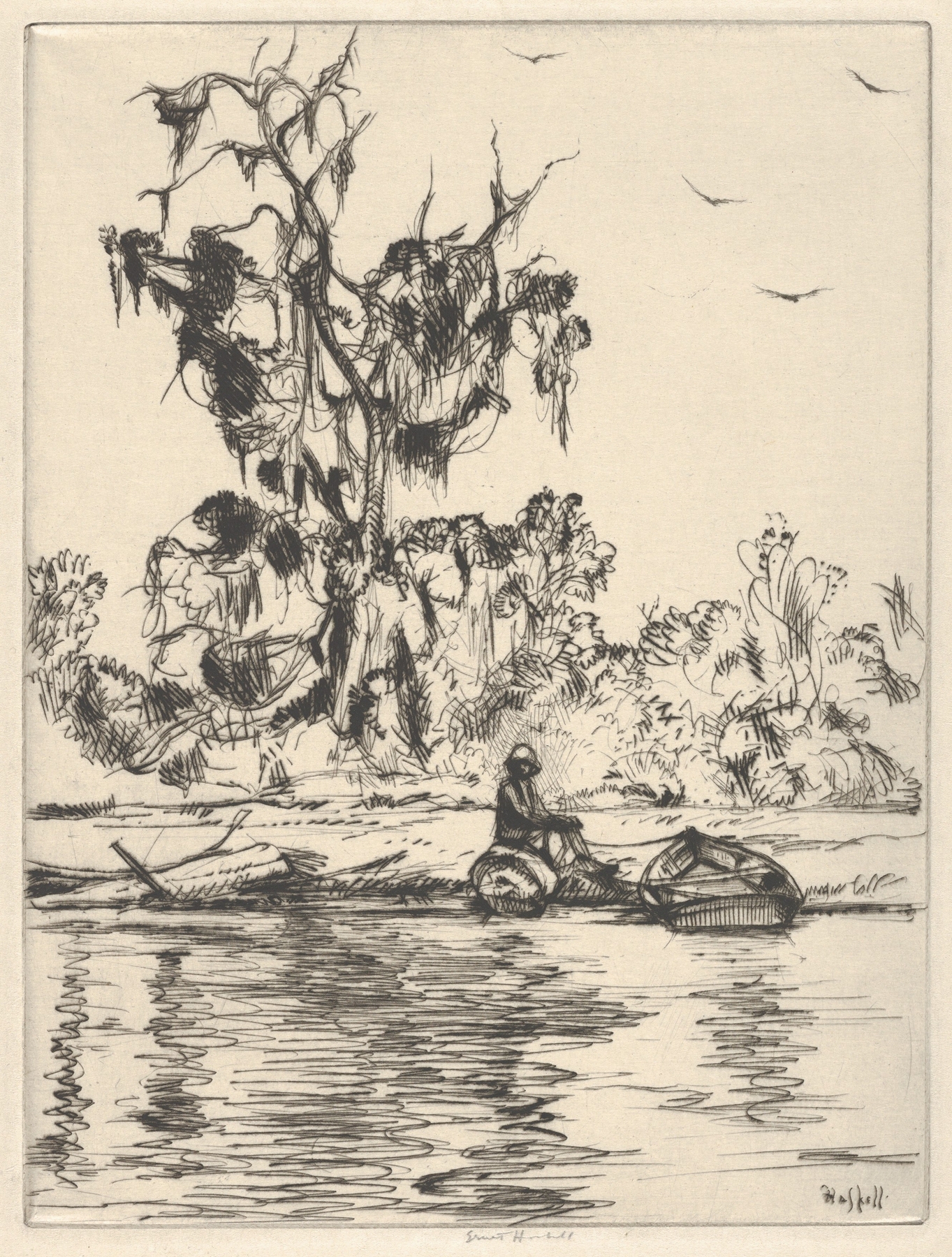
Could a single brushstroke hold eternity? In Negress and the Buzzards, this question lingers in the air, where loss entwines with profound contemplation, revealing the weight of existence in every stroke. Look closely at the central figure, a woman, her gaze both defiant and resigned. Her dark skin contrasts starkly against the pale expanse of the canvas, drawing your eye first to the intricate details of her face, where resilience meets sorrow. Notice how the buzzards circle above, their ominous presence softened by the delicate hues surrounding them.
The painter's use of muted colors imbues the scene with a haunting serenity, while the brushwork conveys tension, as if the very air hums with unspoken fears. As you absorb this image, consider the juxtaposition of life and death. The buzzards, symbols of decay, loom over the figure, yet she stands firm, embodying the endurance of the human spirit amidst despair. The interaction between the figure and the birds evokes themes of loss and survival, suggesting an intricate dance between vulnerability and strength.
It invites contemplation on the cyclical nature of life, where beauty and death persist side by side. In 1915, while living in New York City, Ernest Haskell grappled with the changing tides of American society, where themes of race and survival were increasingly pressing. This work reflects his keen insight into the human condition during a tumultuous era. As a member of the Ashcan School, he sought to capture raw, unfiltered moments, and this piece stands as a powerful testament to his artistic vision and the era's complexities.