Newport, Rhode Island (Beacon Rock) — History & Analysis
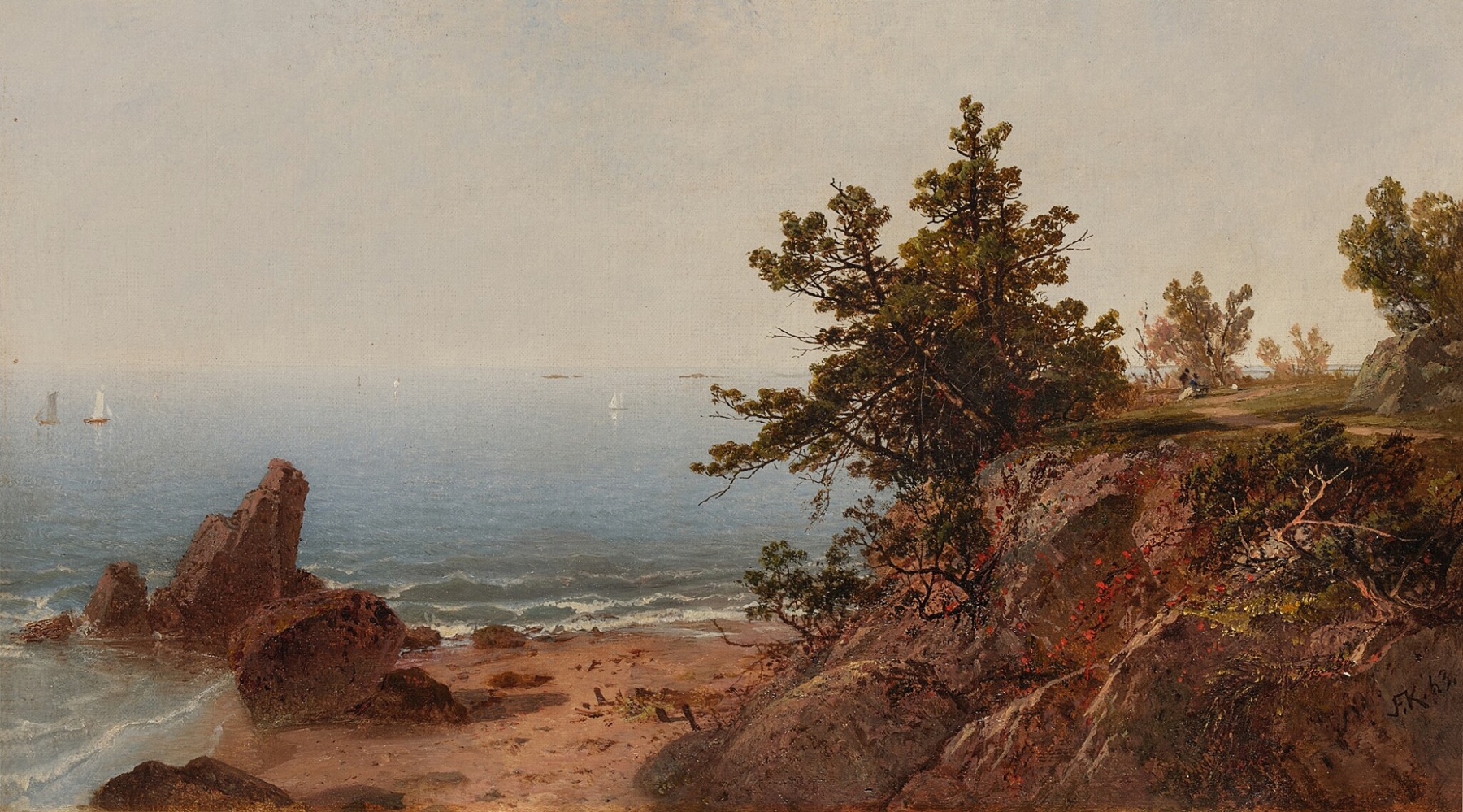
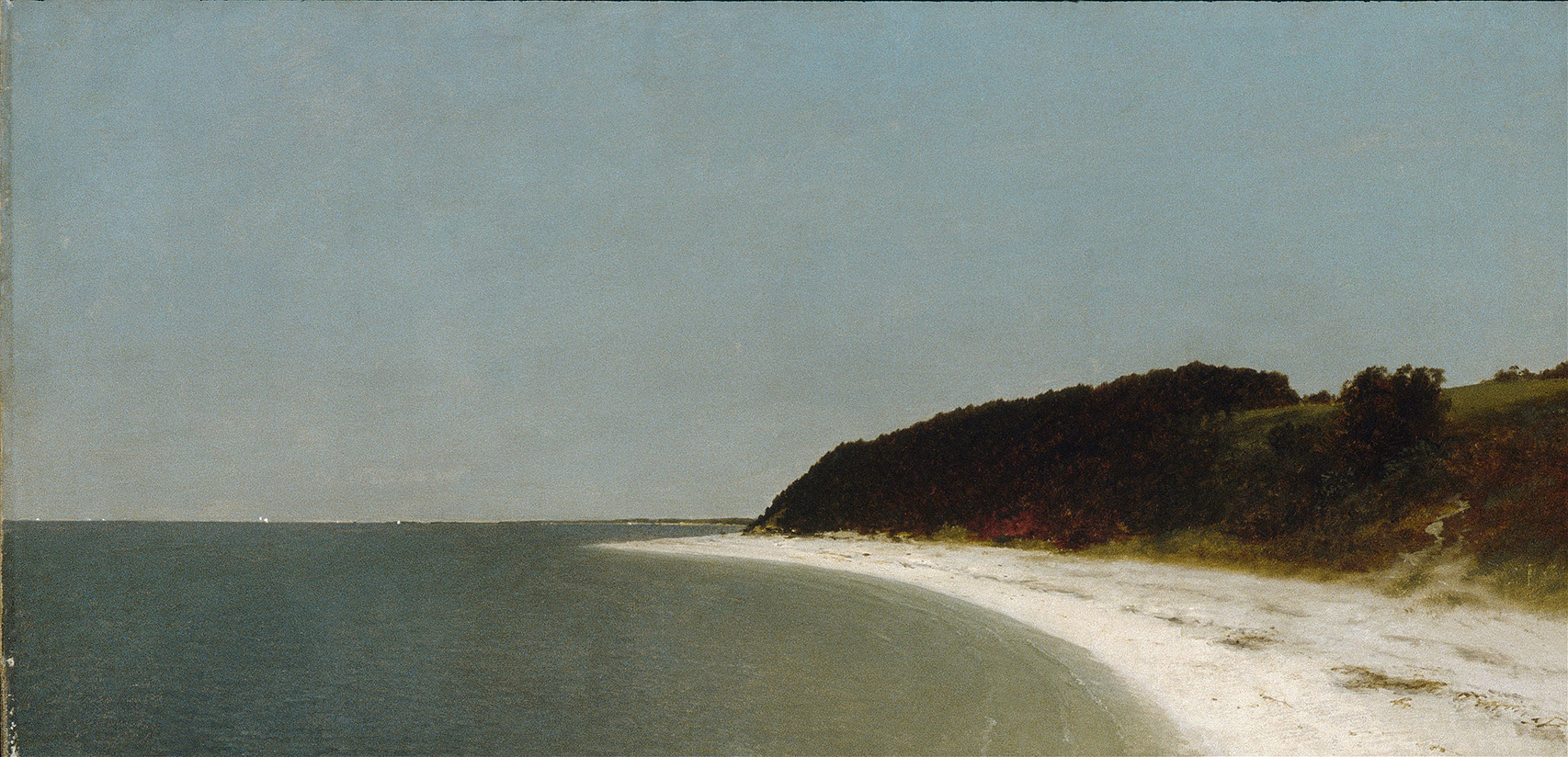
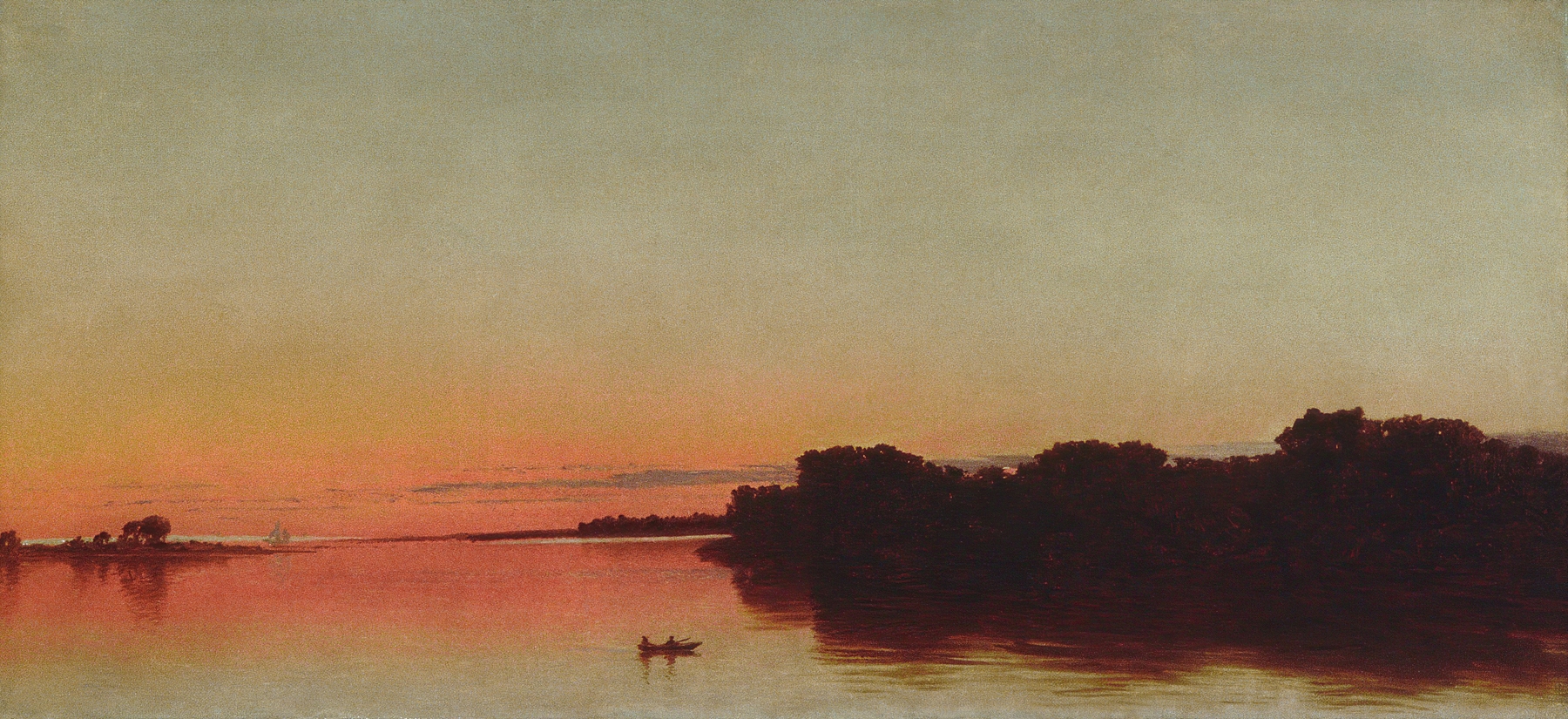
What if silence could speak through light? In John Frederick Kensett's Newport, Rhode Island (Beacon Rock), a tranquil moment whispers the deep longing of nature and the human spirit alike. Focus on the horizon, where the glowing sun dips into the shimmering water, casting golden reflections that dance in a delicate embrace. Notice how the brushstrokes blend the vibrant blues and greens of the sea with the soft pastels of the sky, creating an ethereal atmosphere.
The distant cliffs stand resolute against the fading light, their jagged edges softened by the warm glow, inviting the viewer to explore the dichotomy of ruggedness and serenity. Within this composed scene lies a tension between solitude and connection. The solitary beacon stands as a symbol of guidance, while the open water stretches endlessly, embodying the vastness of possibility and the ache of separation. The stillness of the moment evokes not just tranquility but also a yearning for what lies beyond the horizon, a reminder of the infinite journeys awaiting those who dare to dream.
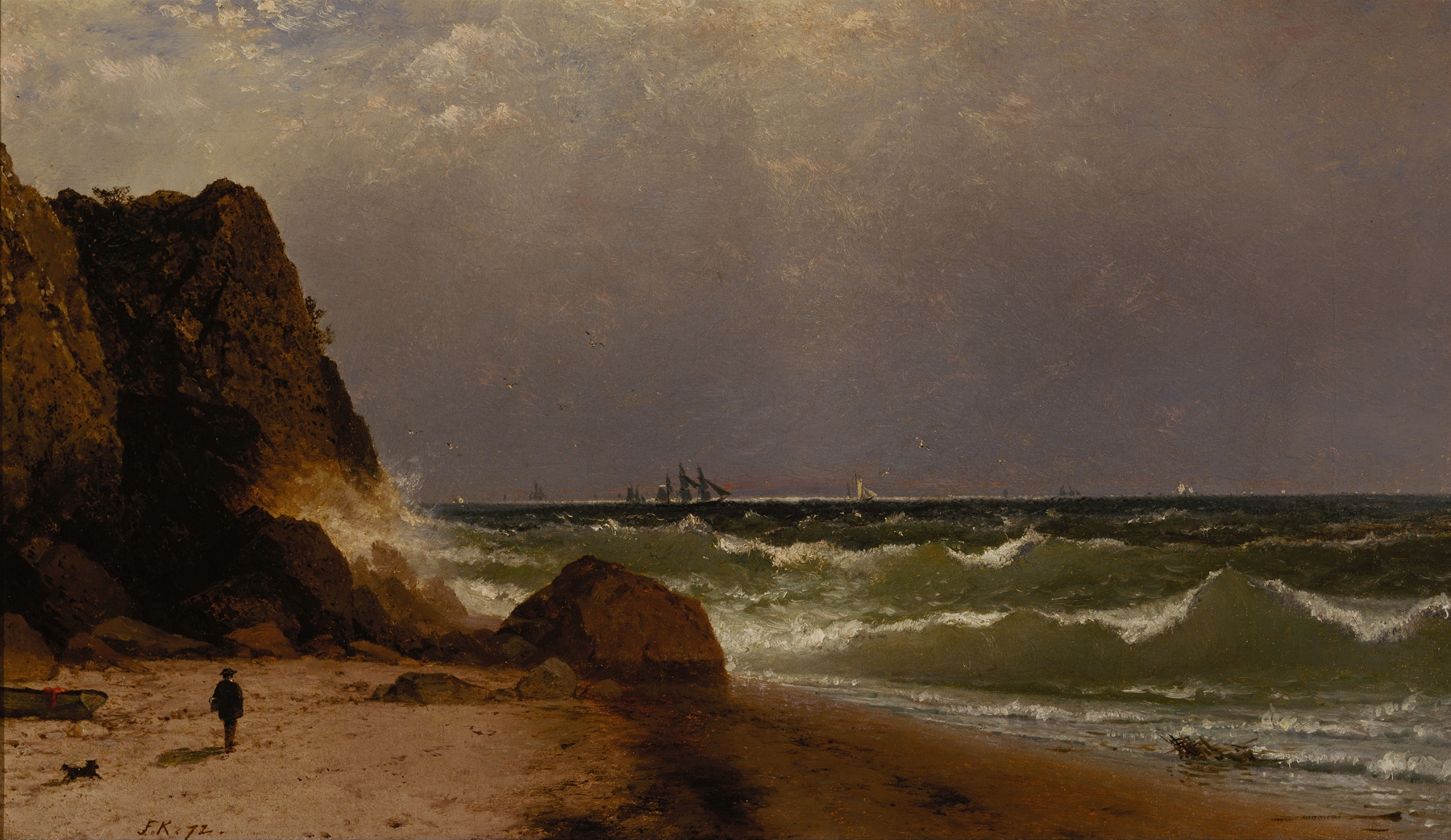
Created in 1872, this work emerged from Kensett's exploration of America's natural beauty during the Hudson River School's zenith. At this time, he resided in Connecticut, frequently visiting coastal regions to capture the interplay of light and landscape. The United States was experiencing a burgeoning appreciation for naturalism in art, as well as a growing desire to depict the serene yet dramatic elements of the American wilderness, making this painting an encapsulation of both personal and national identity at the time.