Nocturne in Blue and Silver — History & Analysis
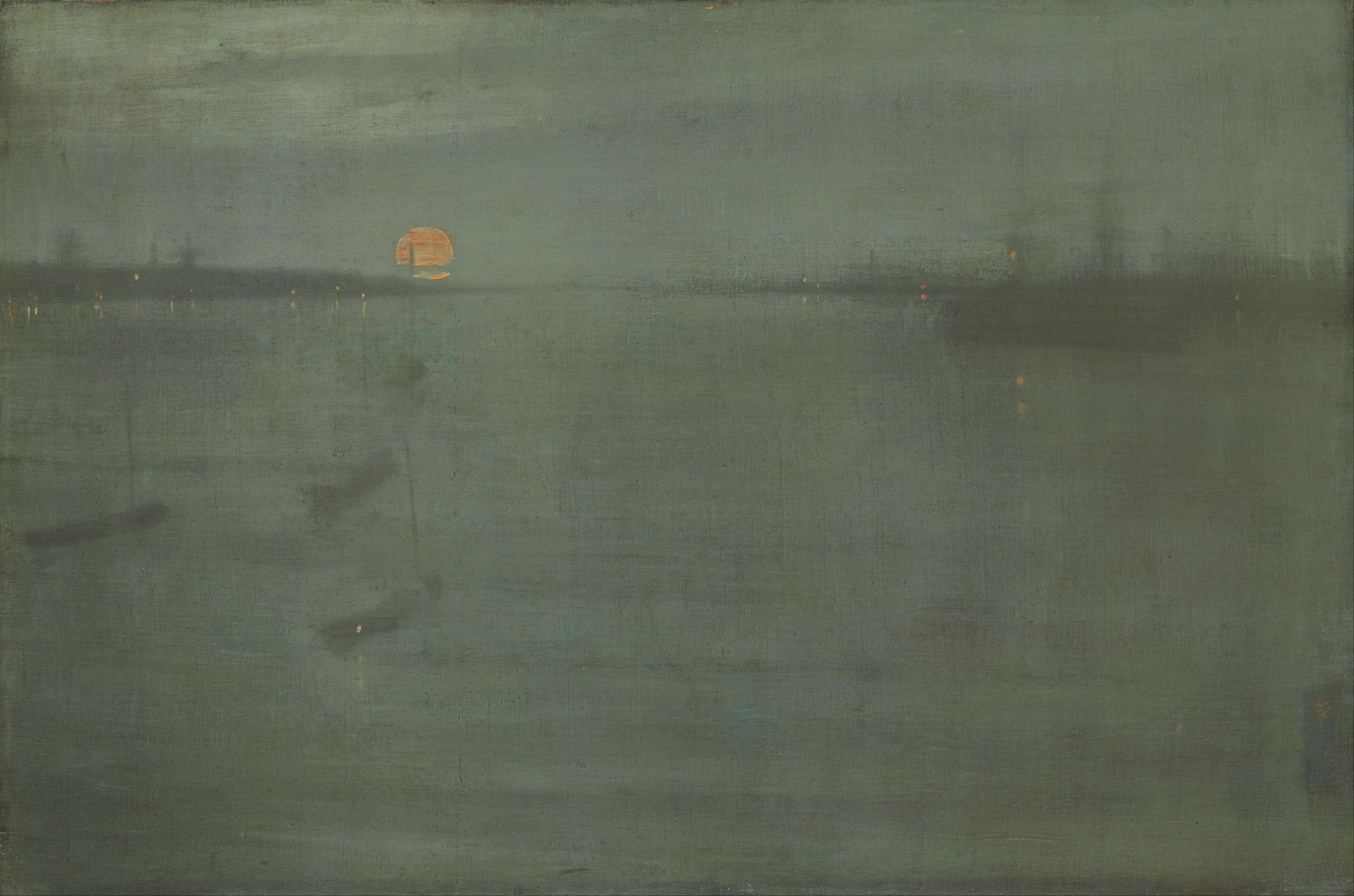
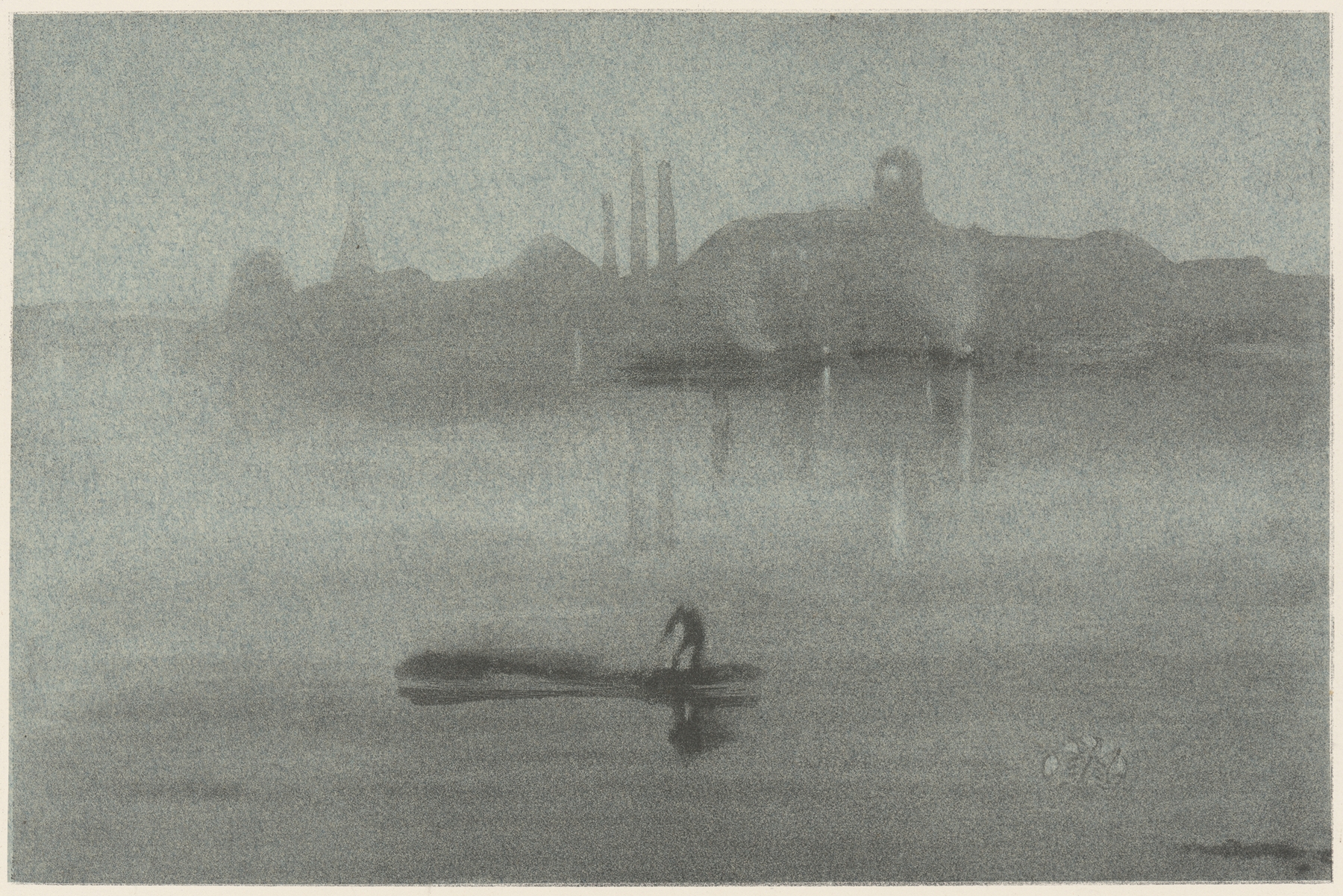
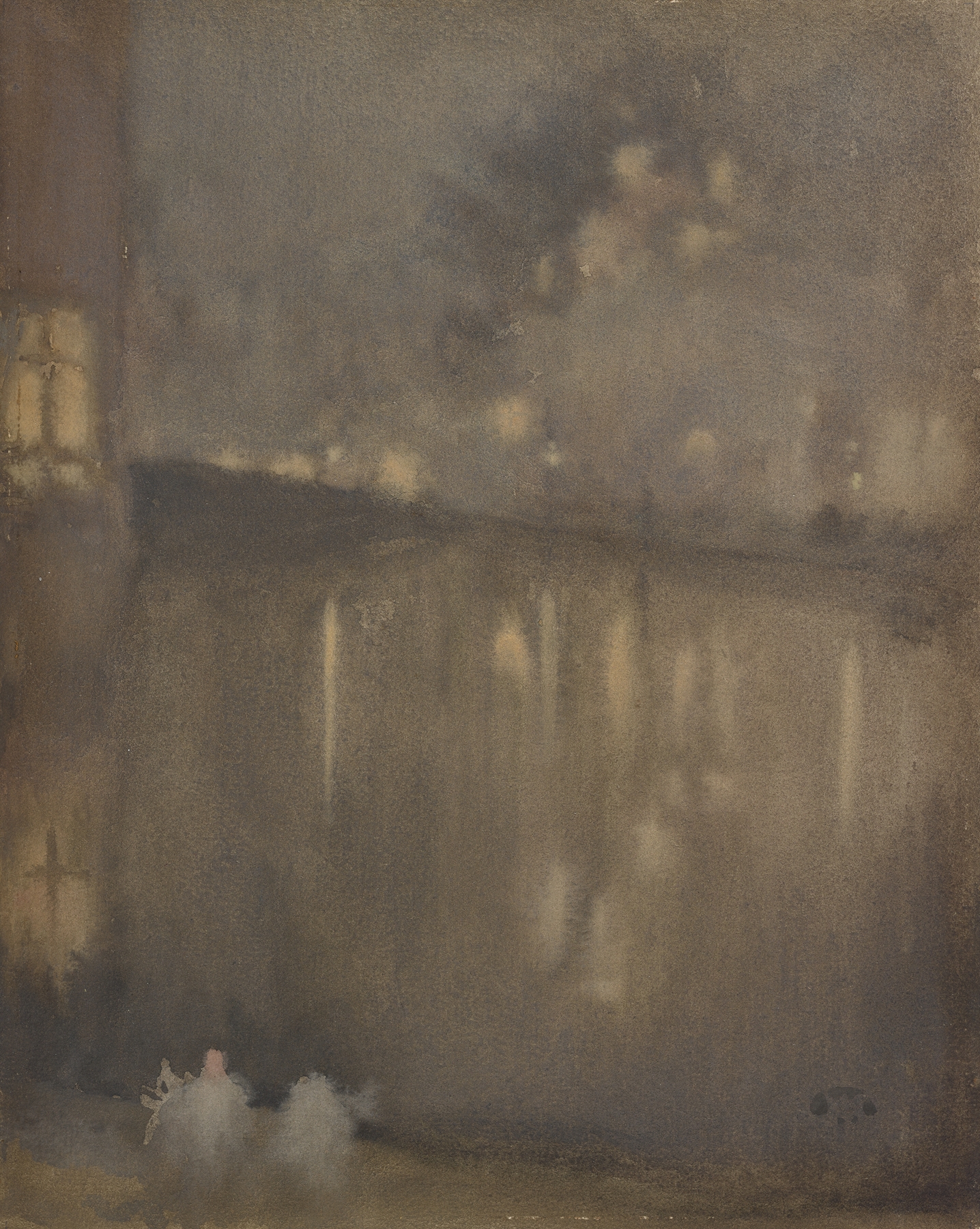
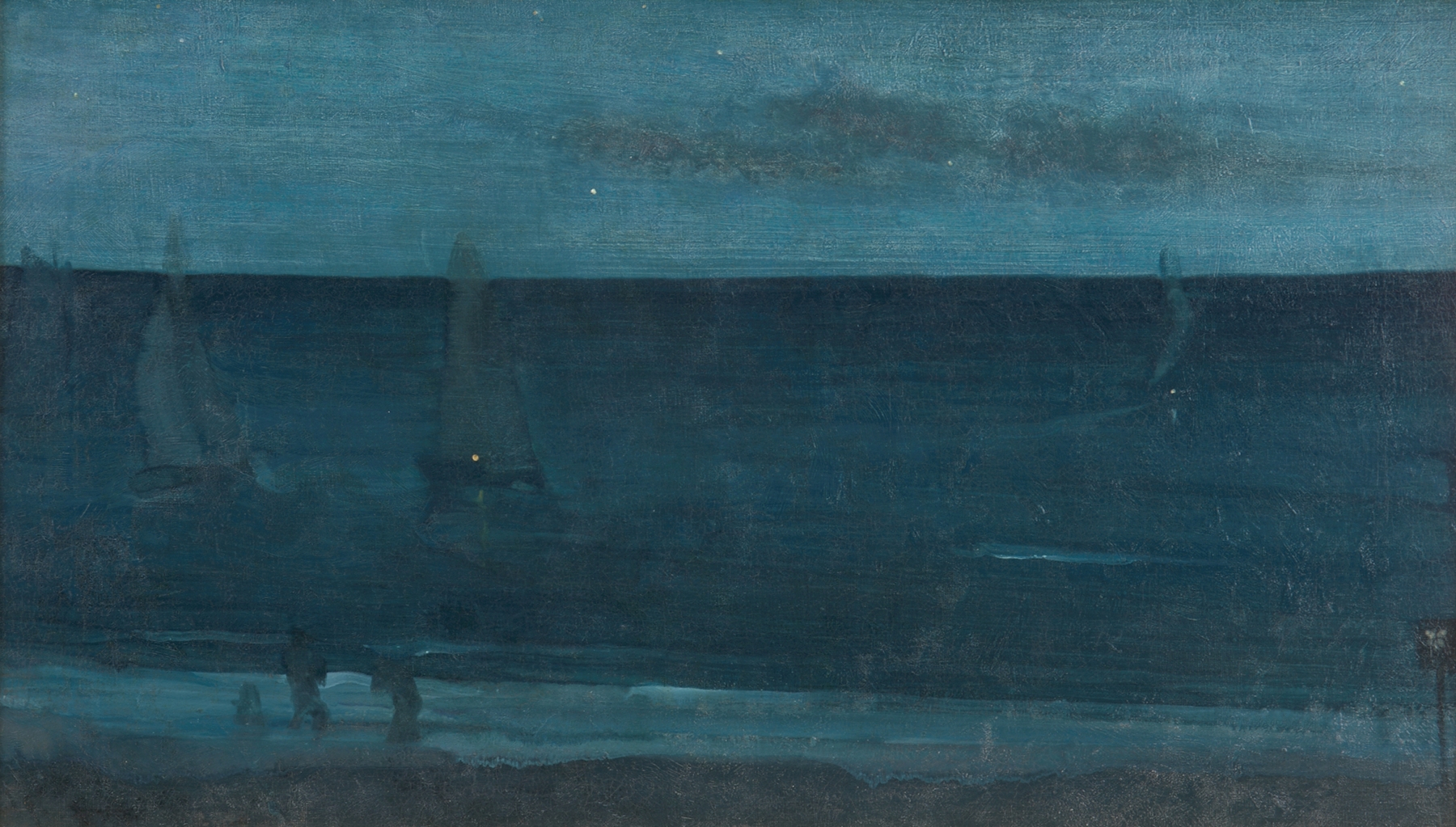
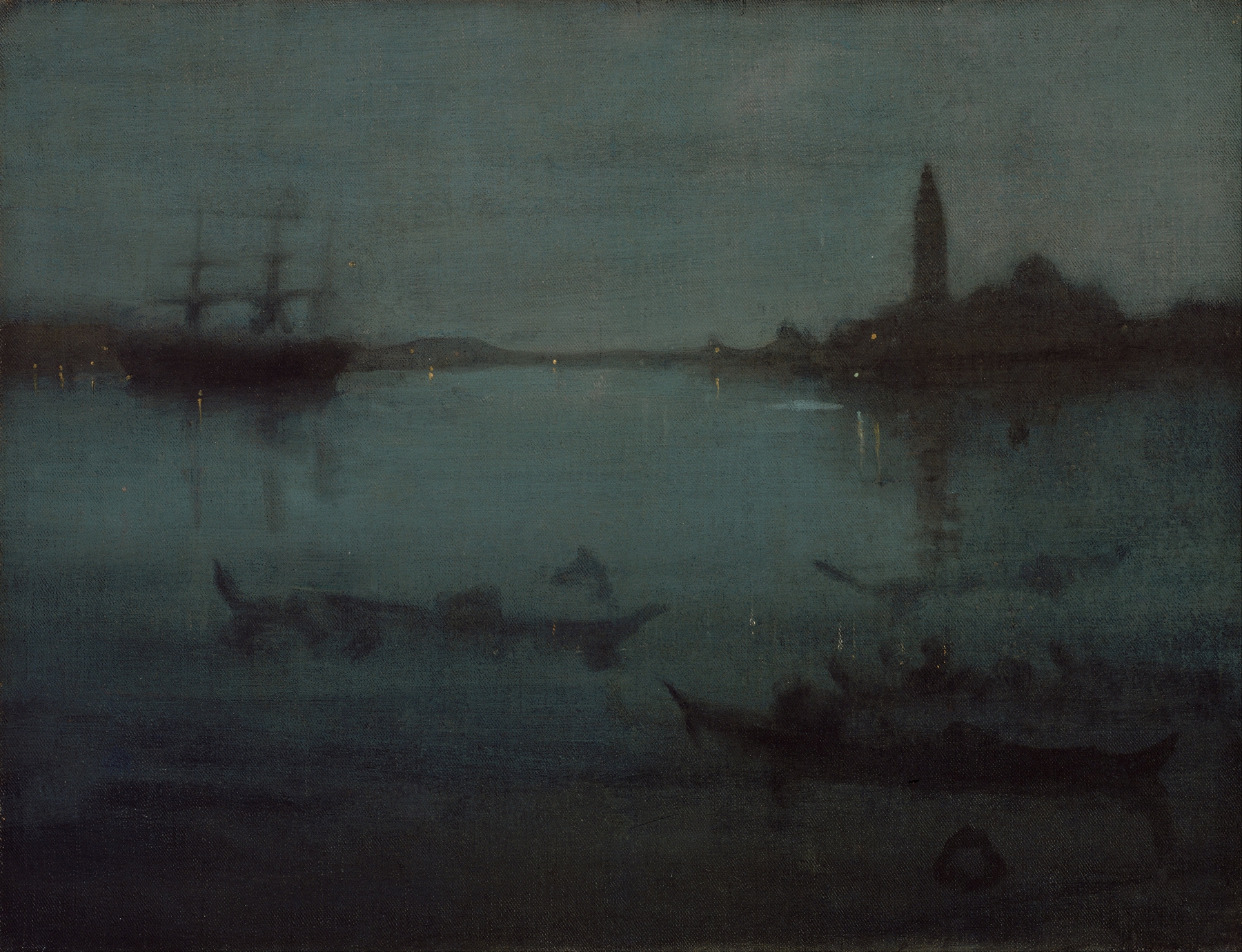
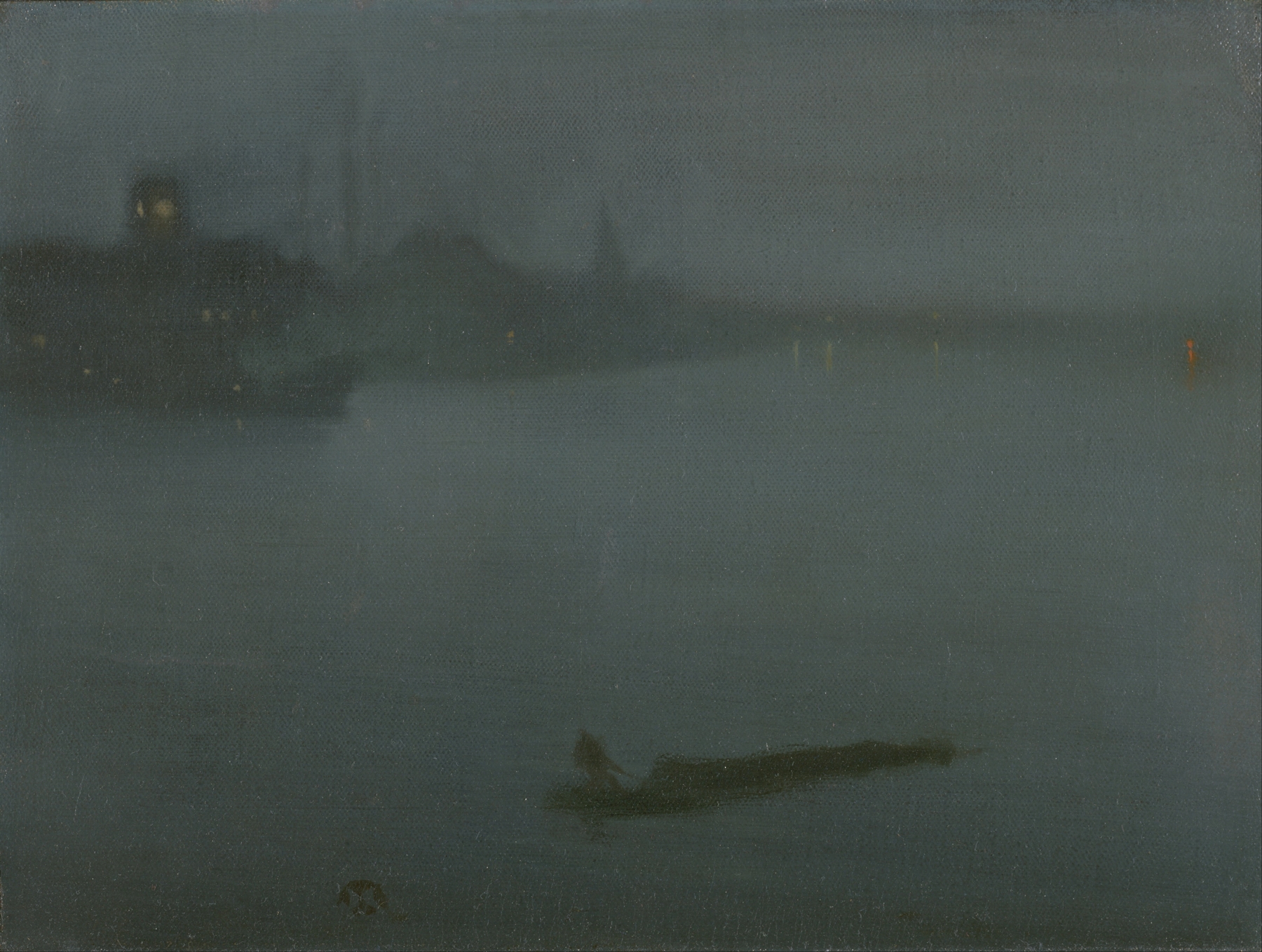
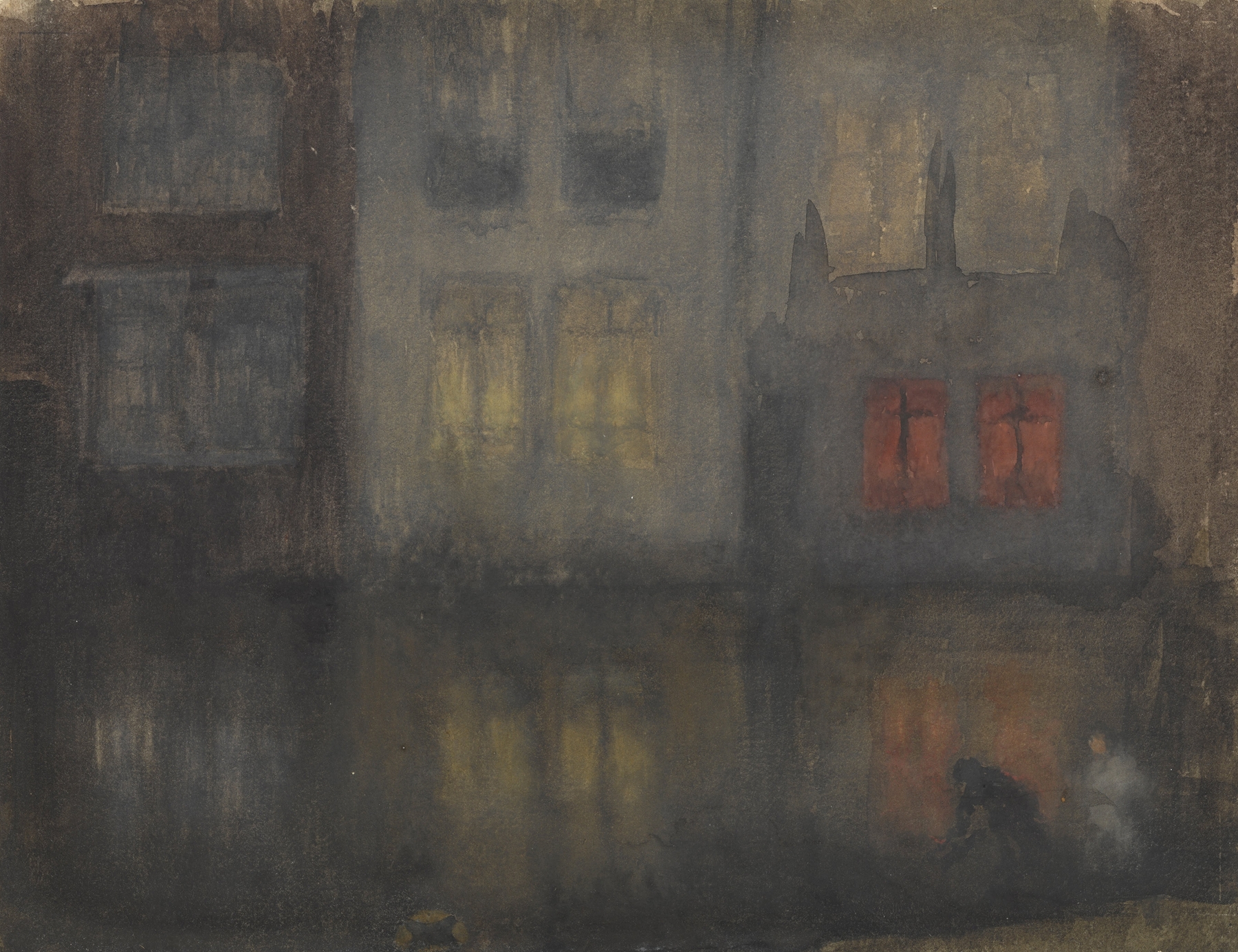
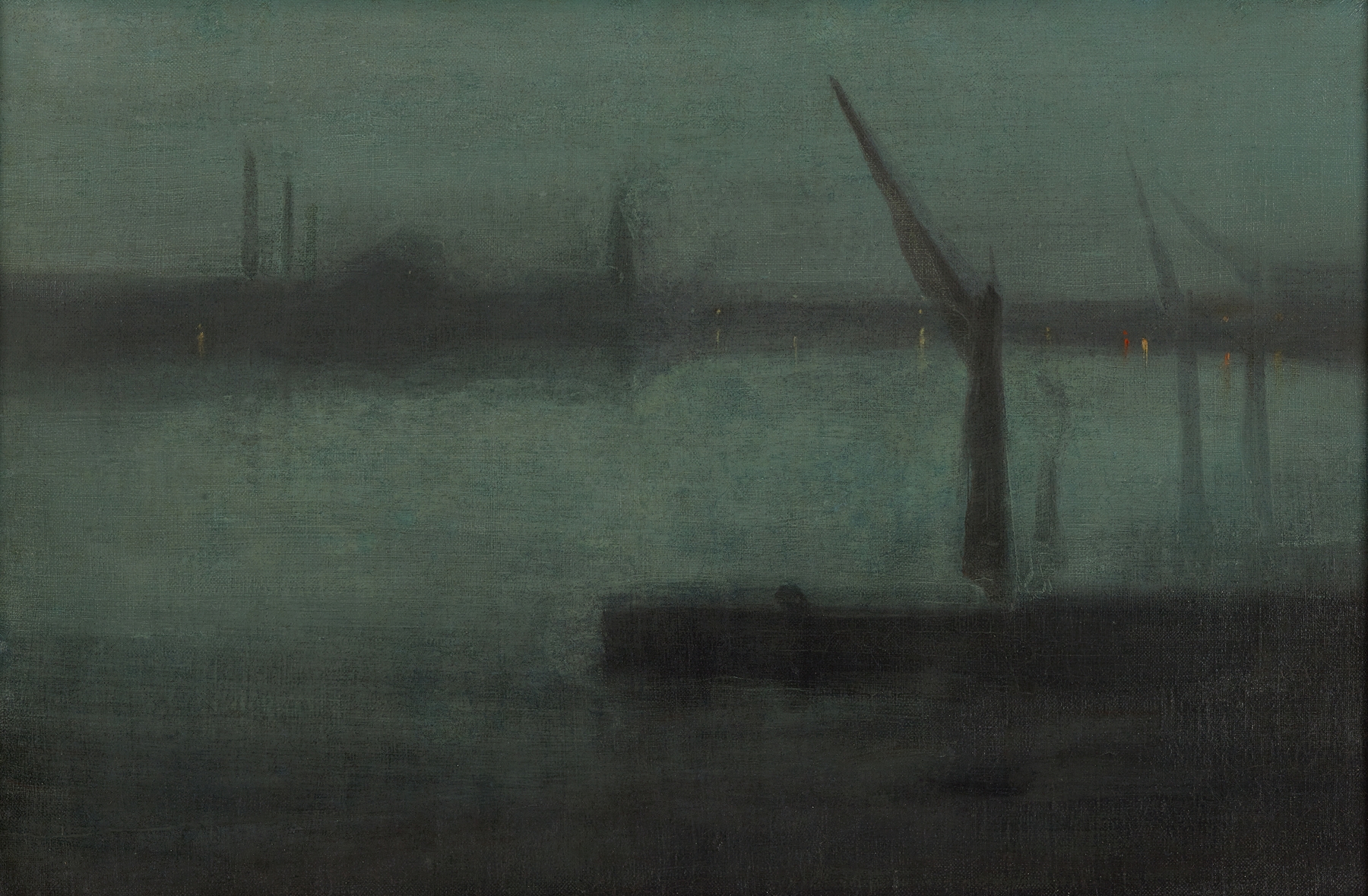
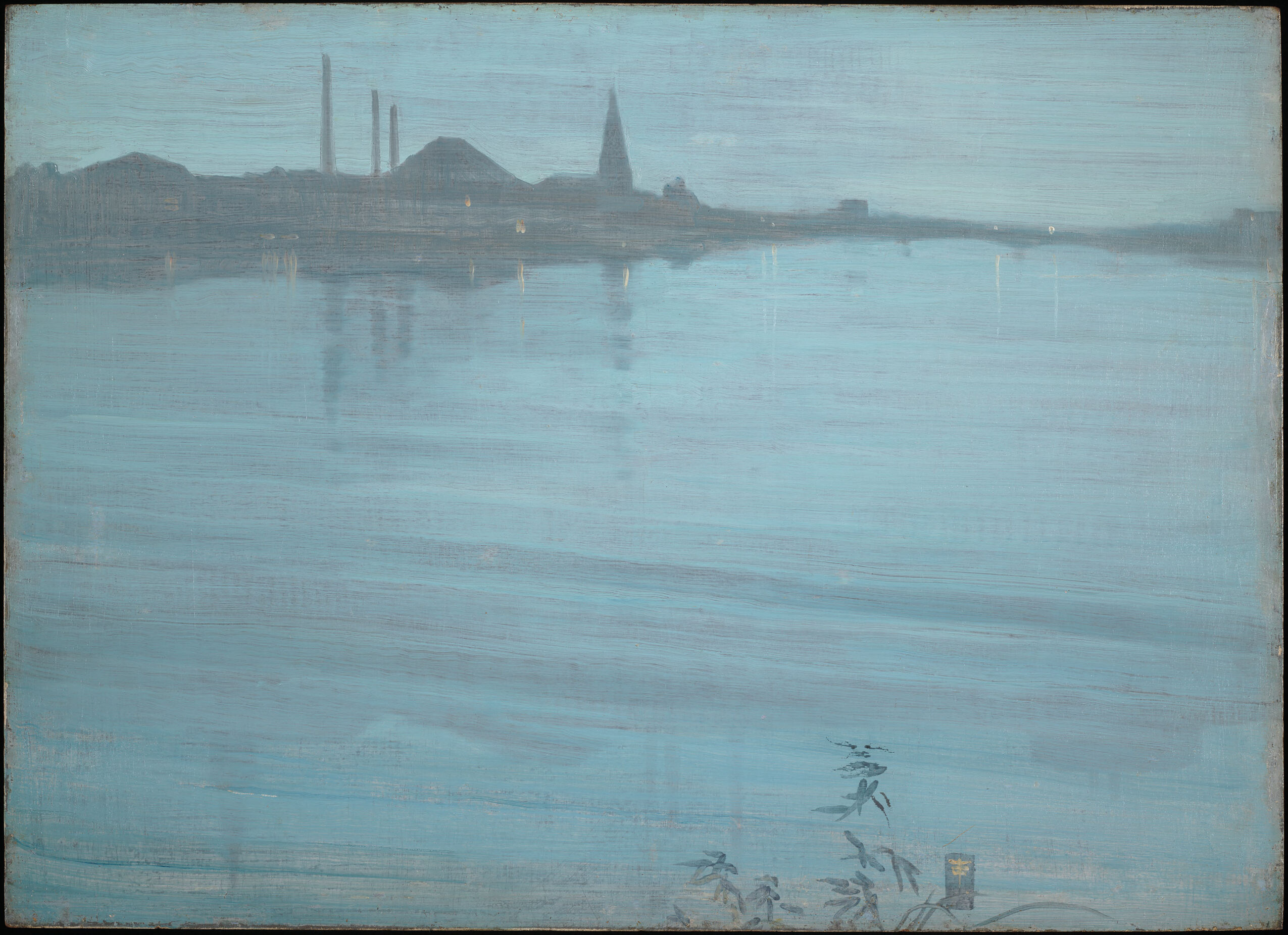
What if silence could speak through light? In Nocturne in Blue and Silver, an ethereal glow emerges from the depths of twilight, revealing layers of emotion that beg to be unraveled. Look to the left, where the horizon dissolves into soft hues of blue and grey, inviting your gaze to drift across the calm water. The subtle brushstrokes evoke a sense of tranquility, yet in the stillness lies an undercurrent of tension, as if a whispered secret lingers in the air.
Notice the play of light reflecting on the water's surface—each ripple suggests not just movement, but an echo of something untold, a moment suspended between peace and unease. As you explore the painting further, consider how the indistinct silhouettes in the foreground hint at lives intertwined, perhaps overshadowed by unspoken betrayals. The contrast of the serene evening sky against the muted figures suggests a world at once beautiful and fraught with complexity. This stillness and simplicity masks deeper emotional layers, questioning the very nature of trust and connection.
Created in the early 1870s, this work emerged from Whistler's time in London, an era marked by the rise of the Aesthetic Movement, which emphasized beauty and artistic expression over narrative content. Embracing a unique approach to color and composition, the artist sought to capture the essence of a moment rather than a specific subject. This period of exploration led him to redefine the boundaries of art, ultimately laying the groundwork for future movements and shifting perspectives within the realm of creativity.