Nocturne in Blue and Silver — History & Analysis
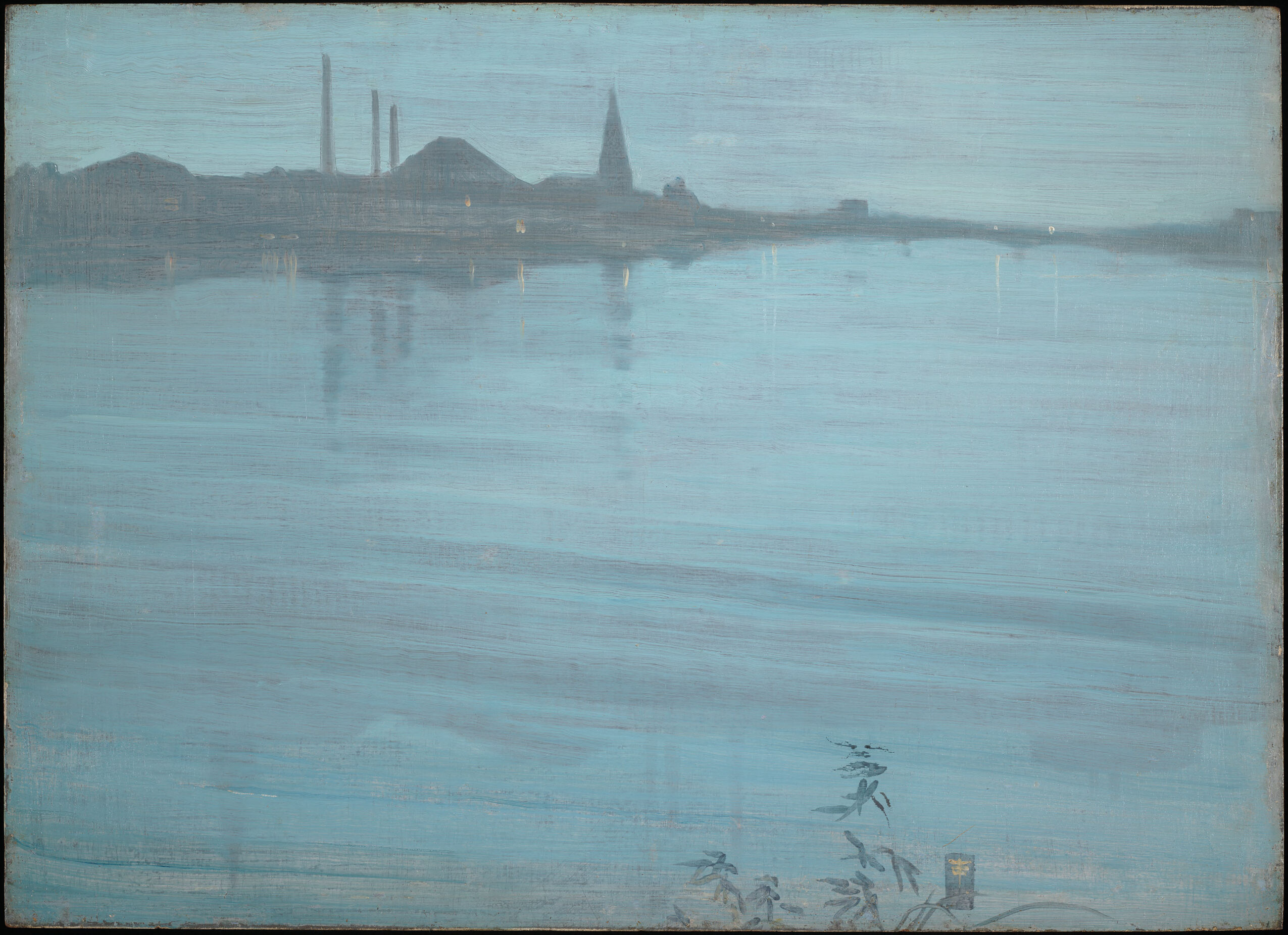
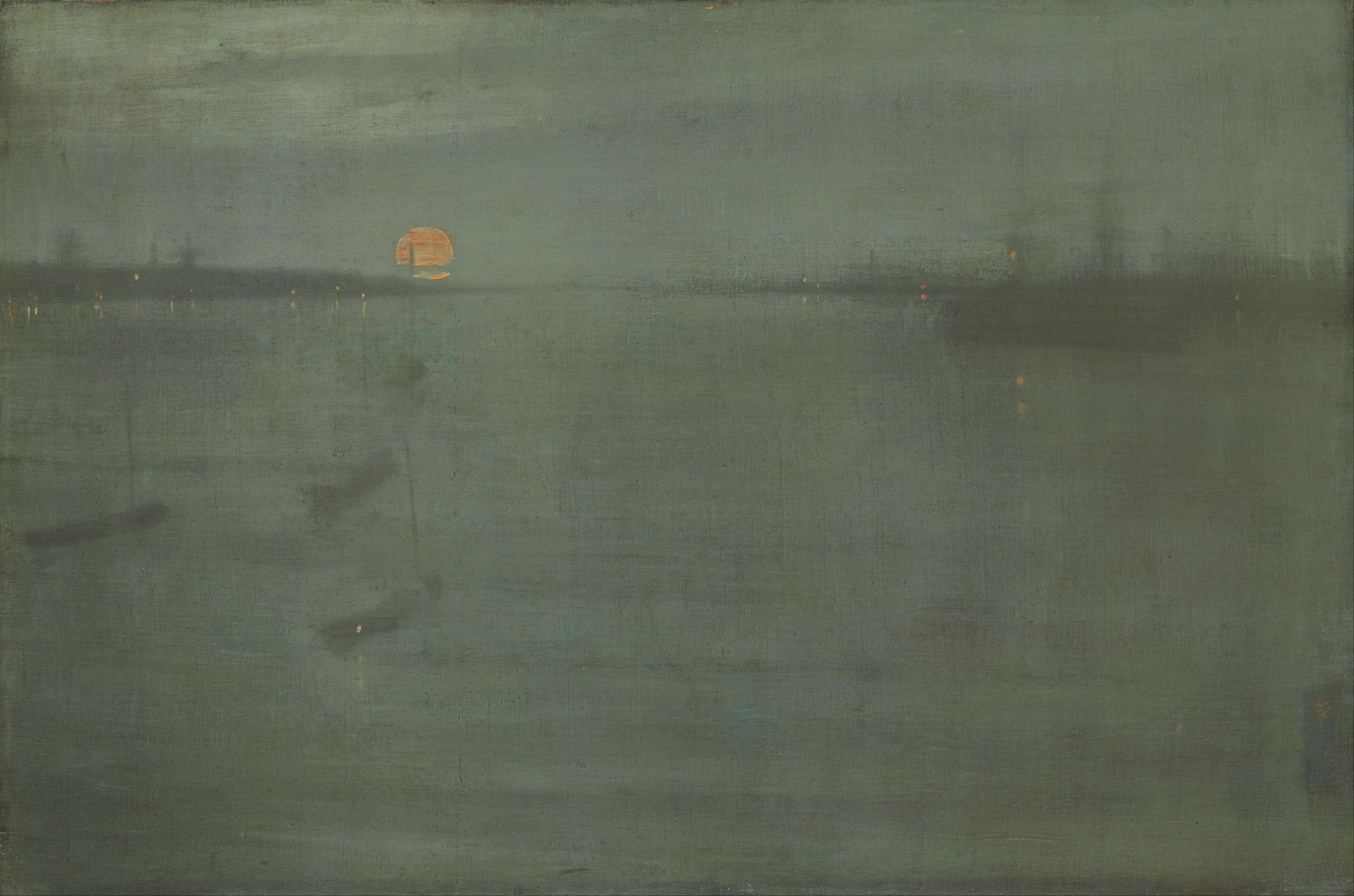
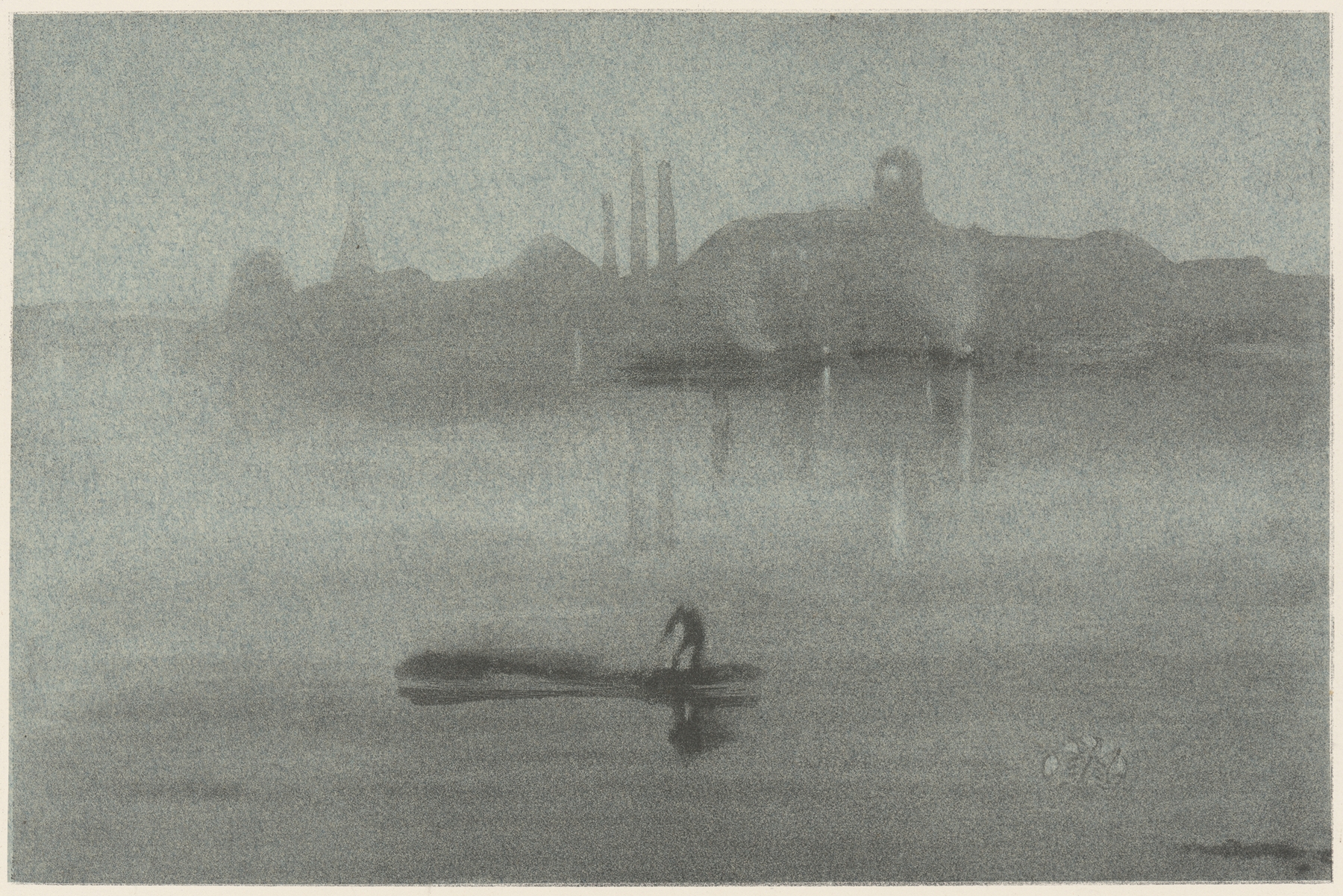
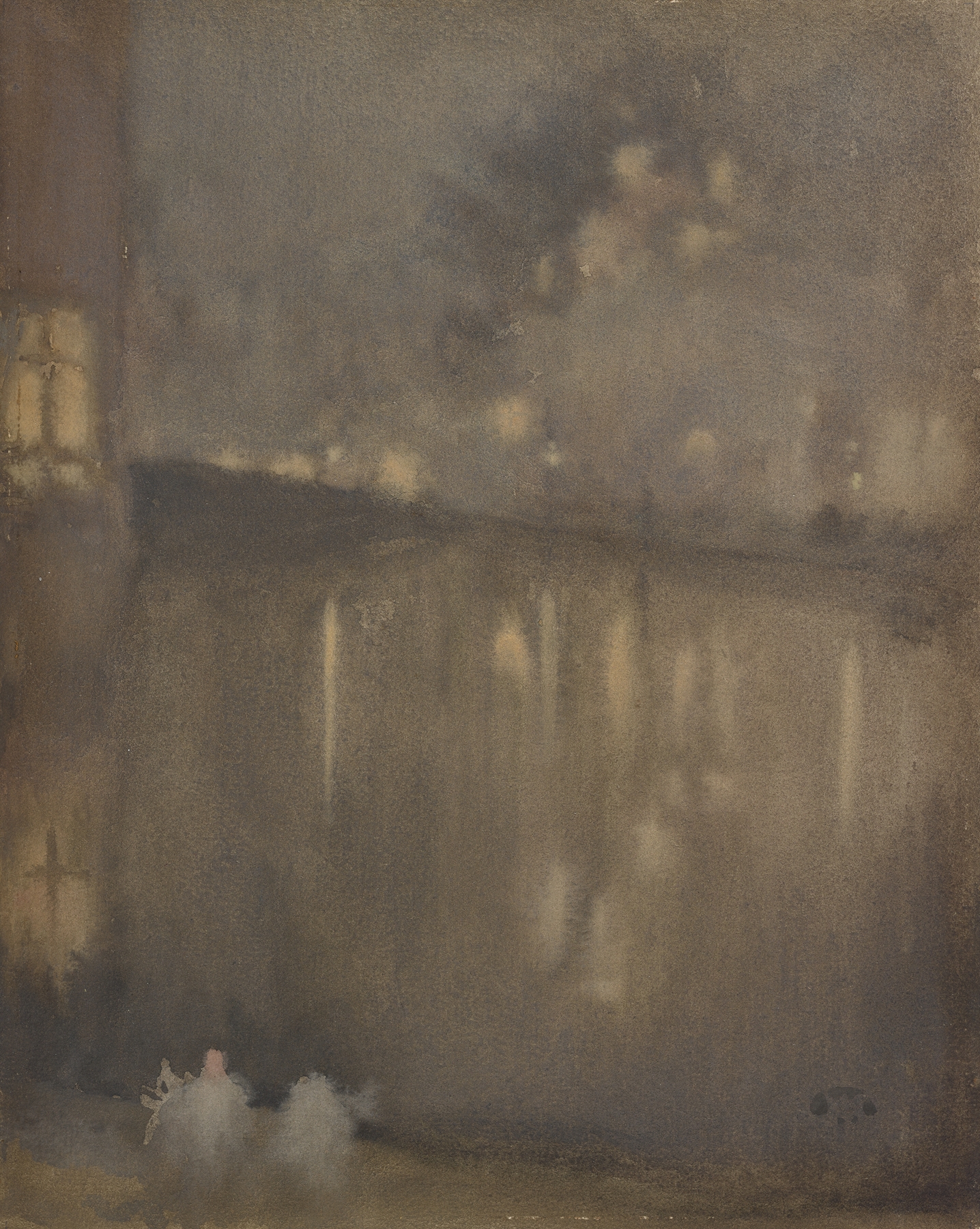
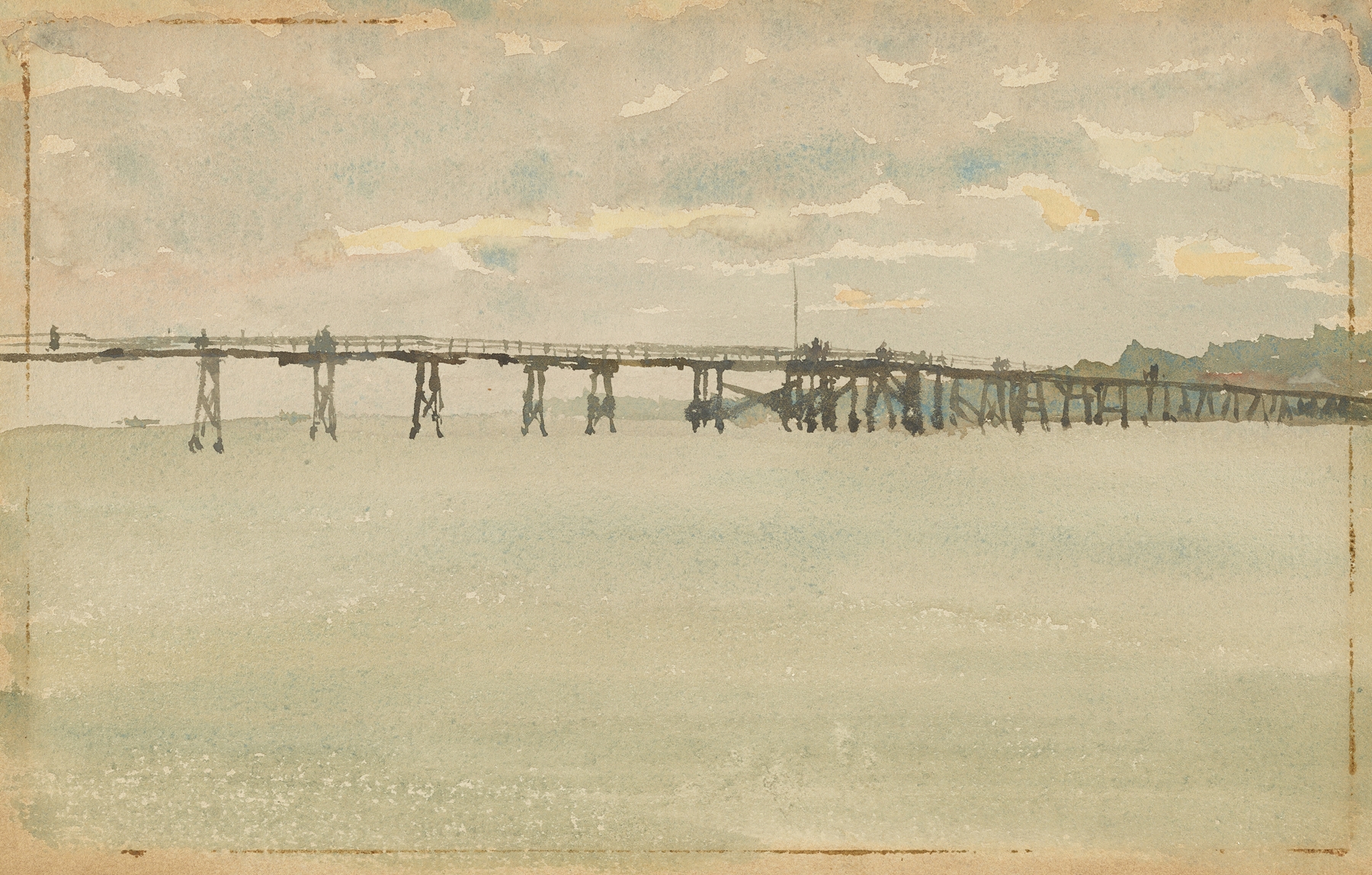
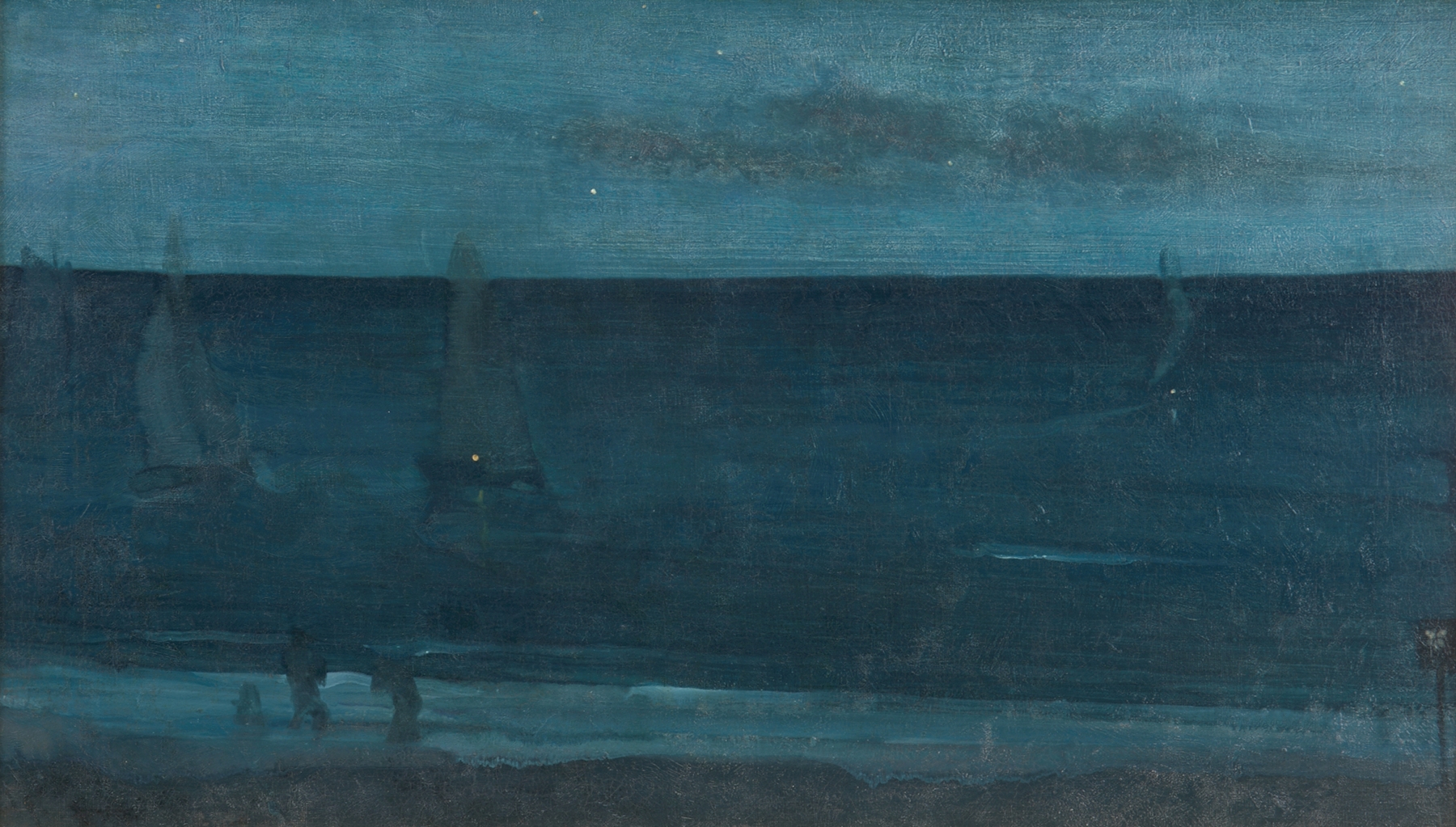
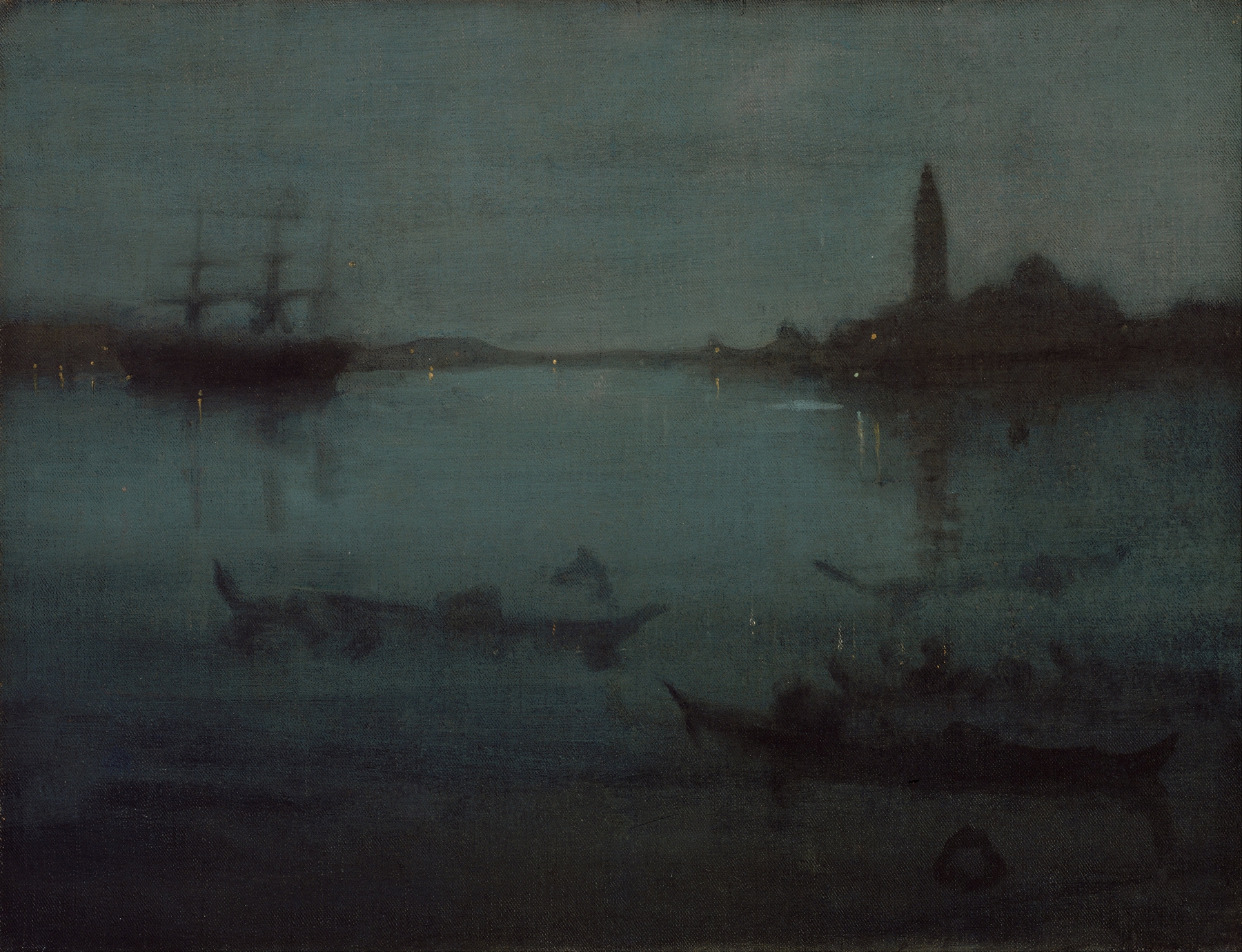
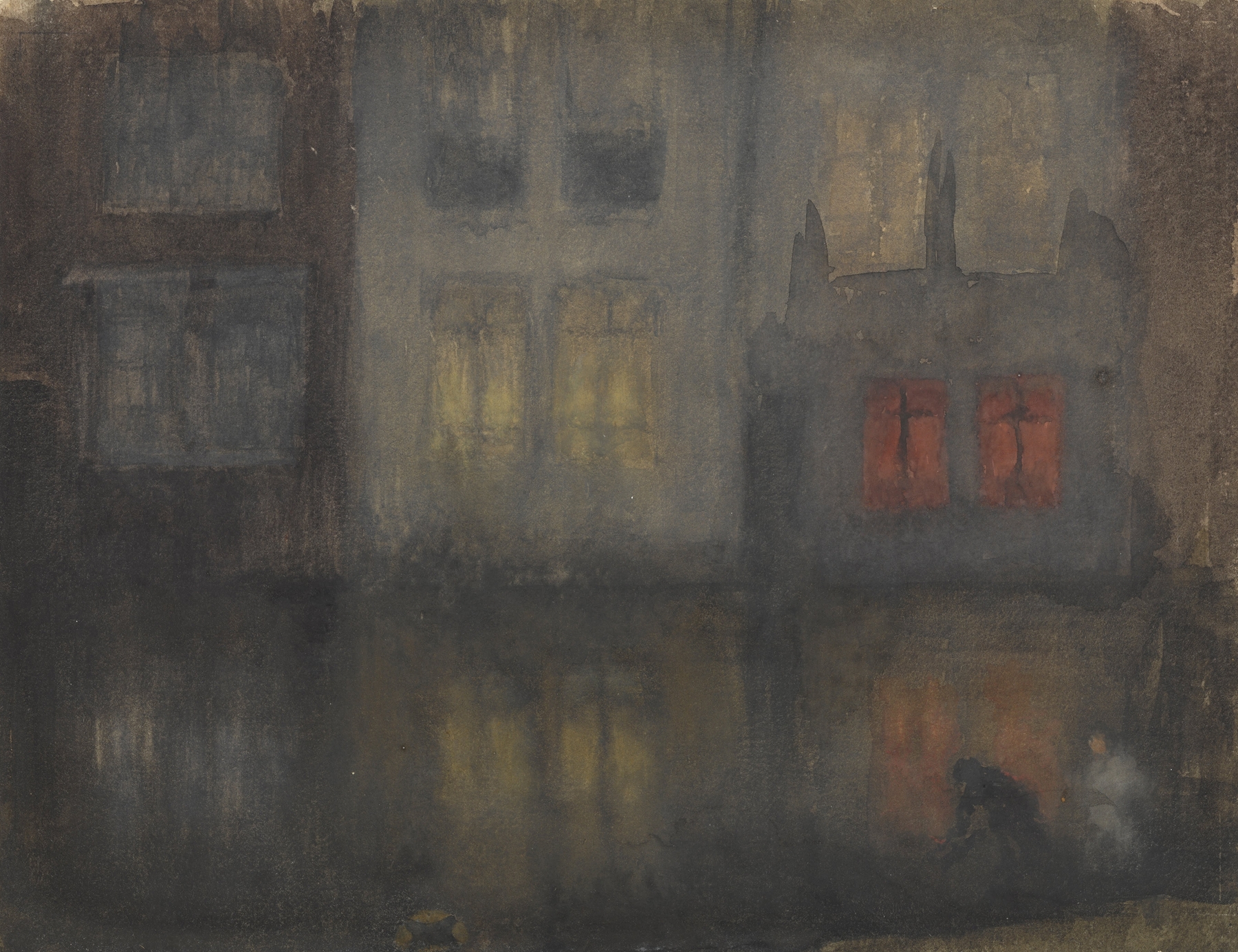
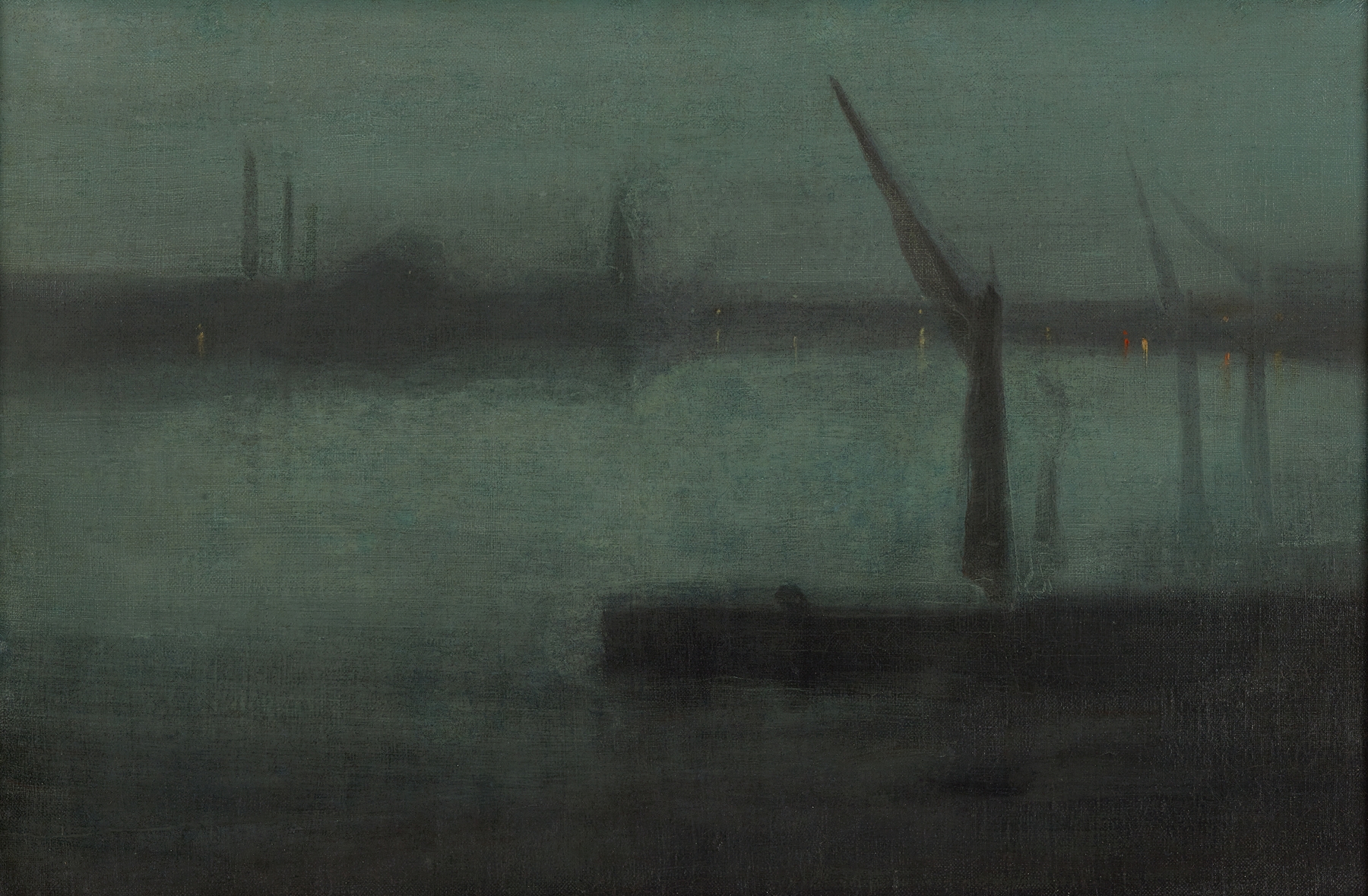
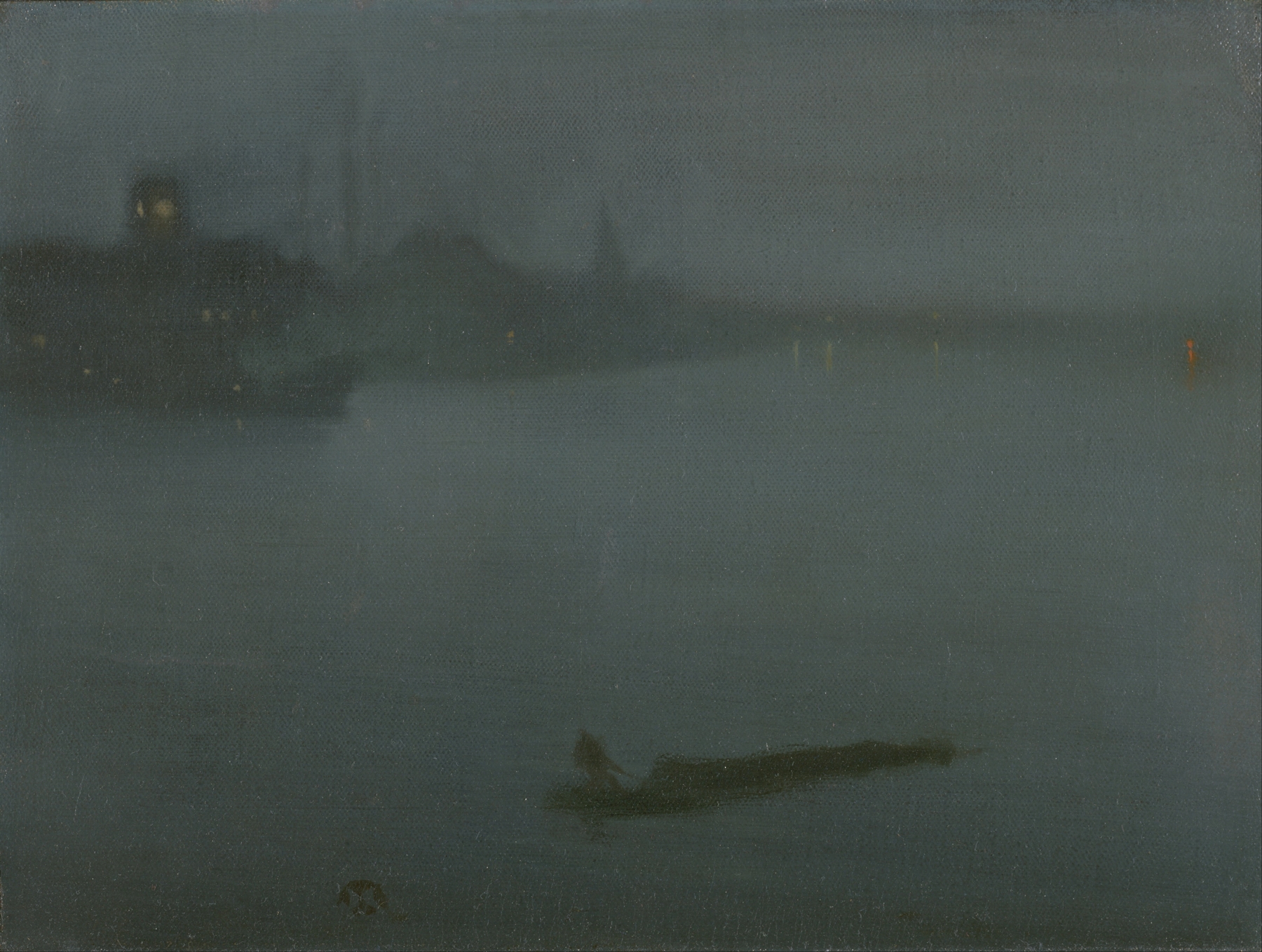
Where does light end, and longing begin? In the delicate interplay of color and shadow, one can sense the ethereal pull of twilight, urging the heart toward transcendence. Look closely at the shimmering expanse of water, where soft blues and silvers meld into a serene symphony. The subtle brushstrokes create a languid surface that seems to ripple with whispers of the evening air.
Notice how the light cascades from the horizon, illuminating the distant ships like fleeting thoughts on the edge of consciousness, while the thickening night sky envelops everything in a gentle embrace. The painting captures a moment suspended in time, rife with emotional tension. The juxtaposition of the serene surface against the impending darkness evokes a sense of yearning—perhaps for connection, for understanding, or simply for the beauty of the transient moment. The figures in the foreground are almost ghostly, mere silhouettes that speak to the feelings of isolation amid the energetic pulse of a bustling world.
Whistler’s use of color evokes a haunting tranquility, creating a bridge between reality and dream. In the late 19th century, Whistler was deeply engaged with the Aesthetic movement, prioritizing beauty over narrative. This work, created during his years in London, reflects his exploration of atmospheric effects and the emotional resonance of color. At this time, he was refining his ideas about art as a sensory experience, influenced by the changing urban landscape and his personal pursuit of elegance in the midst of modernity.