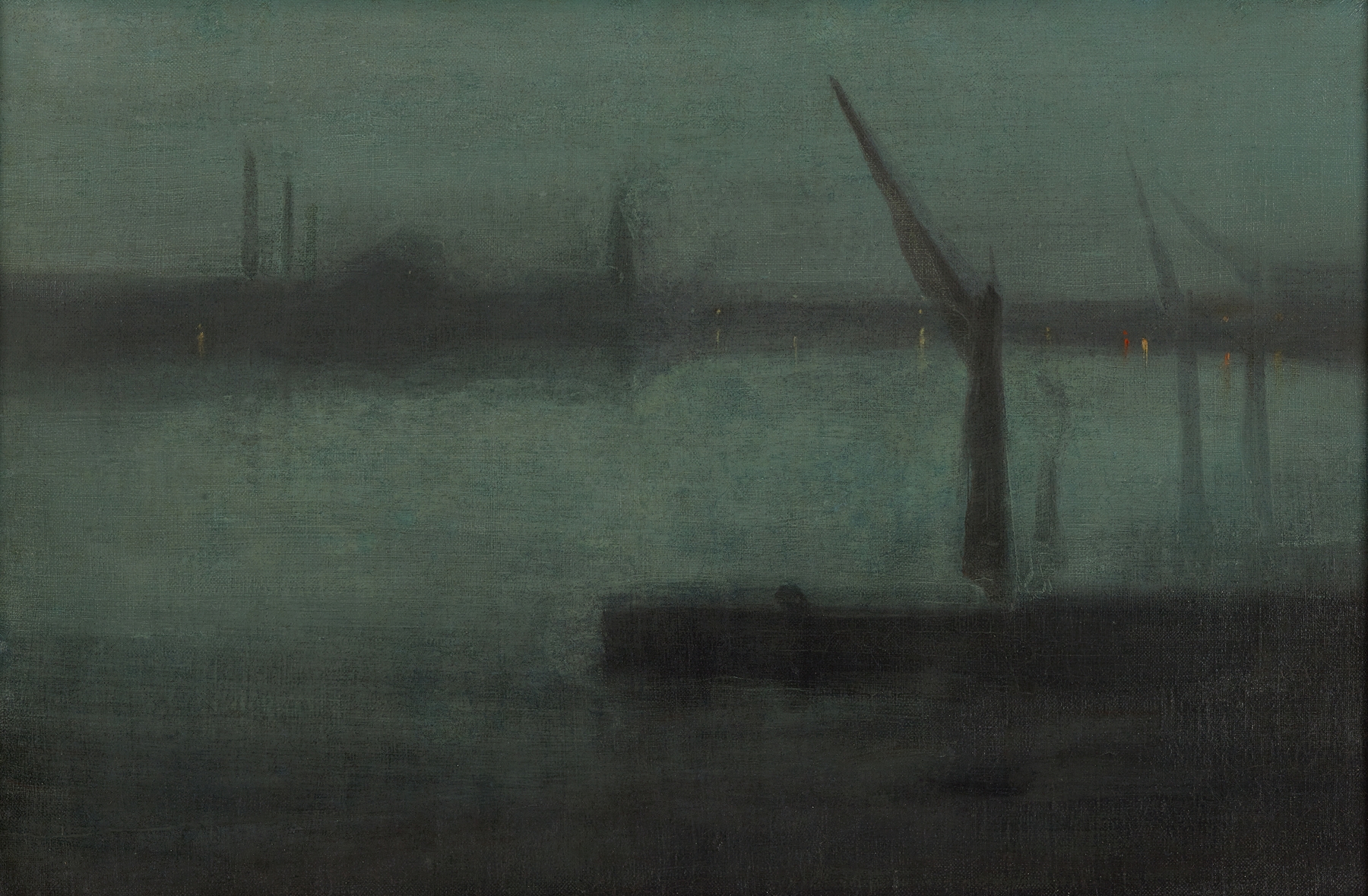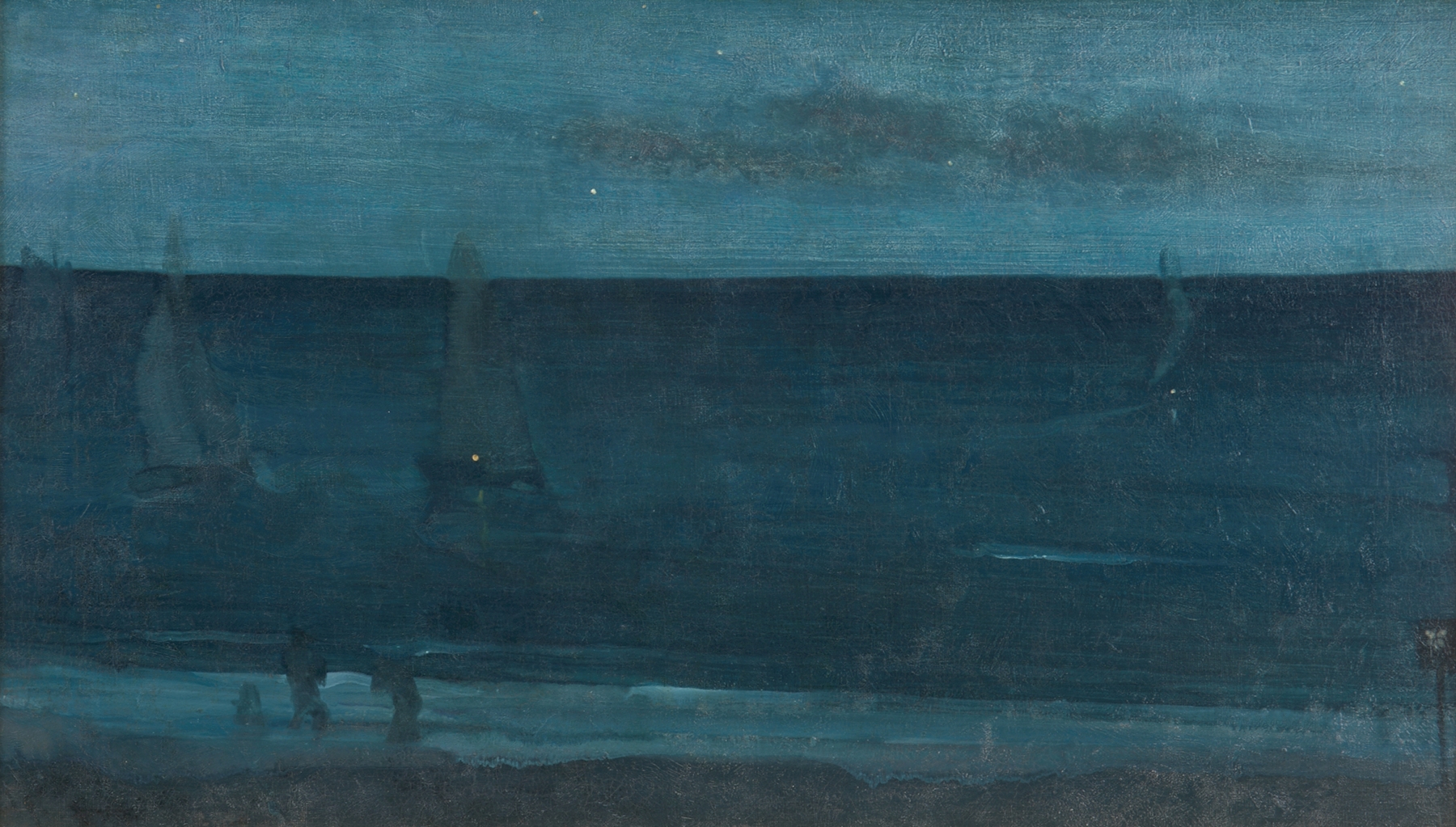
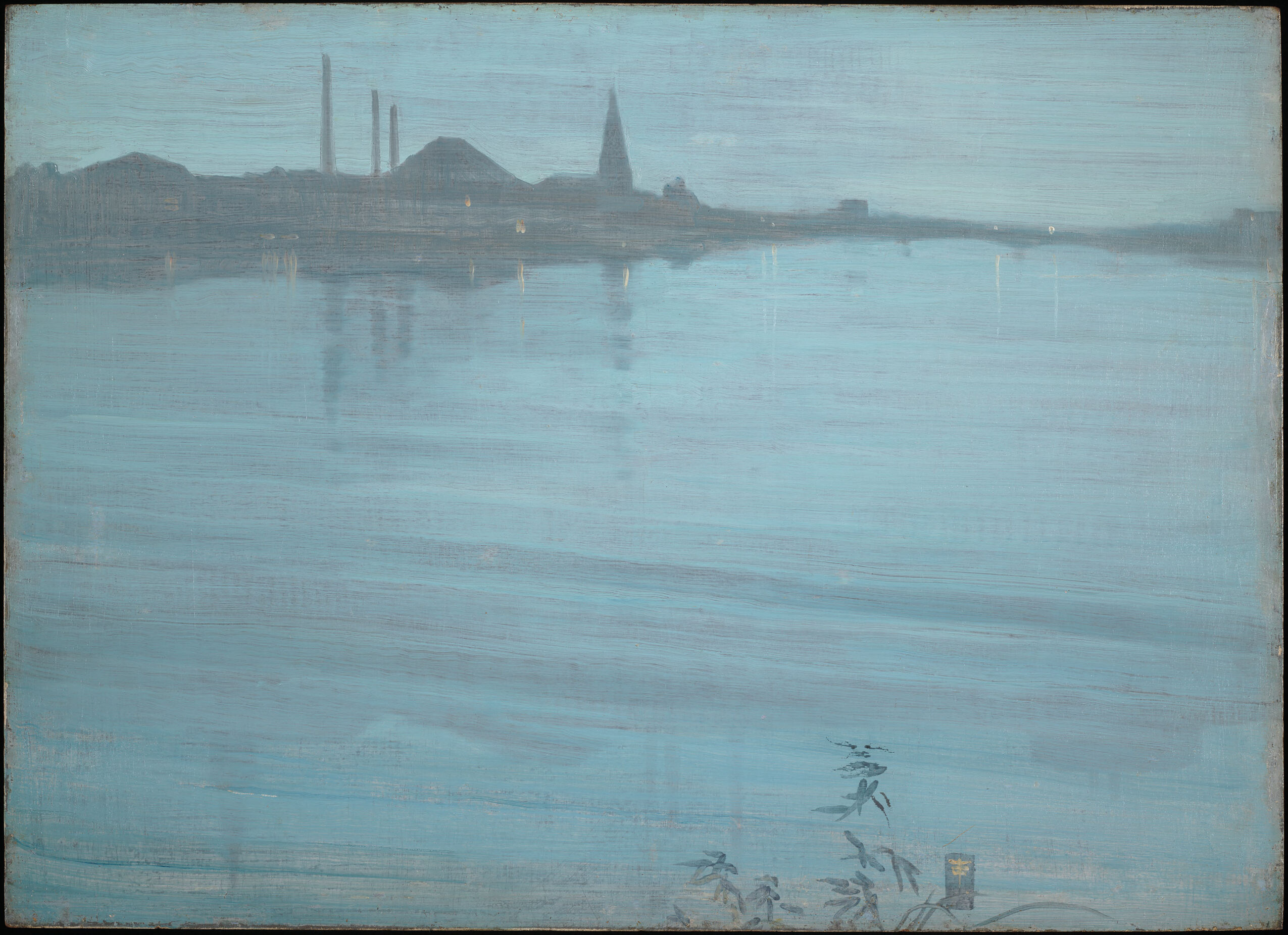
Nocturne: Blue and Silver–Bognor — History & Analysis
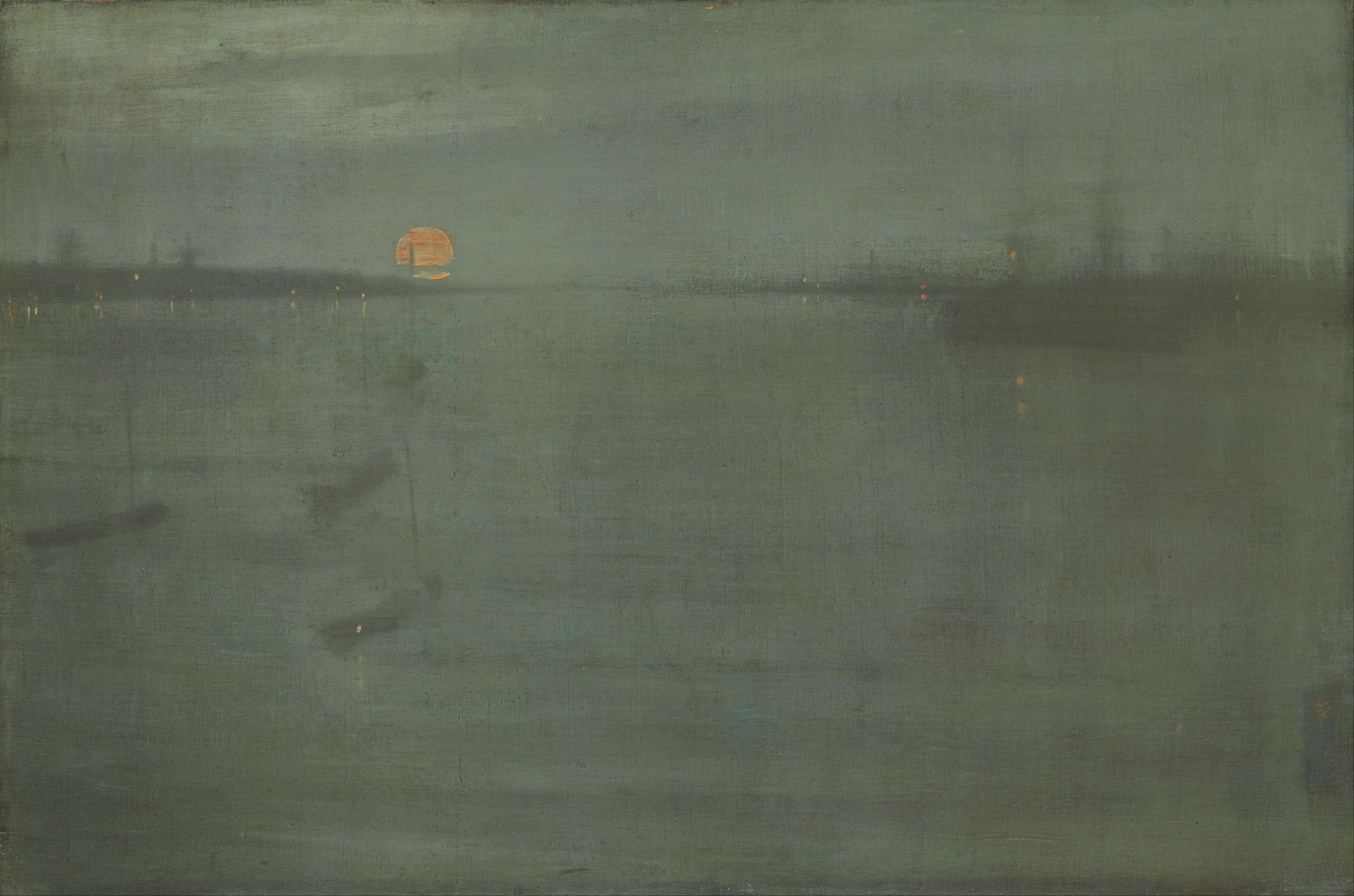
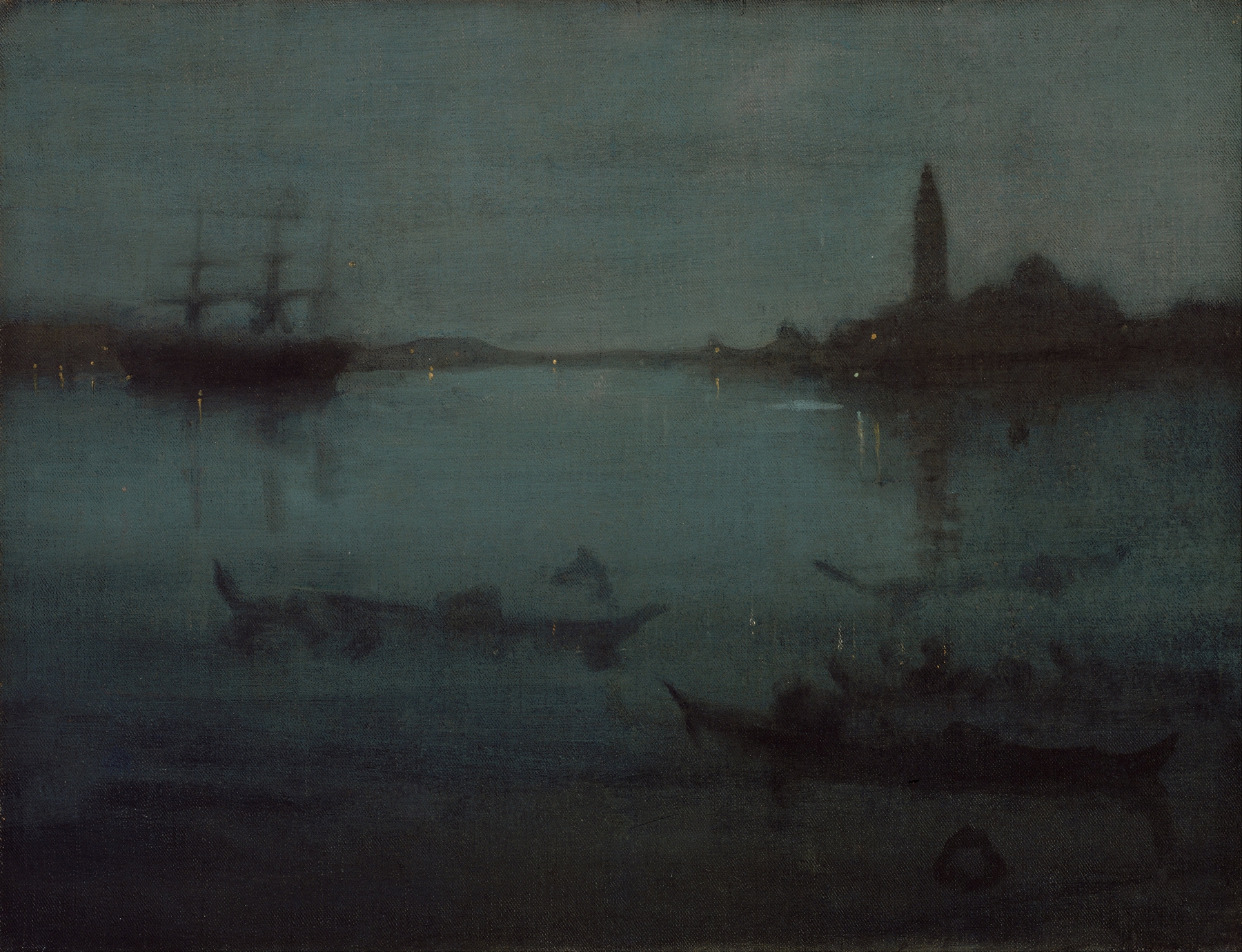
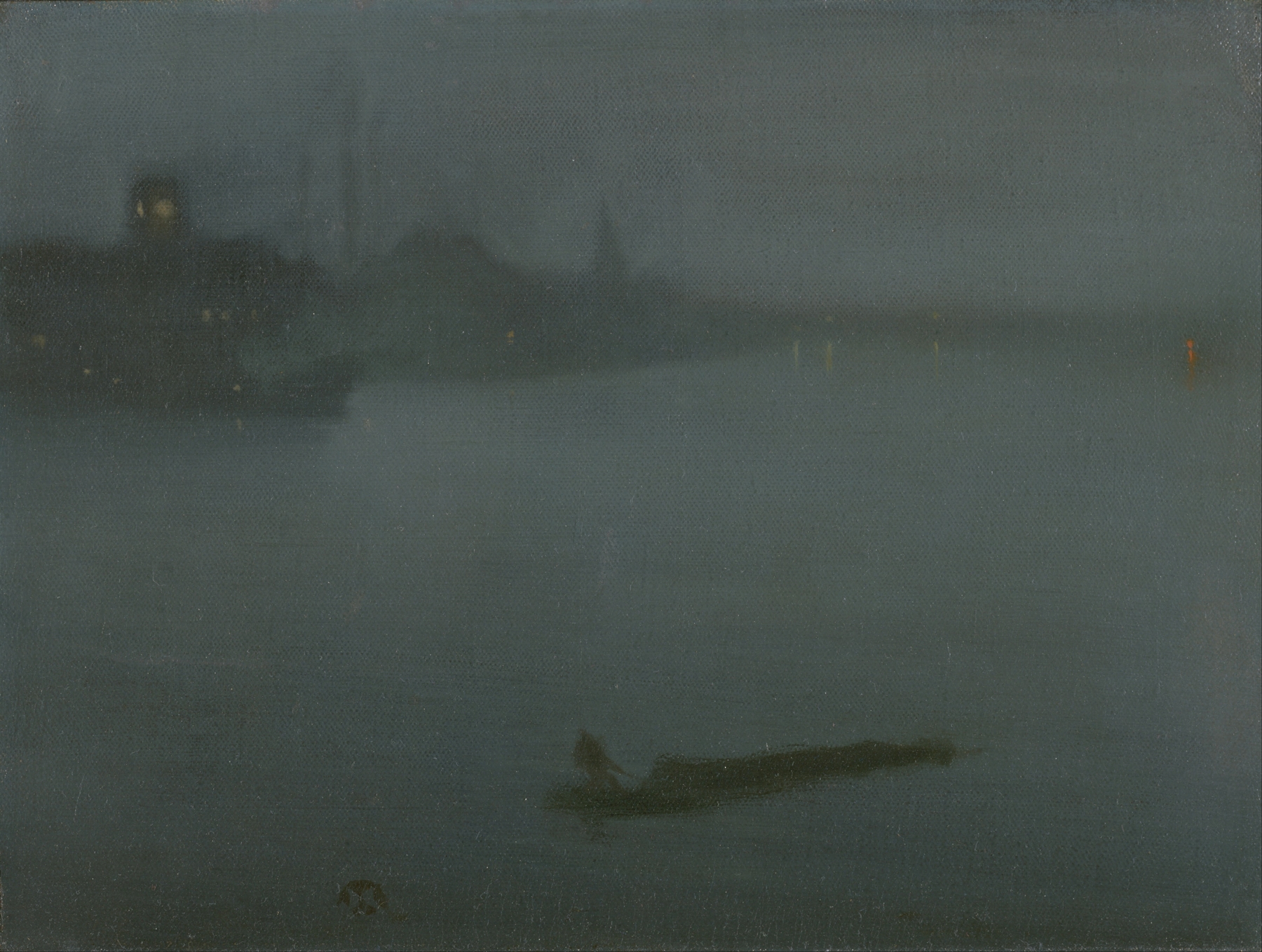
“The canvas doesn’t lie — it simply waits.” In the quiet embrace of twilight, memory drifts like smoke, elusive yet haunting, a shimmering evocation of things past. It invites us to reflect on the shades of our own experiences, where the lines between reality and recollection blur into soft, indistinct edges. Look to the center, where silvery water meets the deepening blue sky. The horizon holds a delicate balance, subtly rendering the tranquility of a fading day. Notice how the light dances upon the surface, creating a shimmering path that draws the eye toward the horizon, inviting contemplation.
The cool palette beautifully embodies the stillness of the moment, while the loose brushwork adds an ethereal quality, capturing the fleeting essence of time and memory. Yet, beneath this serenity lies an intriguing tension. The water, though calm, hints at depths unseen, suggesting a longing that accompanies reminiscence. The hazy silhouettes of distant figures evoke a sense of isolation, emphasizing the quiet ache of solitude amidst beauty.
Whistler's choice of color and abstraction speaks to the complexity of recollection, where joy and melancholy coexist, inviting the viewer to navigate their own emotional landscape. In the years between 1871 and 1876, the artist created this piece during a time when he was deeply engaged with the aesthetics of nocturne paintings. Living in London, Whistler faced financial struggles but was also at the forefront of the growing art movement that favored tonal harmony over detailed representation. This work encapsulates his innovative approach, marking a pivotal moment in his career as he sought to elevate the emotional resonance of art through color and atmosphere.