Oberweimar im Winter — History & Analysis
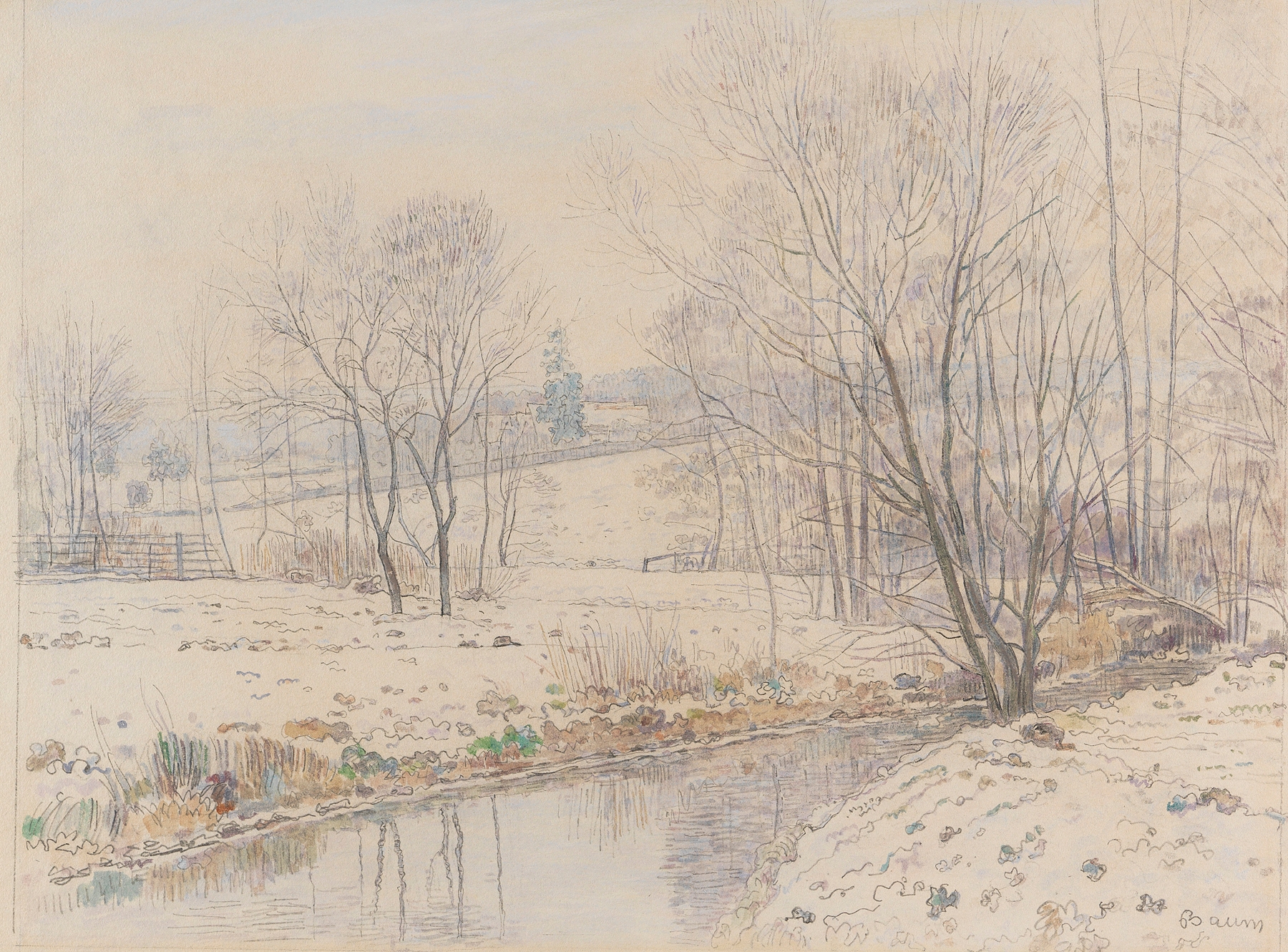
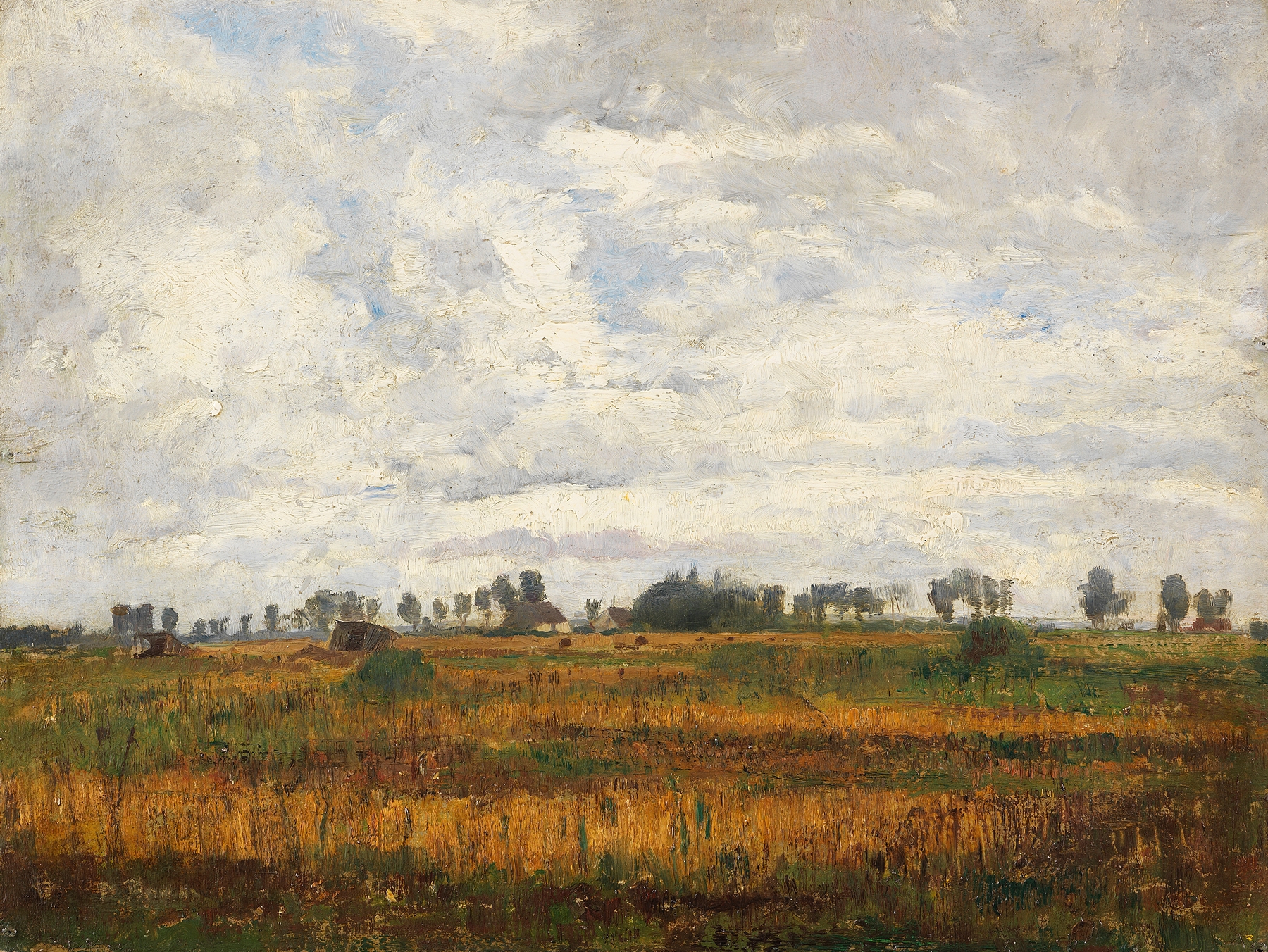
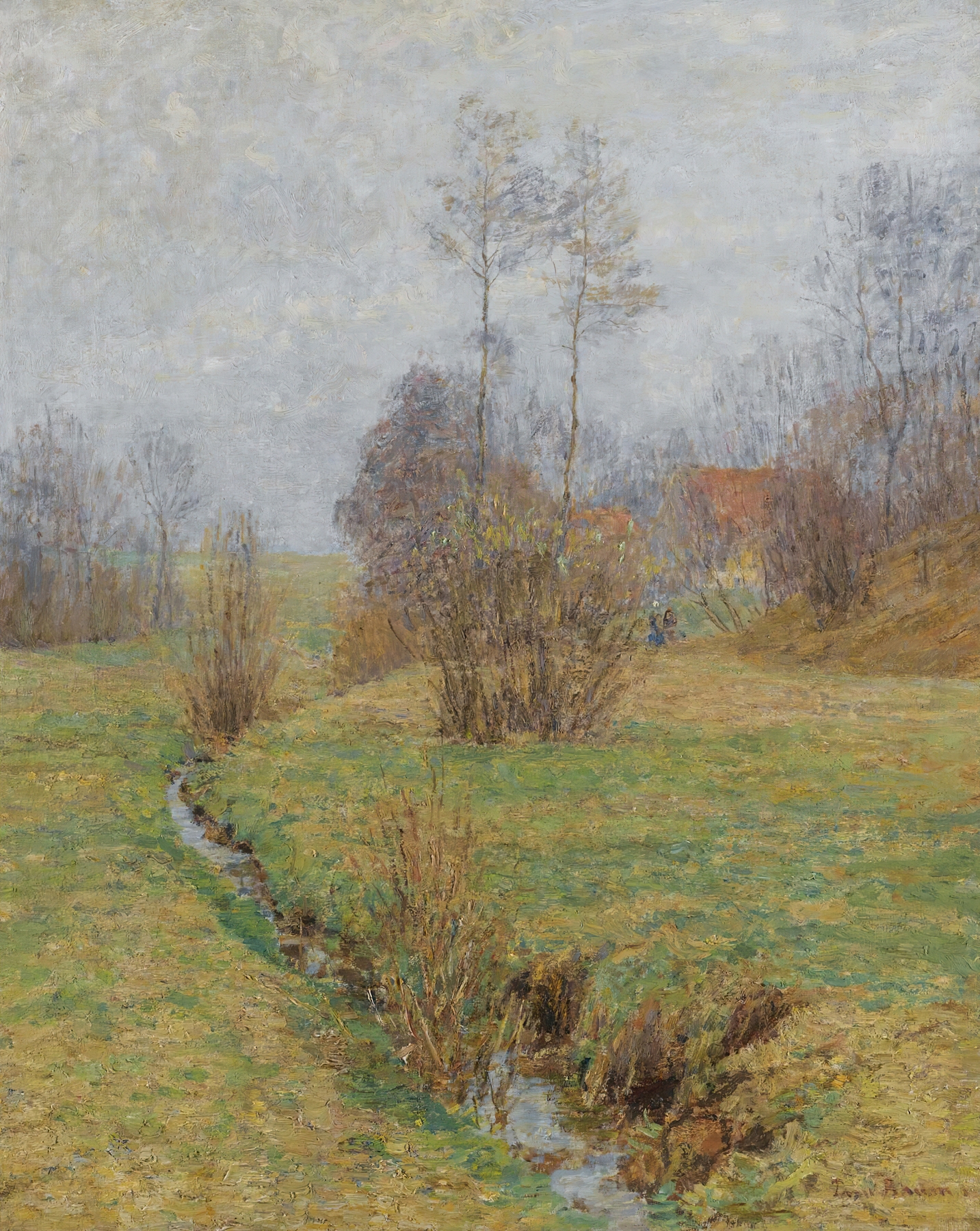
“Between color and silence, truth hides.” In the depths of winter, awe emerges not only from the beauty of a scene but from the stillness that envelops it. Look to the center of the canvas where a quaint village basks in a soft blanket of snow. The gentle hues of blue and white dominate the landscape, while a warm, golden glow radiates from the windows of the cottages, beckoning us into a world of comfort against the harshness outside. Notice how Baum’s brushstrokes create a delicate interplay of light and shadow, leading the eye to the distant trees dusted with frost, their branches like delicate lace against the pale sky.
The contrasts in this piece evoke a profound emotional tension. The vibrant warmth of the village reflects human resilience, while the cold, expansive landscape speaks to nature's indifferent beauty. Each stroke reveals the quiet solitude of winter, inviting contemplation about our place within the vastness of the world. The soft textures of the snow juxtapose against the sturdy, inviting structures, suggesting a harmony between humanity and the natural elements, both fragile yet enduring.
Paul Baum painted this work between 1882 and 1883 in the tranquil town of Weimar. This period marked his deepening exploration of color and light, influenced by the burgeoning interest in Impressionism. As he sought to capture the essence of winter’s quietude, his experiences as an artist during a time of cultural awakening in Germany led him to hone his unique style, bridging traditional landscapes with the new artistic movements of his time.