Old Scarborough, Full Moon, High Water — History & Analysis
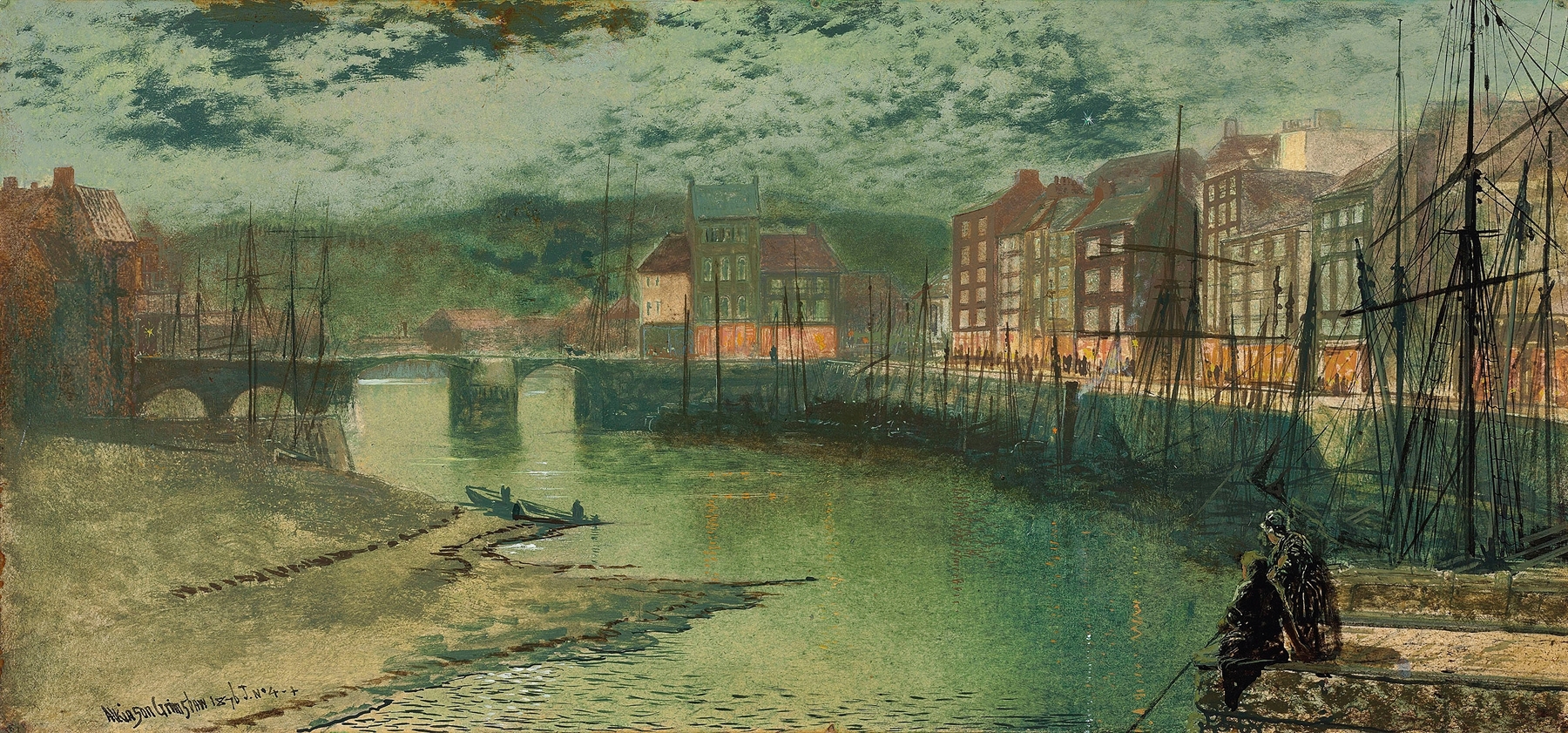
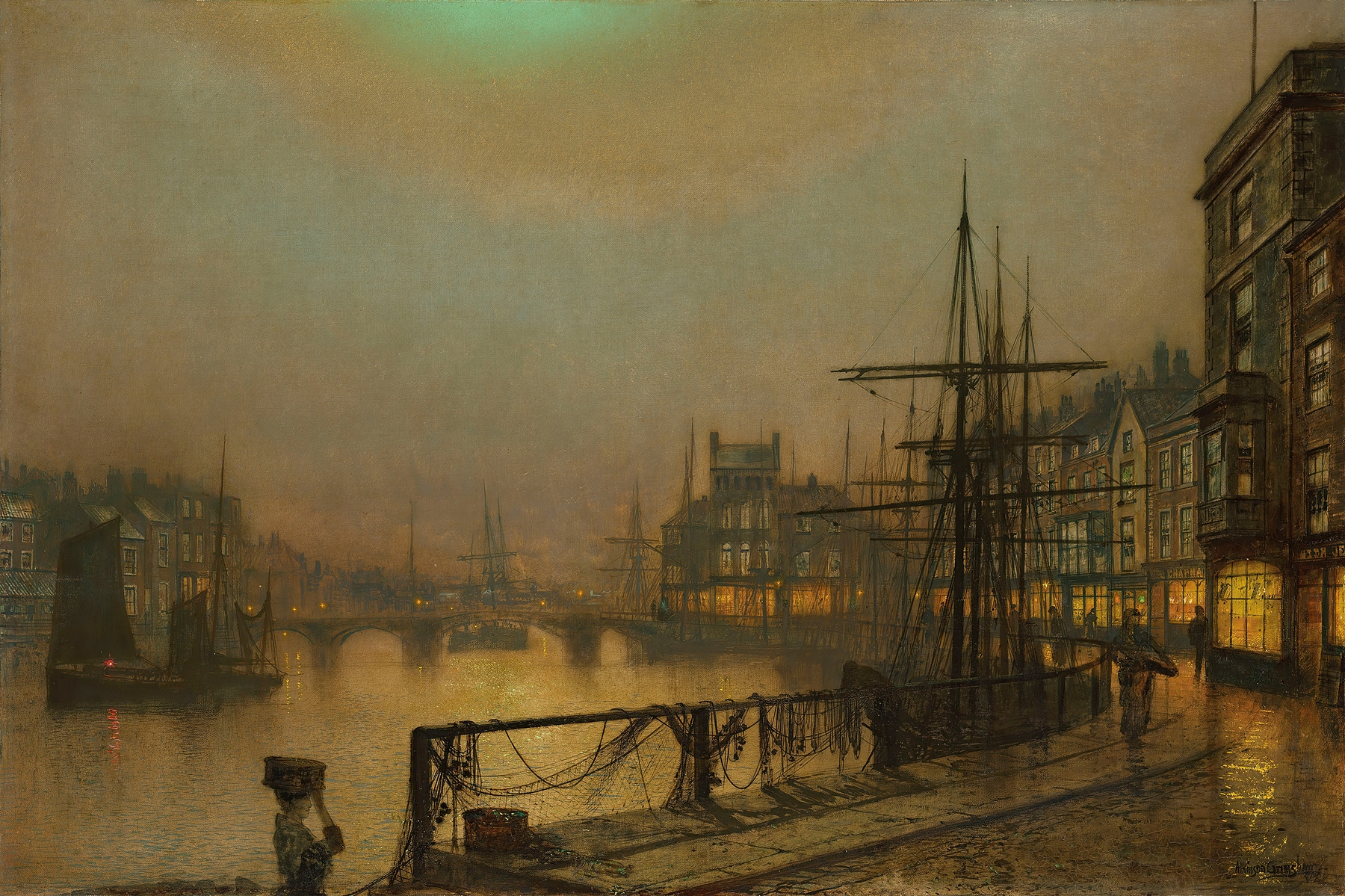
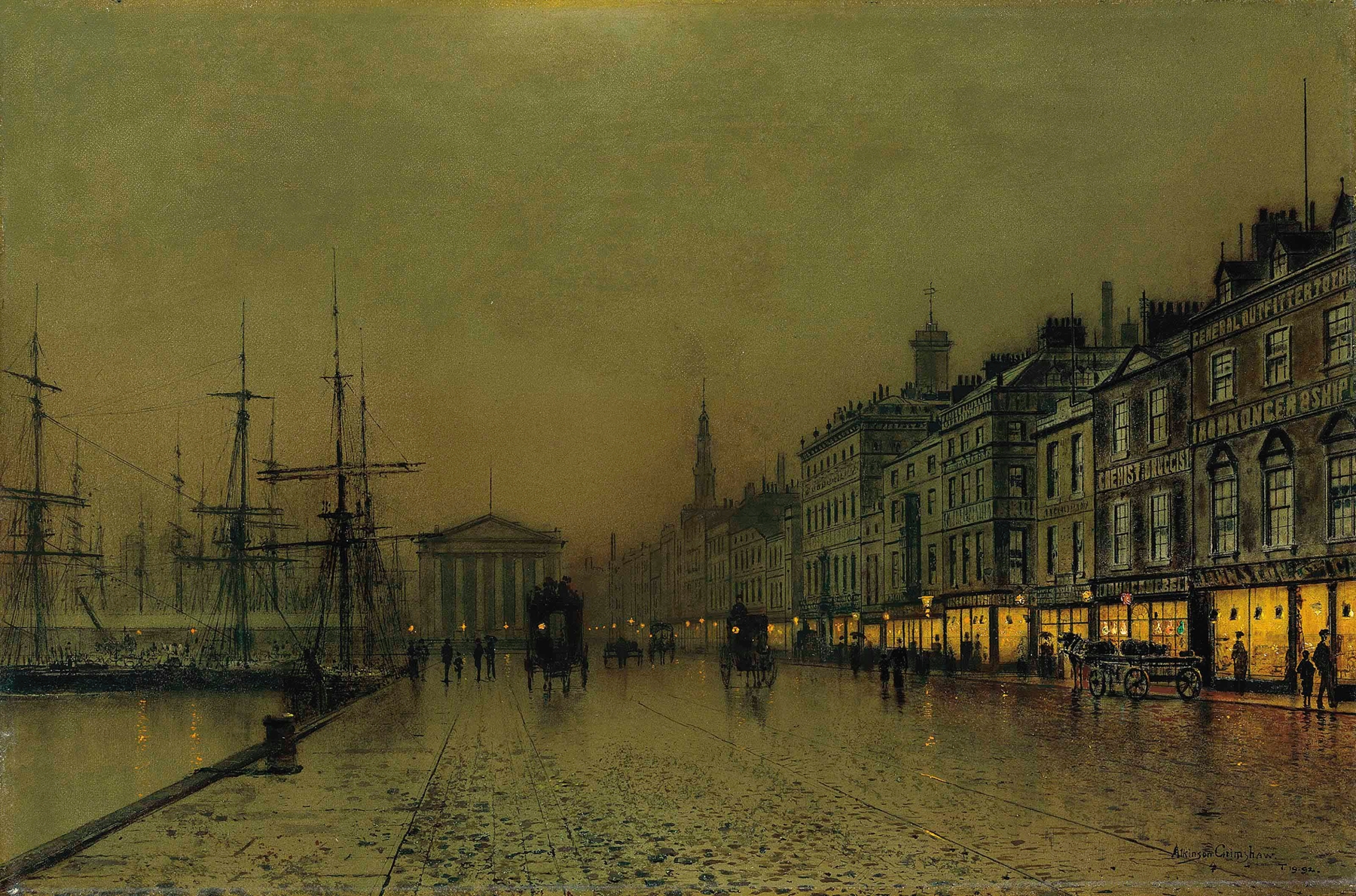
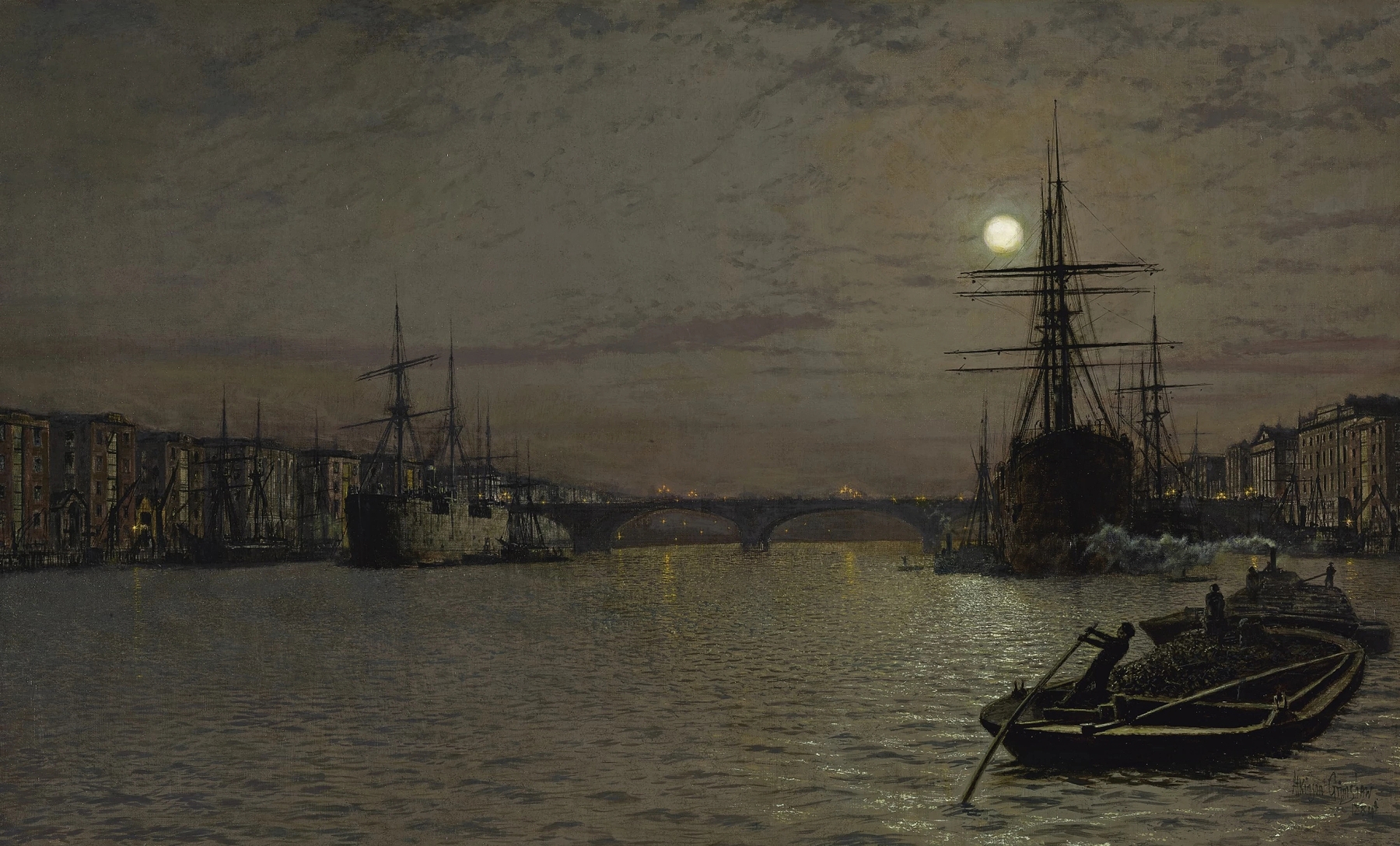
Can paint confess what words never could? In Old Scarborough, Full Moon, High Water, silence weaves through the night, inviting the viewer into a world where the moonlit sea whispers secrets of the past. Shadows dance upon the water's surface, while the tranquil scene promises stories untold — a serene yet haunting stillness envelops the town. Look to the left at the shimmering reflection of the moon on the water, where each ripple captures and distorts the celestial glow.
Notice how the muted palette of blues and silvers harmonizes with the dark silhouettes of the buildings, creating an atmosphere that feels both nostalgic and dreamlike. The play of light and shadow brings structure to the composition, drawing the eye upward to the darkened sky, punctuated by the soft luminescence of the moon. In this work, Grimshaw captures the contrast between the lively essence of the moonlit scene and the overwhelming stillness of the night. The delicate balance between light and darkness reveals a moment suspended in time, where history lingers in the air.
The isolation of the town, framed by the vast sea and sky, evokes a sense of longing and reflection, inviting the viewer to ponder what remains unspoken in this quiet coastal landscape. In 1879, while creating this piece, John Atkinson Grimshaw was immersed in the Pre-Raphaelite movement, experimenting with light in painting. Based in Yorkshire, his focus on atmospheric effects reflected the changing industrial landscape of England. This was a period of profound transformation, both personally and in the art world, as he sought to encapsulate the poetry of his surroundings through the lens of light and shadow.