One of Six Views of Atsugi — History & Analysis
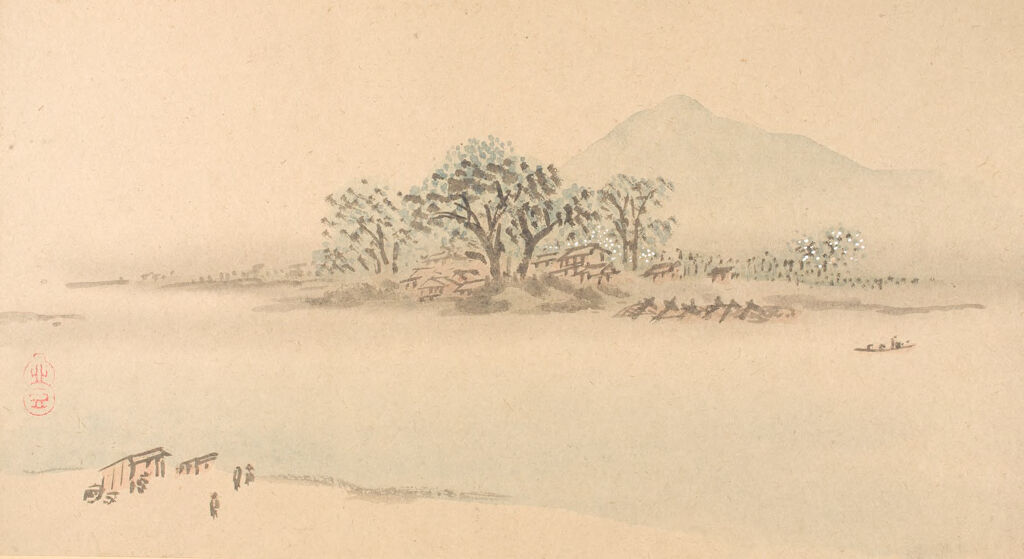
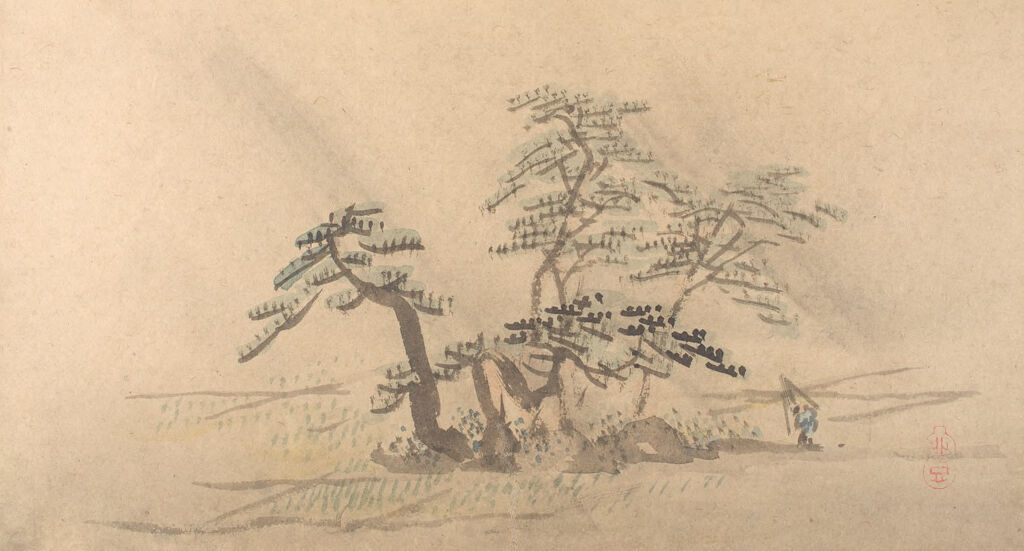
Can paint confess what words never could? In the delicate interplay of light and shadow, the ephemeral beauty of decay whispers secrets of time and transformation. Look to the left at the intricately detailed trees, their branches arching gracefully, swaying in a gentle breeze. The muted palette captures the fading vibrancy of autumn, as warm hues of amber and ochre bleed into cooler tones, suggesting the passage of seasons. Notice how the remnants of old structures emerge through the foliage, relics of a once-thriving landscape, rendered with meticulous precision.
In the foreground, a tranquil pond reflects both the fading light and the encroaching shadows, inviting contemplation on the transience of life. Beneath the surface lies a profound meditation on mortality and change. The trees, though beautiful, stand as silent witnesses to what has been lost, embodying the duality of existence — the fleeting nature of beauty contrasted with the permanence of decay. The hidden structures, their outlines softened by the foliage, evoke a sense of nostalgia and melancholy, suggesting that even in destruction, grace persists.
Each brushstroke becomes a testament to the inevitability of time, urging viewers to reflect on their place within this cycle. In 1831, Watanabe Kazan, a pioneer of ukiyo-e and the Western-style oil painting, created this piece amidst Japan's turbulent period of modernization. Living in a time when traditional art faced the pressures of Western influence, he sought to blend techniques while preserving cultural essence. Kazan's exploration of nature and its impermanence resonates deeply within this work, reflecting both personal introspection and the broader sociocultural shifts of his era.