One of Six Views of Atsugi — History & Analysis
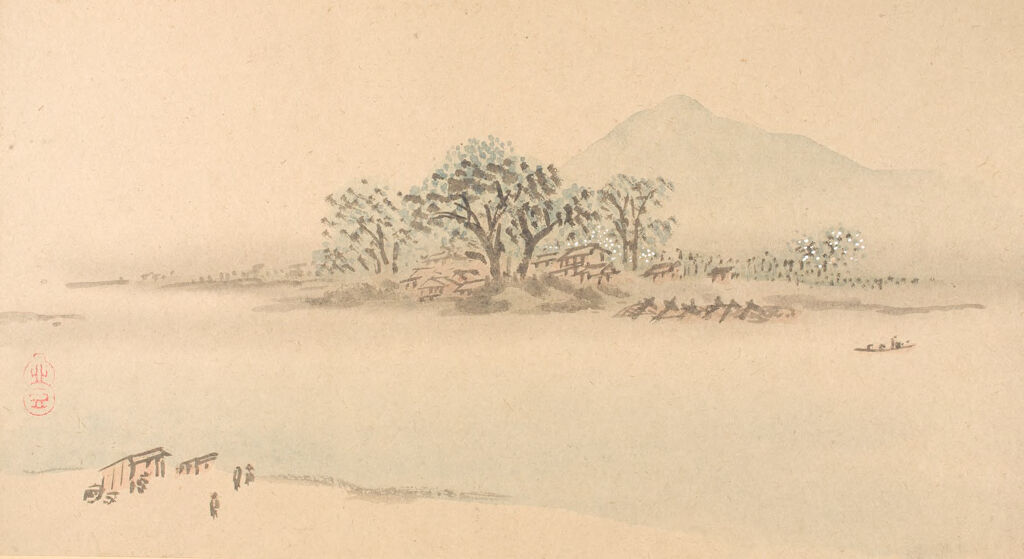
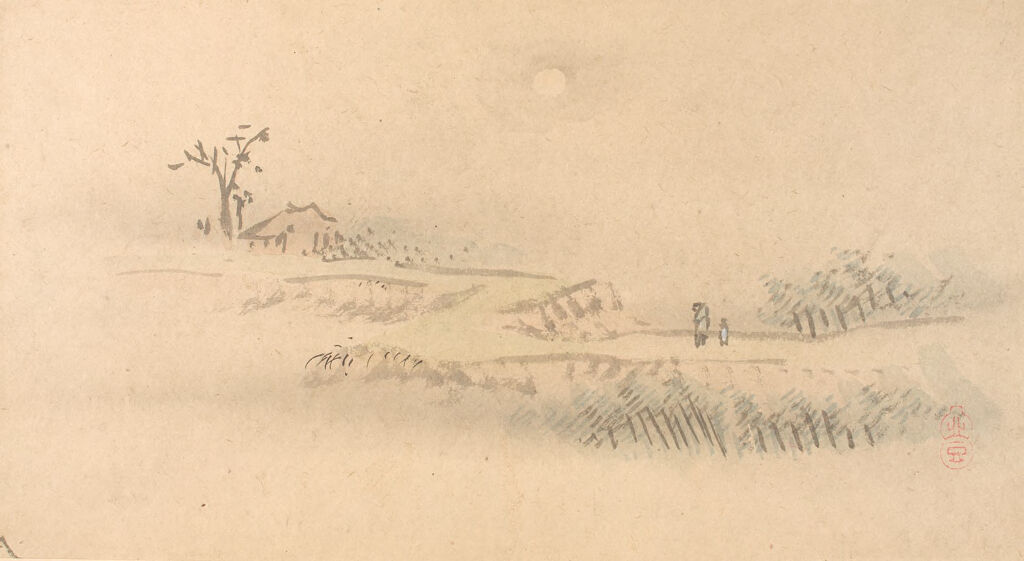
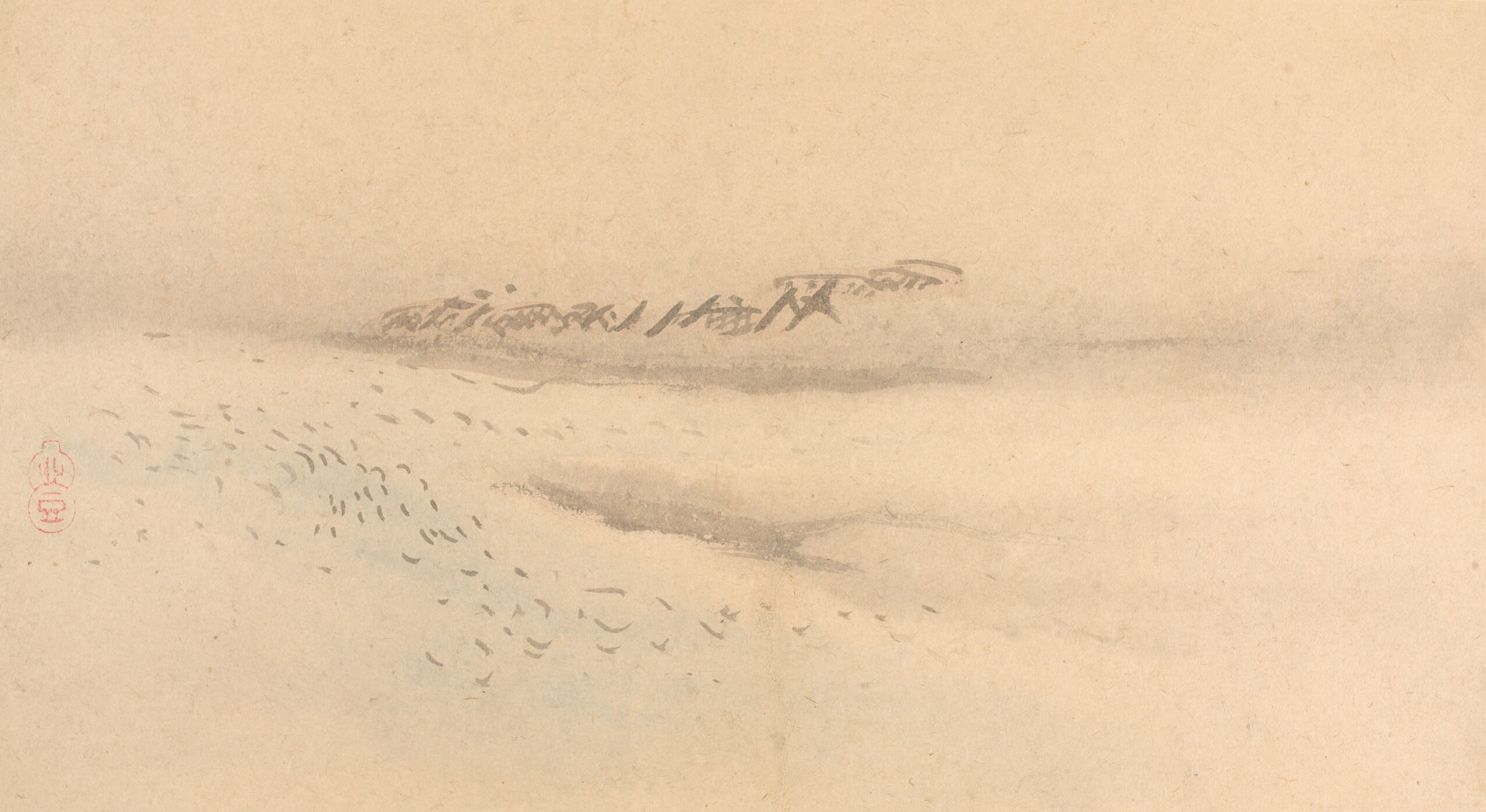
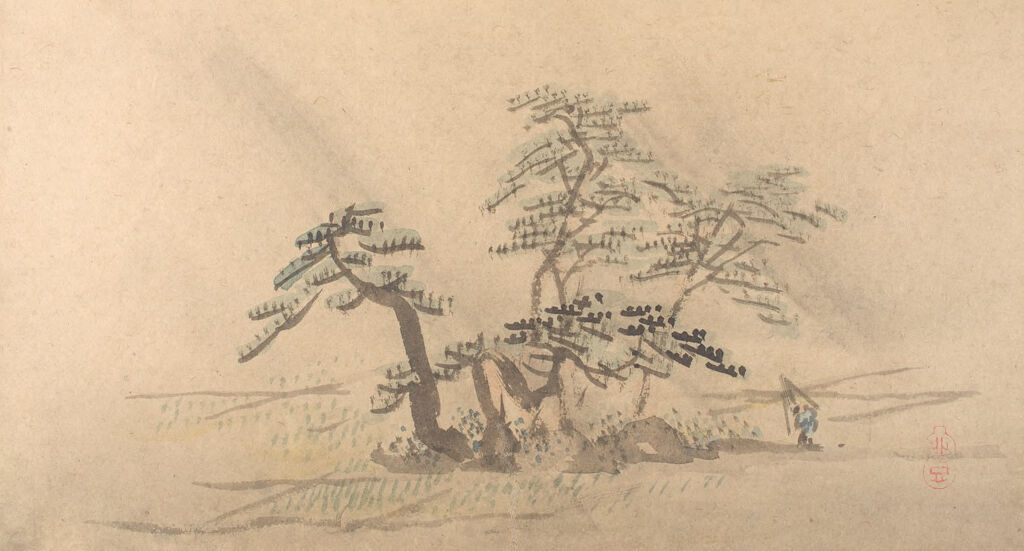
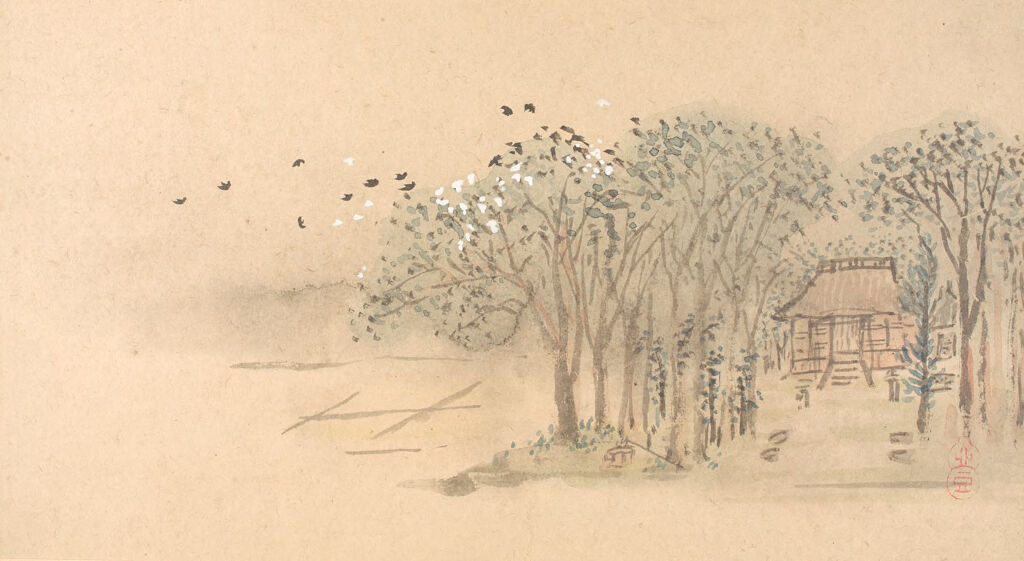
“Under the brush, chaos becomes grace.” In One of Six Views of Atsugi, the artist captures the interplay of light and landscape, transforming nature’s raw energy into a serene panorama. The scene invites viewers to reflect on the delicate balance between chaos and harmony, urging them to observe the subtle dance of illumination across the canvas. Look to the upper left where the gentle strokes of blue and gray create a soft sky, blending seamlessly into the horizon. Notice how the light filters through the clouds, illuminating the distant mountains with a soft glow.
As your gaze travels downward, the rolling hills and craggy terrain emerge, adorned with patches of verdant greens and earthy browns. The composition evokes a sense of depth, coaxing the viewer deeper into this tranquil world, as if they might step into the landscape itself. Beneath the surface, the painting speaks to the duality of nature’s beauty and unpredictability. The contrast between the calm, inviting foreground and the looming, dynamic mountains hints at the tension of human existence against the backdrop of an ever-changing environment.
The light serves as a metaphor, revealing the interconnectedness of tranquility and turmoil, beckoning observers to find solace amidst uncertainty. In 1831, Watanabe Kazan painted this work during a time of significant change in Japan, marked by the end of the Edo period and the onset of modernization. Living in a society that straddled tradition and transformation, Kazan’s artistry reflects his deep connection to nature and his desire to preserve the beauty of Japan’s landscape against the looming pressures of a new era. This painting stands as a testament to his resolve to capture fleeting moments of grace before they are lost to the winds of time.